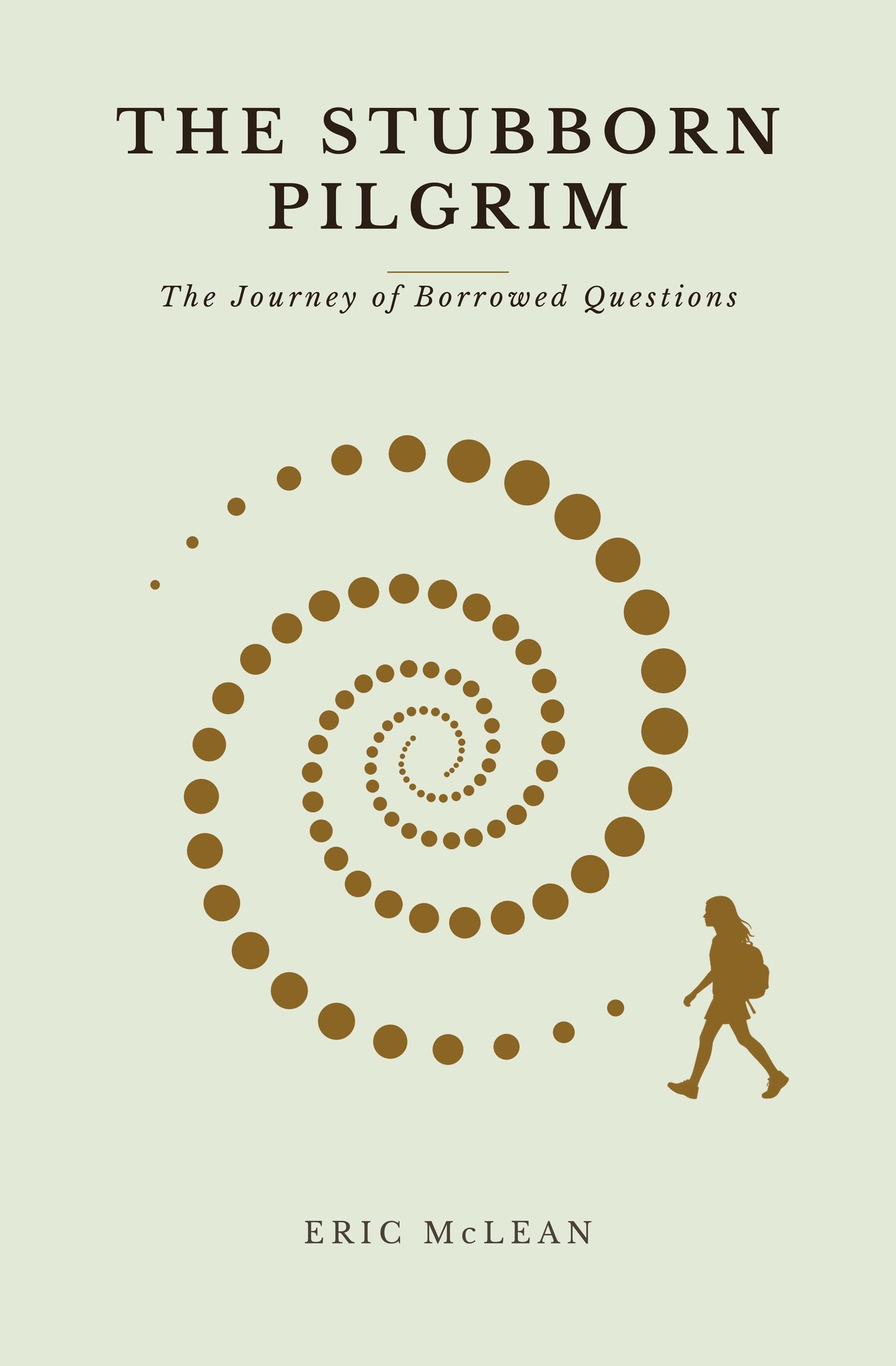
The Stubborn Pilgrim
The girl from the house next door to the mender cannot take what she is given.
She has made an inventory, being thorough. Her opinions are her aunt's, her mother's, the schoolmaster's. Her sayings are her grandmother's. Even the way she folds her arms she took from the blacksmith's wife. And her sentence, "How do you know?", came through the hedge from the man who walked the road before her and came home to mend things.
In her thirteenth year she asks for the road, as the custom of that country allows. He unrolls his grandfather's map on the bench, every town on it a true town. She will not take it. "I'll see for myself."
So she walks fifteen Steps of her own, with a compass that will not point: to a bridge pulled down sound every twenty years and built again beside itself, a potter who talks to his wheel sooner than to her, a well that answers in other people's voices, and a room on a hill where every walker before her has left a question and no answer. On the way she has to learn the one thing a girl who refuses everything cannot do, which is to ask.
A fable of the road in fifteen Steps, to be read one a night with twenty minutes outside after each. Drier than the first book, and its inverse: the boy was refused answers, and she is handed one.
The Stubborn Pilgrim is Book Two of the Pilgrim Cycle, after The Honest Pilgrim. Each book stands alone.