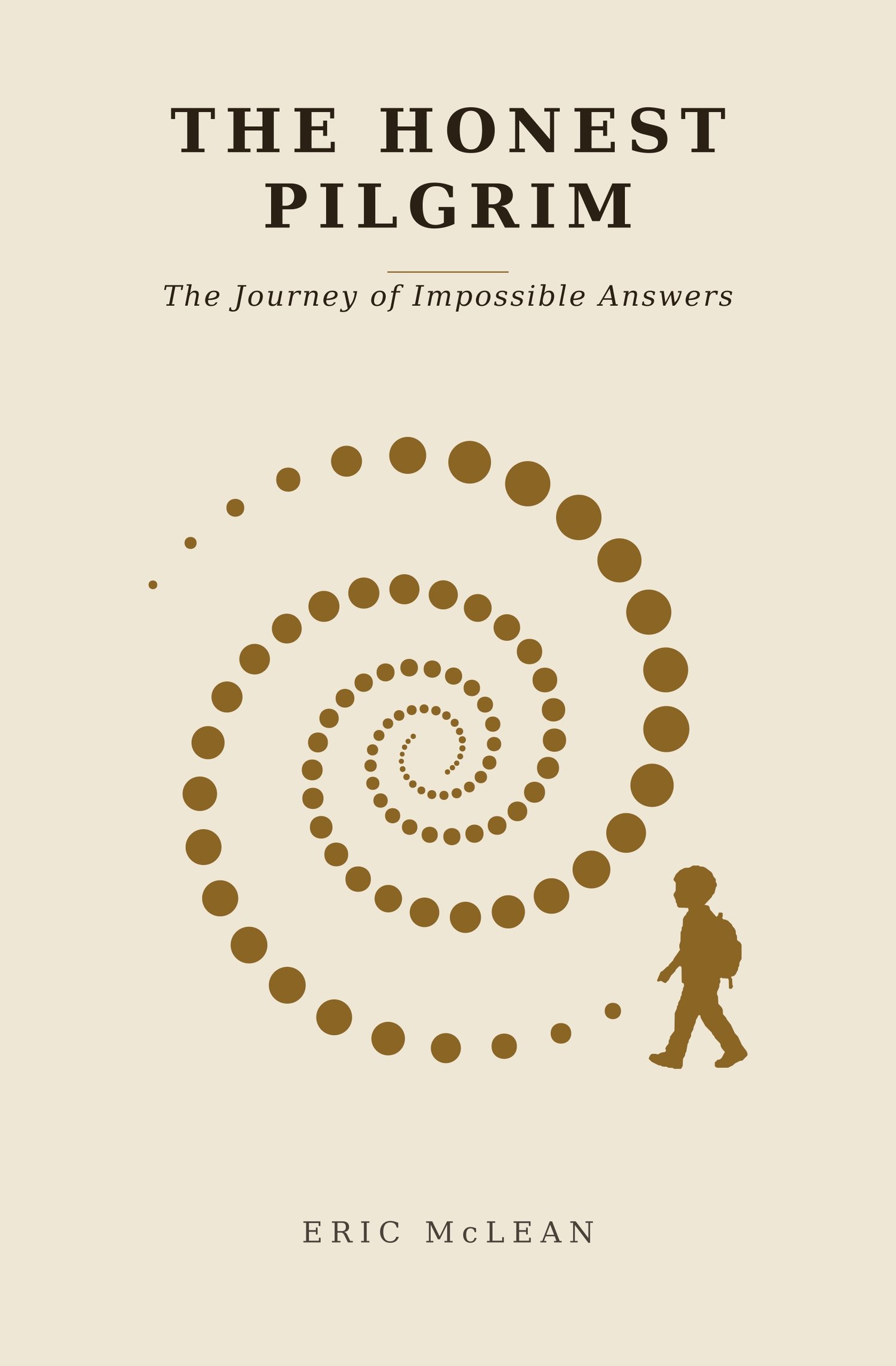
The Honest Pilgrim
"The thing you have to understand about the world is…"
His grandfather dies in the middle of that sentence.
The boy is thirteen, and this is the walking year, when the old custom says that a child who asks for the road cannot be refused it. So he takes the hand-drawn map down from the wall and sets out for the place at the end of the longest road. Every town calls it something different. The map marks it only with a question mark.
On the way he meets a priest who guards a question instead of an answer. A mason whose great dome stands on nothing at all. A judge who has him arrested for asking who made the law lawful. A market where certainty is sold by the bottle. Two towns that have been at war for eighty years over the name of a place neither of them has ever seen. A fool at a campfire who knows exactly why anything exists. And a well that answers back.
Not one of them can tell him what his grandfather understood.
Every one of them hands him a piece of it.
The Honest Pilgrim is a fable about the questions that never close, and about the discovery that they were never meant to. It is fifteen short chapters, one for each night of a journey, and it asks the reader to walk it rather than swallow it: a step a night, and twenty minutes outdoors afterwards with nothing in your hands.
It was written for anyone who was ever thirteen, and anyone about to be.
For the child who asks why until the adults get annoyed. For the reader who has grown tired of being sold certainty. For anyone carrying a grief that will not point anywhere. And for everyone who will never get the gap year, never walk the Camino, and would still like to go.
A small book with a big heart, in the tradition of The Little Prince, Jonathan Livingston Seagull and The Boy, the Mole, the Fox and the Horse.
Bring something.