
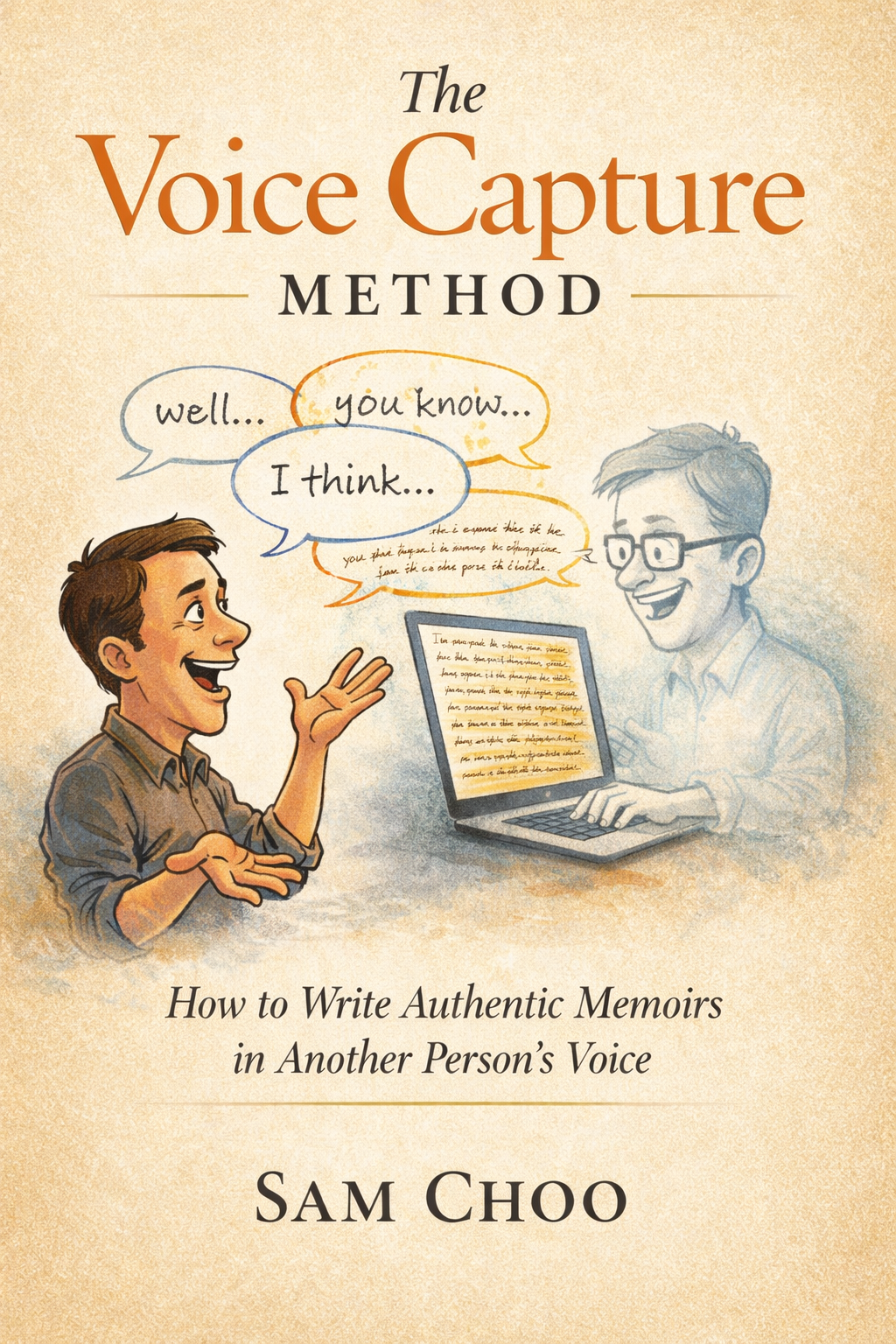

The Voice Capture Method: How to Write Authentic Memoirs in Another Person’s Voice
When people ask what makes memoir ghostwriting difficult, many assume the hardest part is the writing.
It isn’t.
The hardest part is voice.
You can interview someone for hours. You can organize their memories into a clear timeline. You can shape the story into a strong narrative arc.
But if the voice on the page does not sound like the person who lived the story, something important has been lost.
Readers may not be able to explain what feels wrong. The sentences may be clear. The structure may be solid. Yet the human presence behind the story seems to have disappeared.
This book is about that problem.
It explores what voice actually is and why so many ghostwriters struggle to capture it. It looks closely at how people speak, how their worldview shapes their storytelling, and how those patterns can be translated into written language without losing authenticity.
Along the way, it also addresses the quieter responsibilities of memoir writing: cultural awareness, emotional sensitivity, and the ethical questions that arise when someone trusts you with their life story.
Writing another person’s voice requires a certain humility. You learn to listen more carefully than you write. You learn when to edit and when to step back. And eventually you learn something unexpected.
The best ghostwriting is almost invisible.
When it works, readers never think about the writer.
They simply hear the voice of a person telling their story.
Ref: B776. This books contains 22,335 words and 153 pages.