Creative fatigue is one of the biggest reasons ecommerce ads stop working.
But the solution is not just “make more ads.”
The solution is to make more different arguments.
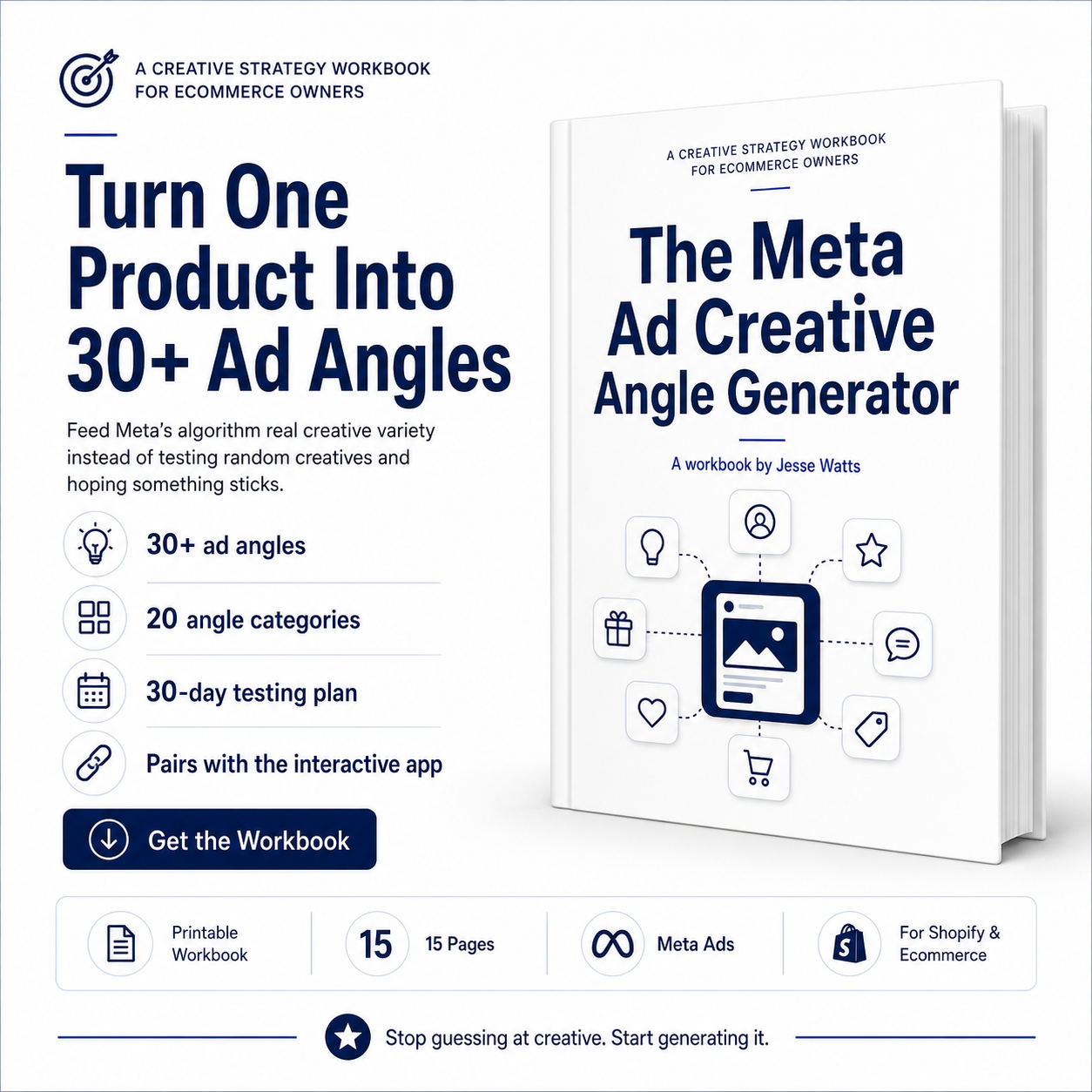
That is what The Meta Ad Creative Angle Generator helps you do.
It gives you a structured process for turning one ecommerce product into dozens of distinct ad angles — so you can feed Meta’s algorithm real creative variety instead of guessing what to test next.
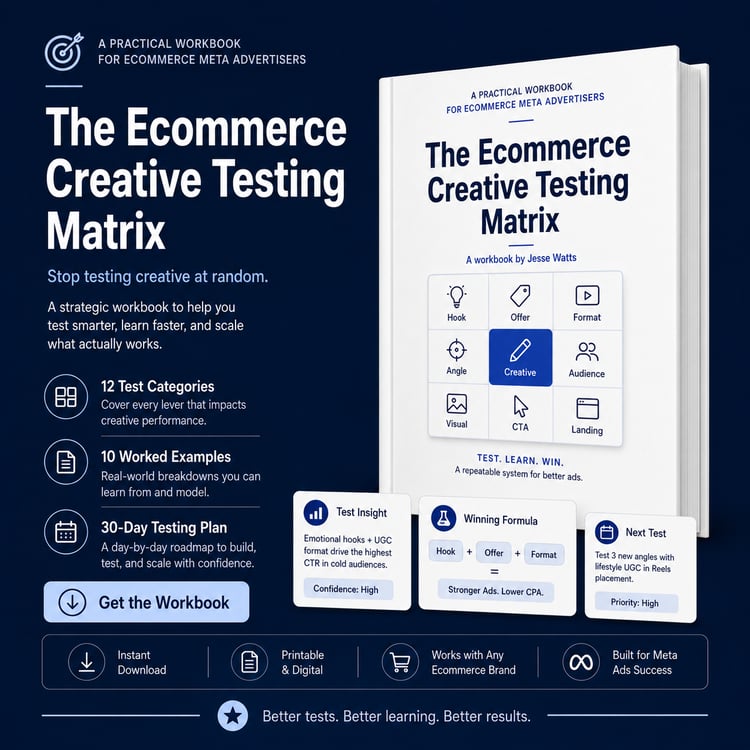
Stop Testing Random Creatives
Most store owners say they are testing creative.
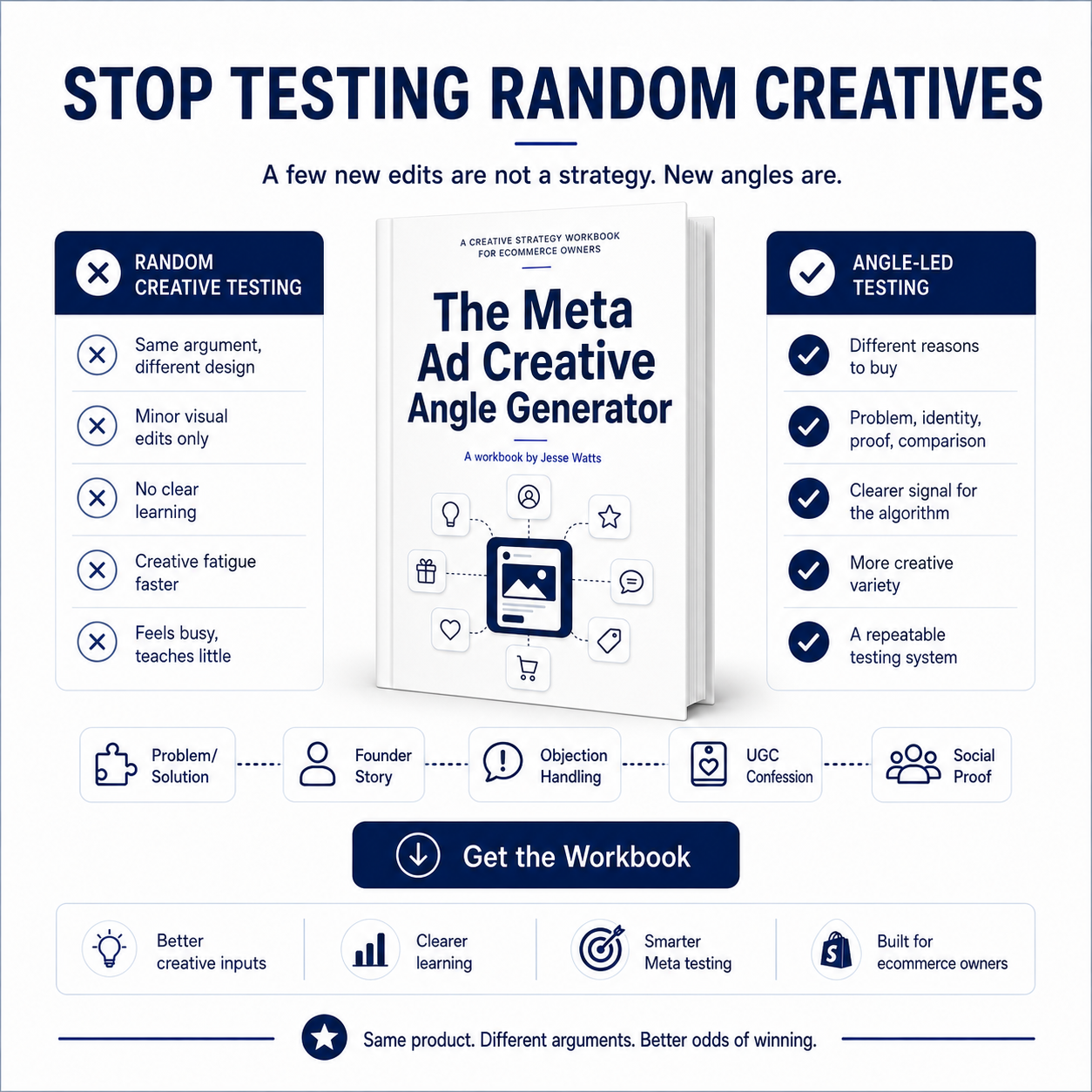
But often, they are only testing surface-level variations.
A new image.
A new font.
A different song.
A slightly different video edit.
A different caption on the same basic message.
That is not true angle testing.
If every ad is making the same argument, then you are not really giving the algorithm new ways to find buyers.
A creative angle is the reason-to-buy behind the ad.
One angle might lead with the customer’s problem.
Another might lead with social proof.
Another might lead with identity.
Another might lead with objection handling.
Another might lead with a comparison.
Another might lead with the founder story.
Same product. Different doors into the sale.
Built for How Meta Works Now
Meta’s algorithm does not need you to manually over-engineer targeting the way advertisers used to.
It needs strong creative inputs.
Broad campaigns work best when they are fed a wide range of angles, formats, hooks, and messages. The algorithm then learns which message resonates with which slice of the market.
This workbook helps you give Meta better creative options.
Not random options.
Strategic ones.
Start With the Product. Find the Emotion.
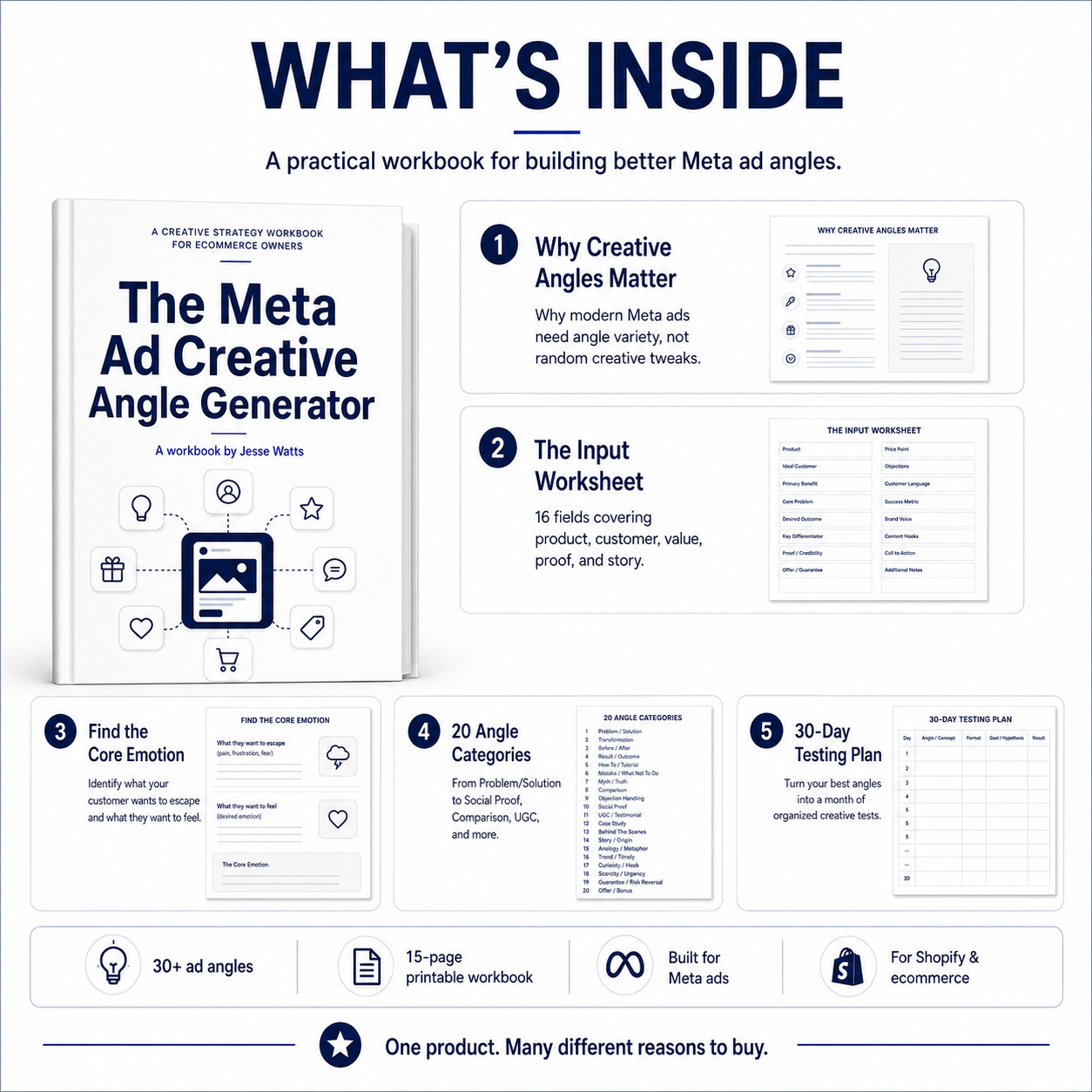
The workbook begins with a product input worksheet so you can collect the raw material behind your ad angles:
What the product is
Who it is for
What problem it solves
What desire it speaks to
What objection stops people buying
What proof you have
What makes it different
What moment or season makes it relevant
What competitors or alternatives customers compare it to
Then you identify the core emotion underneath the purchase.
Because people do not just buy products.
They buy relief. Confidence. Ease. Pride. Belonging. Control. Excitement. Safety. Status. Calm.
Once you know the emotional direction, the angles become much easier to create.
20 Creative Angle Categories
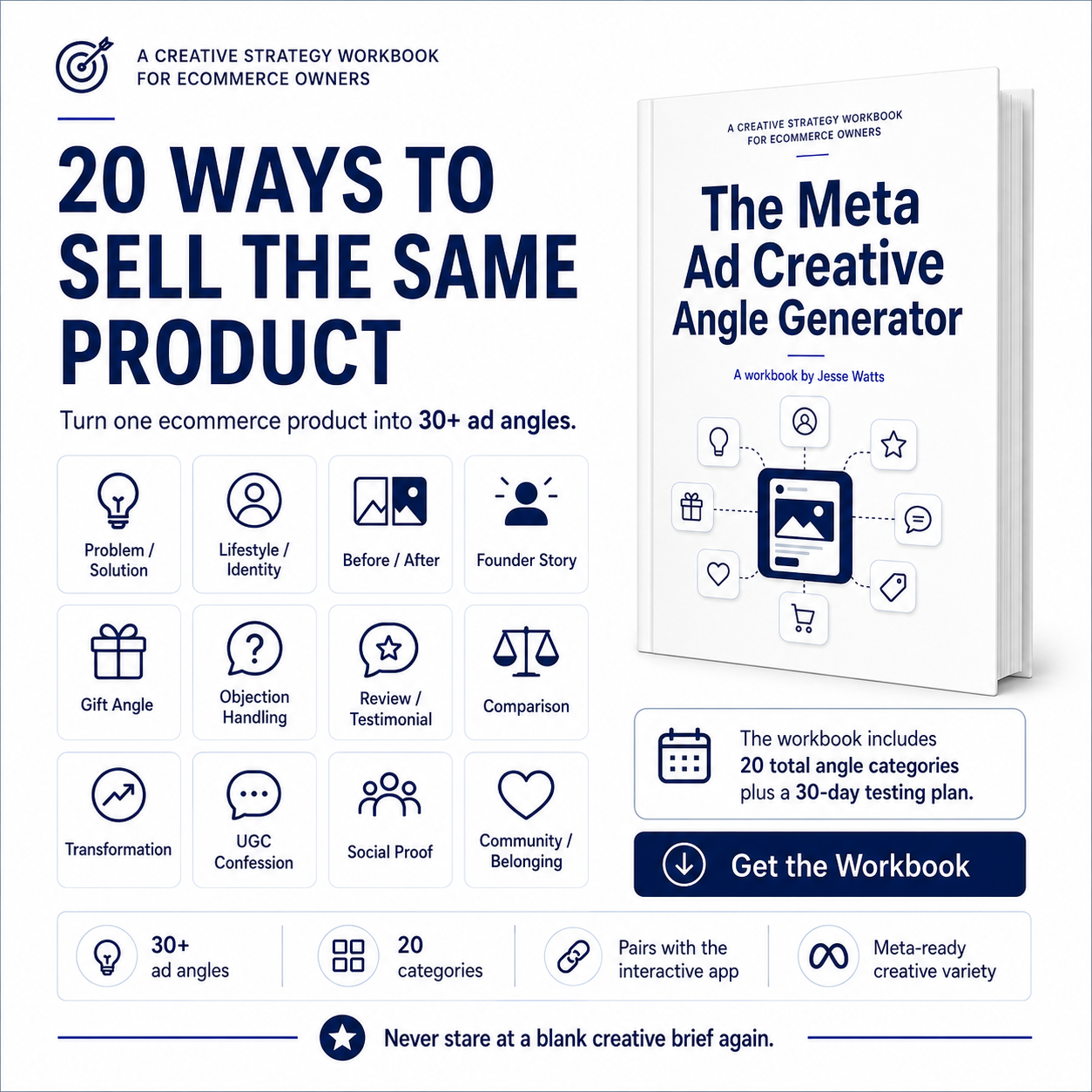
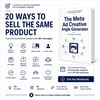
The heart of the workbook is the 20-angle framework.
Each category gives you a different way to frame the same product.
You’ll create angles around:
Problems
Identity
Transformation
Founder story
Giftability
Seasonality
Bundles
Objections
Product demos
Testimonials
Comparisons
Scarcity
Education
Myths
UGC-style confessions
Premium quality
Convenience
Social proof
Community
Belonging
This is what prevents every ad from sounding the same.
From Angles to a Testing Plan
Generating ideas is useful.
Testing them properly is where the value comes from.
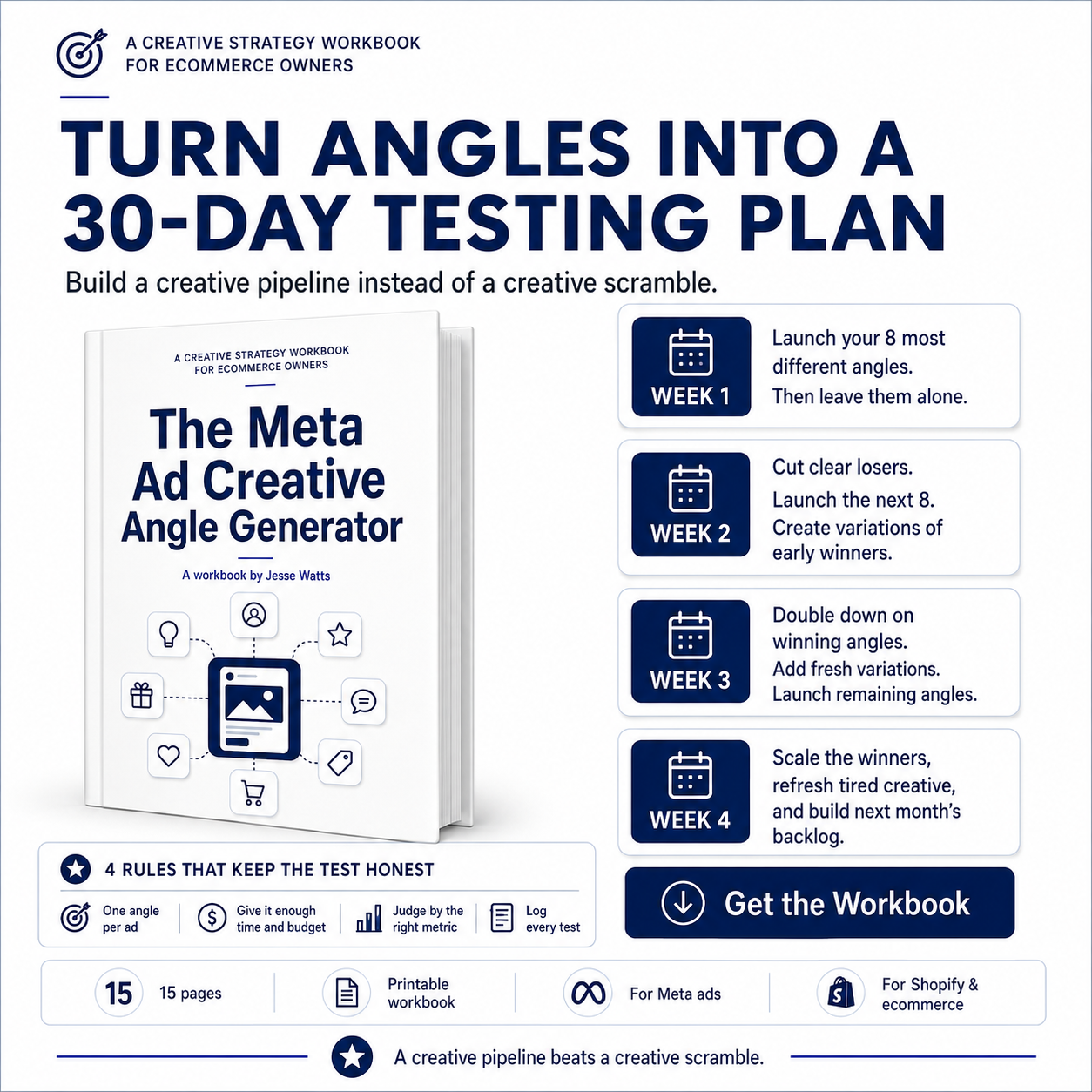
The workbook closes with a 30-day testing plan that helps you launch angles in batches, cut clear losers, make variations of winners, refresh tired creative, and keep a backlog ready for the next month.
The point is not to launch 30 ads at once.
The point is to build a creative pipeline.
Use This Workbook When
You are running Meta ads but running out of creative ideas
Your ads all feel too similar
You keep testing visuals but not actual messaging angles
You need more hooks for one product
You want to brief creators, designers, or AI tools more clearly
You want to feed Meta’s algorithm more creative variety
You need a repeatable system for monthly creative planning
You want to avoid staring at Ads Manager wondering what to test next
By the End, You’ll Have
A completed product input worksheet
A clear customer emotion map
20 core creative angles
Ideas you can multiply into 30+ ad concepts
A better understanding of which messages to test
A 30-day creative testing plan
A stronger monthly creative pipeline
A repeatable method you can use for future products
Who This Is For
This workbook is for ecommerce founders, Shopify store owners, marketers, media buyers, and small teams who need a more systematic way to generate Meta ad creative.
It is especially useful for brands that already have a product worth advertising but need more variety in how they present it.
Who This Is Not For
This is not a generic swipe file.
It is not a list of random hooks.
It is not a magic ad formula.
And it will not replace product-market fit, strong offers, or good creative execution.
It is for people who want a repeatable system for generating better creative directions before they start designing or filming ads.
Build the Creative Pipeline Meta Actually Needs
Meta does not need one perfect ad.
It needs a steady stream of strong, varied creative concepts.
The Meta Ad Creative Angle Generator helps you turn one product into 30+ ad angles, organize them into a testing plan, and build the kind of creative variety modern ecommerce advertising depends on.
Download the workbook and stop guessing what to test next.