
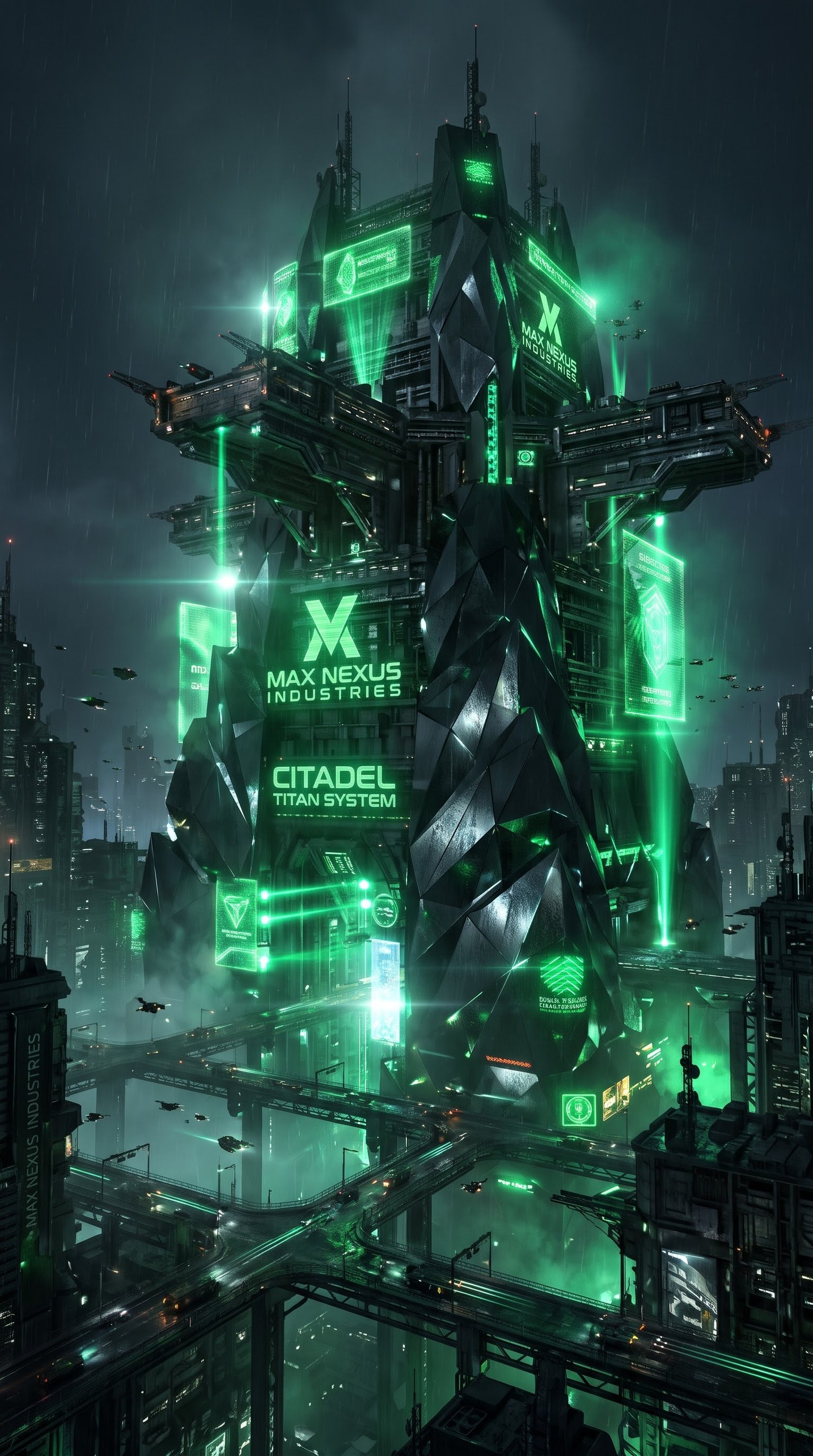
🖤 TECHMAX RESURRECTIONS 🖤 BLACK DAS BLACKS 🖤 MAX NEXUS — THE 100-AGENT UNIVERSAL INTELLIGENCE & INDUSTRIAL OPERATIONS SYSTEM
🖤 TECHMAX RESURRECTIONS 🖤 BLACK DAS BLACKS 🖤
MAX NEXUS — THE 100-AGENT UNIVERSAL INTELLIGENCE & INDUSTRIAL OPERATIONS SYSTEM
100 SPECIALIZED AGENTS. 10 INTELLIGENCE DOMAINS. ONE UNIFIED OPERATIONAL ARCHITECTURE.
What if strategy, intelligence, multimedia, customer experience, financial controls, industrial production, logistics, and technical support could be organized within one unified agent architecture?
Introducing MAX NEXUS — THE 100-AGENT UNIVERSAL INTELLIGENCE & INDUSTRIAL OPERATIONS SYSTEM, a comprehensive operational blueprint designed to connect specialized AI agent roles across multiple business sectors and industrial environments.
This architecture brings together 100 specialized agents covering strategic decision-making, market intelligence, international expansion, multimedia production, knowledge management, customer relationships, financial operations, compliance, industrial automation, logistics, quality control, and intelligent technical support.
Rather than treating every operation as an isolated function, MAX NEXUS provides a structured framework for connecting responsibilities, information flows, and operational workflows.
🧠 DOMAIN 1 — STRATEGY, PLANNING & INTELLIGENCE
AGENTS 01–15 | STRATEGIC CONTROL
The strategic domain organizes decision-making, operational planning, forecasting, competitive intelligence, and expansion opportunities.
- Strategy Agent — Develops strategic directions and business objectives.
- Planning Agent — Structures plans, milestones, and operational roadmaps.
- Execution Agent — Organizes tasks and execution workflows.
- Prioritization Agent — Ranks activities according to importance and impact.
- Decision Agent — Evaluates alternatives and supports informed decisions.
- Scenario Agent — Develops alternative scenarios for strategic planning.
- Simulation Agent — Structures simulations to evaluate possible outcomes.
- Forecasting Agent — Analyzes available information to develop projections.
- Trend Agent — Identifies emerging trends and market developments.
- Market Signals Agent — Monitors indicators that may reveal market changes.
- Competitive Intelligence Agent — Organizes information about competitors.
- Benchmarking Agent — Compares processes, products, and performance indicators.
- Competition Mapping Agent — Maps competitive environments and positioning.
- Opportunity Agent — Identifies potential business and market opportunities.
- Expansion Agent — Develops strategies for business and operational growth.
🌍 DOMAIN 2 — GLOBALIZATION, LANGUAGES & MULTIMEDIA
AGENTS 16–28 | GLOBAL CONTENT INTELLIGENCE
This domain supports international adaptation, multilingual communication, and multimedia production workflows.
- Internationalization Agent — Structures products and operations for international markets.
- Localization Agent — Adapts content to local cultures and market contexts.
- Translation Agent — Translates written materials across languages.
- Language Agent — Supports multilingual communication workflows.
- Voice Agent — Structures voice-related content and interaction workflows.
- Audio Agent — Organizes audio production and processing tasks.
- Video Agent — Structures video creation and production workflows.
- Image Agent — Organizes image generation and visual asset workflows.
- Animation Agent — Structures animation concepts and production sequences.
- Editing Agent — Organizes multimedia editing processes.
- Subtitling Agent — Structures subtitle creation and synchronization.
- Transcription Agent — Converts audio and video speech into text.
- Summarization Agent — Condenses extensive content into concise summaries.
📚 DOMAIN 3 — KNOWLEDGE, DATA & PERSONALIZATION
AGENTS 29–40 | THE KNOWLEDGE ENGINE
This domain structures information so that it can be organized, retrieved, connected, and adapted to different users and operational contexts.
- Curation Agent — Selects and organizes relevant information.
- Cataloging Agent — Creates structured catalogs of digital and informational assets.
- Taxonomy Agent — Develops classification systems and hierarchical categories.
- Ontology Agent — Maps relationships between concepts, entities, and knowledge.
- Indexing Agent — Organizes information for efficient retrieval.
- Search Agent — Structures information discovery and retrieval workflows.
- Recommendation Agent — Suggests relevant resources, products, or actions.
- Personalization Agent — Adapts experiences and content to user preferences.
- Segmentation Agent — Groups audiences according to relevant characteristics.
- Profiling Agent — Organizes user and customer profiles.
- Journey Agent — Maps customer journeys and interaction stages.
- Onboarding Agent — Structures customer introduction and activation experiences.
🤝 DOMAIN 4 — CUSTOMER EXPERIENCE & RETENTION
AGENTS 41–50 | RELATIONSHIP INTELLIGENCE
This domain focuses on engagement, communities, reputation, satisfaction, and customer retention.
- Engagement Agent — Develops strategies to encourage meaningful interaction.
- Gamification Agent — Structures challenges, rewards, and progression systems.
- Community Agent — Organizes customer communities and participation.
- Moderation Agent — Structures community moderation and content review.
- Reputation Agent — Monitors and organizes reputation-related information.
- Feedback Agent — Collects and categorizes customer feedback.
- NPS Agent — Organizes Net Promoter Score measurement and analysis.
- Satisfaction Research Agent — Structures customer satisfaction surveys.
- Churn Agent — Analyzes customer cancellation and retention indicators.
- Upsell Agent — Identifies opportunities for higher-value offers.
💳 DOMAIN 5 — REVENUE, PAYMENTS & FINANCIAL COMPLIANCE
AGENTS 51–60 | FINANCIAL OPERATIONS
This domain organizes commercial revenue processes, recurring payments, financial risk controls, and compliance workflows.
- Cross-Sell Agent — Identifies complementary product and service opportunities.
- Subscription Agent — Structures subscription-based business models.
- Plans Agent — Organizes pricing tiers, plans, and service packages.
- Recurring Billing Agent — Structures recurring billing workflows.
- Payments Agent — Organizes payment processing workflows.
- Anti-Fraud Agent — Supports fraud detection and prevention workflows.
- KYC Agent — Structures Know Your Customer verification processes.
- AML Agent — Supports Anti-Money Laundering monitoring and compliance workflows.
- Due Diligence Agent — Organizes research and assessment of counterparties and business relationships.
- Internal Audit Agent — Structures internal audit procedures and evidence records.
🛡️ DOMAIN 6 — GOVERNANCE, RISK & SUSTAINABILITY
AGENTS 61–68 | CONTROL & RESPONSIBILITY
This domain focuses on internal governance, risk management, environmental considerations, and responsible production practices.
- Controls Agent — Structures internal controls and operational procedures.
- Operational Risk Agent — Identifies and organizes operational risk assessments.
- Financial Risk Agent — Structures financial risk analysis and monitoring.
- Climate Risk Agent — Evaluates climate-related risk factors and exposure.
- ESG Agent — Organizes environmental, social, and governance indicators.
- Carbon Agent — Structures carbon measurement and reporting workflows.
- Recycling Agent — Organizes recycling and material recovery processes.
- Supply Chain Agent — Maps and coordinates supply chain information.
🏭 DOMAIN 7 — INDUSTRIAL PRODUCTION & SMART TECHNOLOGY
AGENTS 69–75 | INDUSTRIAL INTELLIGENCE
This domain connects manufacturing processes with maintenance, sensor data, connected devices, and intelligent equipment workflows.
- Production Agent — Structures production planning and operational workflows.
- Maintenance Agent — Organizes equipment maintenance activities.
- Predictive Maintenance Agent — Analyzes equipment indicators to support predictive maintenance planning.
- Sensors Agent — Organizes sensor data and monitoring workflows.
- IoT Agent — Structures Internet of Things connectivity and data workflows.
- Robotics Agent — Organizes robotic process and automation workflows.
- Drone Agent — Structures drone-related operational applications.
🚚 DOMAIN 8 — LOGISTICS, FLEETS & WAREHOUSE OPERATIONS
AGENTS 76–83 | MOVEMENT & DISTRIBUTION INTELLIGENCE
This domain organizes logistics, transportation, inventory movement, delivery, and warehouse processes.
- Reverse Logistics Agent — Structures returns, recovery, and reverse distribution.
- Route Agent — Organizes route planning and optimization.
- Fleet Agent — Structures fleet management and operational monitoring.
- Delivery Agent — Organizes delivery workflows and service coordination.
- Tracking Agent — Structures shipment and asset tracking.
- Warehouse Agent — Organizes warehouse operations and inventory workflows.
- Picking Agent — Structures order picking and item selection processes.
- Packaging Agent — Organizes packaging specifications and preparation workflows.
🔍 DOMAIN 9 — INDUSTRIAL QUALITY & COMPUTER VISION
AGENTS 84–93 | PERCEPTION, DETECTION & INCIDENT RESPONSE
This domain combines quality control, inspection, visual analysis, anomaly identification, and incident management.
- Industrial Quality Agent — Structures quality assurance and control processes.
- Inspection Agent — Organizes inspection procedures and findings.
- Computer Vision Agent — Structures visual data analysis workflows.
- Recognition Agent — Supports image and pattern recognition tasks.
- Classification Agent — Categorizes detected objects, events, or information.
- Detection Agent — Identifies defined objects, events, and conditions.
- Anomaly Detection Agent — Identifies deviations from established patterns.
- Alert Agent — Structures notifications and operational alerts.
- Escalation Agent — Defines escalation paths for critical situations.
- Incident Response Agent — Organizes incident assessment, response, and documentation.
🖥️ DOMAIN 10 — TECHNICAL SUPPORT & CONVERSATIONAL INTELLIGENCE
AGENTS 94–100 | THE SUPPORT INTERFACE
The final domain organizes technical assistance, knowledge resources, automated conversations, and human-centered operational support.
- Technical Support Agent — Structures technical troubleshooting and assistance.
- Help Desk Agent — Organizes support tickets and service workflows.
- Knowledge Base Agent — Maintains structured technical and operational knowledge.
- FAQ Agent — Develops frequently asked questions and standardized answers.
- Chatbot Agent — Structures automated text-based customer interactions.
- Voicebot Agent — Structures automated voice-based interactions.
- Copilot Agent — Provides contextual assistance to human operators and professionals.
⚙️ THE UNIVERSAL OPERATIONAL CYCLE
STRATEGIZE → PLAN → EXECUTE → ANALYZE → CONNECT → AUTOMATE → MONITOR → OPTIMIZE → EXPAND.
The 10 domains create a framework that can be adapted to different environments:
- Business Intelligence: Strategy, planning, forecasting, and competitive analysis.
- Global Operations: Internationalization, localization, and multilingual communication.
- Digital Knowledge: Information management, search, classification, and personalization.
- Customer Intelligence: Engagement, retention, satisfaction, and customer journeys.
- Financial Operations: Payments, subscriptions, revenue processes, and compliance support.
- Governance & Sustainability: Internal controls, risk management, ESG, and carbon monitoring.
- Smart Industry: Production, robotics, IoT, sensors, and maintenance.
- Logistics: Fleets, warehouses, deliveries, routes, and tracking.
- Industrial Quality: Inspection, computer vision, classification, and anomaly detection.
- Intelligent Support: Help desks, knowledge bases, chatbots, voicebots, and copilots.
WHO IS THIS SYSTEM DESIGNED FOR?
- Entrepreneurs and business operators.
- Digital technology companies.
- Industrial and manufacturing organizations.
- Logistics and supply chain operations.
- AI developers and automation specialists.
- Marketing and customer experience teams.
- Financial operations and compliance teams.
- Companies exploring intelligent operational architectures.
WHAT YOU RECEIVE
A structured 100-agent architecture covering 10 operational domains, with defined agent names, core responsibilities, and potential applications across business and industrial environments.
The framework can be used to design prompts, workflows, specialized AI assistants, orchestration systems, and integration projects.
IMPLEMENTATION FRAMEWORK
The agents represent specialized functional roles, not 100 pre-installed autonomous systems. Real-world execution depends on the selected AI models, data sources, APIs, software, sensors, hardware, permissions, integrations, and validation procedures. Regulated functions such as KYC, AML, financial controls, and industrial safety require appropriate human oversight and compliance processes.
The architecture provides the map for connecting these capabilities into a coordinated operational environment.
🖤 TECHMAX RESURRECTIONS 🖤 BLACK DAS BLACKS 🖤
INTELLIGENCE WITHOUT BORDERS. OPERATIONS WITHOUT SILOS.
100 AGENTS. 10 DOMAINS. ONE UNIVERSAL ARCHITECTURE.
MAX NEXUS — DESIGN. ACTIVATE. EXECUTE. MEASURE. EVOLVE.
CONNECT INTELLIGENCE. TRANSFORM OPERATIONS. EXPAND POSSIBILITIES.