


DPAS Covered-Material Sales Compliance & Evidence System
DPAS Covered-Material Sales Compliance & Evidence System
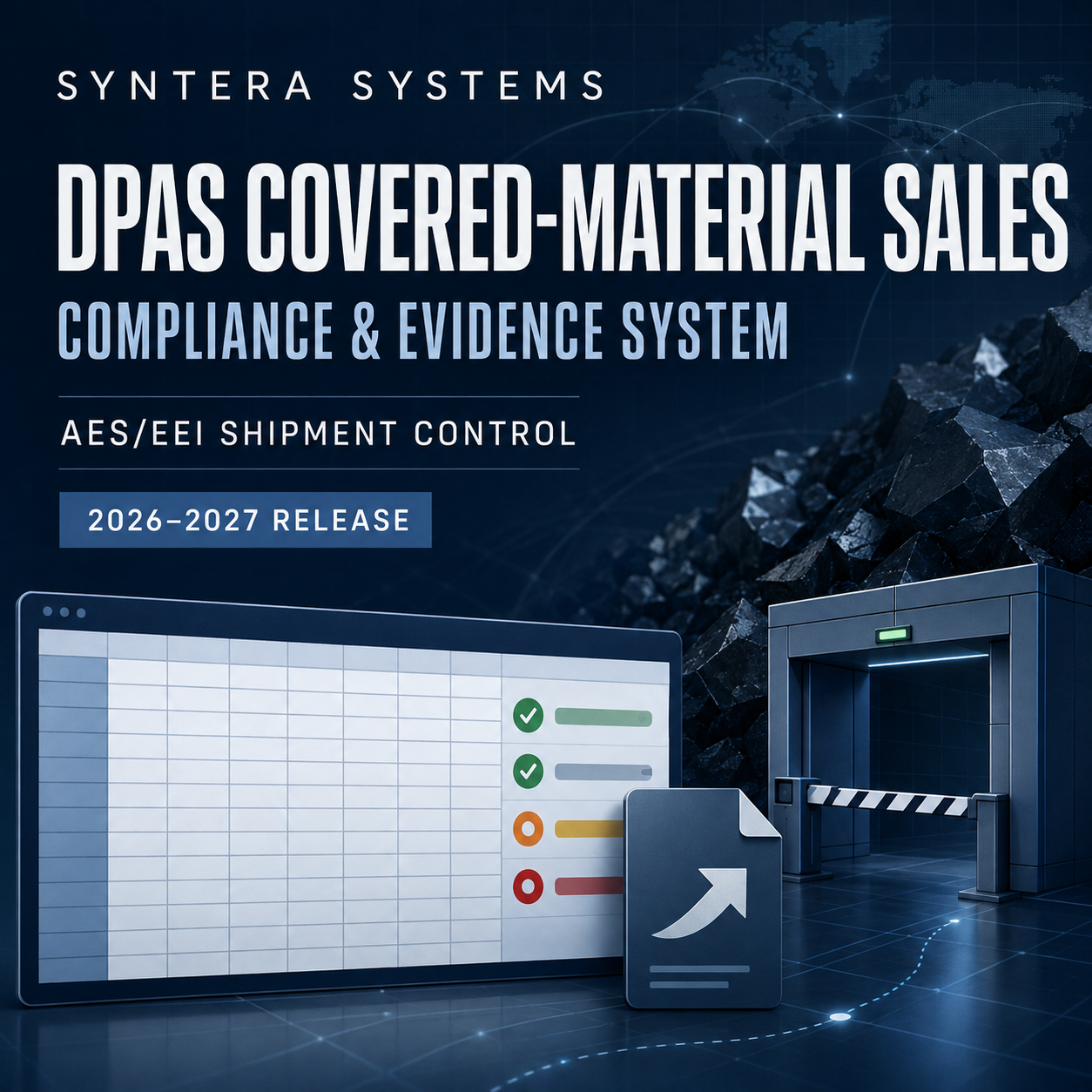
An Excel-based compliance and shipment-release control system for businesses affected by the BIS Directive Allocation Order and the August 26, 2026 Census AES/EEI filing procedures.
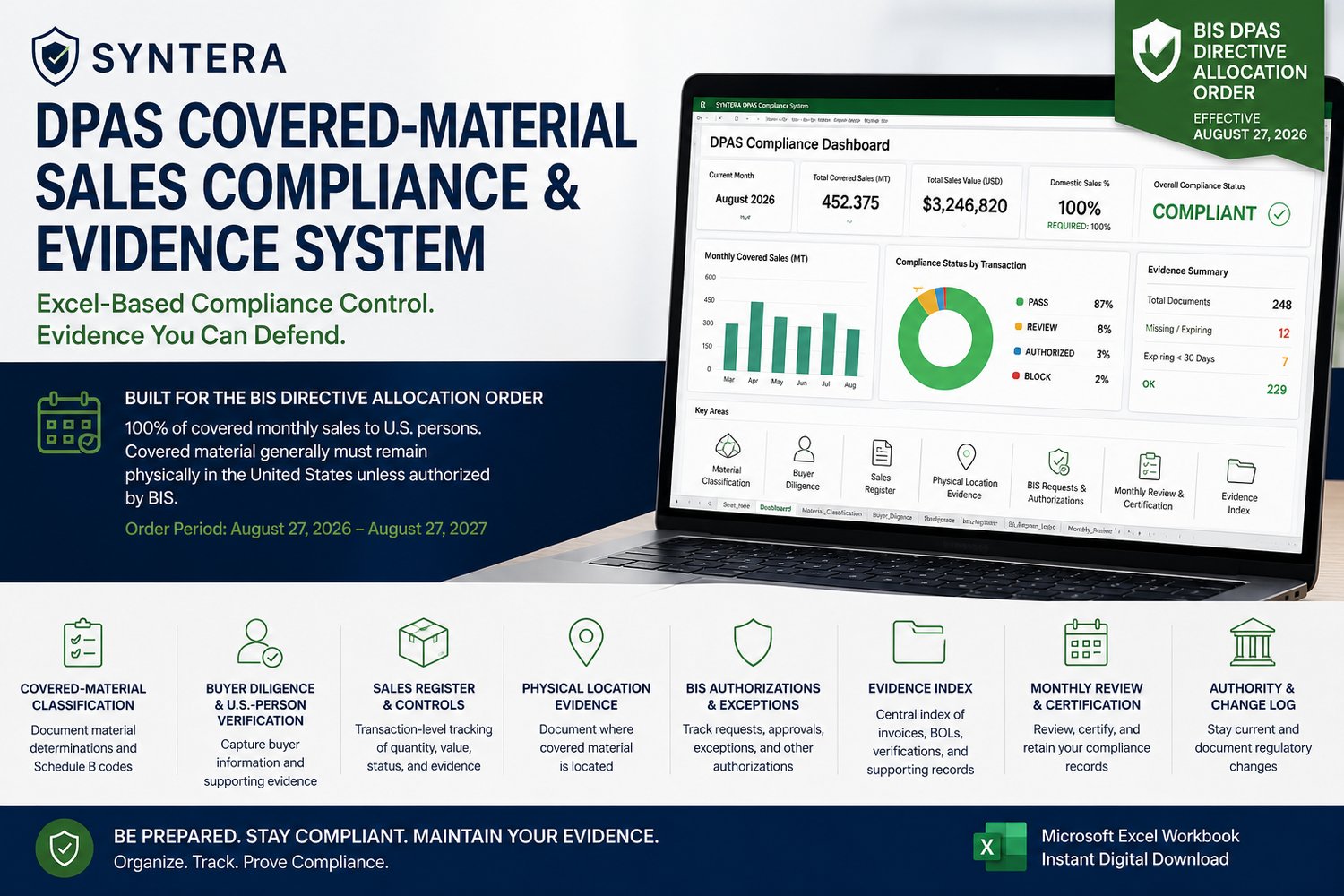
The BIS Directive Allocation Order requires U.S. persons selling specified black mass and tungsten waste and scrap to allocate covered monthly sales to U.S. persons and generally keep covered material physically within the United States unless authorized otherwise by BIS.
Control the covered sale, document the authorization, and make sure the export filing is handled correctly before the shipment reaches CBP.
WHAT THE SYSTEM HELPS YOU CONTROL
• Covered-material classification and applicable Schedule B codes
• Black-mass coverage determinations
• Buyer identity, U.S.-person status, and due-diligence evidence
• Transaction-level quantity, value, location, authorization, and supporting records
• Export-planned and EEI-required determinations
• DPAS- and EAR-license requirements and license numbers
• AES filing status, license type, ITN, filing date, and release/hold status
• DPASNO placement and Schedule B-versus-HTS controls
• Monthly domestic-sales compliance, exceptions, corrective action, and sign-off
FOUR PRACTICAL AES/EEI FILING SCENARIOS
1. DPAS license required; no EAR license — C30, with a DPAS license number beginning with S.
2. No DPAS or EAR license — C33 for an applicable 8549 non-black-mass shipment, with DPASNO first in the commodity description.
3. Both DPAS and EAR licenses required — C30 on separate commodity lines, EAR first and DPAS subsequent, with corresponding values.
4. EAR license required; no DPAS license — C30 with the EAR license entered normally and DPASNO first in the commodity description.
The shipment-control worksheet also checks that Schedule B—not HTS—is used for the covered shipment workflow and that accepted EEI, the AES ITN, filing date, and release evidence are retained.
BUILT-IN COMPLIANCE CONTROLS
PASS — Required sale and shipment conditions have been documented.
REVIEW — Information, applicability, or supporting evidence requires attention before release.
AUTHORIZED — The underlying covered-material transaction relies on documented BIS authorization or an exception.
BLOCK — Entered information indicates that the transaction or shipment should not proceed without correction and compliance review.
INCLUDED WORKSHEETS
• Start Here — Requirements, Census scenarios, and operating instructions
• Dashboard — Sales, evidence, monthly-compliance, and AES exception indicators
• Material Classification — Covered-material determinations
• Buyer Diligence — U.S.-person verification and supporting evidence
• Sales Register — Transaction-level sales, licensing, AES, and shipment-release fields
• BIS Requests — Adjustments, exceptions, temporary licenses, appeals, and inability-to-comply matters
• Evidence Index — Invoices, bills of lading, location evidence, buyer verification, AES records, and BIS correspondence
• Monthly Review — Month-end compliance review and sign-off
• Authority & Change Log — Regulatory authority, Census procedures, enforcement notes, and future changes
• AES/EEI Shipment Control — Four-scenario release gate with PASS/REVIEW/BLOCK controls
DESIGNED FOR OPERATIONAL USE
Built for battery recycling and recovery, black-mass processing and sales, tungsten recycling and scrap, critical-mineral recovery, materials brokerage and trading, export compliance, logistics, supply-chain compliance, and internal audit teams.
All shipments under the four covered Schedule B codes may receive additional CBP screening. Nonconforming AES filings may be held or delayed, and improper AES or DPASNO declarations may receive heightened scrutiny.
Current order period: August 27, 2026–August 27, 2027.
Format: Macro-free Microsoft Excel .xlsx workbook
Delivery: Instant digital download
Release: Updated September 7, 2026
This product is an operational compliance aid and does not constitute legal advice. Users remain responsible for determining regulatory applicability, material classification, U.S.-person status, export-control requirements, filing requirements, and compliance with current law.