
Trauma Psychoeducation Bundle
Trauma Psychoeducation Bundle
Understanding Healing Reclaiming
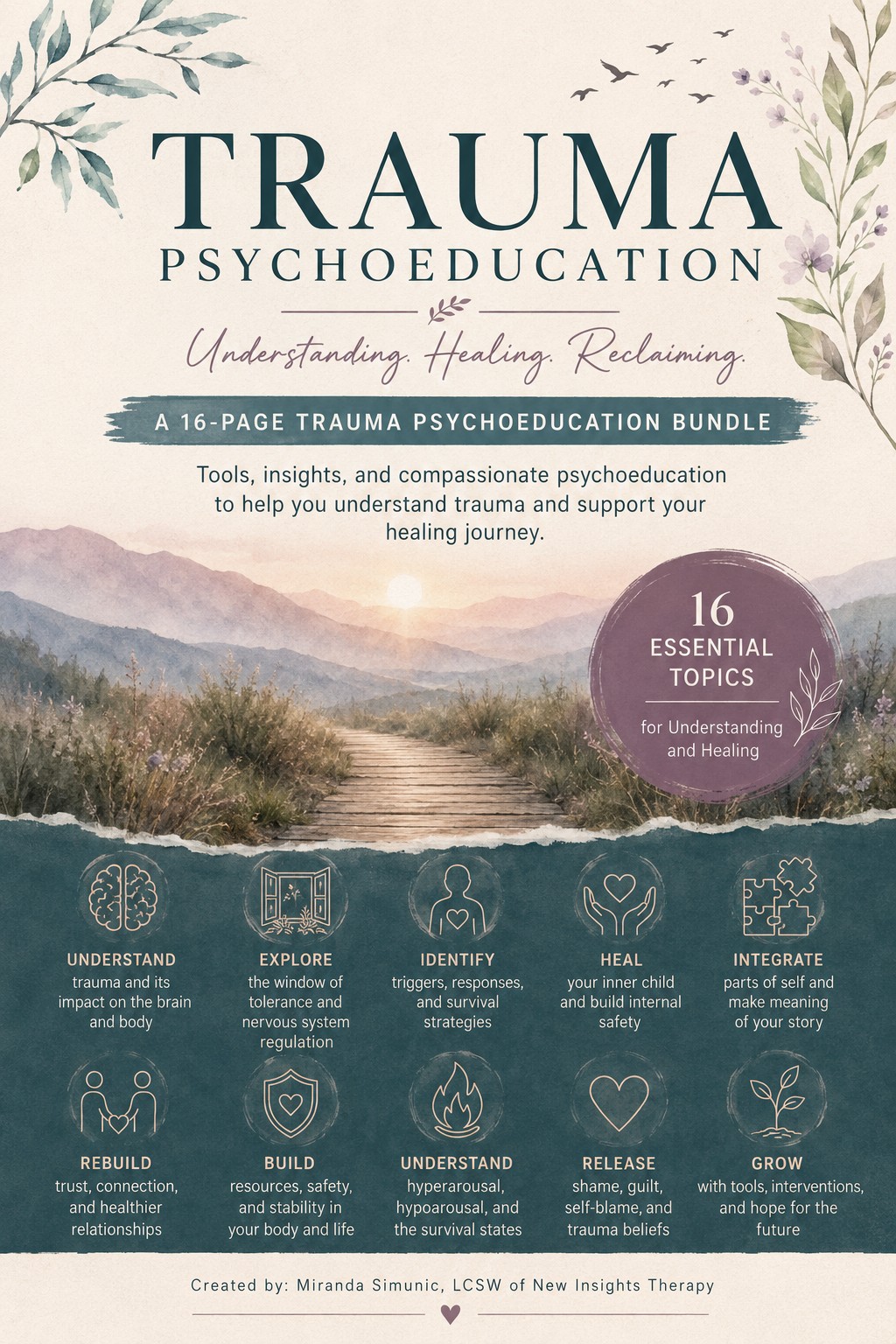
Trauma can affect far more than our memories. It can influence the brain, nervous system, emotions, relationships, beliefs, sense of safety, and the way we respond to everyday situations. This Trauma Psychoeducation Bundle was created to make complex trauma concepts easier to understand, explain, and apply in therapy or personal healing.
What's Included?
This bundle includes easy-to-understand psychoeducation on:
- 10 Things to Know About Trauma
- What Trauma Looks Like in the Brain
- The Window of Tolerance
- Trauma Triggers
- Fight, Flight, Freeze & Fawn
- Hyperarousal vs. Hypoarousal
- Inner Child Work for Trauma
- Interventions for Trauma
- Making Meaning of Past Trauma
- Parts Work & Integration
- Relationships & Trust After Trauma
- Resource Building
- Shame vs. Guilt vs. Self-Blame
- Shifting Trauma Beliefs
- The Safe Container
- Tools for Building Safety & Stability in Your Body
Who Is This Bundle For?
This resource is designed for:
- Therapists and mental health professionals
- Counselors and social workers
- Coaches working within their scope of practice
- Psychoeducation groups
- Clients working through trauma
- Individuals who want to better understand their own trauma responses
Why You'll Find It Useful?
Trauma psychoeducation can help clients move from:
“What's wrong with me?”
to:
“Oh. This makes sense.”
These resources can help clients recognize that many reactions that feel confusing, overwhelming, or frustrating may be connected to learned survival responses.
The bundle provides language and visual explanations for concepts that can otherwise be difficult to explain during a therapy session.
How to Use It In Session
Use these resources to:
- Introduce trauma concepts
- Support clinical discussions
- Provide take-home psychoeducation
- Help clients identify their trauma responses
- Explain nervous system regulation
- Explore shame and self-blame
- Begin conversations about inner child and parts work
- Discuss safety and stabilization
- Support healthier beliefs about past experiences
- Help clients understand relationship patterns after trauma
A Resource You Can Come Back To
Trauma healing isn't about forcing yourself to "get over it."
It's about developing understanding, safety, awareness, regulation, and new ways of relating to yourself and your
experiences.
This bundle gives you practical psychoeducation you can return to throughout the therapeutic process.
Digital download. Print it, use it in sessions, or keep it as a psychoeducation resource in your clinical toolkit.
*Important Disclaimer*
These therapeutic resources are intended for educational and supportive purposes only. They are designed to provide general information, reflection prompts, psychoeducation, and therapeutic tools that may be used by mental health professionals or adapted for personal growth.
These materials are not a substitute for professional mental health treatment, diagnosis, medical care, crisis intervention, or individualized clinical judgment. Every client is different, and therapeutic interventions should be selected and adapted based on the individual's needs, circumstances, presenting concerns, developmental level, culture, risk factors, and treatment goals.
If you are a mental health professional, use your professional judgment when determining whether and how a resource is appropriate for a particular client. These resources do not replace appropriate assessment, supervision, consultation, documentation, ethical standards, or applicable laws and regulations.
If a person is experiencing a mental health crisis, is at risk of harming themselves or someone else, or requires immediate medical attention, they should seek appropriate emergency or crisis services rather than relying on these materials.
The creator does not guarantee any particular therapeutic outcome from the use of these resources and assumes no responsibility for how the materials are interpreted, modified, or applied.
For Professional Use:
These resources are educational tools and are not intended to replace the training, education, licensure, ethical responsibilities, or clinical expertise of a qualified mental health professional.
Copyright & Use:
These materials are provided for personal and/or professional use according to the terms of purchase. They may not be resold, redistributed, reproduced for commercial resale, uploaded to sharing platforms, or presented as the original work of another person without written permission.