

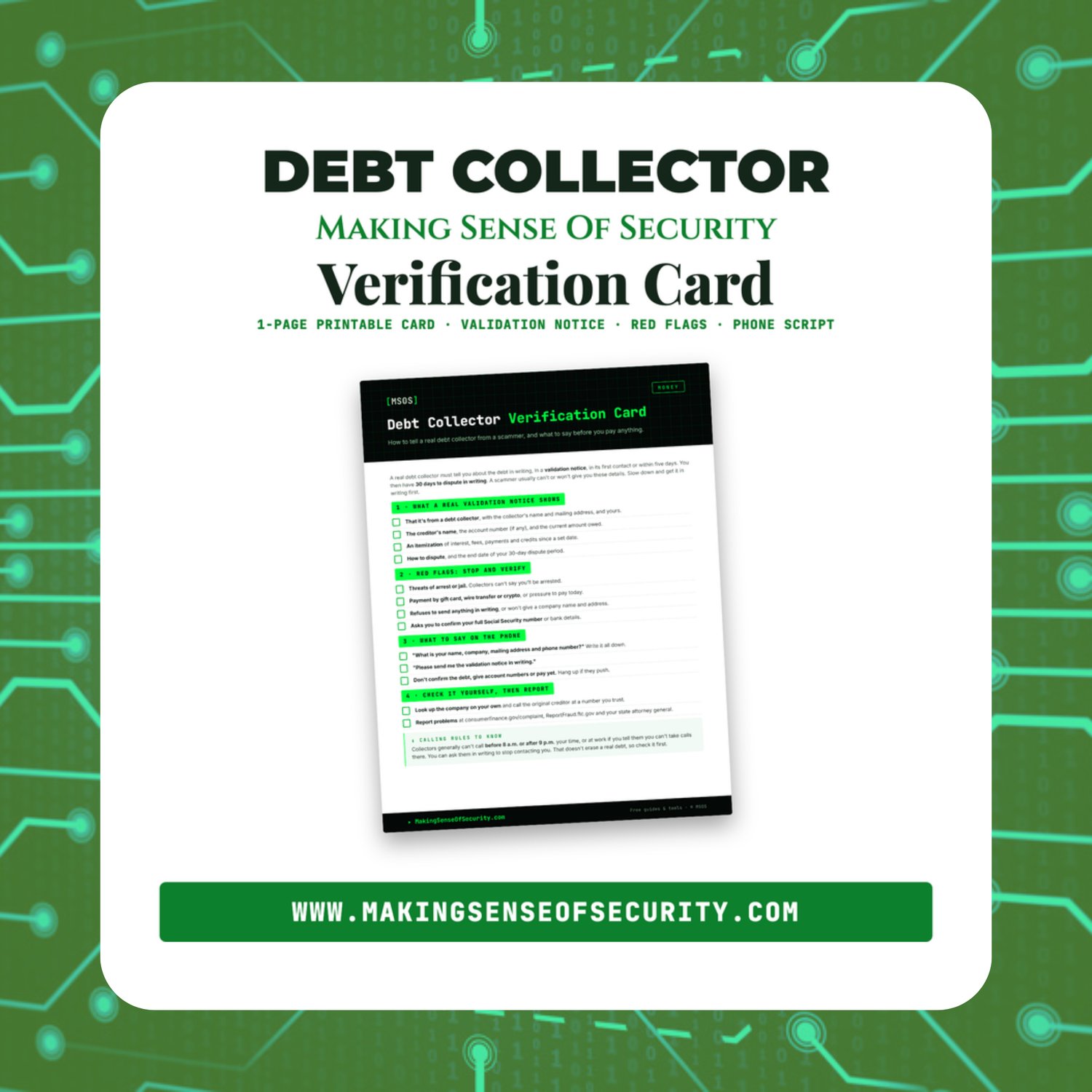
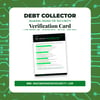




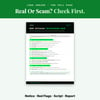


Debt Collector Verification Card
Is That Debt Collector Even Real?
- A caller says you owe money on a debt you don't recognize
- They want payment today, by gift card, wire or crypto
- They threaten arrest if you don't pay right now
- They won't send anything in writing
- You're not sure what to say, so you say too much
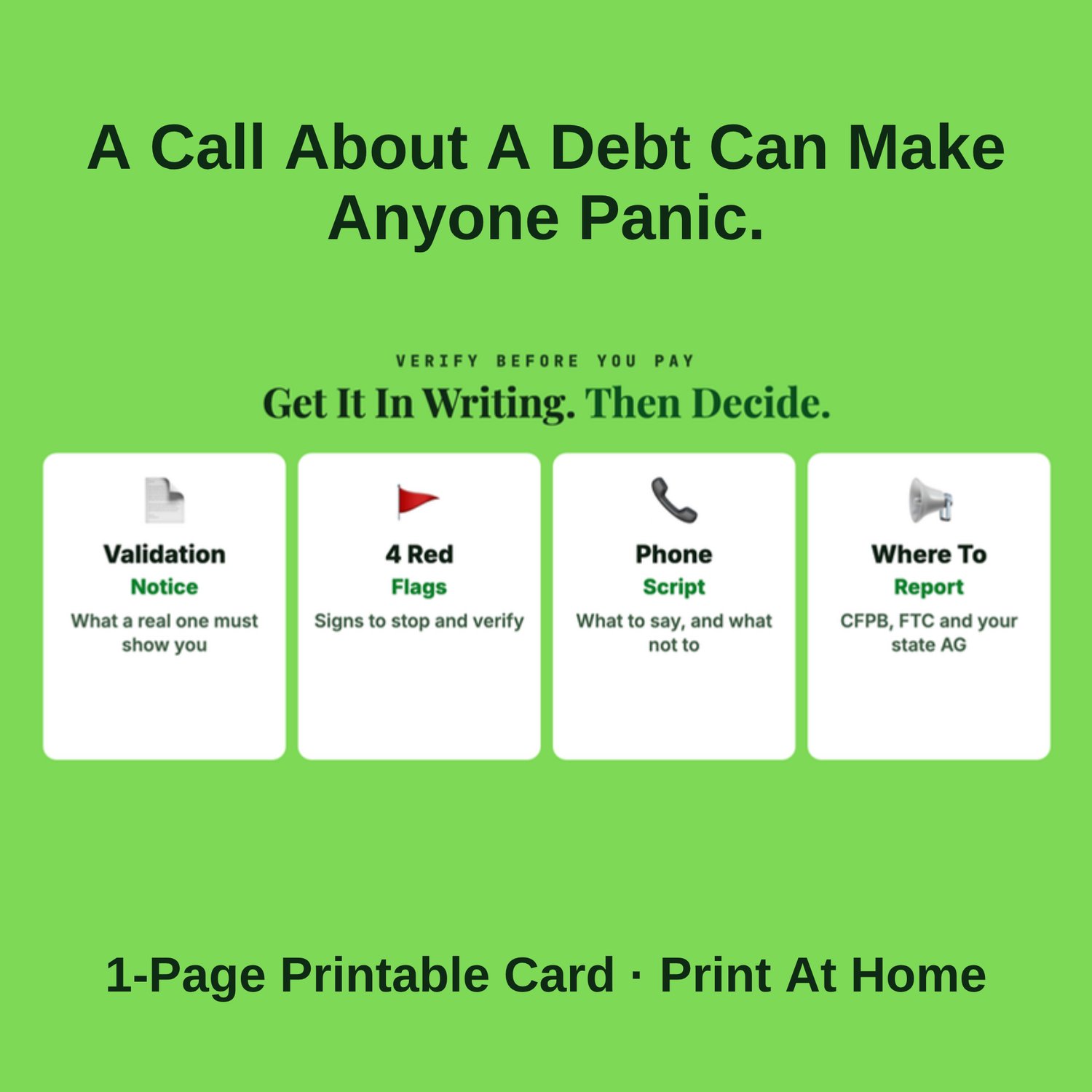
A call about a debt can make anyone panic. This one-page card shows what a real collector has to tell you, the red flags of a scam, a short phone script and where to report problems.
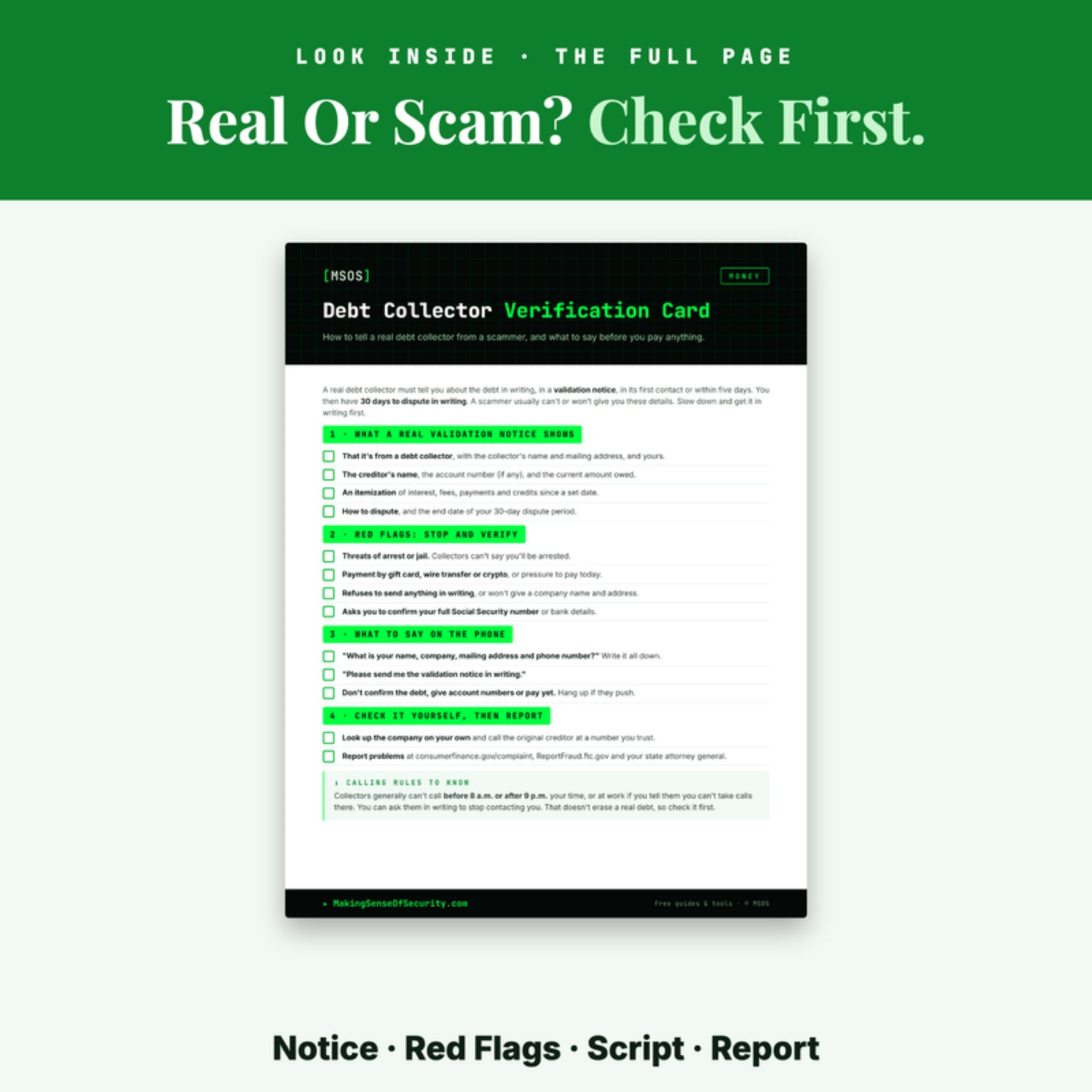
A Real Collector Must Send A Validation Notice. It comes in the collector's first contact or within five days, and it shows the creditor, the amount and the end date of your 30-day dispute period. If a caller can't or won't give you those details, slow down and verify before you pay.
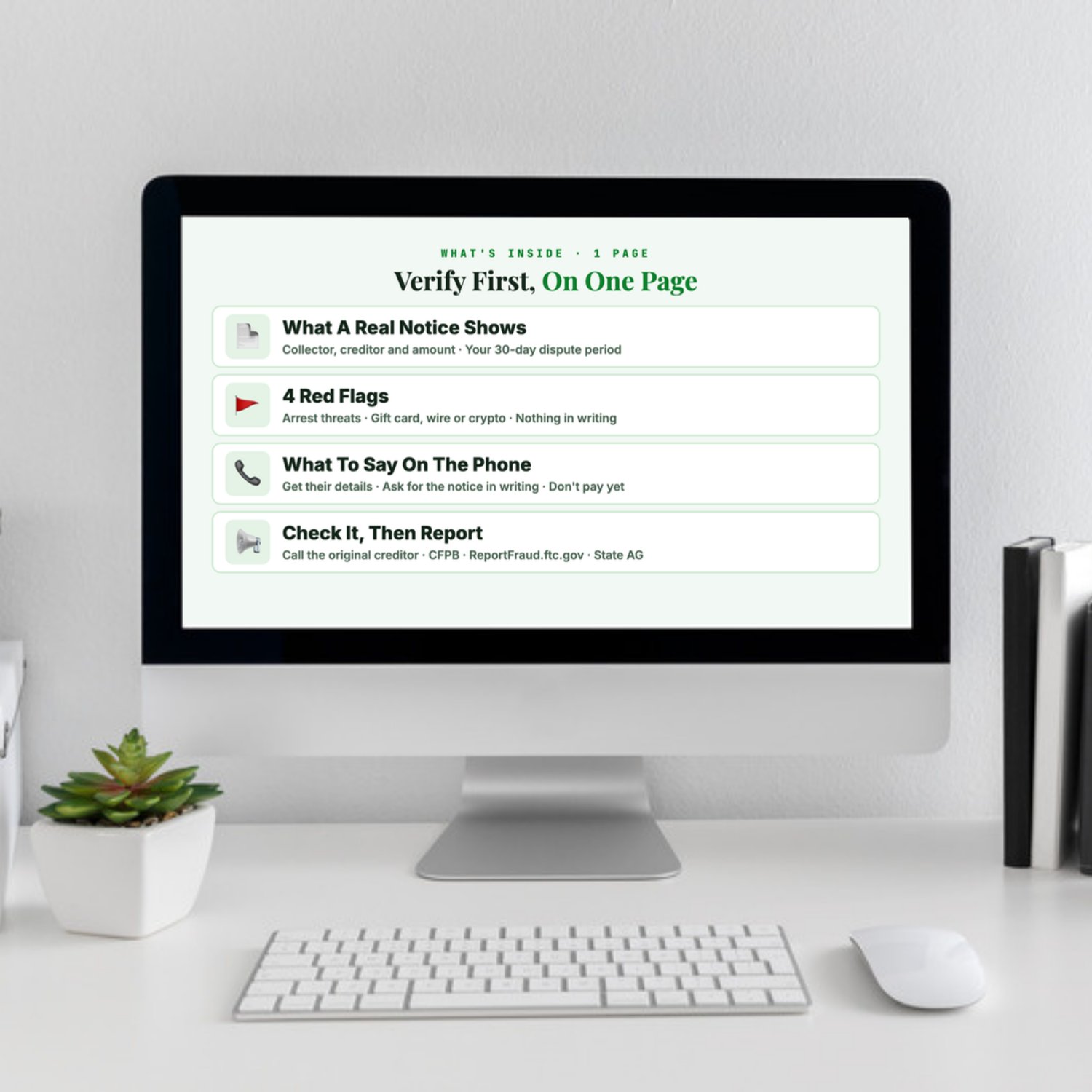
What's Inside
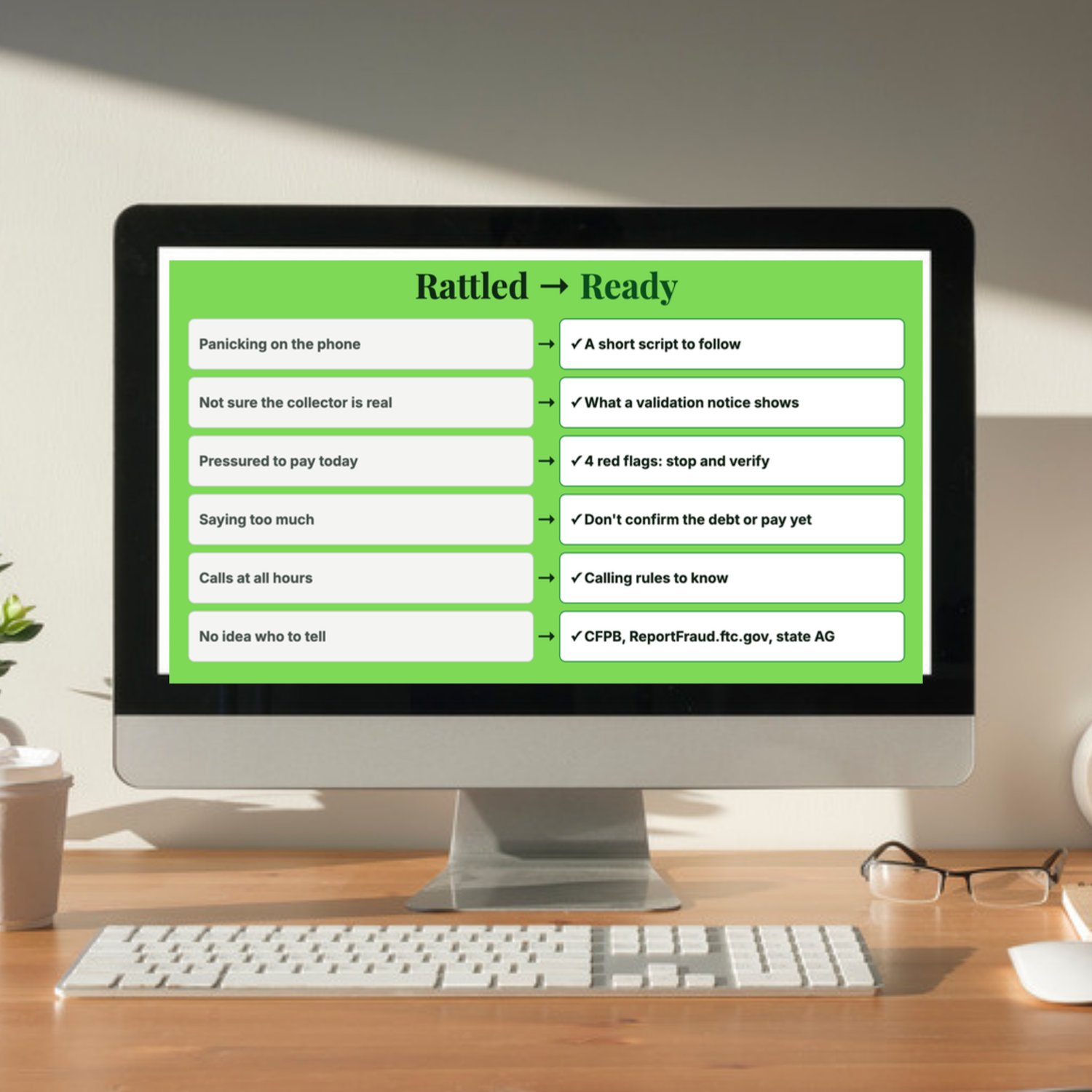
- What a real validation notice shows, in plain English
- 4 red flags that mean stop and verify
- A short phone script: get the details, ask for the notice in writing, don't pay yet
- How to check the company yourself
- Where to report: the CFPB, ReportFraud.ftc.gov and your state attorney general
- Calling rules to know (times of day, calls at work, asking them to stop)
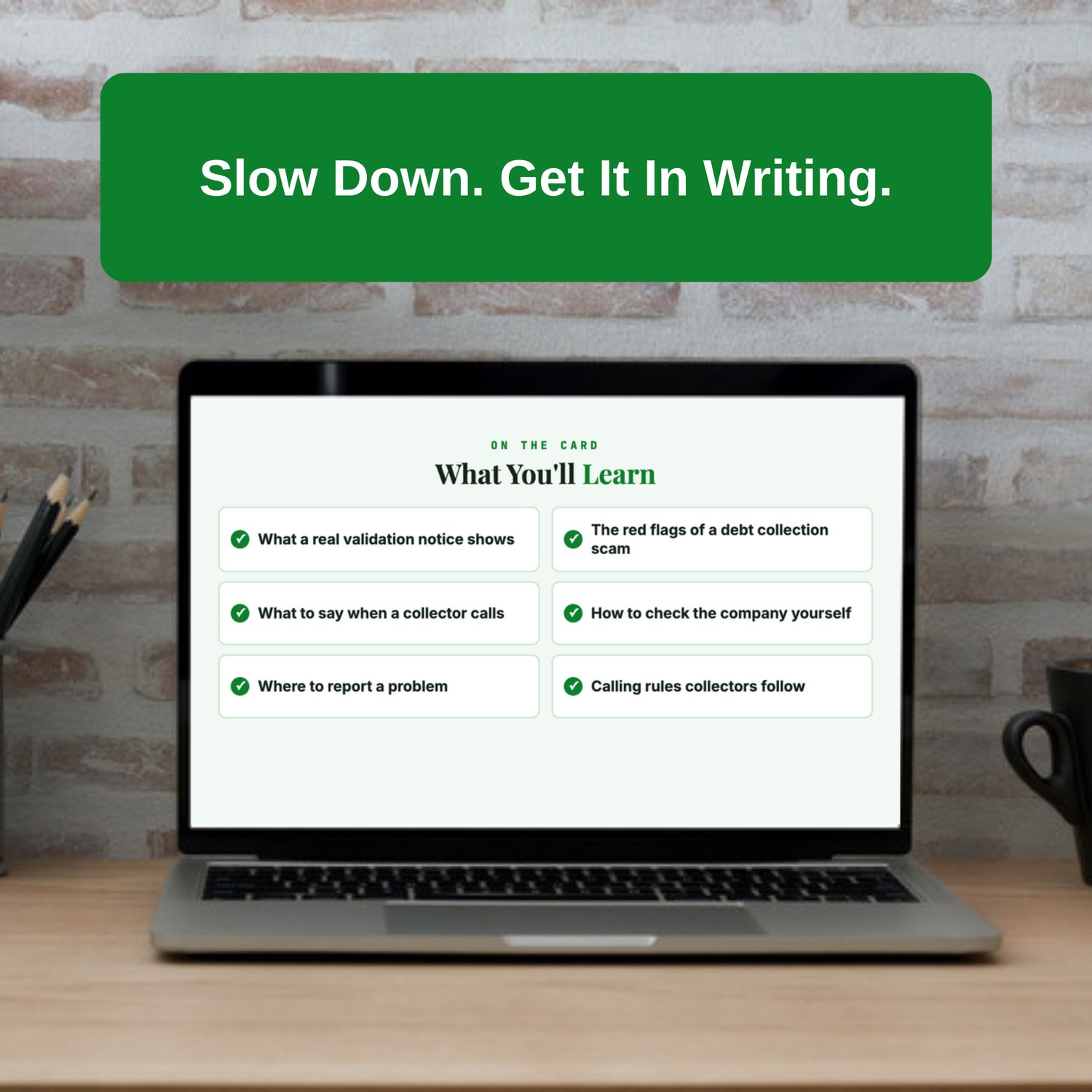
Card Objectives: When you finish, you'll know how to recognize a real debt collector, spot common scam signs and respond on the phone without confirming or paying anything too soon.
For education only. This isn't legal advice. Details were checked on consumerfinance.gov and consumer.ftc.gov in November 2026 and can change.
Why it works: It's one page you can keep by the phone, so the right questions are ready the moment a collector calls.
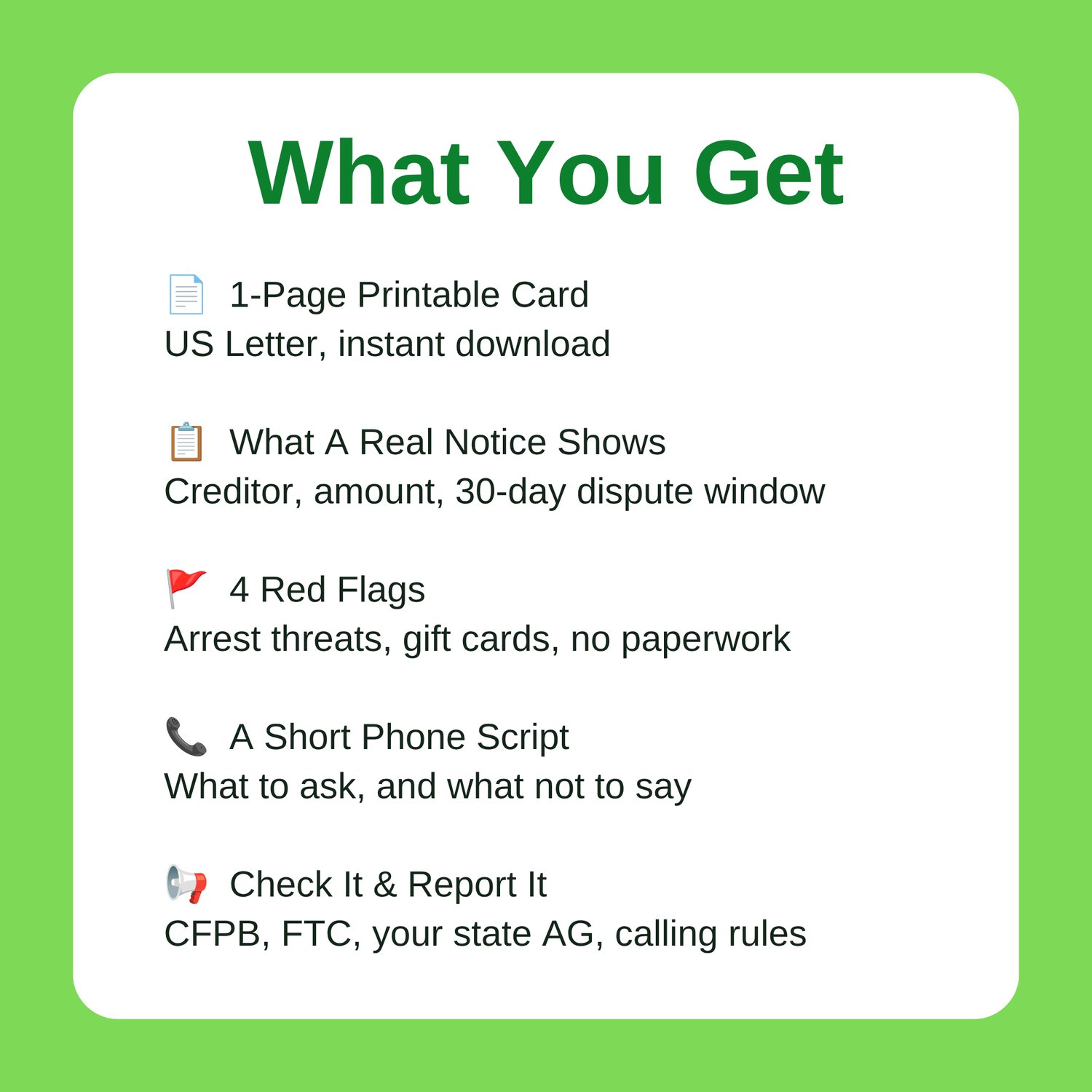
📄 1-page printable PDF (US Letter) · Instant download · Read on any device or print at home
A Making Sense Of Security guide: free guides and tools at MakingSenseOfSecurity.com