


PHISHING INCIDENT RUNBOOK / PLAYBOOK
On Sale
$4.00
$4.00
PHISHING INCIDENT RUNBOOK / PLAYBOOK
🎯 Purpose
To detect, analyze, contain, eradicate, and recover from phishing attacks while minimizing user impact and preventing recurrence.
🔹 1. Detection & Reporting
Sources
- User-reported email (Phish Report button / helpdesk)
- Email security gateway alerts
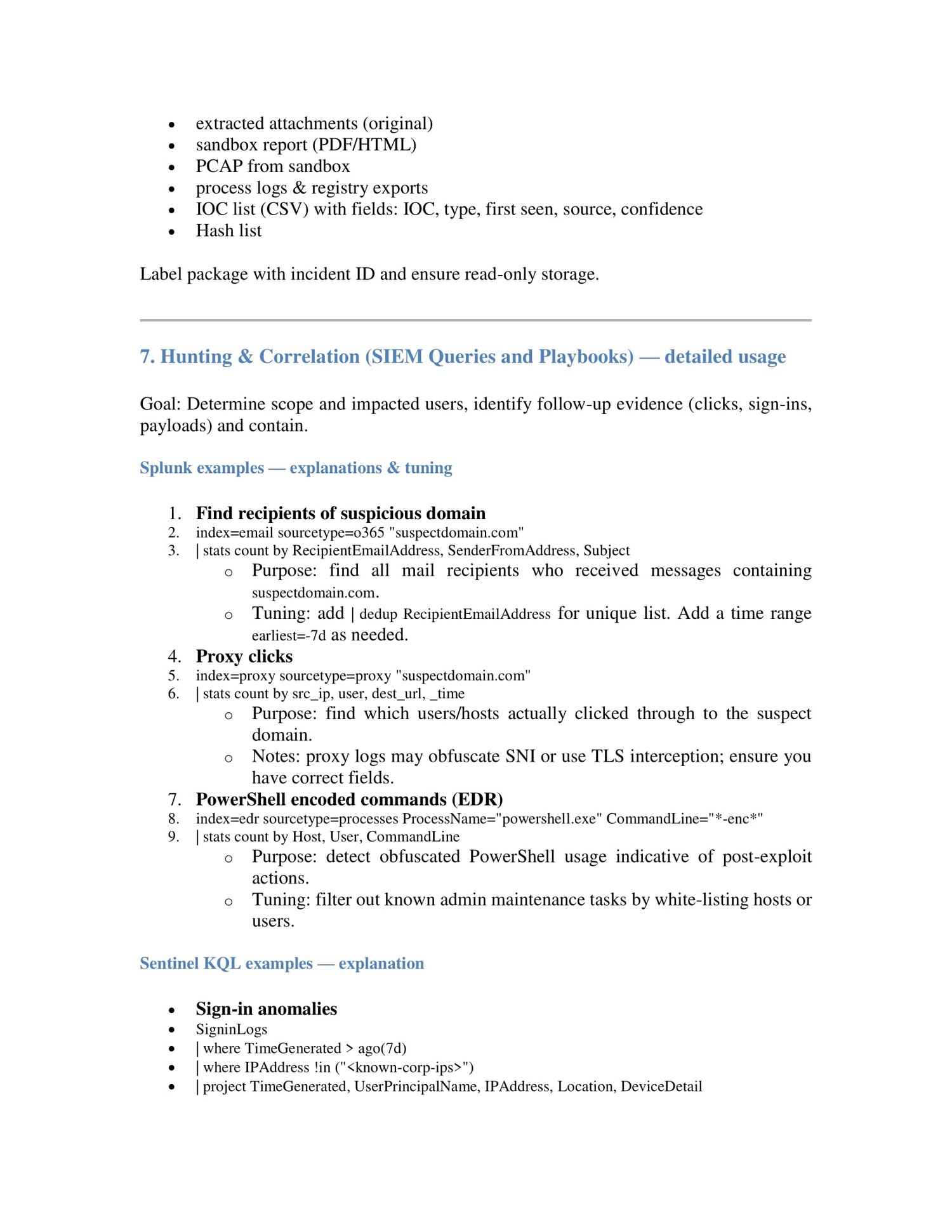
- SIEM alerts
- EDR/XDR detections
- Threat intelligence feeds
Initial Actions
- Acknowledge report
- Create an incident ticket
- Preserve the original email (do not delete yet)
🔹 2. Initial Triage (Quick Assessment)
Ask:
- Is this phishing, spam, or legitimate?
- Was the email delivered to multiple users?
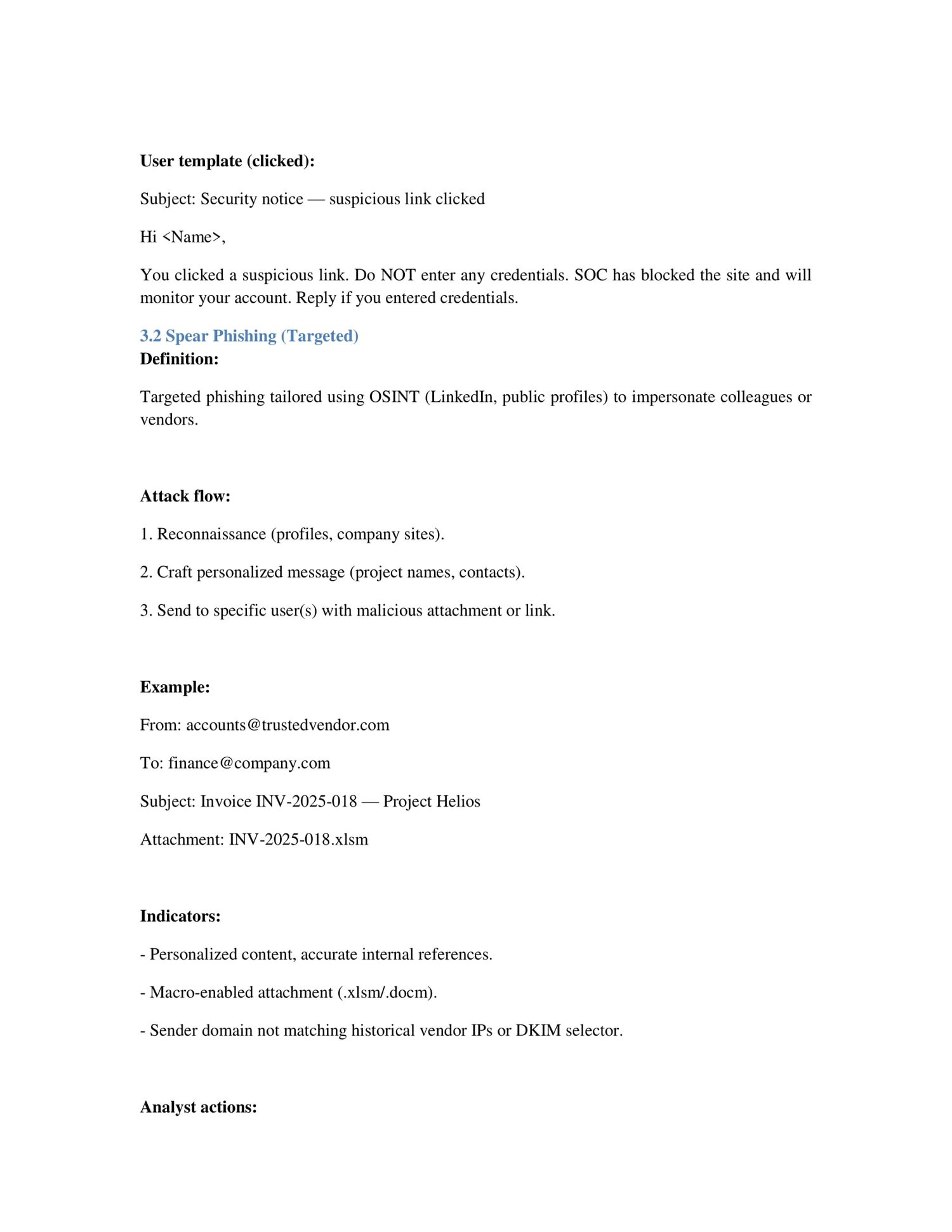
- Did any user click links or open attachments?
- Are credentials possibly compromised?
Indicators to Check
- Sender domain mismatch
- Suspicious URLs
- Urgent language (“verify now”, “account locked”)
- Unexpected attachments
- Spoofed brand or internal user
🔹 3. Classification
TypeDescriptionSpamLow risk, no action neededPhishingCredential theft attemptSpear PhishingTargeted individualWhalingTargeting executivesMalware PhishingMalicious attachment/link
Assign severity (Low / Medium / High / Critical).
🔹 4. Investigation
Analyze Email
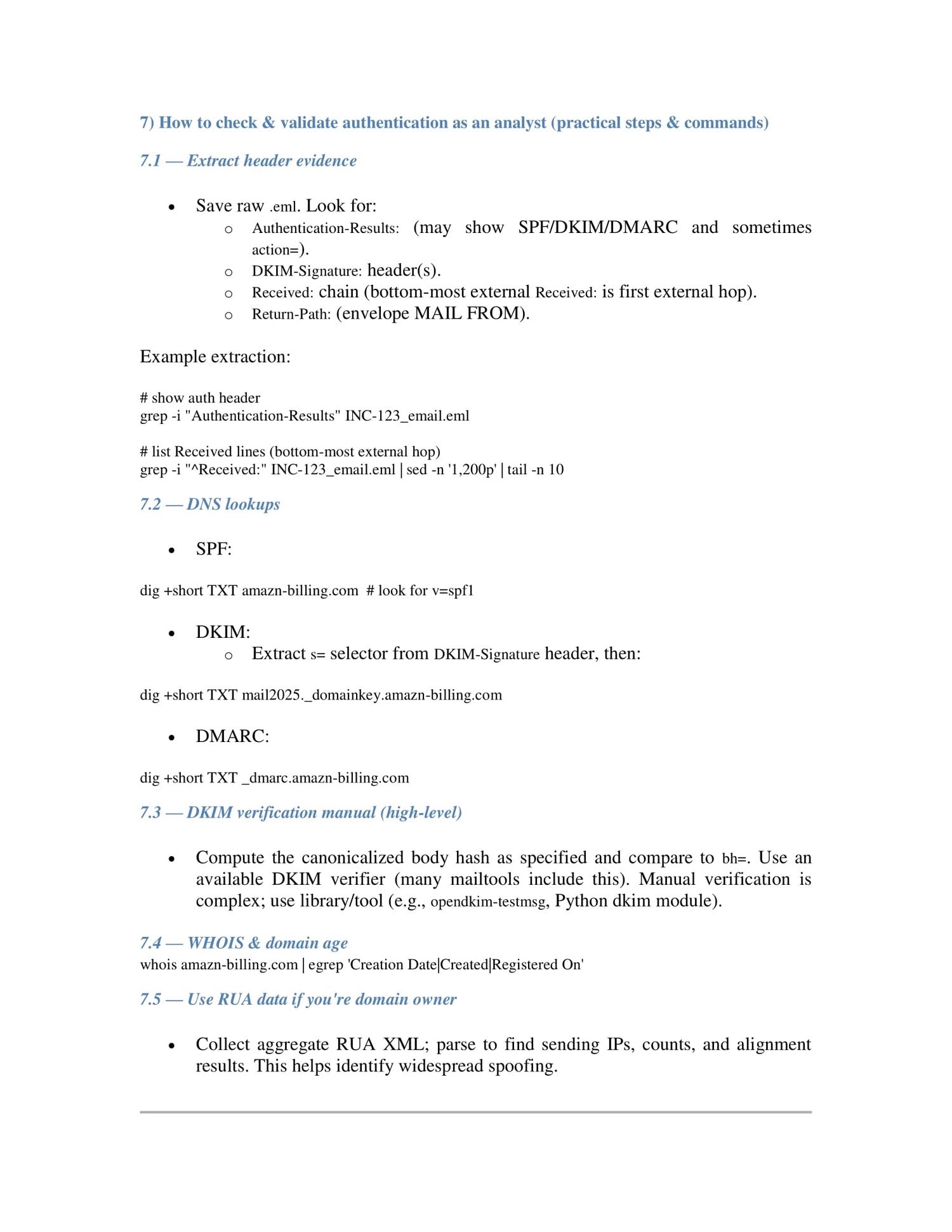
- Headers (SPF, DKIM, DMARC)
- Sender IP & domain reputation
- URLs (sandbox / URL analysis)
- Attachments (hash, sandbox scan)
Scope
- Number of recipients
- Who clicked?
- Who entered credentials?
- Any malware execution?
🔹 5. Containment (Time-Critical)
- Block sender domain & IP
- Block URLs at email gateway, proxy, firewall
- Quarantine similar emails
- Disable compromised user accounts
- Force password resets
- Revoke active sessions / tokens
🔹 6. Eradication
- Remove malicious emails from all mailboxes
- Clean infected endpoints
- Delete malicious files
- Remove persistence mechanisms
- Update email filtering rules
🔹 7. Recovery
- Restore access for affected users
- Monitor accounts for suspicious activity
- Verify systems are clean
- Reinstate services if disrupted
🔹 8. User Communication
- Notify affected users
- Provide guidance:
- Do not click similar emails
- Report suspicious messages immediately
- Conduct targeted security awareness if needed
🔹 9. Post-Incident Activities
Lessons Learned
- How did it bypass filters?
- Which control failed?
- Detection time vs response time
Improvements
- Update email security rules
- Enhance SIEM detection
- Improve phishing simulations
- Update training content
🔹 10. Metrics to Track
- Time to detect (TTD)
- Time to contain (TTC)
- Number of affected users
- Click-through rate
- Credential compromise rate