

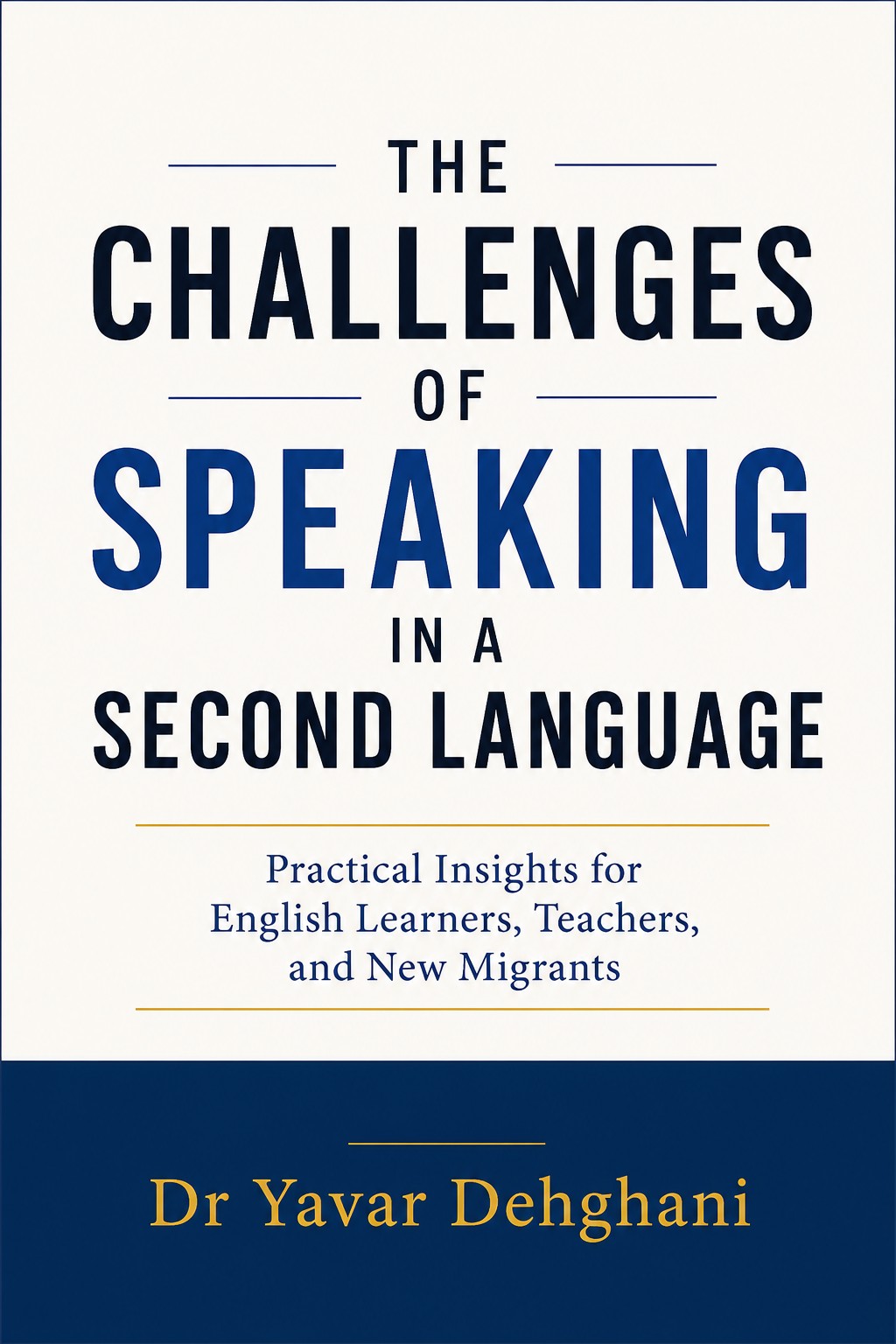
The Challenges of Speaking in a Second Language: Practical Insights for English Learners, Teachers, and New Migrants
You studied English for years. You passed the test. You arrived. And suddenly you could not understand a word.
This is not a failure of intelligence. It is not a failure of effort. It is one of the most common and least understood experiences in the world — and it happens to millions of migrants, students, and language learners every day. The English of the classroom and the English of the street are different languages. And the silence that follows the discovery of that gap is one of the most damaging things a migrant can choose, even when it feels like the only safe option.
The Challenges of Speaking in a Second Language is the book that names what is happening, explains why it happens, and offers a clear, research-based path forward.
What you will find inside:
- Why migrants go quiet in a new country, and why silence costs more than imperfect speech ever could
- The aphasia comparison: why the gap between what migrants know and what they can currently express is a communication barrier, not a measure of intelligence
- The dual task problem: why writing an essay, giving a presentation, or joining a conversation in a second language is not one task but two performed simultaneously under cognitive load
- Why language and culture are inseparable, and why translation fails when cultural context is missing — illustrated through Persian, Azerbaijani, and English
- The specific fears that drive migrant silence: accent anxiety, fear of sounding less intelligent, and the loss of the version of yourself that exists only in your first language
- The comparative grammar method: a research-based teaching approach that uses the learner's first language as a scaffold rather than treating it as an obstacle
- Practical strategies for migrants who want to speak before they feel ready, and for educators who want to create the conditions that make speaking feel possible
- Why the heritage language must be maintained alongside the new one, and what the research on bilingualism consistently shows
- Stories from the journey: the rehabilitated student, the taxi driver who could not drive and speak a new language at the same time, and the turning point that changes everything
This book speaks to three audiences simultaneously. To migrants and language learners who have ever doubted their intelligence because they could not express it in another person's language. To English teachers, ESL educators, and language professionals who want to understand what their students are actually experiencing beneath the surface of their silence. And to supervisors, managers, and institutions working with people from linguistically and culturally diverse backgrounds who want to respond with understanding rather than assumption.
The gap between what a migrant knows and what they can currently express is not a measure of their capability. It is a measure of the difficulty of the task. And the task, with the right understanding and the right support, is one that every migrant can complete.
For everyone who has ever been silent when they had something important to say. And for everyone who works with people who have.