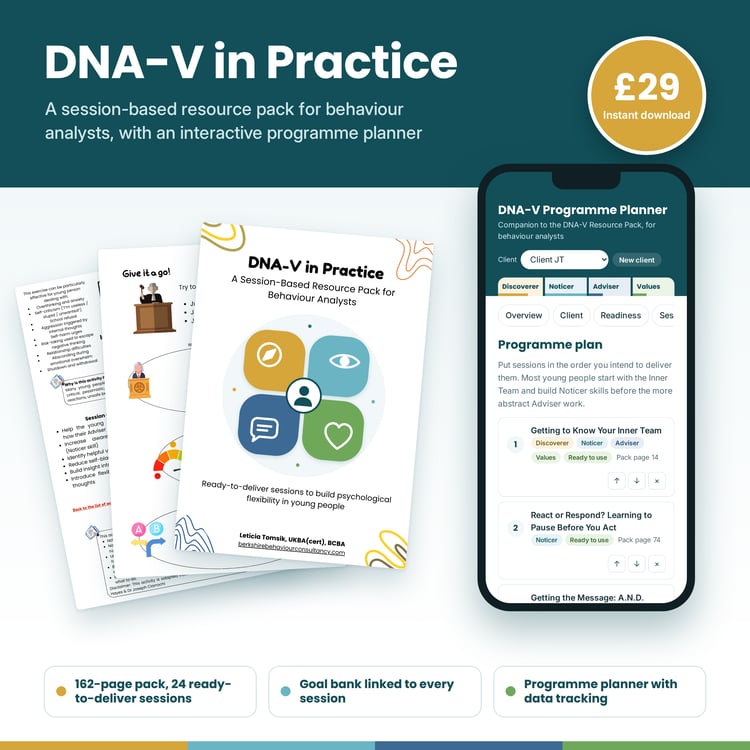
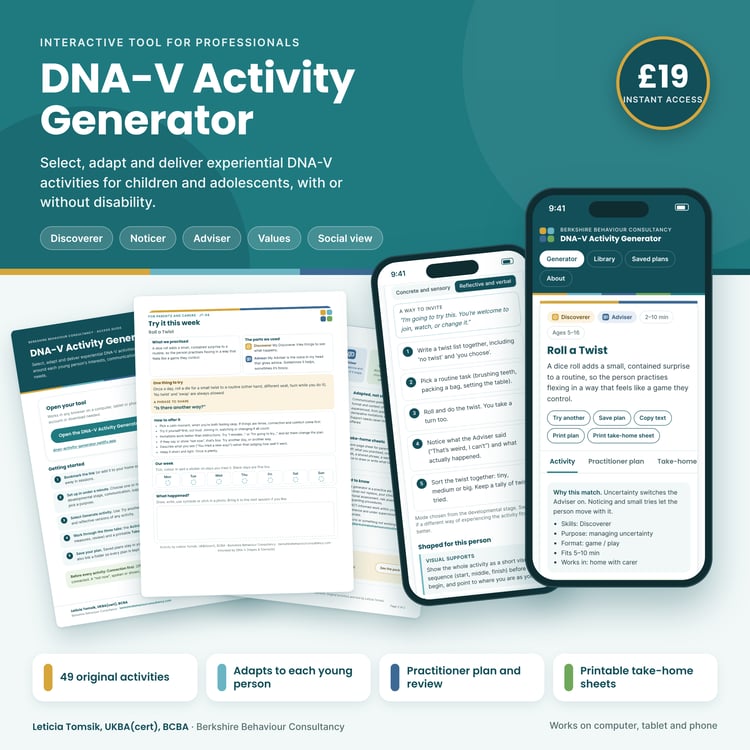
DNA-V in Practice: Sessions and Activity Generator.
Structured DNA-V sessions and an adaptable activity generator, together in one toolkit.
Christmas offer: £35 until 27 December, then £39.

Structured DNA-V sessions and an adaptable activity generator, together in one toolkit.
Christmas offer: £35 until 27 December, then £39.
I created DNA-V in Practice because the young people I work with deserve more than a list of behaviours to reduce. They deserve skills: noticing what’s happening inside them, holding their Adviser’s rules a little more loosely, trying new things and moving towards what matters to them.
The pack gave colleagues structured, ready-to-deliver sessions. The question I kept hearing was what to do next. How do you adapt an activity for a young person who uses AAC? For someone who experiences every question as a demand? For a teenager who learns best through concrete, real-world experience but deserves age-respectful materials?
The Activity Generator is my answer. It takes the DNA-V model and helps you shape original, experiential activities around the person in front of you: their interests, communication, developmental stage, support needs and goals. It doesn’t just shorten instructions; it changes how the activity is experienced.
Together, the pack and the generator take you from planned sessions to everyday practice: in sessions, at home, in the classroom, wherever the young person is.
Leticia Tomsik, UKBA(cert), BCBA
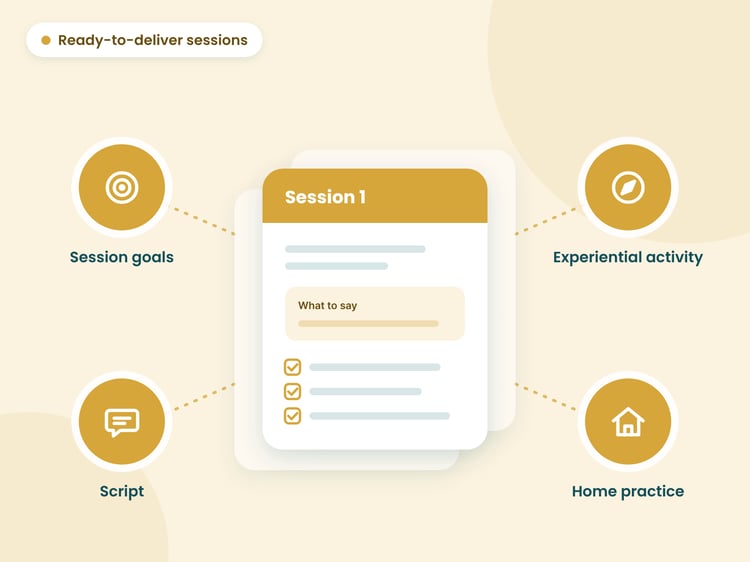
Each session in DNA-V in Practice includes goals, preparation notes, a script, an experiential activity and a “Give it a go!” home practice sheet. There’s a goal bank with measurement suggestions and guidance on adapting DNA-V when language is complex.
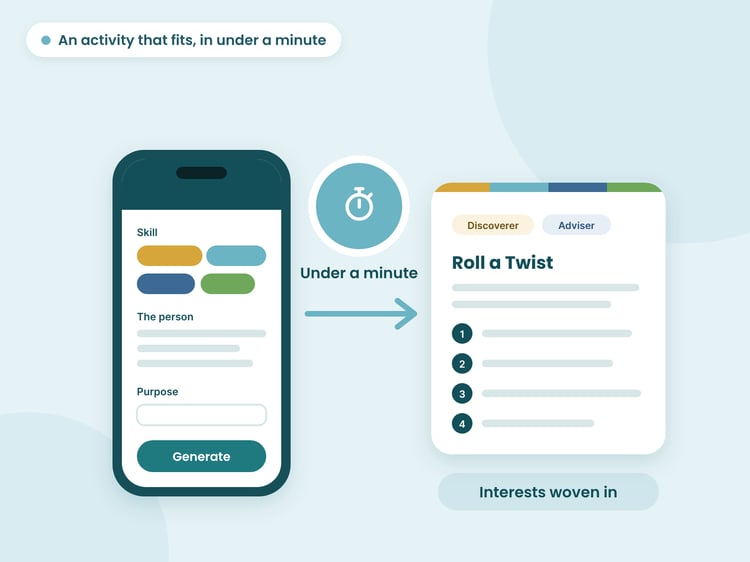
Choose the DNA-V skill, describe the young person and pick a purpose. The generator suggests an original activity linked to your goal, incorporates the young person’s interests, and shows what keeps each process true to its function.
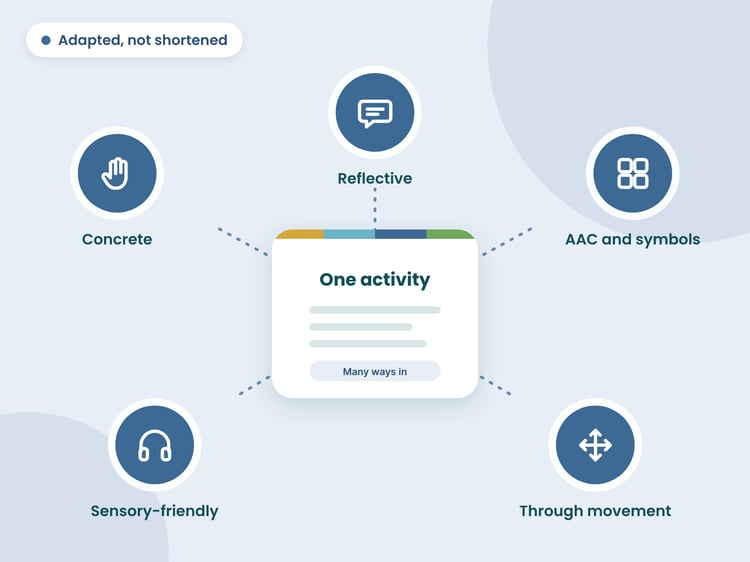
Every activity has a concrete, sensory version and a reflective, verbal version. Communication preferences and support needs add practical changes, such as AAC vocabulary, low-demand invitations, low-arousal set-ups and responses through movement. Support needs shape how an activity is offered. They never limit what a young person can do.
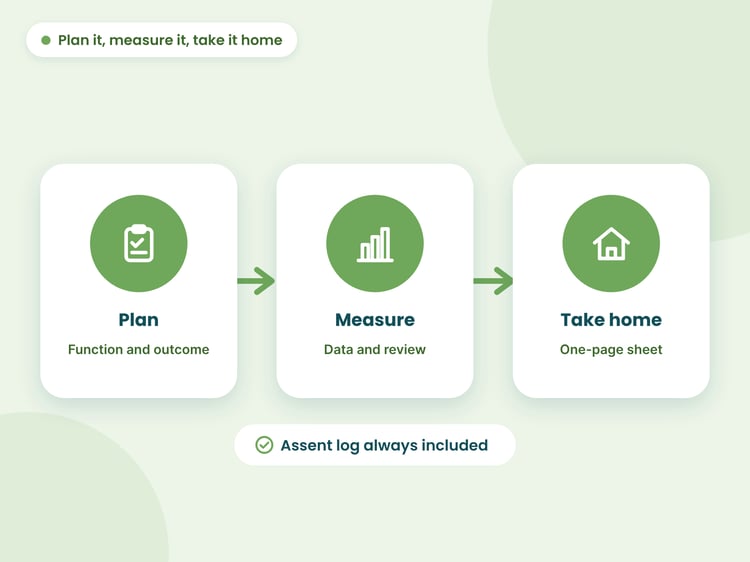
Link each activity to function, set an observable outcome in any communication mode, choose measures and record a review, with an assent log kept separately. Then print a one-page take-home sheet so parents, carers or school staff can carry the skill into everyday life.
Here are all the products that are included in your bundle
SENCOs, teachers, teaching assistants and specialist staff often support young people whose distress shows up as avoidance, withdrawal or rigid patterns, and whose needs make standard wellbeing resources hard to access. The toolkit gives you activities that work with a range of communication profiles, including minimal speech and AAC, and with sensory, processing and demand-related needs. You can run activities 1:1, with small groups or as a whole-class warm-up, and send home a plain-language sheet so families use the same language. It also helps you link activities to targets and record progress, which supports EHCP reviews and multi-agency conversations.
Behaviour analysts (BCBA, UKBA(cert), BCaBA, UKiBA), psychologists, therapists, SENCOs and other professionals supporting children and young people aged 4 to 18, with or without disability.
No formal training is needed to use the resources. The pack explains the model through a behaviour-analytic lens, and every activity shows what each process is for. As with any ACT-informed work, use it within your scope of competence, with supervision where appropriate.
Yes. Every activity has a concrete, experiential version, and any communication mode counts as a full response: pointing, signing, symbols, AAC, drawing or movement. The generator suggests specific adaptations for each communication profile.
After purchase, you’ll receive a PDF access guide with your link and a QR code. It works in any browser on a computer, tablet or phone, with no account or download needed.
The generator never sends data anywhere. Everything is saved in your browser on your device, and you’re encouraged to use client codes or initials only. In Chrome or Edge on a computer, you can also save plans to a folder on your computer.
Yes. The DNA-V Activity Generator is available separately for £19.
No. DNA-V was developed by Dr Louise Hayes and Dr Joseph Ciarrochi. The sessions and activities in this toolkit are original and informed by their published model, and the toolkit is not affiliated with or endorsed by the model’s authors.
The bundle is £35 until 27 December. From 28 December, it will be £39.
Each purchase is for one practitioner. For team or school licences, email leticia@berkshirebehaviourconsultancy.com.
No. The two are designed to work together, so they don’t repeat each other.
The DNA-V in Practice pack gives you structured, ready-to-deliver sessions. Each one has goals, preparation notes, a script, an experiential activity and a “Give it a go!” home practice sheet. It’s ideal for planning a programme and introducing the DNA-V model step by step.
The Activity Generator has 49 different, original activities across Discoverer, Noticer, Adviser, Values and Social view. Each activity can be adapted to a young person’s interests, communication, developmental stage, support needs and goals. Use them to extend a session, practise a skill in a new way, fill a 5-minute window at a transition, or carry the work into home and the classroom.
Both use the same DNA-V language and principles, so they fit together naturally. Use the pack to deliver sessions, and the generator to keep practising those skills in everyday life.