
STOP Skill - DBT Skillsheet
Slow down before you react.
When emotions spike, the urge to react can feel instant: snapping back, sending the text, slamming the door or shutting down. This one-page DBT worksheet puts a pause between the feeling and the action, so you get to choose your response instead of reacting on autopilot.
What’s inside
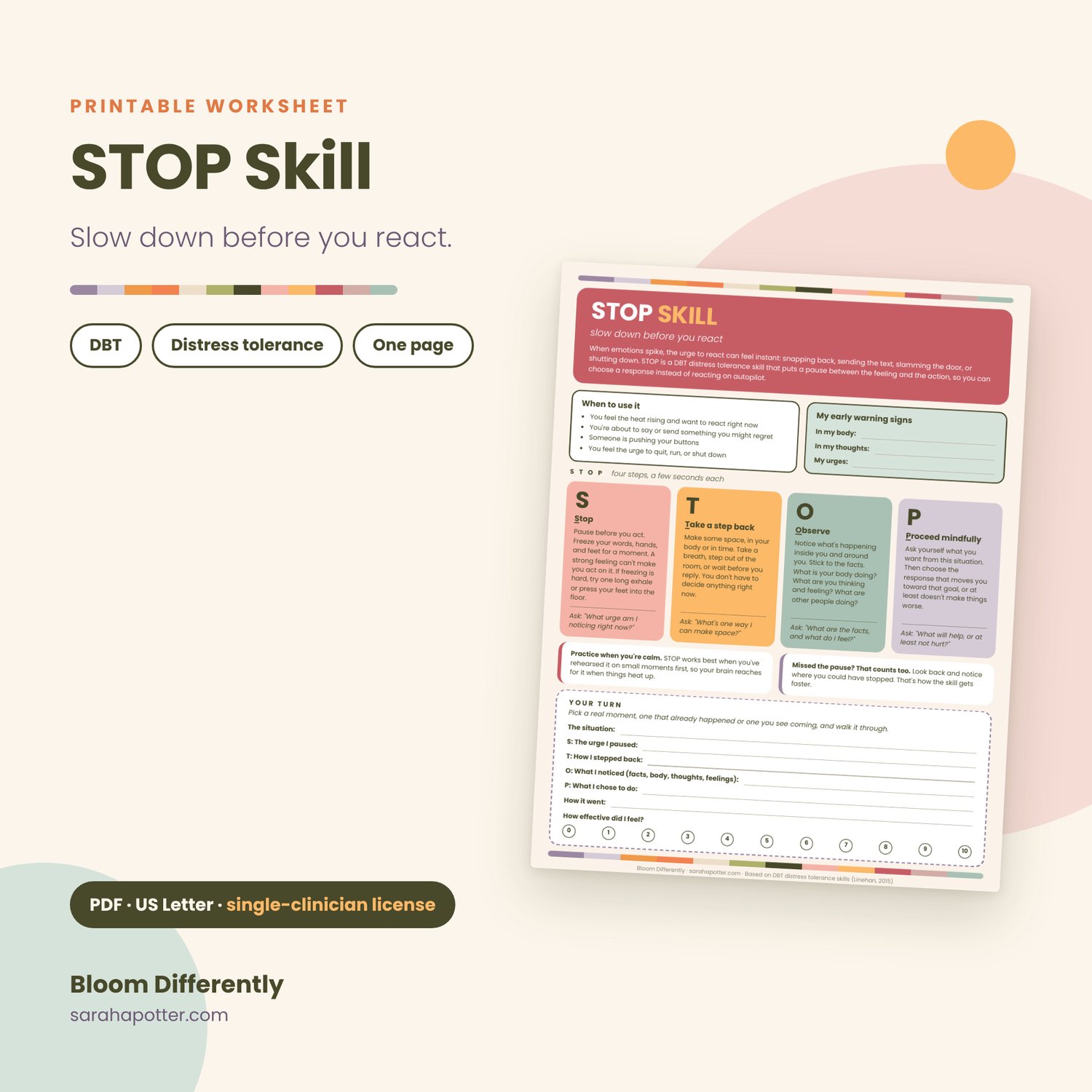
- The four steps of STOP (Stop, Take a step back, Observe, Proceed mindfully), each in plain language with a simple question to ask yourself.
- A “when to use it” list of real moments, like when someone is pushing your buttons, or you’re about to send something you might regret.
- Space to map your own early warning signs in your body, thoughts and urges.
- Gentle options for when freezing is hard, like one long exhale or pressing your feet into the floor.
- Encouragement that missing the pause counts too, because looking back is how the skill gets faster.
- A Your Turn practice section: walk a real moment through each step, then rate how effective you felt from 0 to 10.
Who it’s for
Teens and adults working on impulsive reactions, anger, conflict or shutting down. It’s useful for therapists, school counselors and parents teaching distress tolerance.
Ways to use it
- Teach STOP in session, then practice it on a recent moment together.
- Send it home as between-session practice, starting with small, low-stakes moments.
- Do a “cope ahead”: walk a conflict you can see coming through the steps before it happens.
- Keep it nearby as a quick reminder for moments when emotions run high.
Why it’s different
There’s no shame and no “just calm down.” It treats urges as information, offers sensory-friendly ways to pause, and builds the skill through practice rather than perfection.
What you get
A one-page printable PDF, US Letter, available as an instant download. It’s based on DBT distress tolerance skills (Linehan, 2015). Single-clinician license included.
Pairs well with: DBT Skills Toolkit, Radical Acceptance, My Regulation Toolkit