
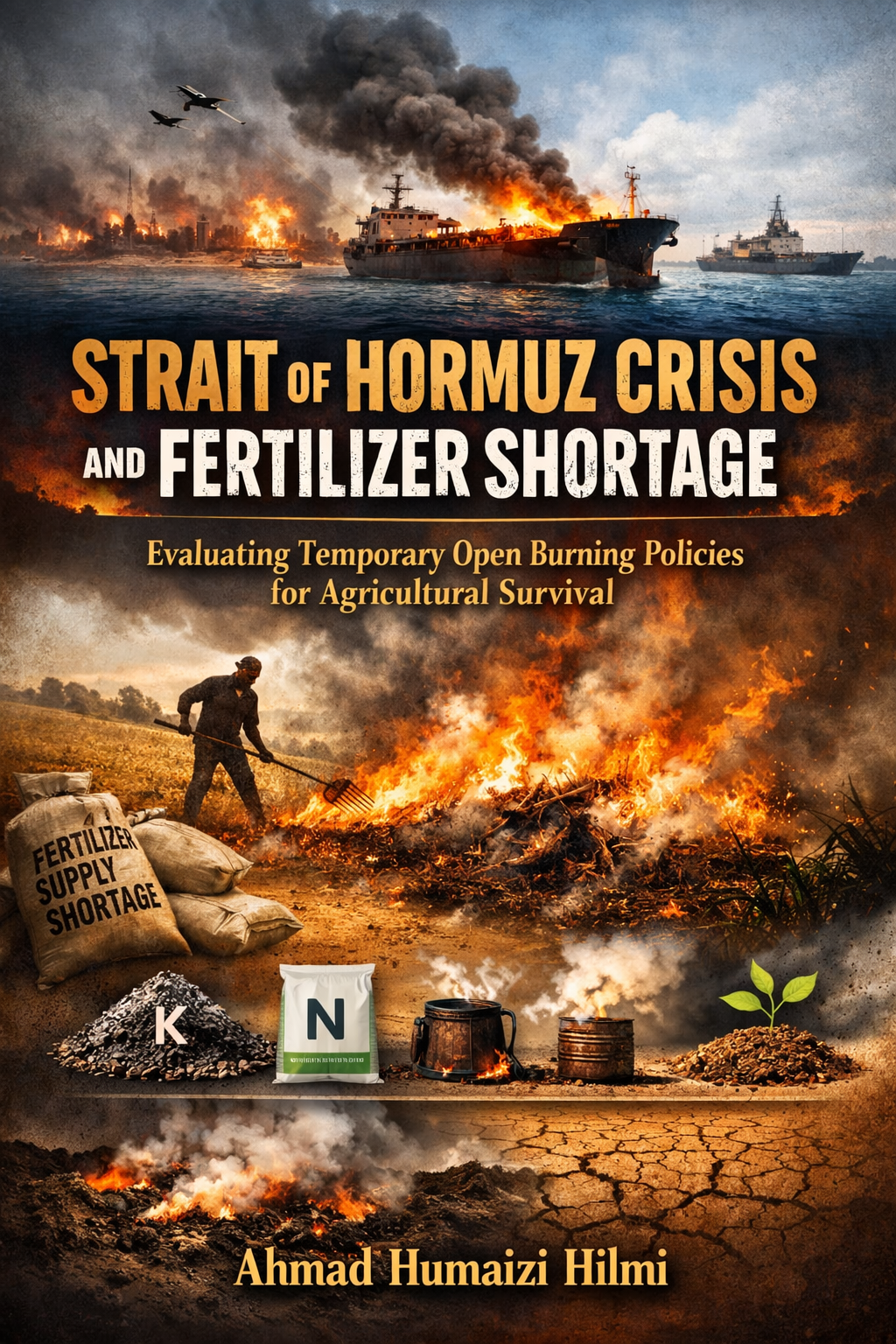
Strait of Hormuz Crisis and Fertilizer Shortage: Evaluating Temporary Open Burning Policies for Agricultural Survival
This review evaluates whether tightly constrained, emergency autorizations for controlled residue burning can serve as a temporary agronomic stopgap during acute fertilizer supply shocks that threaten planting windows and food security. It synthesises trade, agronomic and policy evidence showing that maritime chokepoint disruptions can rapidly produce localized fertilizer shortages, that ash from combustion supplies immediately available potassium and base cations but volatilises nitrogen and reduces soil organic matter, and that these effects produce short‑term planting continuity benefits alongside measurable yield and environmental costs. The review contrasts burning with lower‑risk, slower alternatives such as accelerated composting, biochar and local production of slow‑release fertilizers, and it presents a policy framework that conditions any temporary relaxation on objective emergency triggers, strict permit and operational rules, ash handling and co‑application with N‑supplying amendments, air‑quality and soil monitoring, and automatic sunset clauses. It argues that emergency burning may be defensible only under verifiable, time‑limited threats and when paired with safeguards, compensatory measures and investments that accelerate transition back to standard, lower‑risk nutrient strategies.