

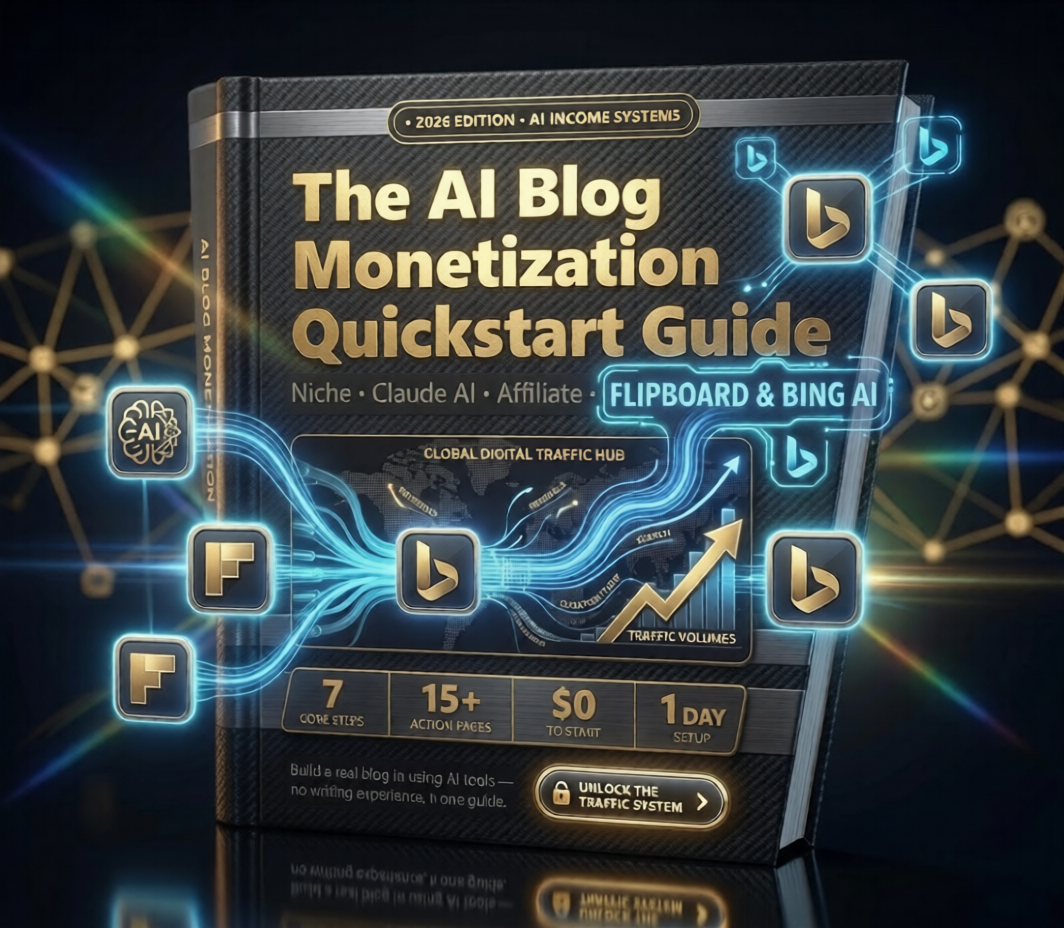



The AI Blog Monetization Quickstart Guide
The AI Blog Monetization Quickstart Guide (2026 Edition)
Build a real, compounding blog income using free AI tools — no writing experience, no large budget, no guesswork.
This is not a generic blogging course recycled from YouTube. It's a complete, working system built from zero — covering every stage from niche selection to your first affiliate commission, powered by Claude AI.
What's inside (11+ action pages):
✅ How to pick a profitable niche in one afternoon using Claude AI — with a validation prompt that tells you in minutes whether a niche is worth pursuing
✅ The exact tech stack to launch your blog for free (or near-free) in a single day
✅ A copy-paste master article prompt that produces SEO-optimized, 1,500-word blog posts — 3 to 5 per day
✅ The 3 affiliate link placements that actually convert — and the programs paying $30–$500 per referral in 2026
✅ The Flipboard curation method most creators never discover — how a brand-new account can outreach a 10,000-follower account by following one specific daily order
✅ The Bing SEO and email list strategies most bloggers leave completely empty
✅ A full 30-day, day-by-day roadmap from domain registration to Month 1 income
✅ A complete free toolkit — every tool you need to launch today, before spending a single dollar
This works because blogs compound.
Every article you publish is an asset that drives traffic and earns commissions for months — sometimes years — after you write it. You're building a library, not trading time for money. AI just made building that library dramatically faster.
Who this is for:
Perfect for side hustlers, content entrepreneurs, and anyone who wants a low-cost, AI-powered income stream that doesn't require showing their face, filming videos, or building a personal brand.
Format: Instant digital download — interactive HTML guide + PDF (works on any device)
Pages: 11+ action pages across 7 core chapters
Time to set up: 1 day
Cost to start: $0
"The gap between people who use AI for content and those who don't has become a direct revenue gap."