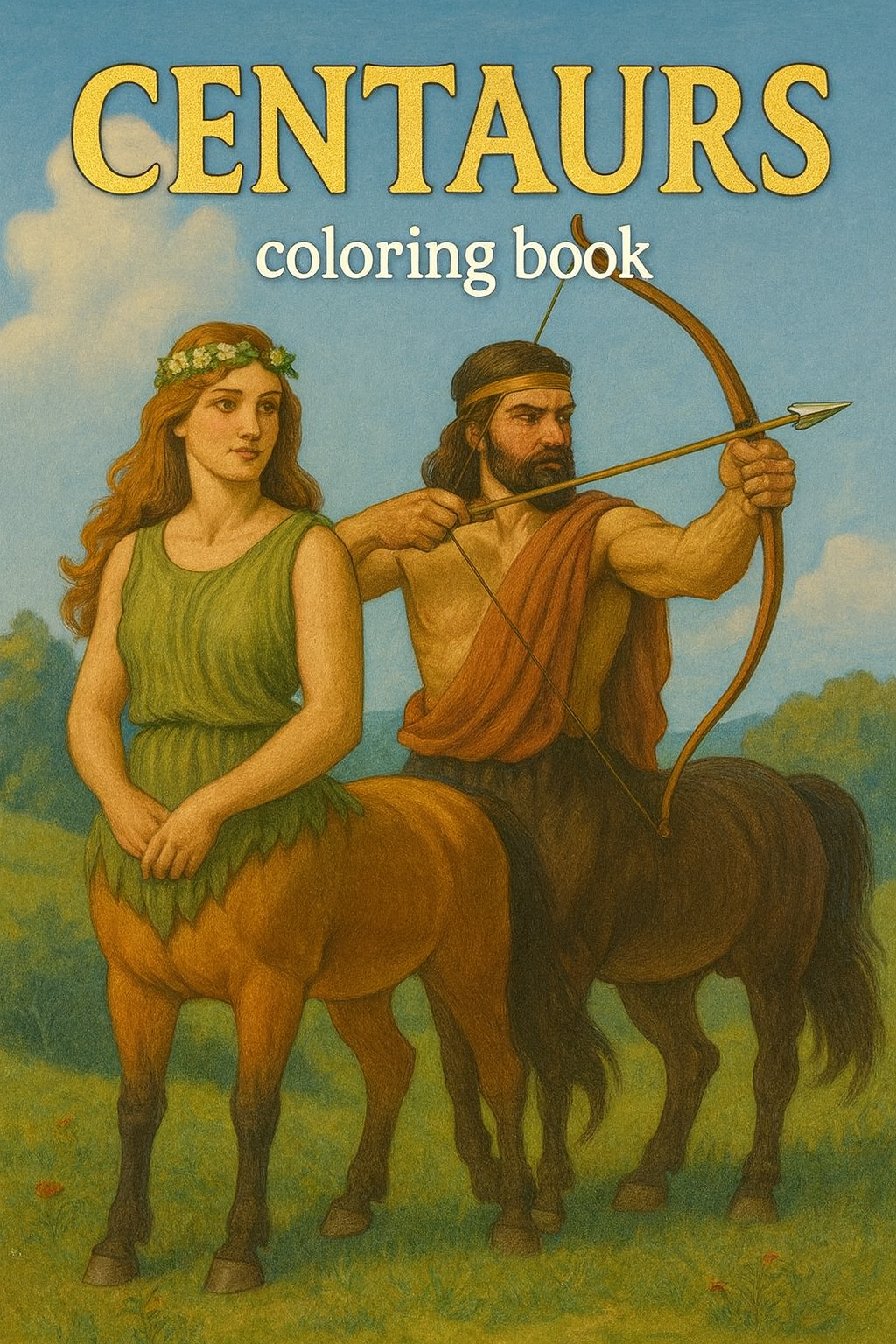
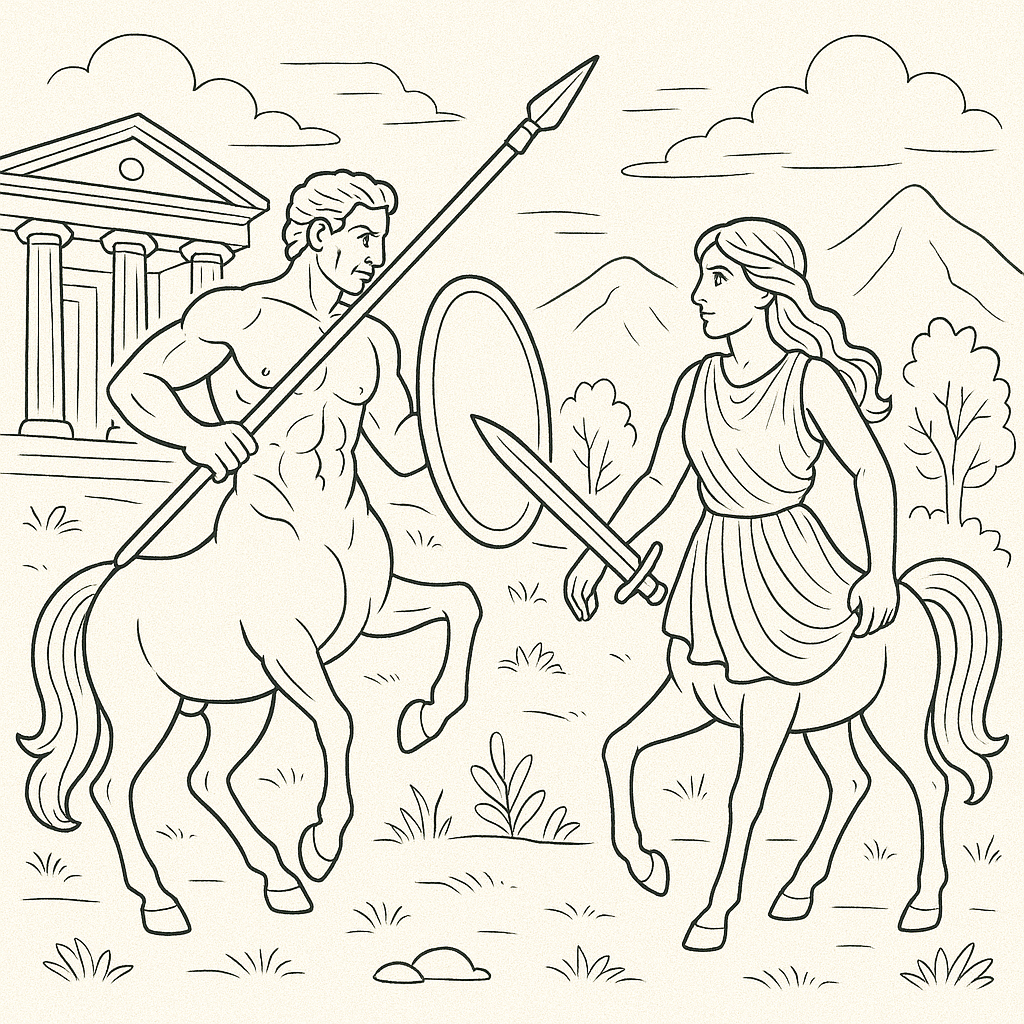
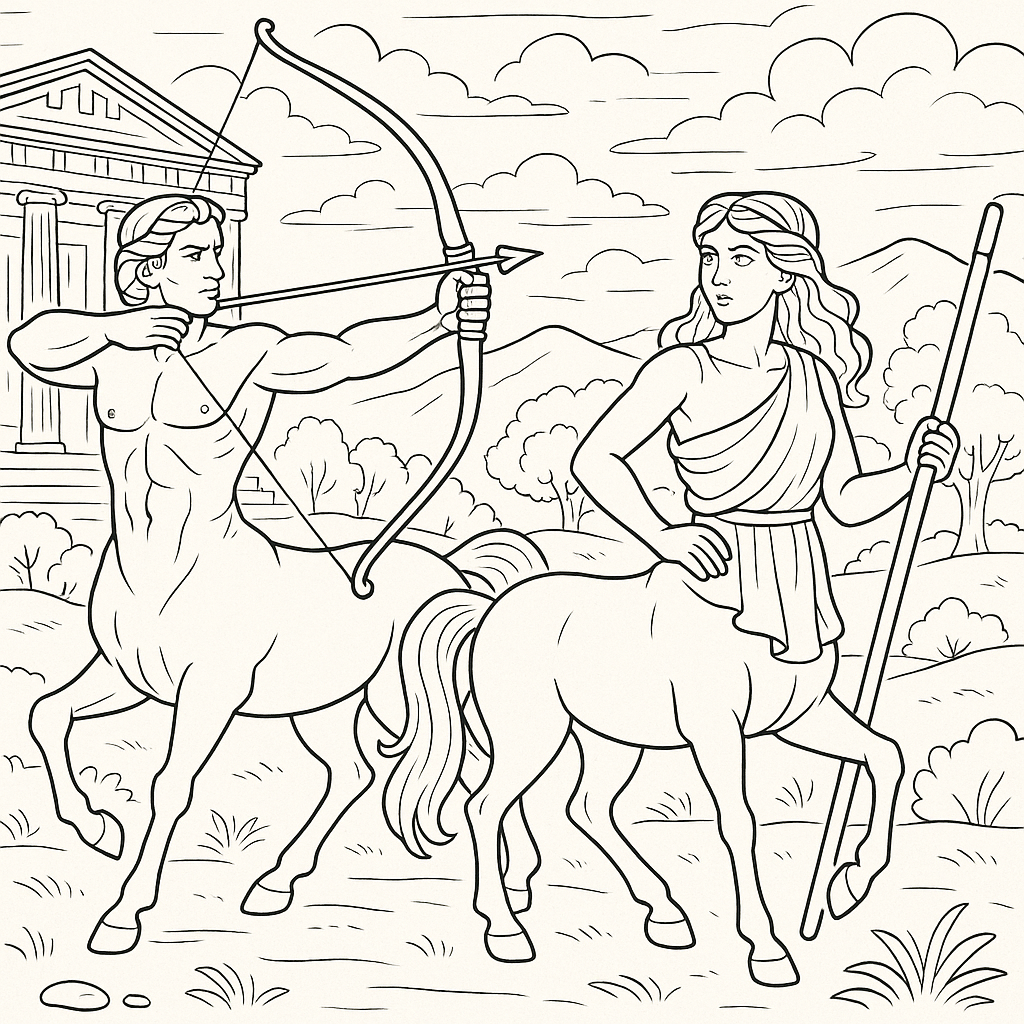
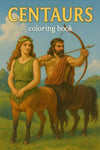
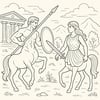
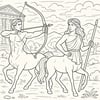
Centaurs, coloring ebook, 41 designs, digital product, instantly download
Centaurs, coloring ebook, 41 designs, digital product, instantly download. Centaurs: The Wild Children of Myth – Origins, Symbolism, Stories, and Legacy
Introduction
Centaurs are among the most iconic hybrid beings of ancient mythology. Half human and half horse, they embody a tension between civilization and wildness, reason and instinct, spiritual aspiration and earthly desire. Their image has traveled from ancient Greek pottery to the Renaissance arts, and from medieval manuscripts to modern fantasy worlds like Narnia, Dungeons & Dragons, and Percy Jackson.
But who were the centaurs? Where did they come from? And why do they continue to fascinate us thousands of years later?
This article takes a deep dive into the full mythology, symbolism, and cultural origins of centaurs.
1. Origins of the Centaur Myth
Centaurs (Greek: Κένταυροι) first appear in Greek mythology as mountain-dwelling creatures from Thessaly. Their name likely comes from Kentauros, meaning “bull-killer”—possibly linking them to ancient hunting tribes.
Yet, scholars believe the myth may have originated much more simply:
A Practical Explanation: The First Time Greeks Saw Horse-Riders
Early Greeks had limited experience with horseback riding.
When they first encountered nomadic tribes who rode horses expertly, the sight may have seemed supernatural—humans fused with their animals.
Thus, the centaur was born:
human intellect + the speed and power of a horse.
2. The Nature of the Centaurs
Centaurs were usually portrayed as:
- Wild
- Untamed
- Lovers of wine
- Quick to anger
- Strong and dangerous
They lived in the high mountains and forests, far from cities and civilization.
In Greek thought, centaurs represented an internal struggle within every human:
- The animal side (impulse, passion, instinct)
- The rational side (thought, discipline, virtue)
Most centaurs lean toward the animal side—except for one extraordinary figure: Chiron.
3. Chiron – The Noble Centaur
Chiron is the most famous and respected centaur, completely different from his unruly kin.
Chiron’s Qualities
- Wise
- Civilized
- Gentle
- Immortal
- Teacher of heroes
- Skilled in medicine, music, astrology, and prophecy
Students of Chiron
Chiron trained some of the greatest figures in Greek mythology:
- Achilles
- Jason
- Heracles
- Asclepius (god of healing)
- Perseus
- Actaeon
Unlike the other centaurs, Chiron represents self-control, wisdom, and spiritual evolution.
He is the symbol of the healer wounded by life, which inspired the modern psychological concept “the wounded healer archetype.”
4. The Battle Between Centaurs and Humans: The Centauromachy
One of the most famous myths involving centaurs is the Centauromachy, the battle between centaurs and the Lapith people.
The Cause of the War
At the wedding of King Pirithous, the centaurs were invited. After drinking wine, they became drunk and attempted to abduct the bride and other women.
This insult sparked a massive battle that ended with the defeat and exile of the centaurs.
Symbolism of the Centauromachy
In ancient Greek art, the Centauromachy represented:
- Order vs chaos
- Civilization vs barbarism
- Discipline vs violent instinct
It was often carved into temples (such as the Parthenon) as a reminder of the victory of reason over animal passions.
5. Female Centaurs: The Centaurides
Unlike the male centaurs, female centaurs appear mostly in later art, not ancient Greek myth.
They were portrayed as:
- Elegant
- Playful
- Strong yet graceful
- Symbols of harmony with nature
During the Renaissance, centaurides represented the union of beauty and wild freedom, blending femininity with raw strength.
6. Centaurs in Modern Culture
Centaurs never disappeared. They evolved into cultural icons found in:
Fantasy literature
- C.S. Lewis’ Narnia portrays them as noble warriors and star-readers.
- J.K. Rowling’s Harry Potter shows them as mystical forest sages.
- Rick Riordan’s Percy Jackson series features Chiron as a wise mentor.
Video games
- World of Warcraft
- Dungeons & Dragons
- The Witcher
- Elder Scrolls (in some lore)
Astrology
The minor planet Chiron symbolizes:
- healing
- past wounds
- personal growth
7. Symbolism of the Centaur
The centaur represents duality—two natures fused into one:
Human Half
- Mind
- Spirit
- Reason
- Wisdom
- Civilization
Horse Half
- Passion
- Energy
- Freedom
- Instinct
- Wild nature
Together, they form a symbol of:
- the struggle between desire and discipline
- the blending of instinct and intellect
- the journey toward inner harmony
In many interpretations, the centaur is the archetype of human nature itself.
8. Centaurs in Art and Archaeology
Centaurs appear in:
- Greek pottery (6th century BCE)
- Temple friezes (Parthenon, Olympia)
- Roman mosaics
- Medieval manuscripts
- Renaissance frescoes
- Modern fantasy art
Throughout history, they shift from symbols of wildness to symbols of heroism and cosmic wisdom.
Conclusion
Centaurs remain one of mythology’s most powerful symbols. They are not merely monstrous hybrids—they reflect humanity’s timeless struggle between the primal and the civilized, the physical and the spiritual.
Whether wild warriors or wise teachers, centaurs have galloped through centuries of storytelling. And their dual nature still resonates with us today, reminding us that every person carries both instinct and reason within them.