
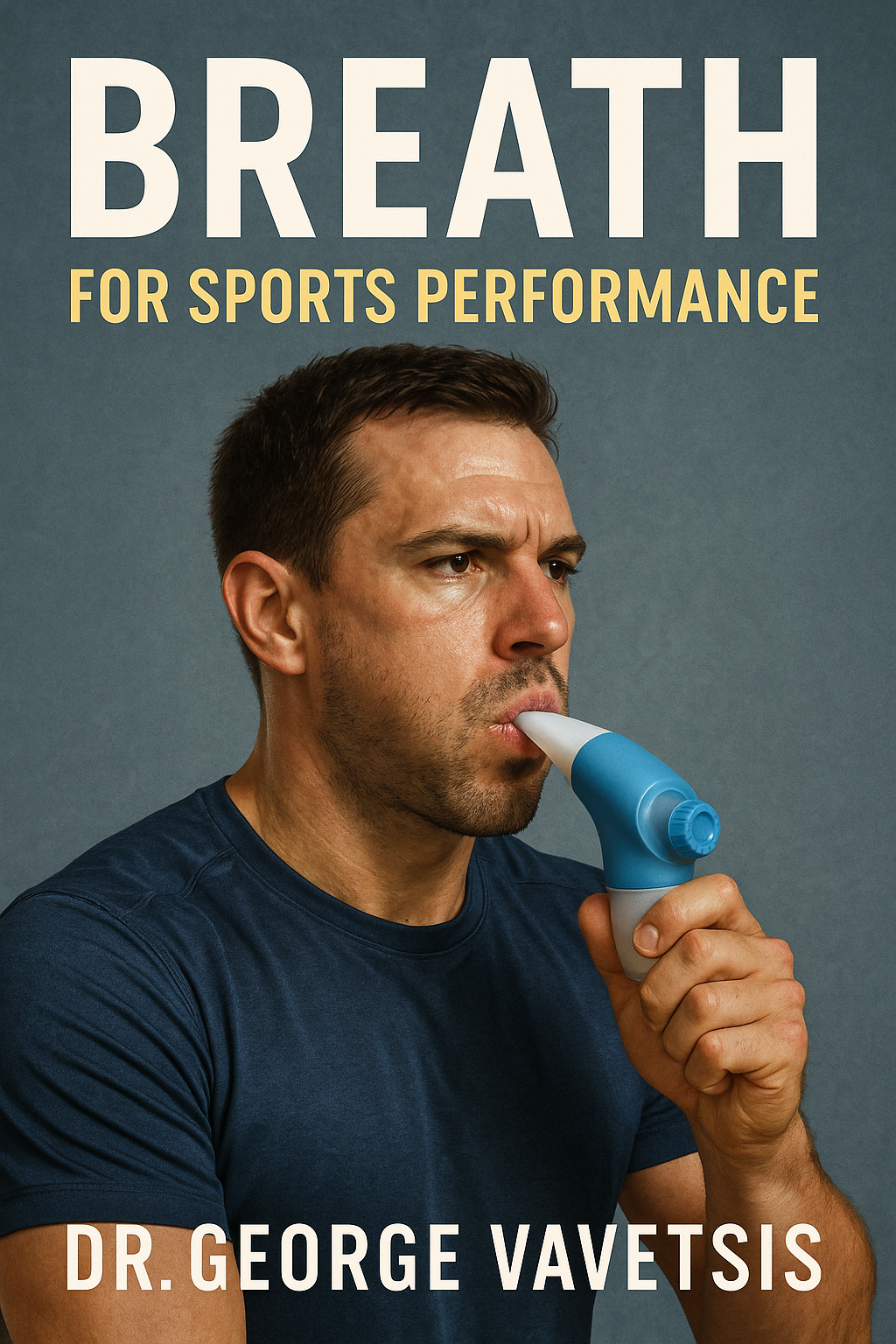
Breath for Sports Performance
Pages: 2399
Breathing is the most fundamental human movement—yet in sport, it is often the most neglected. Athletes and coaches talk about strength, speed, power, agility, and tactical intelligence, but rarely do we discuss the invisible engine that powers them all: the respiratory system. Each breath carries the potential to regulate oxygen delivery, stabilize the spine, modulate arousal, and influence both technical execution and decision-making. When breathing becomes dysfunctional, performance can deteriorate rapidly; when breathing becomes optimized, athletes reach deeper reserves of physical efficiency and mental clarity.
This book was born out of a simple but powerful realization: breathing is not merely a metabolic necessity—it is a trainable skill. Across various sports and cultures, expert performers instinctively harness their breath to control movement, direct attention, and manage stress. Martial artists synchronize inhale and exhale with strikes and transitions. Free divers condition their nervous system to tolerate high carbon dioxide levels while remaining relaxed. Endurance athletes refine cadence-paced breathing to reduce energetic waste during locomotion. Strength and power athletes master bracing at the precise moment force must transfer through the kinetic chain. Even elite coaches, without always naming it, cue breath control when demanding rhythm, tempo, precision, and intent.
Yet in modern strength and conditioning practice, respiratory training remains underutilized. Many athletes develop breathing habits that limit their potential—excessive chest lifting, high-threshold over-bracing, irregular rhythms under fatigue, or unconscious breath-holding during technical execution. These patterns often arise not from lack of effort, but from lack of awareness. As intensity rises, the athlete’s attention shifts externally, and breathing defaults to inefficient, automatic strategies. The breath becomes reactive rather than proactive.
Breath awareness reclaims control. By making breath a conscious element of training, athletes acquire self-monitoring tools that improve movement quality and pacing strategies. Coaches gain a clearer lens into fatigue responses, psychological readiness, and biomechanical stability. The simple act of observing one’s own breathing can reveal compensations, anxiety, asymmetries, and unnecessary tension that would otherwise go unnoticed.
In this text, breathing is approached through a sport-specific lens: as a physiological regulator, a biomechanical stabilizer, a neurocognitive performance enhancer, and a tactical skill. The aim is not to introduce mystical or esoteric principles, but to integrate respiratory awareness into daily training with practical methods. Breathing drills are embedded within strength sets, agility circuits, endurance intervals, and skill acquisition sessions—never as isolated rituals detached from competitive reality.
Throughout the chapters, key themes emerge:
1. Interoception and Self-Monitoring.
Athletes must learn to detect internal breathing cues just as accurately as external opponent movements. The relationship between perceived breath effort and actual ventilatory demand becomes a marker of autoregulation and resilience.
2. Conscious to Automatic Transition.
Breathing techniques practiced under controlled conditions must later persist in unpredictable, chaotic environments—under pressure, fatigue, and high emotional load. The ultimate goal is automatic efficiency without conscious interference.
3. Biomechanical Link to Performance.
Breathing regulates core stiffness, rib-cage mobility, and lower-body force transmission. Whether sprinting, jumping, or rotating, the breath orchestrates muscular recruitment and spinal alignment.
4. Arousal and Emotional State Control.
Breath rate and depth shift autonomic balance. Slow nasal breathing reduces anxiety and improves fine motor control; powerful pre-movement breaths can prime explosive actions. Athletes must recognize these state shifts and employ them deliberately.
5. Perceptual Focus and Cognitive Clarity.
Breath cues help athletes reprioritize attention, reset rhythm, and remain present within performance. In pressured situations, the breath often becomes the final anchor of composure.
Together, these components transform breathing from a passive reflex into a tactical asset.
The structure of this book reflects both scientific rigor and coaching practicality. Each sub-chapter pairs underlying mechanisms with applied strategies, integrating:
• Exercise prescription (sets, reps, tempos, VBT interplay)
• Skill-driven breath cueing and attentional strategies
• Progressions and regressions appropriate for training zones
• Testing and KPI frameworks to track improvement
• Coach-athlete communication systems that transform awareness into habit
The goal is to give coaches the clarity and confidence required to introduce respiratory training across all phases of preparation—from rehabilitation and general conditioning to peak competitive performance.
Across my own journey working with elite athletes, one consistent lesson has emerged: the athletes who learn to breathe well sustain excellence longer. They maintain technical quality deeper into fatigue. They cope more effectively with competitive stress. They train harder without accumulating excessive tension or energy leaks. They recover faster between bouts and between seasons. Most importantly, they trust their bodies under pressure, because they have mastered the most fundamental mechanism for regaining control: their own breath.
Breath is the bridge between physiology and psychology, between effort and rhythm, between chaos and clarity. When athletes reconnect to this bridge, they rediscover their capacity to perform with intention, fluidity, and precision.
It is my hope that the pages ahead will inspire coaches, practitioners, and athletes to explore this territory with curiosity and discipline—to experiment, measure, refine, and ultimately elevate the role of breathing within sport. Every rep, every sprint, every jump, every serve, and every tactical decision begins with a breath. If we honor this truth, we elevate not only performance, but the entirety of the athletic experience.
Breathe with purpose. Move with awareness. Perform with mastery.