



Write Your Name in Arabic | Dyslexia-Friendly Name Lab Sound Chart and Poster
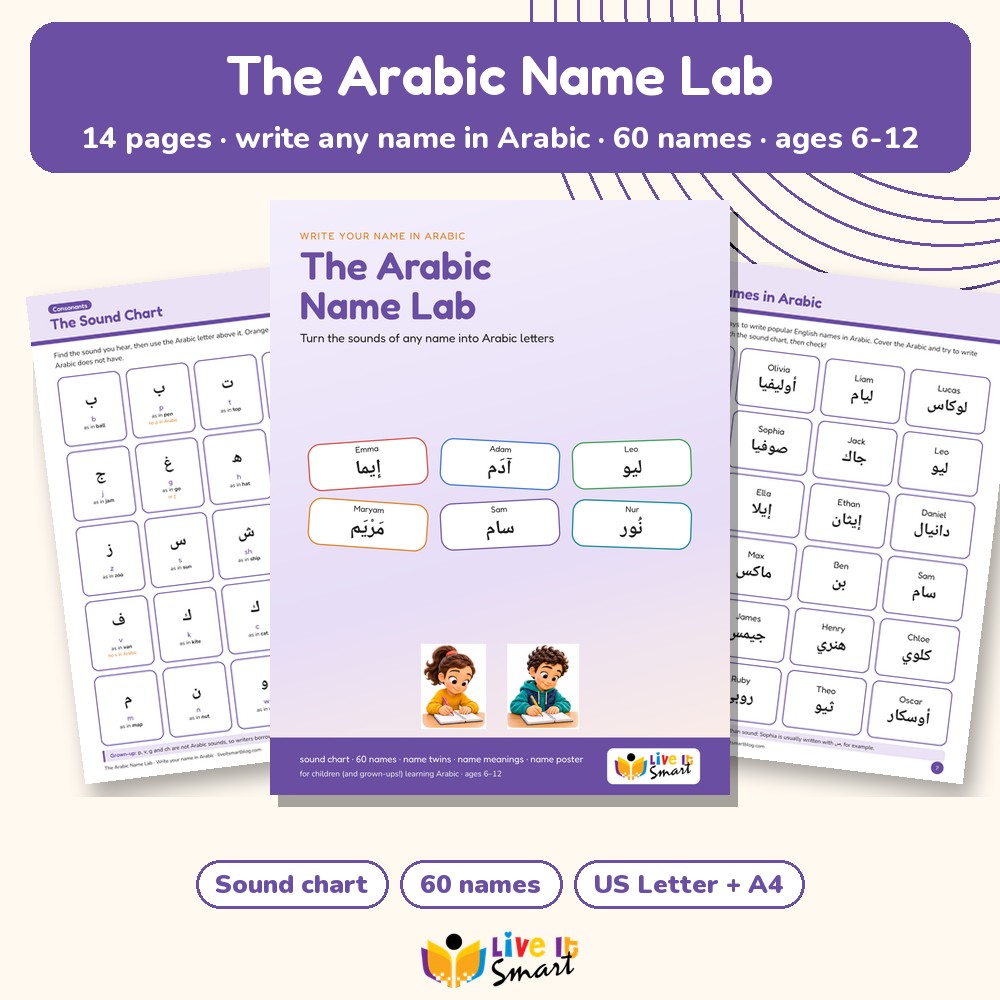
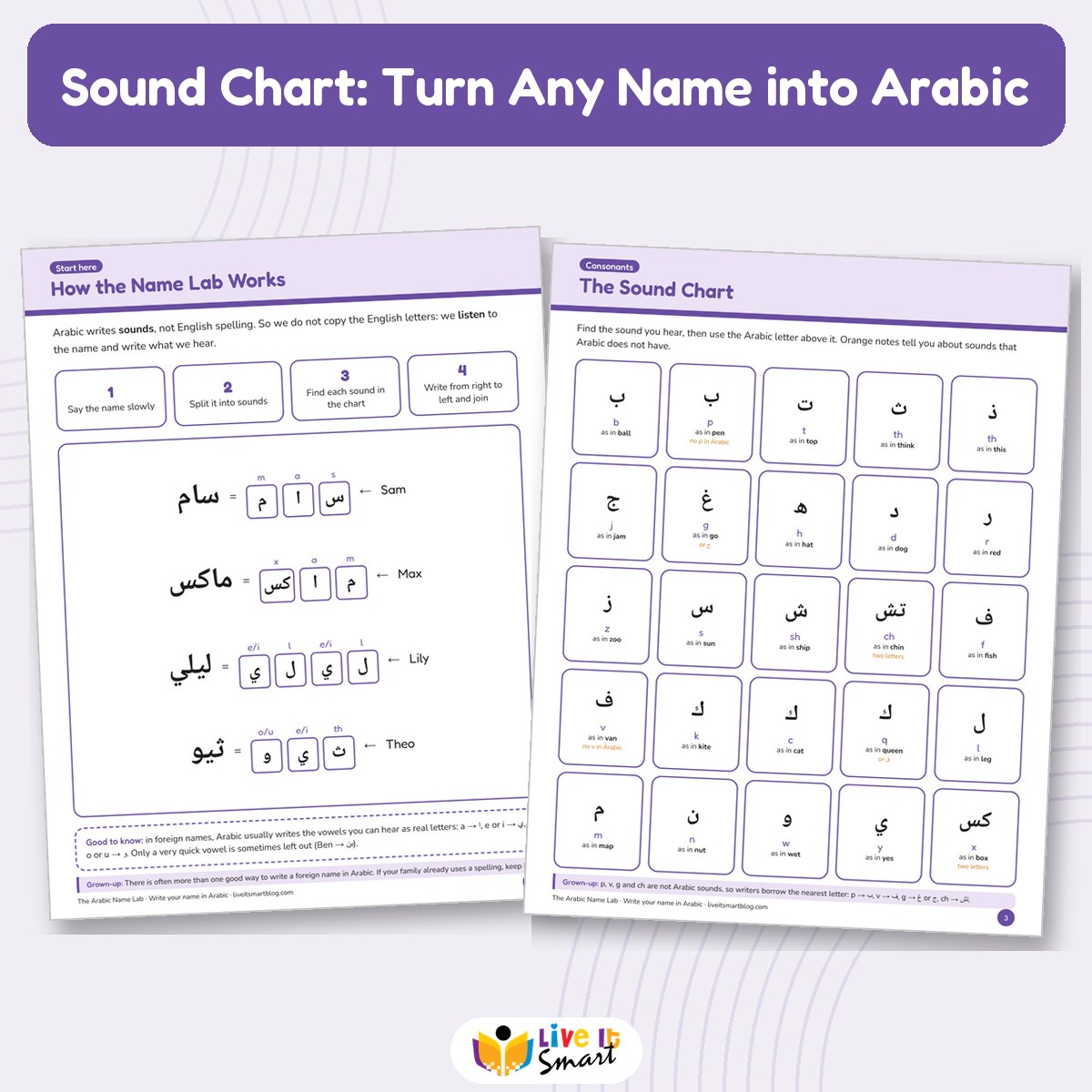
Children often ask how to write their own name in Arabic, and why there is no letter P. The Name Lab gives them a sound chart that matches English sounds to Arabic letters, so they can write their own name and their friends' names.
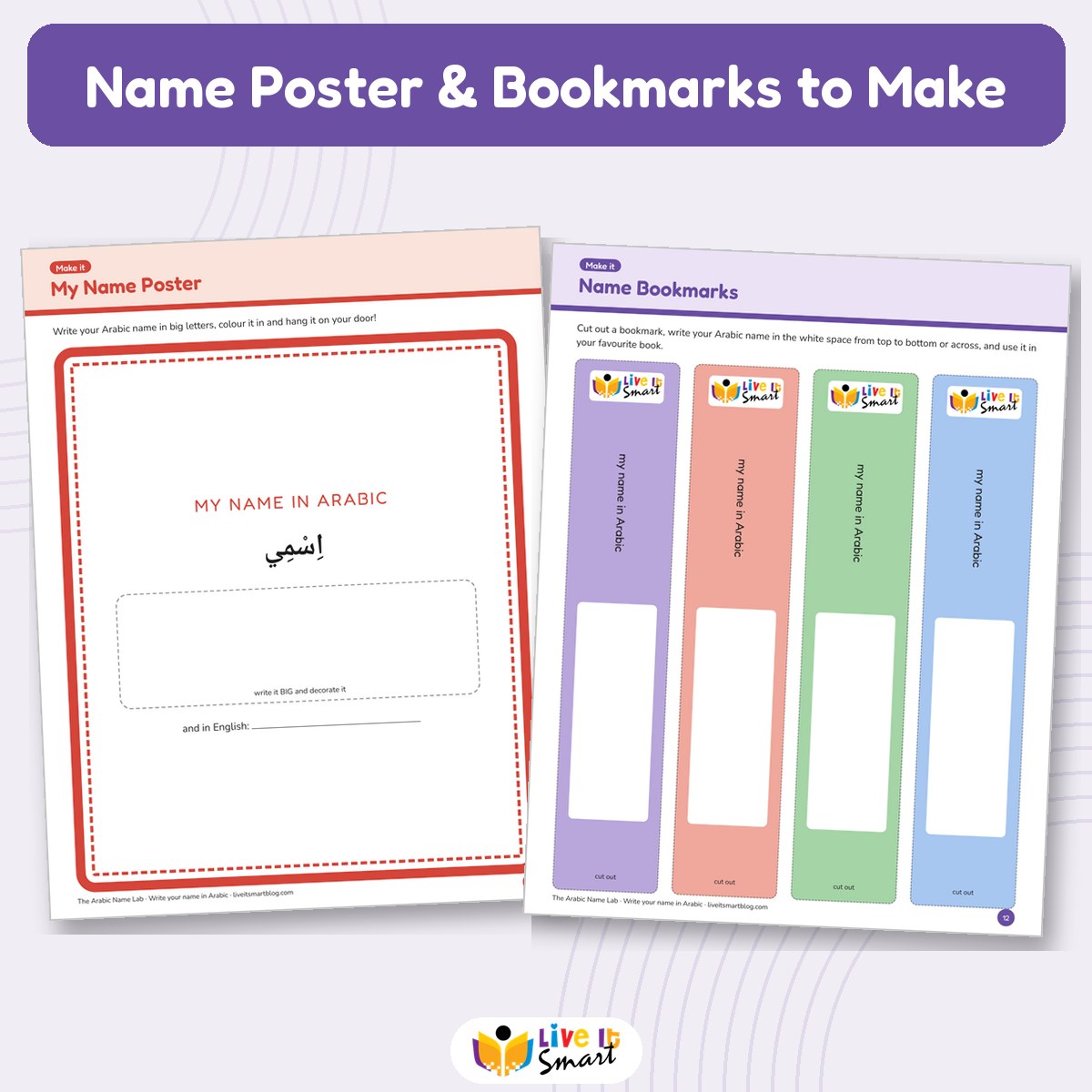
It is a good first-week project for a new class, and each child finishes with a name poster and a bookmark.
What's included (14 pages)
- How the Name Lab Works
- The Sound Chart: 25 English sounds and their Arabic letters (p is written ب, v is written ف)
- Vowel Sounds, including how names begin (Adam, Emma, Olivia)
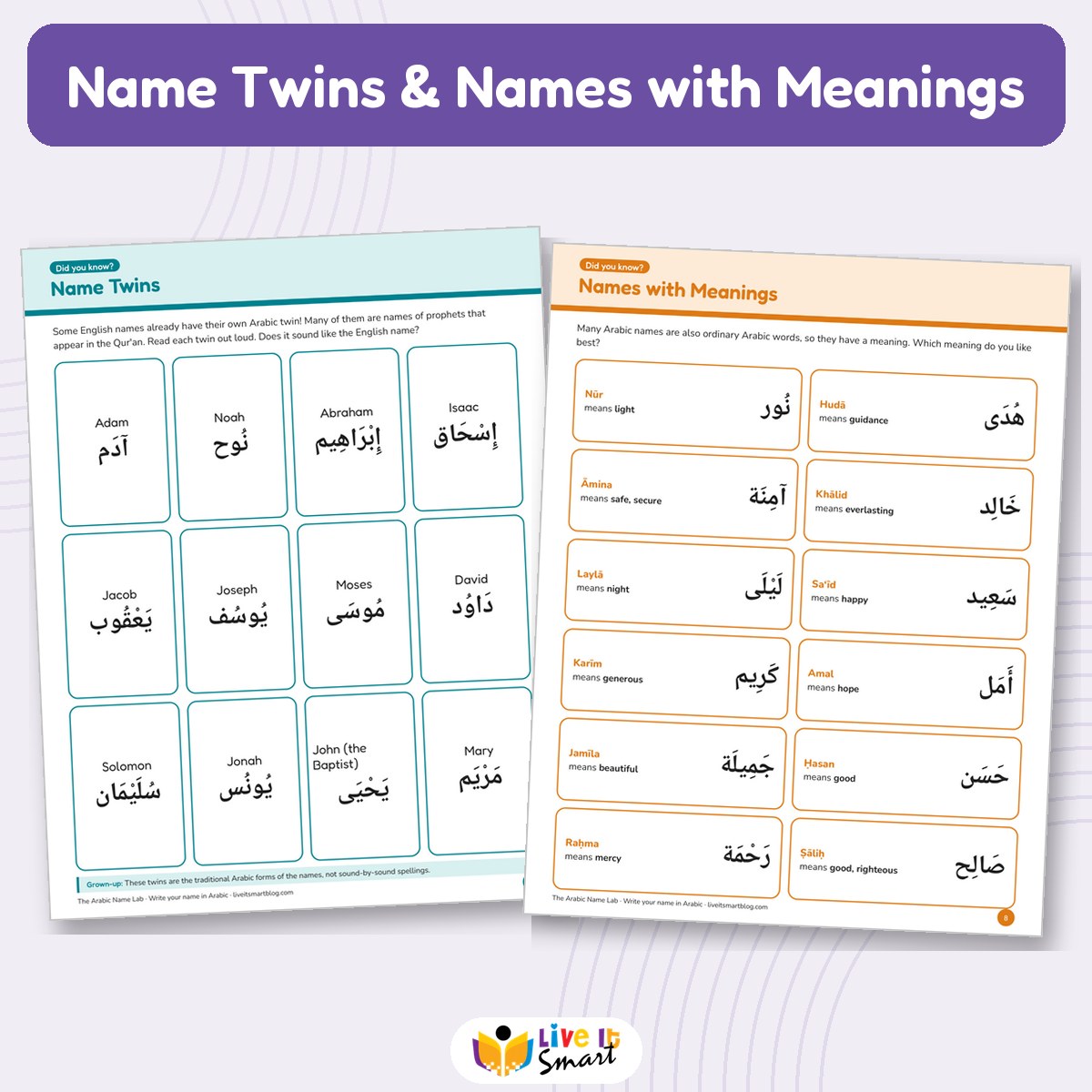
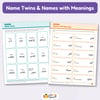
- Name Twins: prophets' names in English and Arabic, such as Joseph / يُوسُف and Noah / نُوح
- Arabic Names: 12 for boys and 12 for girls, with transliteration
- English Names in Arabic: 24 common names
- Names with Meanings: نُور (light), أَمَل (hope), كَرِيم (generous) and others
- Build a Name, My Name Poster, My Family and Friends, and Name Bookmarks to cut out
- Certificate
- US Letter and A4
Good to know
The Arabic names are fully vowelled. English names are written the usual way, without marks. Many foreign names can be spelled in more than one way; if your family already uses a spelling, keep it.
Dyslexia-friendly: one sound chart to keep coming back to, with the child's own name as the starting point.
Who it is for
Ages 6–12, and adults, learning the Arabic letters. Useful in the first week of weekend school.
Works well with: Use it alongside the Harakat Workbook, together with The Letter Train.
Instant download after payment: two PDF files, US Letter and A4. Print as many copies as you need for your own family or class.
New to teaching this at home? Read our free guide: How to Write Your Name in Arabic, Sound by Sound.