
Introduction to Iconography
On Sale
£2.00
£2.00
This lesson introduces learners to the concept of iconography in media texts, helping them understand how objects, props, costumes, and visual symbols communicate genre and meaning. Through interactive tasks and guided analysis, students will learn how to identify and evaluate the role of iconography across a variety of media forms.
🎯 Lesson Aim
- To understand what the term iconography means.
- To identify icons within different media texts.
- To analyse how iconography contributes to genre and audience response.
✅ Learning Outcomes
By the end of the lesson, students will be able to:
- Identify and categorise images into genres.
- Recognise recurring icons in media (films, adverts, music videos, games).
- Analyse how iconography builds tension and atmosphere in a media text.
📝 Lesson Structure
- Starter Activity – Students predict the meaning of iconography.
- Do Now Task – Pair activity categorising a selection of images into genres, justifying choices.
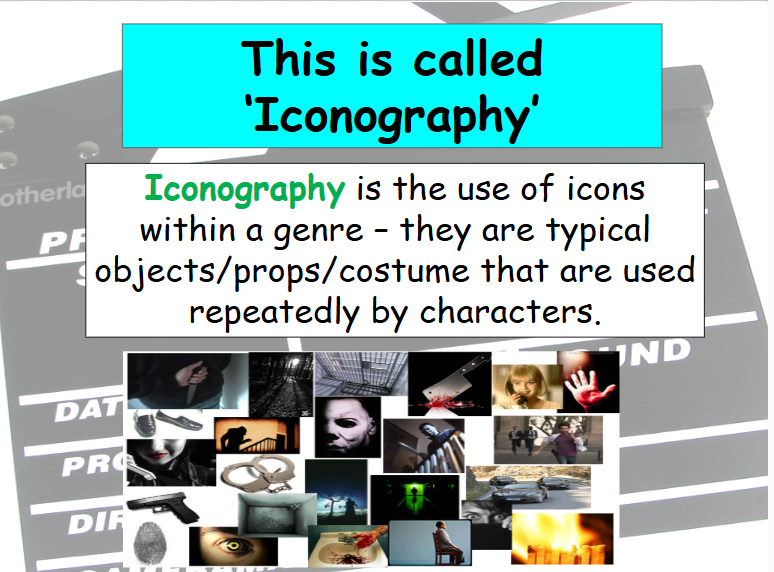
- Key Teaching Point – Explanation of iconography as recurring genre indicators (objects, props, costumes).
- Exploration – Identifying icons across different media types (films, adverts, music videos, video games, TV).
- Main Task – Close analysis of two media texts (e.g. Nike TV advert & The Woman in Black trailer). Students evaluate how iconography creates meaning and tension for audiences.
- Reflection Points – Throughout the lesson, learners consider why iconography is important for both creators and audiences.
✍ Final Writing Task
Learners respond to the question:
“How successful is the iconography used in the Woman in Black trailer in building tension for the audience?”
- Using a scaffolded writing frame, students plan and structure their answer with PEA(L) (Point, Evidence, Analysis, Link).
- The task consolidates learning and builds analytical writing skills.
📦 What’s Included
- Full lesson presentation (PowerPoint).
- Interactive starter and discussion activities.
- Worksheet and writing frame for the final task.