
Who Pays While China's Robots Learn: China's Embodied AI Industry, 2026 Edition
On Sale
$99.00
$99.00
One line
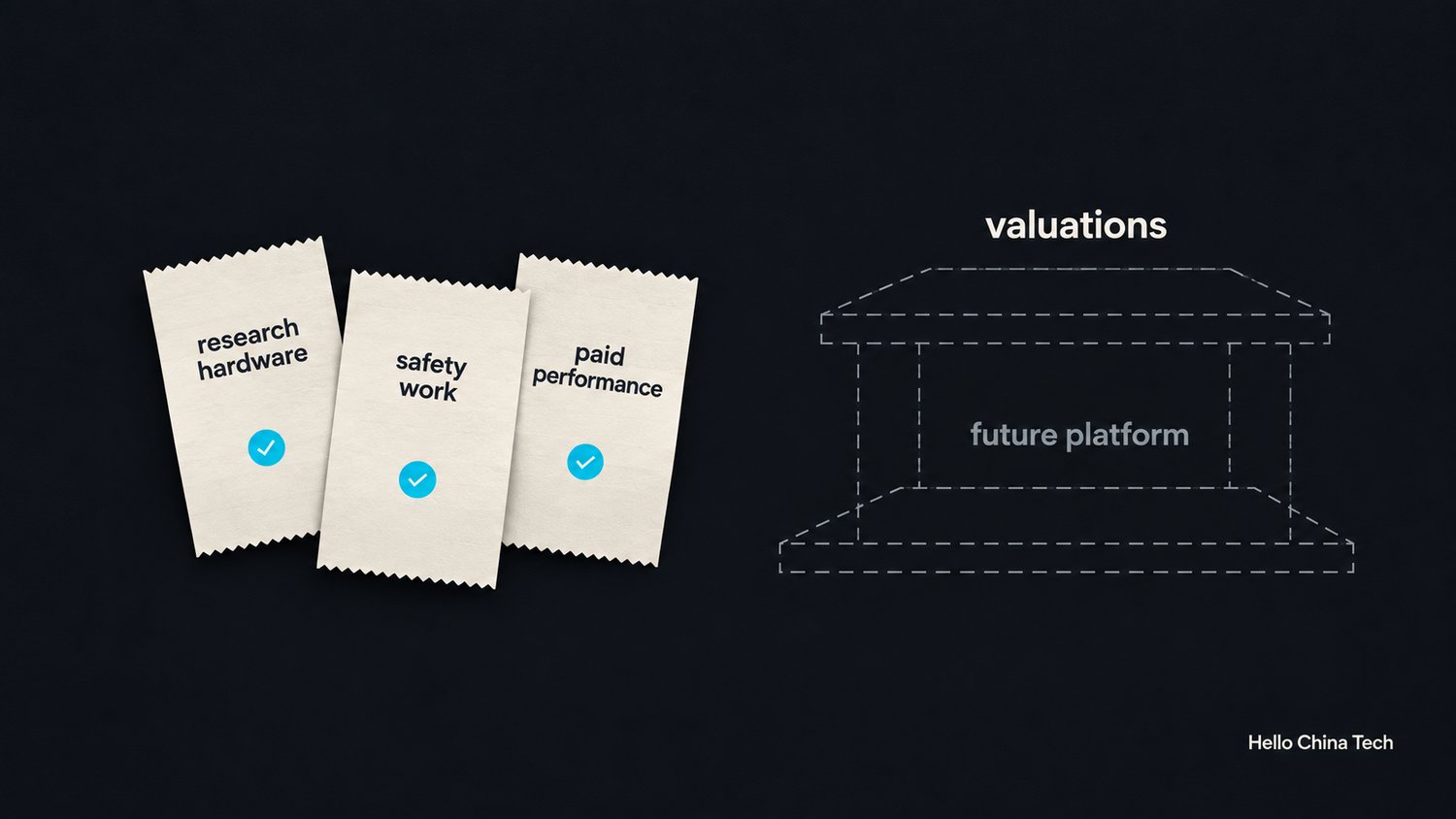
China’s robot companies earn their money from research labs, safety work and stage shows. Their valuations assume something else. This report shows who pays for the gap, and what evidence would change that picture.
Three questions this report answers
- Which of China’s robot businesses make money today, and who are their buyers?
- Who is paying for the general-purpose robot that valuations assume: private investors, capital markets or the state?
- Which evidence would show that productive demand has arrived, and which would show progress toward general-purpose capability?
Contents
- Executive Summary. The full argument in short points.
- Introduction. Why “boom or bubble” is the wrong question for China’s robot sector.
- 1. One Label, Five Businesses. Research hardware, safety work, performance, factory labor and companionship, plus the model-first group that mostly waits. One table maps all six.
- 2. Who Pays Today. What Unitree’s buyer table shows, why factories are the missing buyer, and how to read order announcements.
- 3. Who Pays for the Wait. Private capital, listings before profit, and the state’s new tools: leasing, payment linked to use or utility, insurance and exit channels.
- 4. How Long the Wait. Two waits, legs, hands and brains, and who may own the model when capability arrives.
- 5. How You Will Know. Filings against folklore, shipment counts that disagree, and a table of the evidence that would change each judgment.
- Scorecard. Eleven of my earlier calls on this sector, graded in public, including forecasts I got wrong and framings I have withdrawn, each with the assumption behind it.
- Watchlist. Twelve checkpoints, seven of them dated, starting with Unitree’s third-quarter report on October 29, 2026.
- Data Appendix. Shipments, funding, two prospectuses side by side, and the policy documents cited, each with its source and source level.
Who it is for
- Investors who follow Chinese robotics, Hong Kong and STAR Market listings, or the global humanoid trade.
- Policy researchers who track how the Chinese state funds and measures a new industry.
- Industry readers who need a map of China’s robot sector by business, not by company.
What makes it different
The Scorecard grades my own past calls against public documents, including the ones I got wrong. The data tables give a source and a source level for each figure, and where sources disagree, both are shown.
Format
About 10,000 words, plus data tables. PDF. 2026 Edition. Data as of October 6, 2026.
Price
$99. Annual paid subscribers to Hello China Tech get a member price; the code is sent separately. Founding members and Institutional clients receive the report as part of their plan.