
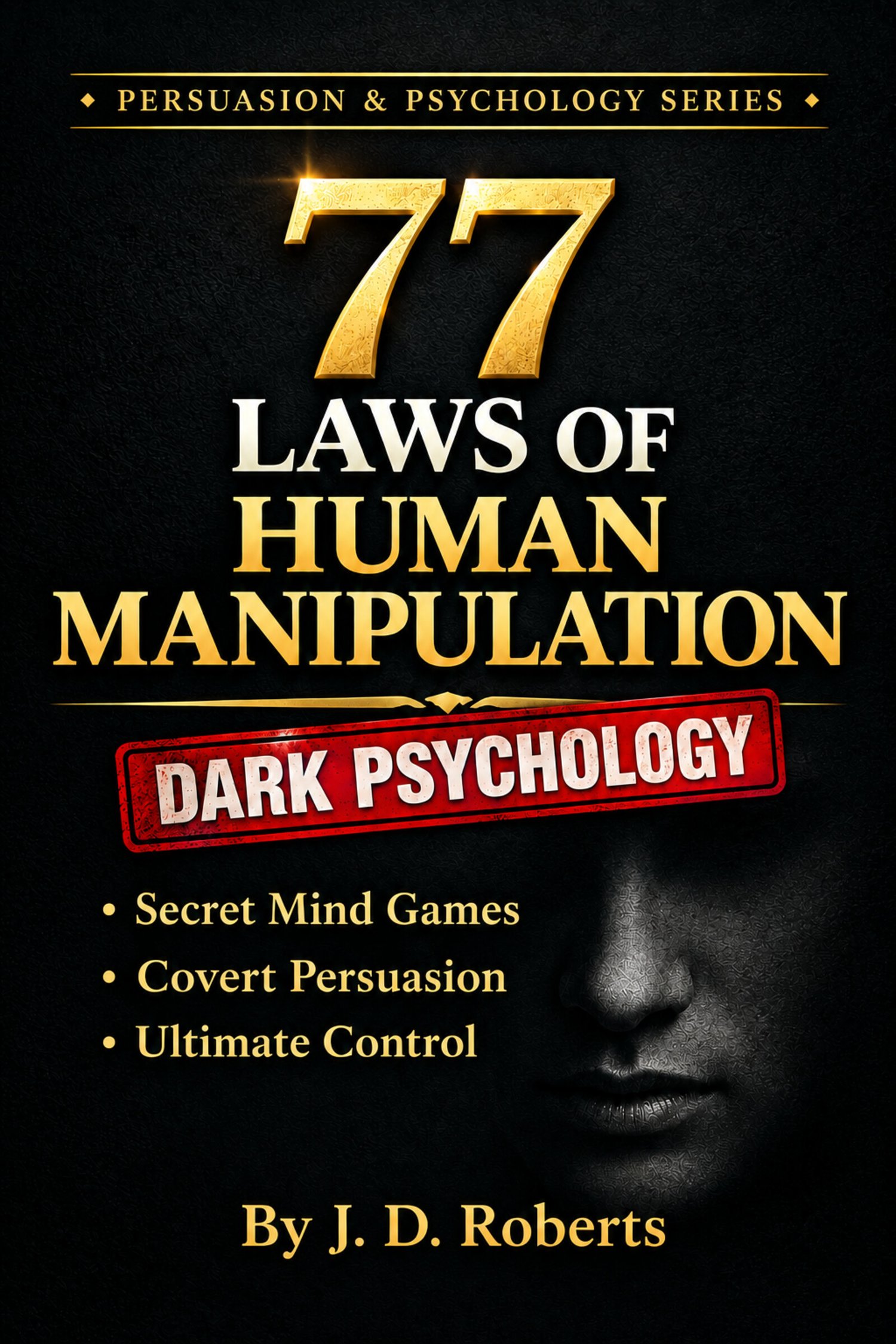
77 Laws of Human Manipulation
The most dangerous manipulation is the kind you don't recognize until you've already complied.
A request doesn't have to sound threatening to be controlling.
Sometimes manipulation arrives as a compliment. Sometimes it appears as disappointment. Sometimes it takes the form of urgency, guilt, silence, excessive generosity, selective information, or the suggestion that everyone else already agrees.
The mechanism works because you respond to the surface rather than seeing the structure underneath it.
77 Laws of Human Manipulation examines the patterns through which influence, persuasion, social pressure, and power operate in everyday life.
Organized into five stages—from the architecture of deception to the long game—the book explores how people conceal motives, control information, exploit emotional vulnerabilities, create artificial urgency, establish social leverage, manage reputation, and influence decisions without appearing to do so.
Among the laws you'll encounter are principles concerning:
• Why people often show you what works rather than who they truly are
• How information becomes leverage
• Why the person who knows what you don't know can control the conversation
• How selective generosity can create invisible obligations
• Why the need to be liked can become a vulnerability
• How victimhood can sometimes become a position of social power
• Why what someone consistently refuses to discuss may deserve attention
• How silence can change the balance of an interaction
• Why manufactured urgency should trigger scrutiny rather than compliance
• Why clarity can disrupt manipulation
• How reducing dependence can increase your freedom
• Why visible power is often less durable than invisible influence
• And why understanding the game does not necessarily mean becoming part of it
But this is not a book about becoming colder, more cynical, or more manipulative.
The final objective is awareness.
Once you can recognize the pattern, you have a choice. You can ask a better question. Delay your response. Establish a boundary. Request the missing information. Refuse the manufactured deadline. Walk away. Or simply recognize what is happening without allowing it to dictate your behavior.
Because manipulation loses much of its power when it becomes visible.
77 Laws of Human Manipulation is for readers interested in psychology, persuasion, human behavior, negotiation, social dynamics, power, and the hidden mechanisms behind everyday interactions.
See the pattern. Name the mechanism. Keep your choice.
That final positioning is especially consistent with the manuscript's own conclusion, which says the knowledge is a responsibility and gives the reader the possibility of acting from genuine choice rather than automatically reacting to social pressure.