

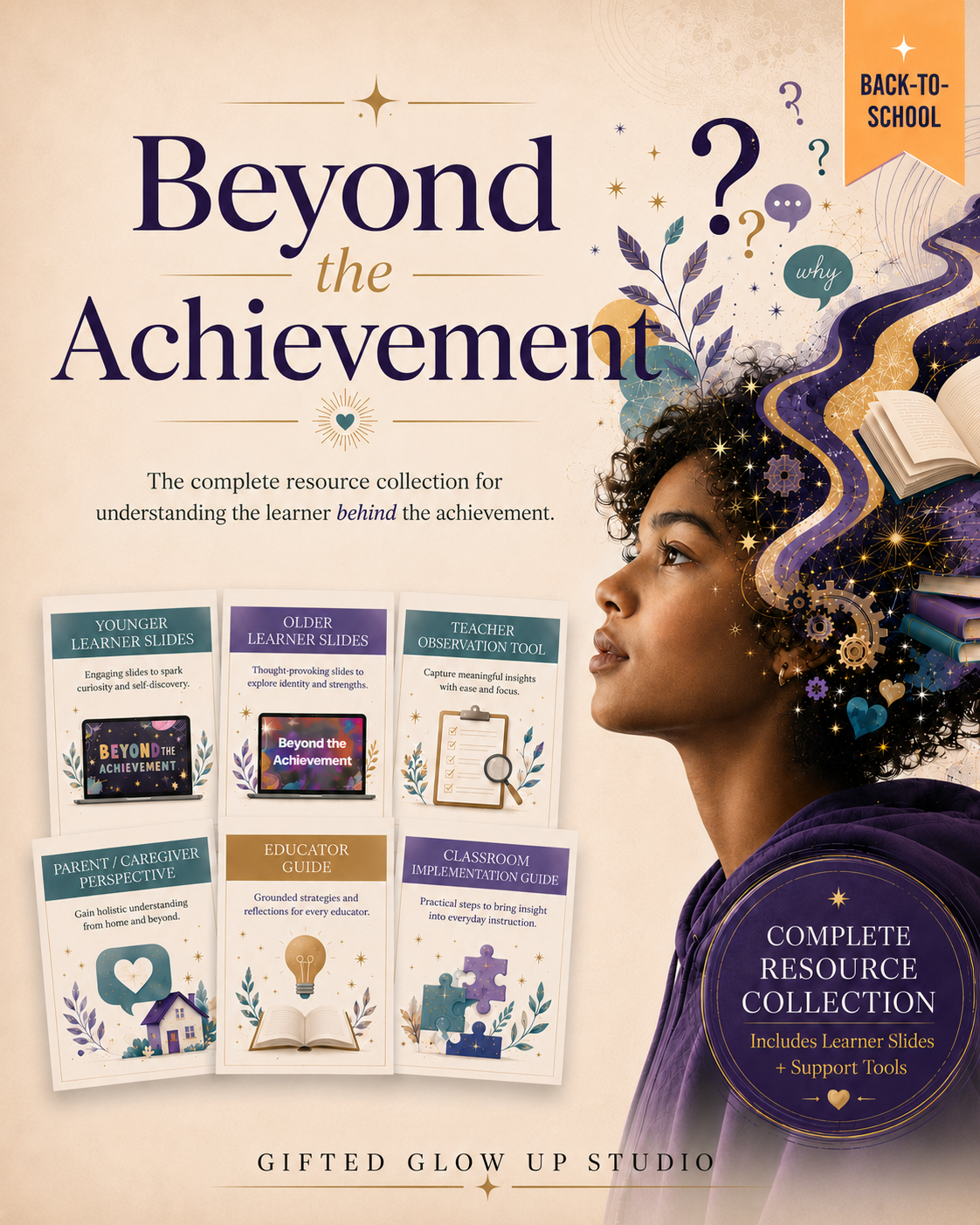
Beyond the Achievement: A Gifted Learner Insight Collection
Most beginning-of-the-year activities ask students what they like. Beyond the Achievement helps educators understand how their minds work.
This comprehensive gifted learner insight collection is designed to help teachers see beyond performance, grades, and test scores. Through thoughtful, age-appropriate reflection prompts, learners explore what activates their curiosity, how they experience underchallenge, what happens when learning becomes genuinely difficult, what adults may misunderstand, and what they need in order to take intellectual risks and grow.
Rather than creating a fixed label or traditional “All About Me” profile, Beyond the Achievement opens meaningful conversations about engagement, challenge, identity, intensity, motivation, and classroom belonging.
The complete collection includes 147 ready-to-present learner reflection slides:
Younger Learner Slides: 66 slides
Recommended for grades 1–3
The younger learner version uses accessible, student-friendly prompts that invite learners to reflect on:
- What lights up their minds
- How they learn best
- What happens when learning feels too easy
- How they respond when learning feels difficult
- What adults sometimes misunderstand
- The social and emotional side of learning
- Goals that extend beyond grades
The slides can be used for whole-group discussion, individual reflection, journaling, student conferences, or one prompt at a time throughout the year.
Older Learner Slides: 81 slides
Recommended for grades 4–8, with flexibility for early high school
The older learner version explores the same essential areas with greater depth and nuance. Learners reflect on:
- Intellectual interests and self-directed learning
- Preferred conditions for engagement
- Repetition, mastery, and meaningful extension
- Uncertainty, feedback, productive struggle, and avoidance
- Strengths or behaviors adults may misinterpret
- Masking, intellectual safety, peer connection, and group work
- Personal growth, intellectual risk-taking, and success beyond achievement
These prompts are especially useful for helping older gifted learners develop metacognition and communicate what may not be immediately visible through their classroom performance.
Also Included: The Learner Insight Toolkit
The collection also includes a 12-page educator and caregiver toolkit designed to turn reflection into responsive action:
Teacher Observation Tool
Helps educators identify patterns across time and contexts, including intellectual engagement, signs of underchallenge, response to difficulty, emotional safety, and strengths that may be misread.
Parent/Caregiver Perspective
Invites insight from beyond the classroom, including long-term interests, responses to challenge, emotional intensity, support needs, and differences between home and school.
Educator Guide
Helps teachers interpret student responses without turning preferences into permanent labels. It includes practical guidance for translating learner insight into instructional decisions, meaningful challenge, student agency, and continued conversation.
Classroom Implementation Guide
Provides flexible ways to use the resource, including:
- A beginning-of-the-year reflection
- One section at a time
- Student-teacher conferences
- Family partnership
- Midyear reflection and revision
A Natural Companion to The First 10 Days of Deeper Thinking
The First 10 Days of Deeper Thinking helps teachers establish a classroom where curiosity, complexity, and original thinking belong.
Beyond the Achievement helps teachers understand how each individual learner experiences that classroom.
One builds the culture for deeper thinking.
The other helps educators understand the minds entering it.
Use them together to begin the year with both a thinking-rich classroom environment and a more responsive understanding of the gifted learners within it.
Beyond the Achievement is not simply another back-to-school activity.
It is an invitation to understand the learner beneath the performance and to use that understanding to create more responsive challenge, stronger relationships, and classrooms where gifted learners feel genuinely known.
Because before we plan for achievement, we need to understand the mind behind it.
***Glow Up Resource Library Member?
This complete resource is already included with your membership and available inside the organized Google Drive Library.
Not yet a member? The Glow Up Resource Library includes this resource and an expanding collection of downloadable and ready-to-use tools created specifically for gifted learners, educators, and families!
© Gifted Glow Up Studio. For individual purchaser use only. Please do not share, redistribute, resell, or upload these resources to publicly accessible platforms.