

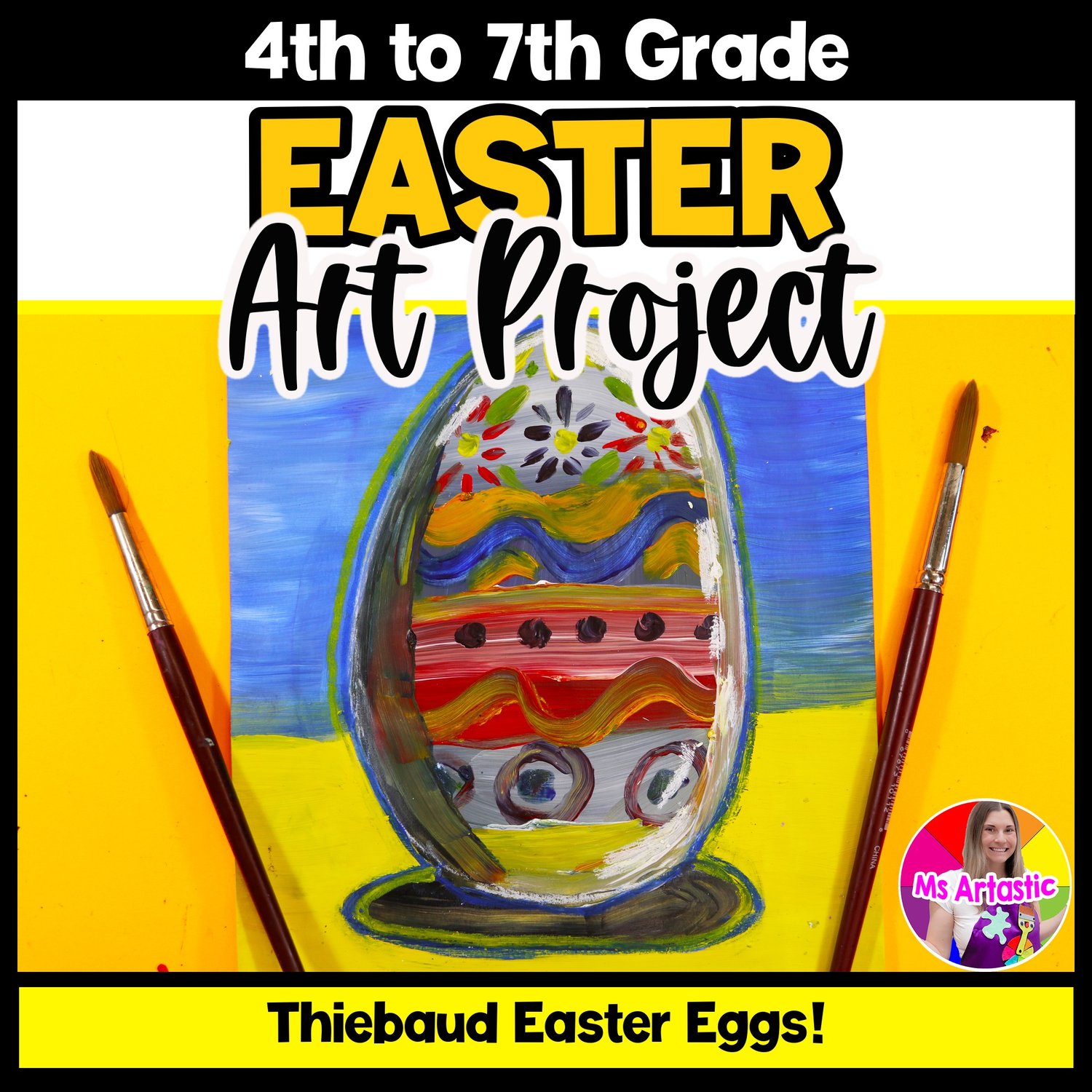

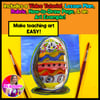

Easter Egg Art Lesson Wayne Thiebaud Inspired Easter Art Project Easter Painting
Looking for an Easter painting lesson that teaches color theory, art history, and creative expression all in one engaging project? This Wayne Thiebaud inspired Easter Egg art lesson introduces students to the colorful painting style of the famous artist while guiding them through creating their own vibrant Easter egg painting. Students explore color mixing, tints, shades, highlights, and contrast while learning how artists use color and brushwork to make objects appear dimensional and visually exciting.
In this Easter art history painting lesson, students paint a decorative Easter egg using acrylic paint while studying the bold color style inspired by artist Wayne Thiebaud. The lesson focuses on primary colors, color mixing, tints, shades, and expressive brushwork, helping students develop stronger painting skills while exploring the Elements of Art: Color.
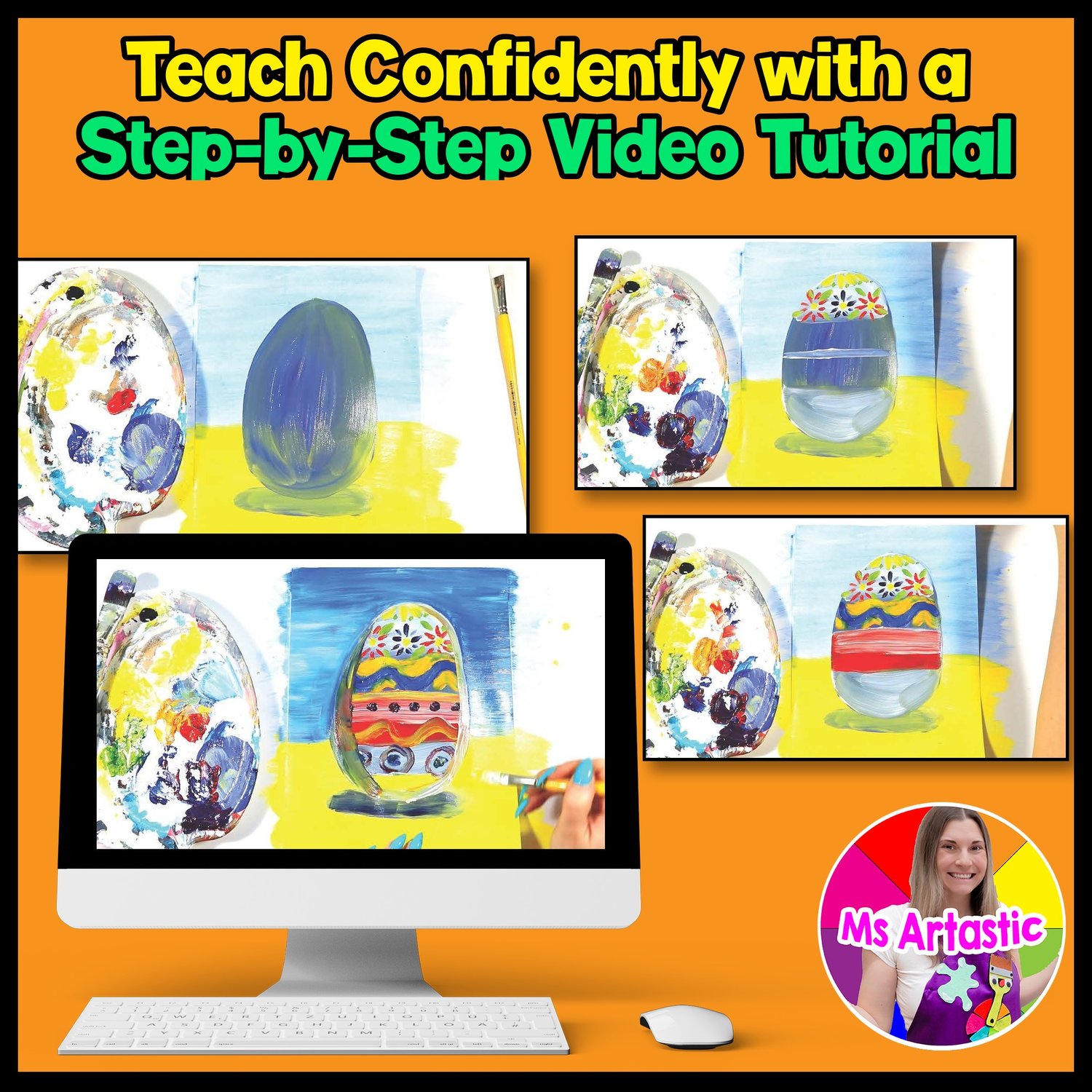
VIDEO ART LESSON
This is a video art lesson. Your download includes the lesson plan and printable pages, plus a "Watch the Video" page with a clickable link and QR code to the step-by-step video tutorial, so you can watch it anytime and show your class again later.
This project is perfect for elementary art classrooms, general classroom teachers integrating art, homeschool families, and spring art units. Students complete a colorful Easter egg painting while also participating in reflection, research, and discussion activities that deepen their understanding of how artists work.
Do you want a spring painting lesson that introduces students to art history while practicing color theory and brush control?
This lesson works wonderfully for:
• Easter themed art lessons
• spring art units
• elementary painting lessons
• art history units
• homeschool art education
• substitute teacher art plans
• seasonal bulletin board displays
Teachers often integrate this lesson with:
• color theory units
• painting technique practice
• art appreciation lessons
• discussions about contemporary artists
• spring themed creative units
Because students are painting with acrylic paint and exploring color mixing, they gain hands-on experience with how artists build colors, create contrast, and make artwork feel vibrant and alive.
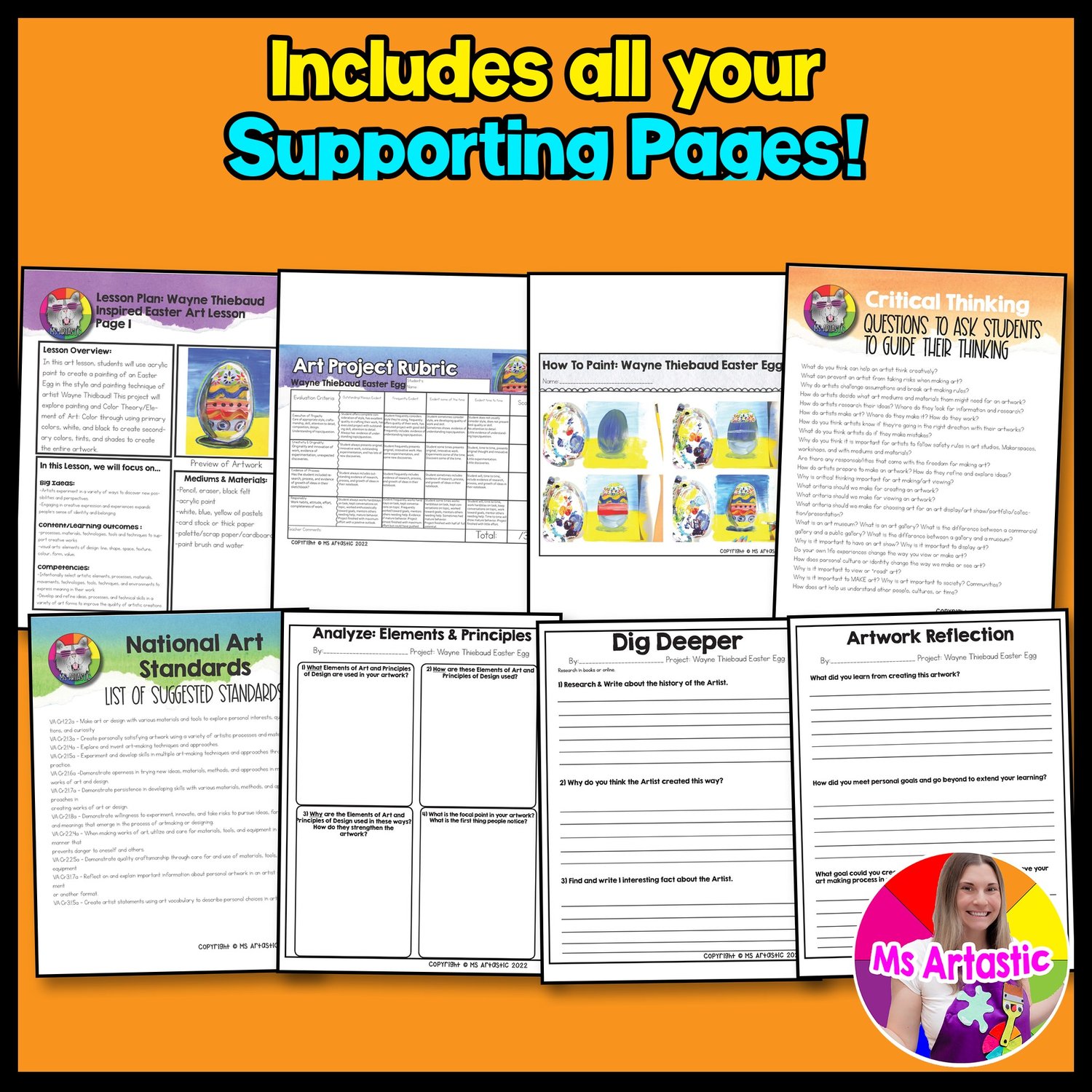
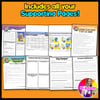
THIS RESOURCE INCLUDES (NON-EDITABLE)
• Complete Easter painting lesson plan with teacher guidance for introducing the project and supporting students during the painting process
• Preview artwork poster page that can be shown to students before starting the lesson to introduce the project
• Step-by-step painting guide pages demonstrating how students build the Easter egg painting from start to finish
• Teacher example artwork page showing what the finished Easter egg painting can look like
• Student art reflection worksheet where students analyze the elements and principles used in their artwork
• Artist research activity page where students research the life and work of Wayne Thiebaud
• Guided art reflection questions that help students analyze artistic choices and think critically about art
• Student artwork reflection page where students reflect on their learning and creative process
• Artist statement worksheet where students describe their artistic decisions and explain their finished artwork
• Detailed art project rubric assessing creativity, craftsmanship, effort, and understanding of the project
• Critical thinking discussion prompts that help teachers guide conversations about artistic processes, creativity, and visual storytelling
WHAT ART MATERIALS WORK WELL FOR THIS PROJECT
This painting lesson is designed to be flexible for most classroom art supplies.
The example artwork uses:
• acrylic paint
• oil pastels
• pencil and eraser
• black felt marker
• card stock or thick drawing paper
• paint brush and water
• palette or scrap paper for mixing paint
Teachers can adapt the lesson depending on available supplies while still focusing on color theory and expressive painting techniques.
Your support helps me continue creating new art lessons for classrooms and homeschool families.
FAQ
Q: Who can use this resource?
A: This lesson works well for elementary art teachers, classroom teachers integrating art into their lessons, homeschool educators, and substitute teachers looking for an engaging seasonal art activity.
Q: How can this resource be used effectively?
A: Teachers introduce the project and artist, students follow the guided video tutorial to paint their Easter egg artwork, and the included reflection and research pages help extend the lesson into art appreciation and critical thinking.
Q: How long does this lesson take?
A: Most classes complete this project in 2–3 class periods, depending on student age, class length, skill level, and how much time is spent on reflection and research activities.
ABOUT THE AUTHOR
Kathleen McGiveron (Ms Artastic) is an artist who has been featured on NBC LX News and was the featured educator on the cover of OCO Magazine (October 2025). She designs engaging art lessons used by teachers and homeschool families around the world.
Images and Lessons are Copyright Products
YOU MAY:
For clip art, you may use them as clip art, website graphics, binder covers, or even bulletin board decorations.
Use this in creative ways! Explore and have as much fun with it as you would like
By additional licensing for school use.
YOU MAY NOT:
Use this on OutSchool
Put on your Blog
Share this product with other teachers, administration or districts. Admin can buy additional licensing.
Sell this product or give it out for free or photocopy it for others
Sincerely,
Ms Artastic
FILES YOU WILL DOWNLOAD
- Easter Thiebaud Eggs Art Lesson - Video Lesson + Lesson Plan - Ms Artastic.zip: the lesson plan and printable pages (PDF), plus a "Watch the Video" page (PDF) with a clickable link and QR code to the step-by-step video tutorial
★ Get free, classroom-ready art lessons and printables in my Free Art Lesson Library