
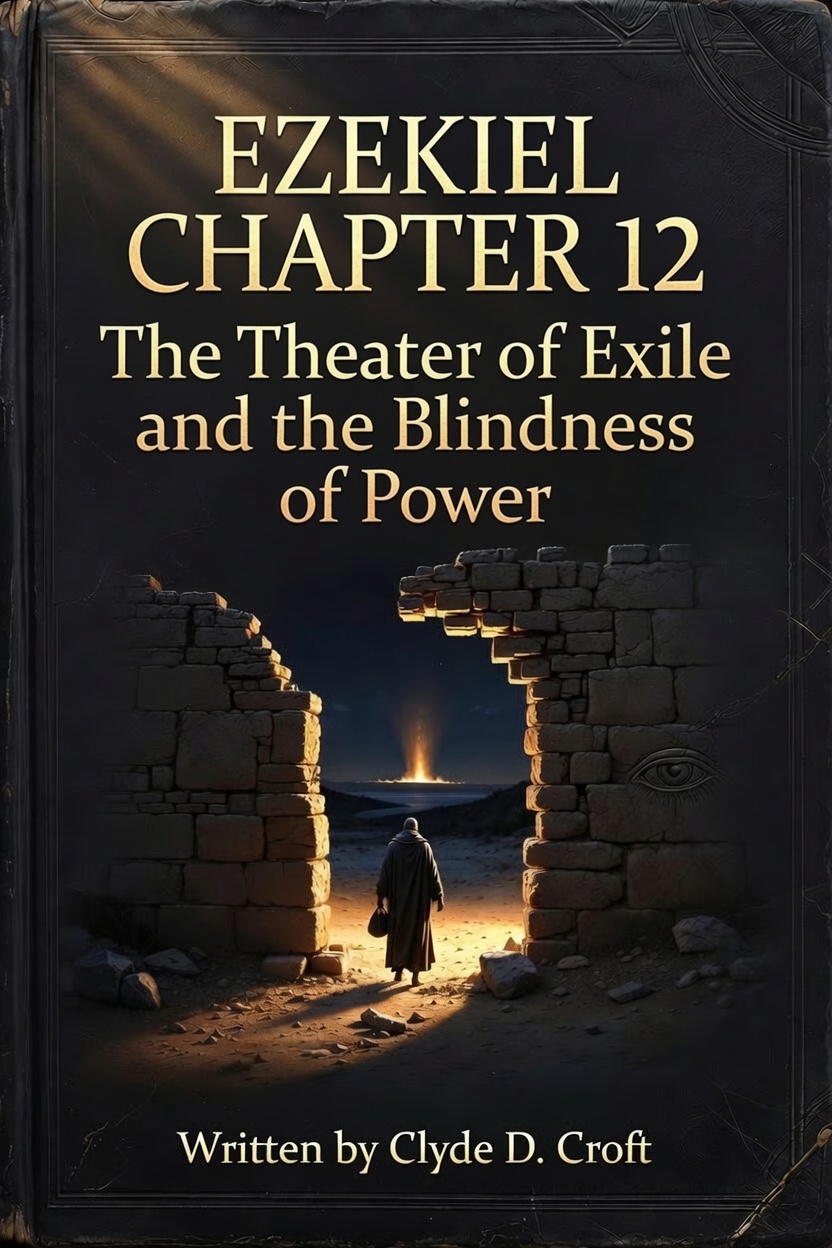
Ezekiel Ch 12 The Theater of Exile and the Blindness of Power
When words fail, the prophet becomes the sermon.
In the final days before Jerusalem's fall, a city drunk on false security has stopped listening. So God gives up on speeches and turns His prophet into street theater — Ezekiel packing his bags in broad daylight, tunneling through a wall by night, eating his bread with visibly trembling hands. It is performance art aimed at a king with eyes that refuse to see, and it ends exactly where such blindness always ends: in blood, darkness, and exile.
Ezekiel 12: The Theater of Exile and the Blindness of Power traces that ancient performance through an unlikely company of witnesses — Augustine naming the lust to dominate that blinds empires, the Epistle of Barnabas and the Wisdom of Solomon staging their own war between light and darkness centuries apart, Kierkegaard diagnosing the despair of a completion endlessly deferred, and Leon Festinger explaining the lies a mind will tell itself rather than face what it already knows.
The result is a chapter far older than modern psychology, already fluent in its every trick — and a warning that has never once gone out of date: reality does not wait for us to be ready for it.