
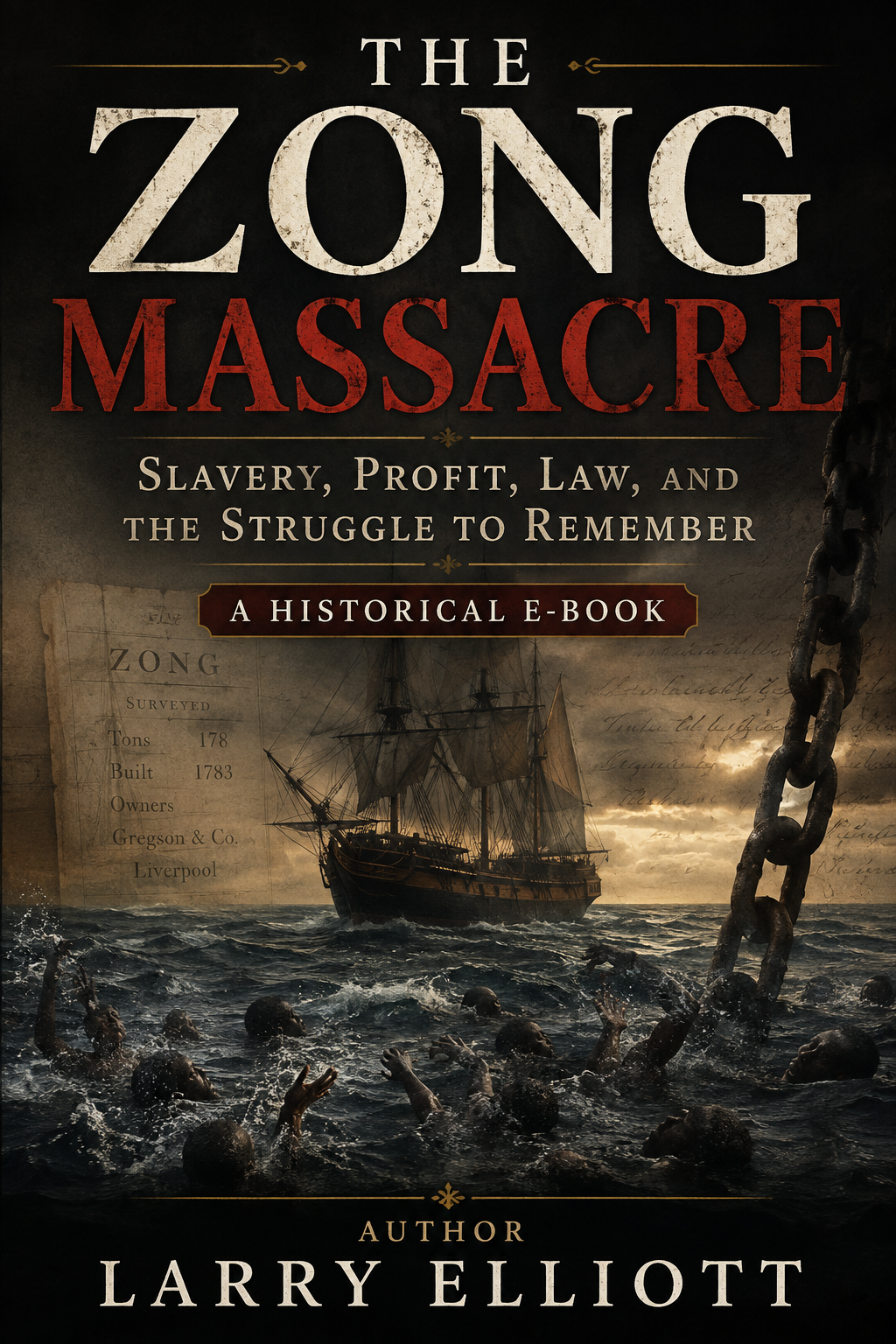
THE ZONG MASSACRE Slavery, Profit, Law, and the Struggle to Remember A Historical E-book
In 1781, in the middle of the Atlantic slave trade, the British slave ship Zong became the scene of one of
the most notorious mass killings connected to the trafficking of enslaved Africans. More than one hundred
captive Africans were deliberately thrown into the sea by members of the ship's crew. The killings were not
initially treated by British law as murder. Instead, the dispute that followed centered on money, insurance,
property, and whether the owners of the ship could recover financial losses for the human beings who had
been killed.
The Zong Massacre exposes the brutal logic of racial slavery in unusually stark terms. Human beings
were kidnapped, confined, transported, bought, sold, insured, and assigned monetary values. The massacre
was therefore not simply an isolated act of cruelty committed by a few individuals. It was connected to a
larger commercial system that rewarded profit, treated African captives as cargo, and permitted extreme
violence to become part of ordinary business practice.
This book examines the world that produced the Zong Massacre, the voyage itself, the decisions that led
to the killings, the insurance case that followed, the response of abolitionists, and the massacre's lasting
place in the history of slavery and human rights. Because many of the captives' individual names and life
stories were not preserved in surviving records, any responsible account must also acknowledge the silence
created by the slave trade itself.