
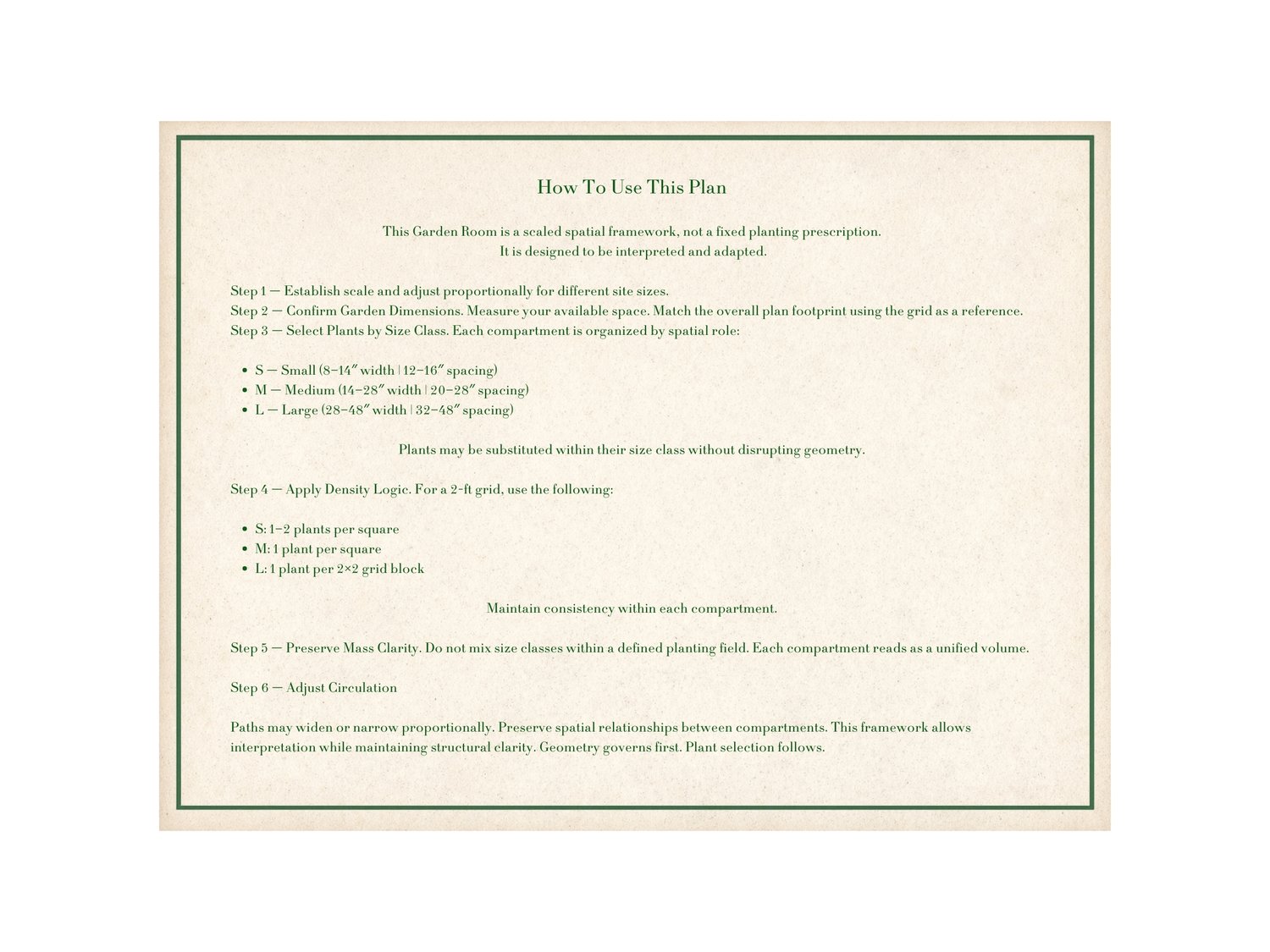
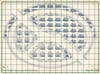
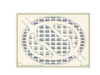
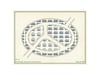
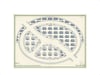

Garden Room I Oval Asymmetric Enclosure
This is a scaled adaptable architectural garden framework for experienced gardeners and designers who prefer structured spatial planning over template-based layouts.
What’s Included
- One complete high-resolution Garden Room PDF with 3 room variations.
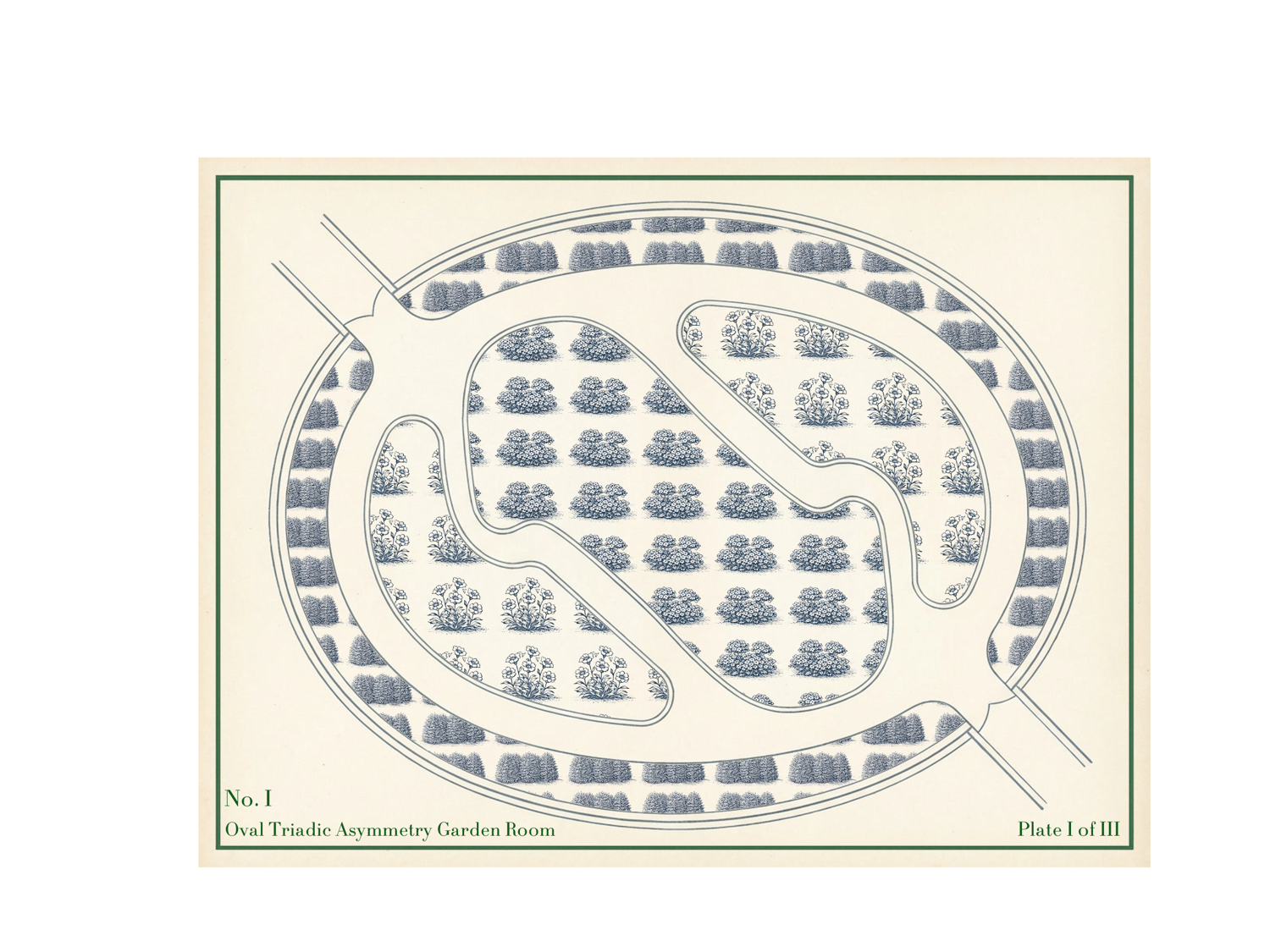
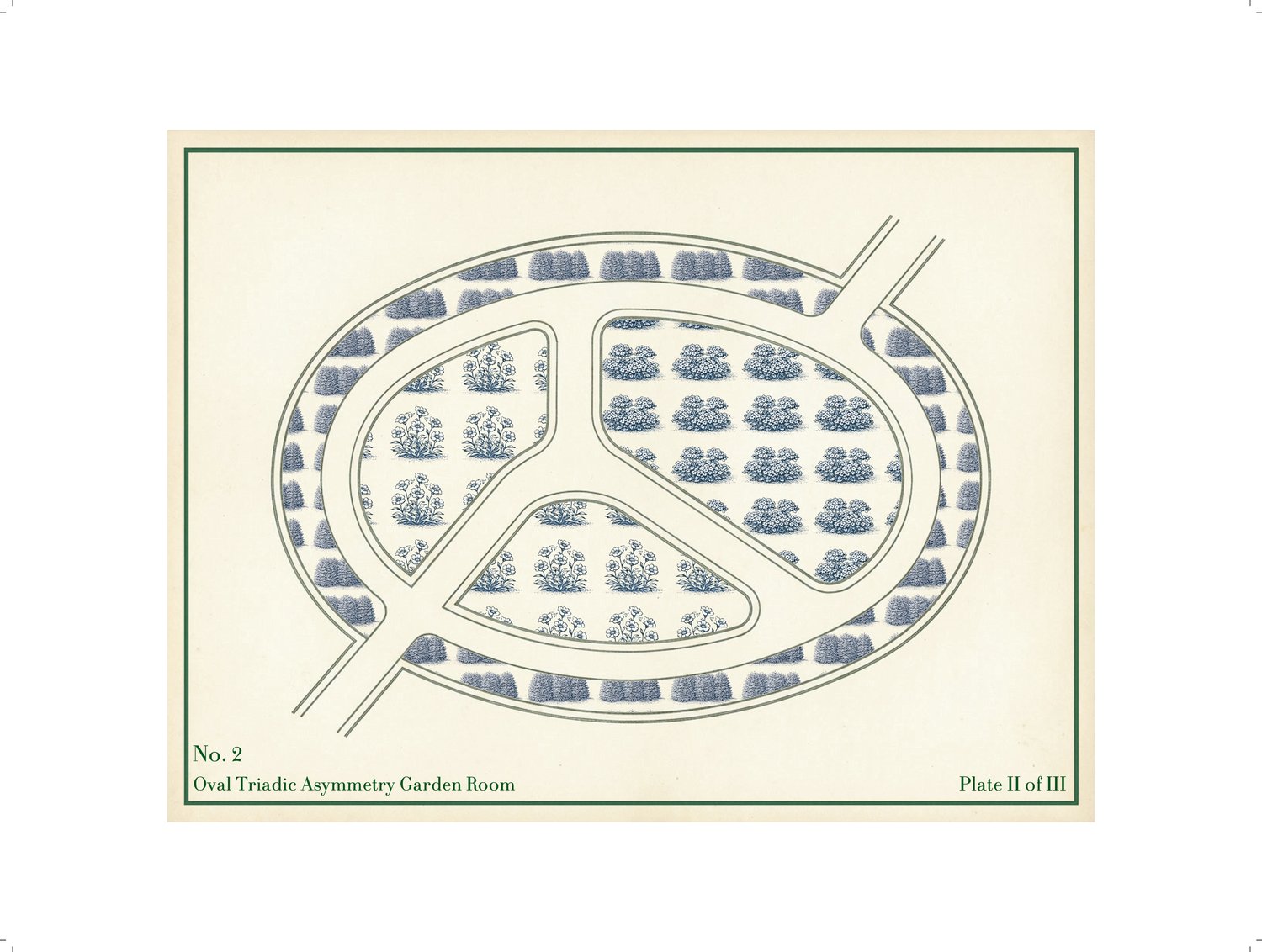
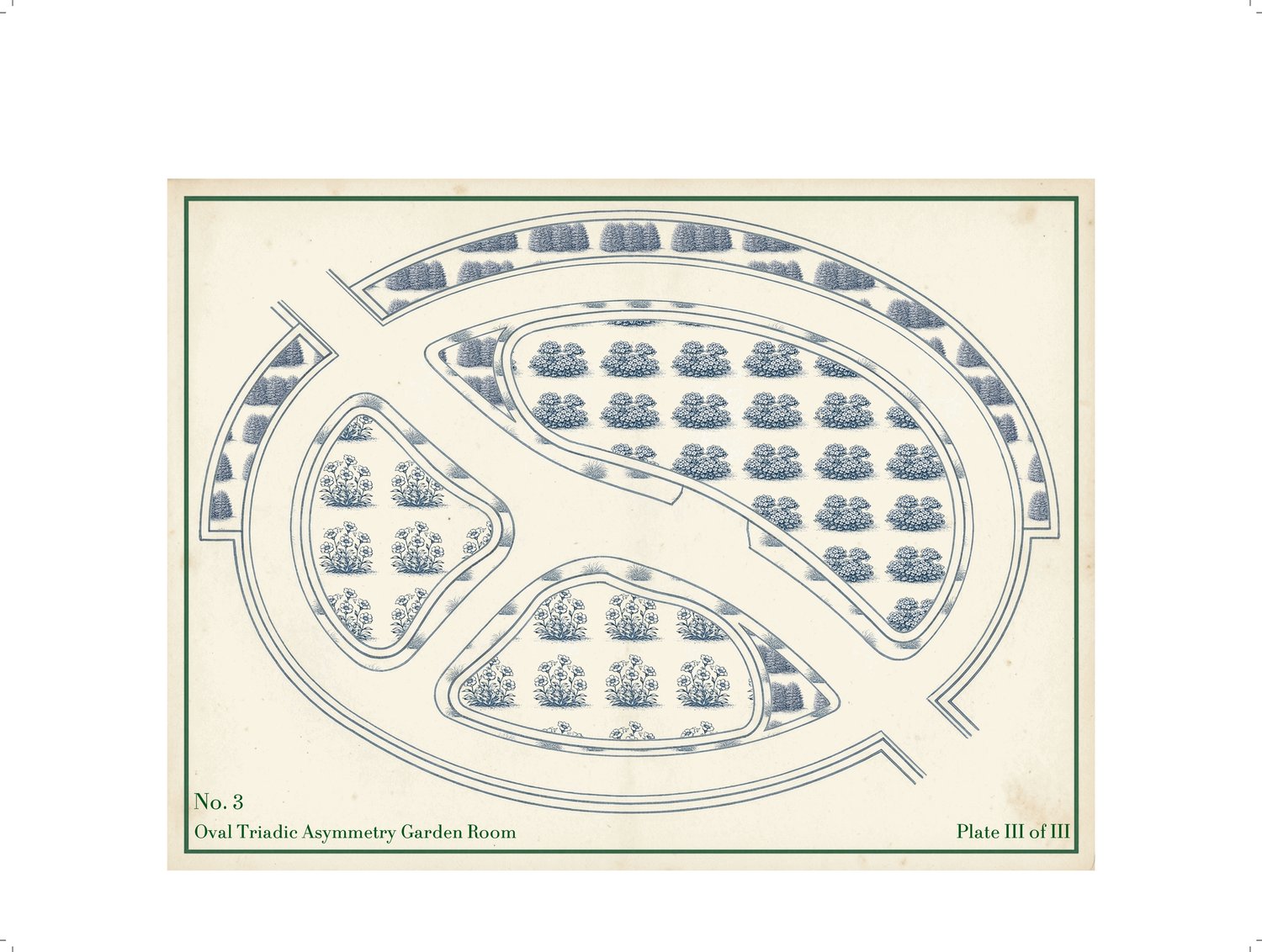
- Three finished design plates exploring variation within a single rectilinear enclosure organized through orthogonal circulation and compartmental massing.
- A title and cover plate.
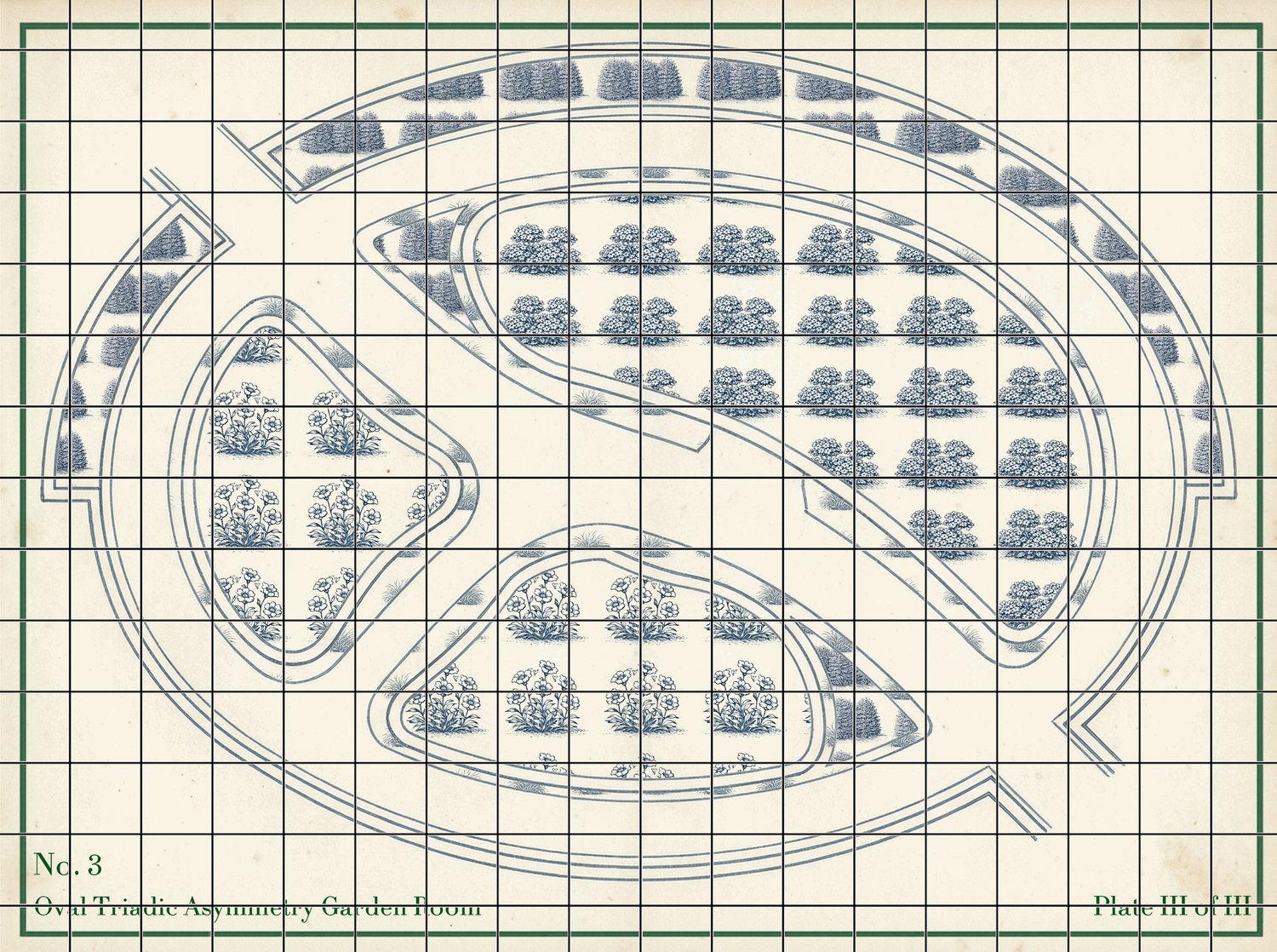
- Grid system for practical planting use for 3 room variations.
- Plant mass reference glyphs and a plant legend offering general plant suggestions.
- Interpretive design notes and visual reference material.
The Garden Room series is conceived as a set of spatial studies rather than rigid specifications. Each room is treated as a composed enclosure, defined by proportion, repetition, edge, and movement, where planting is understood as mass and relationship rather than inventory. The work draws from historical garden and architectural traditions associated with the late Renaissance to early Enlightenment period, when gardens were communicated through plates, plans, and variation rather than instructions. The intent is to offer a way of seeing and organizing gardens as rooms that are legible, enclosed, and capable of holding complexity without rigidity. The plates are meant to be read slowly and interpreted, functioning as reference objects and planning tools for gardeners, designers, and homeowners who prefer judgment and adaptation over fixed templates.
This Garden Room explores an oval enclosure held by a continuous hedge, within which asymmetry is introduced through path curvature, planting mass distribution, and subtle shifts in internal balance. The planting palette is deliberately restrained, chosen for clarity of form, seasonal continuity, and the way each plant holds space rather than competes for attention. Planting is treated as architectural mass at human height, lighter accents that introduce movement without visual noise, and quieter textures that regulate rhythm at ground level. The enclosing hedge is understood as a living wall that forms the structure of the room and allows the space to retain intention over time through shaping and maintenance.
Across the three plates, the same elements are recomposed to explore variation within a stable oval framework. Emphasis shifts between openness and containment, procession and pause, without breaking the underlying logic of the room. Paths lengthen or compress movement, planting masses gather or release visual weight, and the enclosing edge remains continuous and readable. Rather than presenting alternatives, the plates describe related moments within the same place, inviting the viewer to imagine walking, stopping, and returning, and experiencing the garden as a calm interior landscape shaped by proportion, repetition, and deliberate restraint.
The plates and grid overlays may be studied, scaled, adapted, or translated into real spaces according to the user’s own context, climate, and judgment. Plant selections are presented as general guidance and spatial roles, intended to be adjusted to local conditions and personal preference.
How to Use the Grid
The grid functions as a proportional scaling tool. Each square corresponds to the scale indicated on the specific plate (1 ft, 1.5 ft, or 2 ft). Use the grid to translate planting mass into appropriate on-center spacing. Small plants occupy tighter intervals, medium plants align approximately one per square at their spacing, and large plants extend across multiple squares according to mature width. Maintain a single size class within each compartment to preserve spatial clarity. Plants may be substituted within the same size range without altering the underlying geometry.
The plant glyphs shown on the plates represent planting types listed in the legend and are decorative indicators of mass, not literal quantities per grid square.