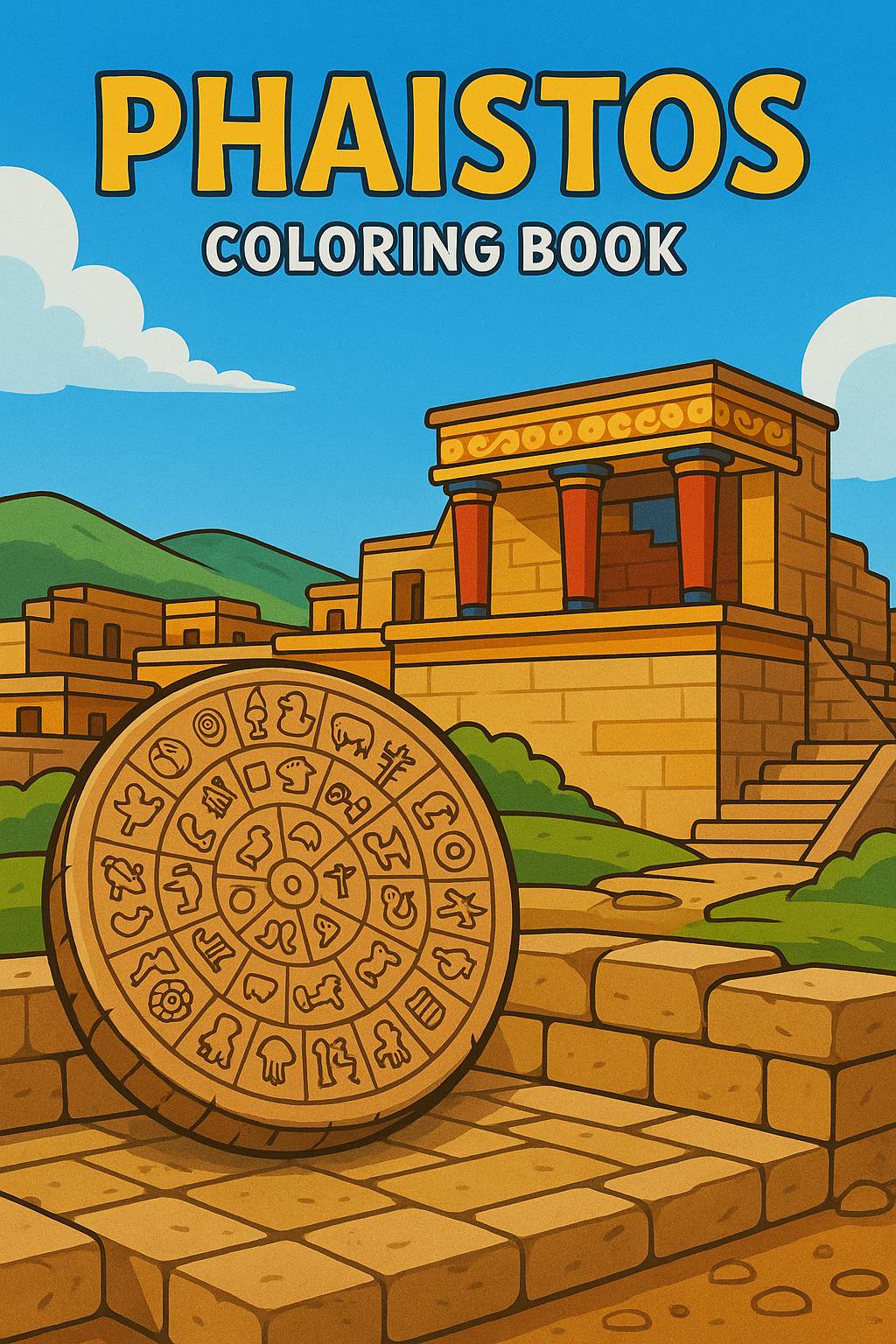
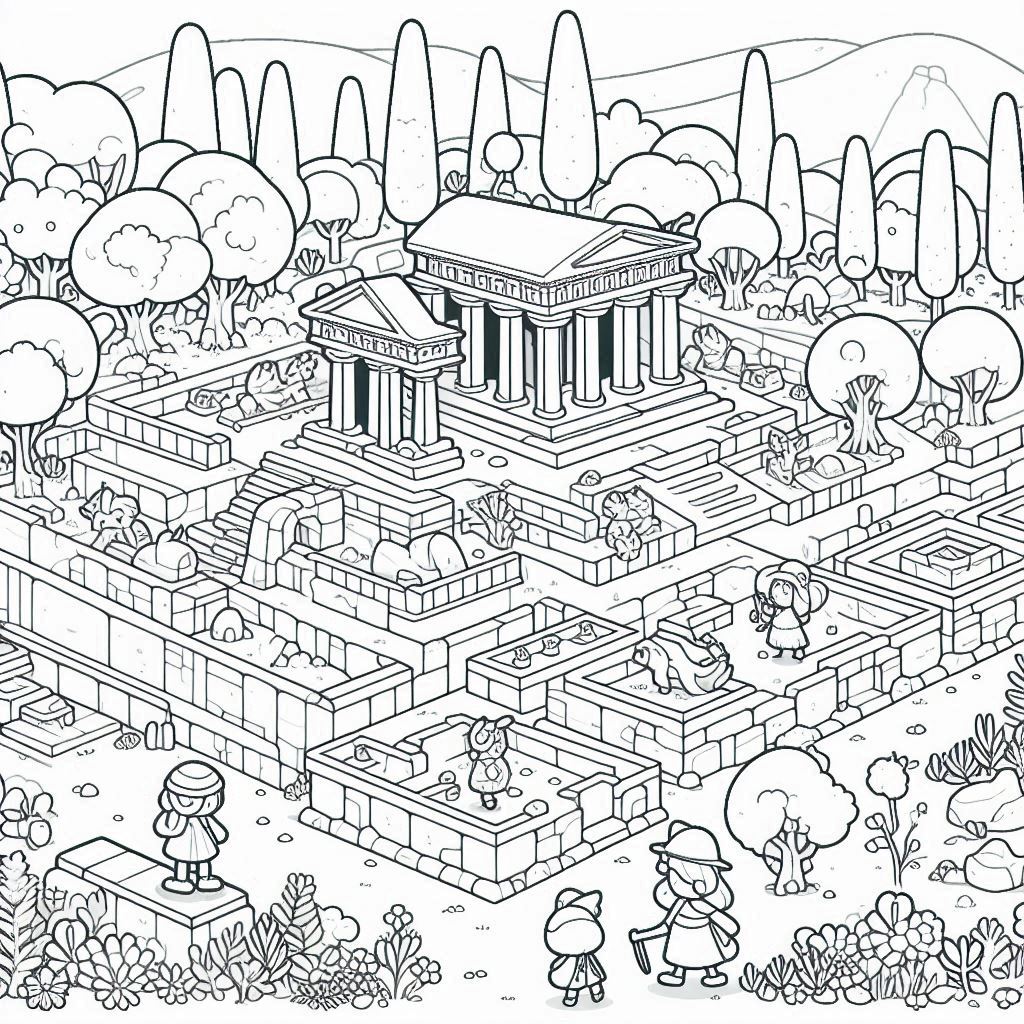
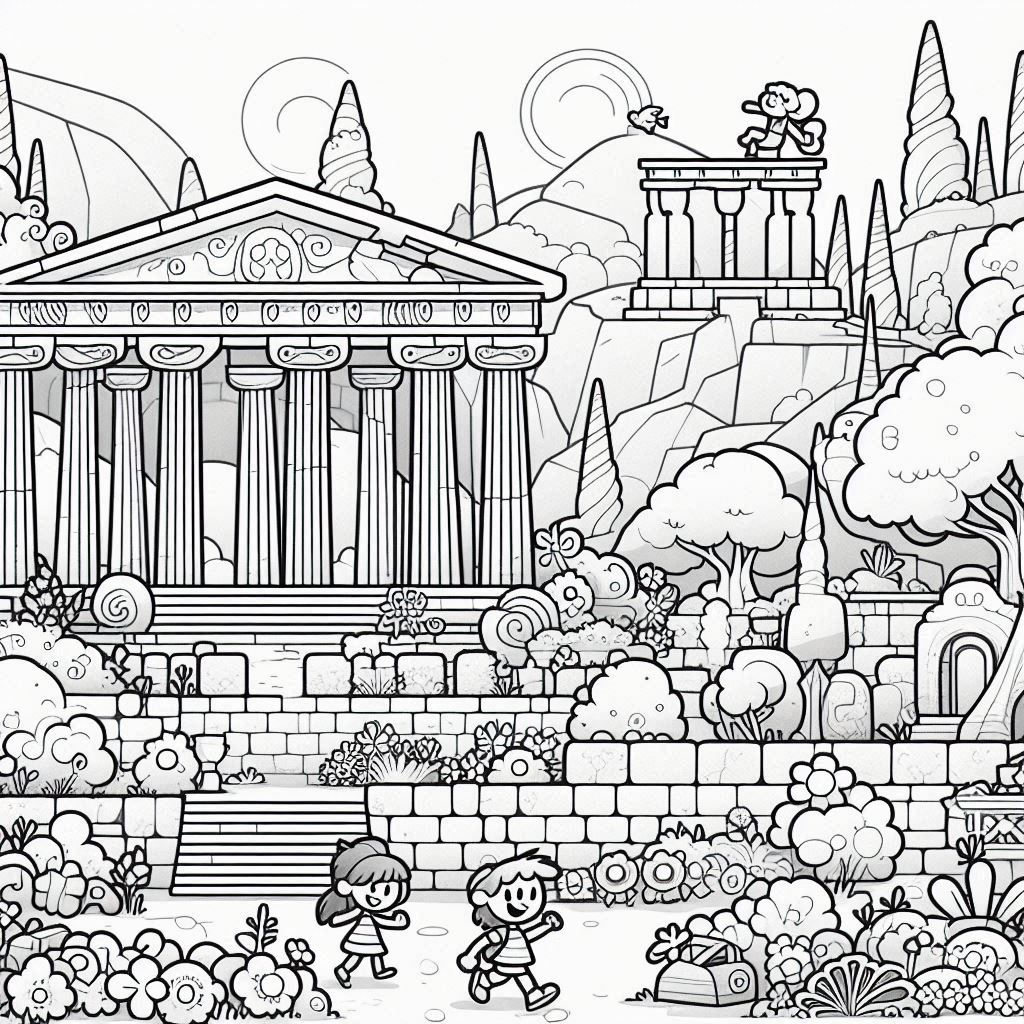
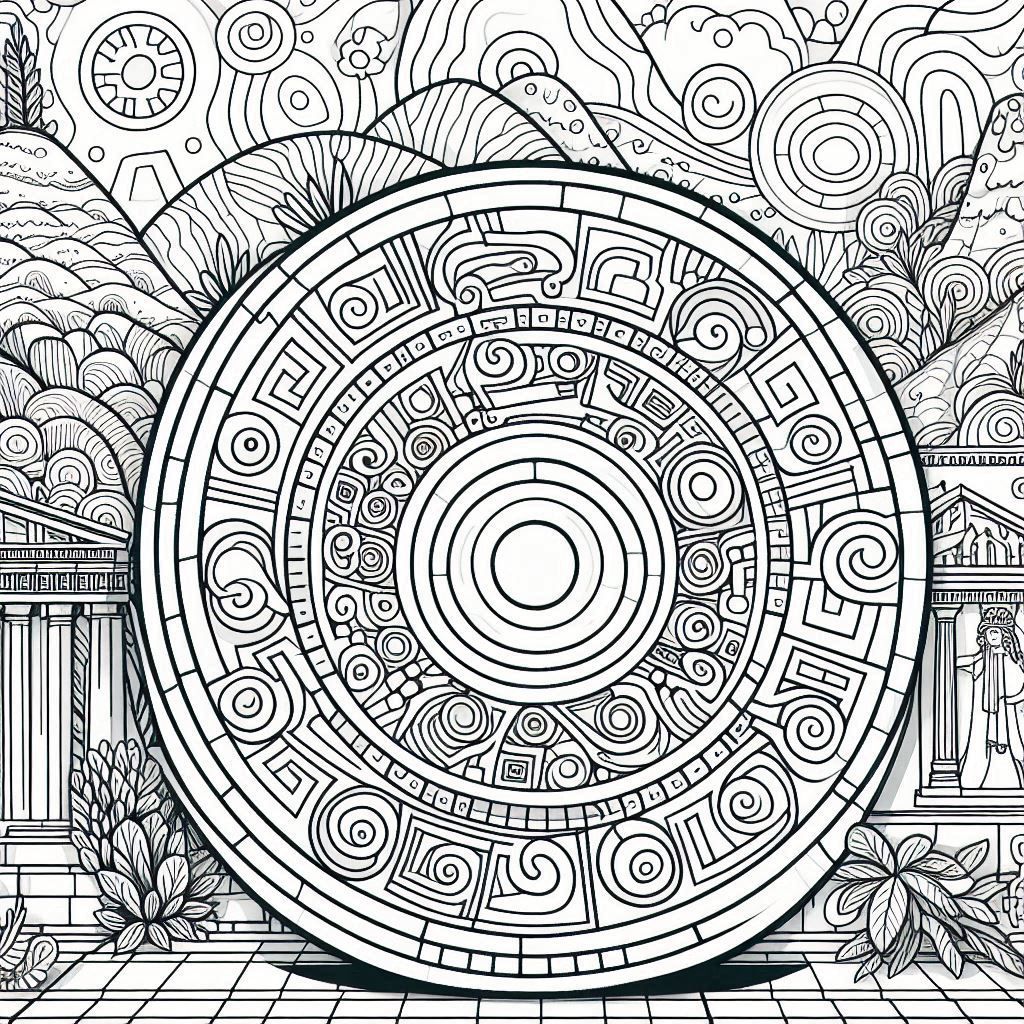
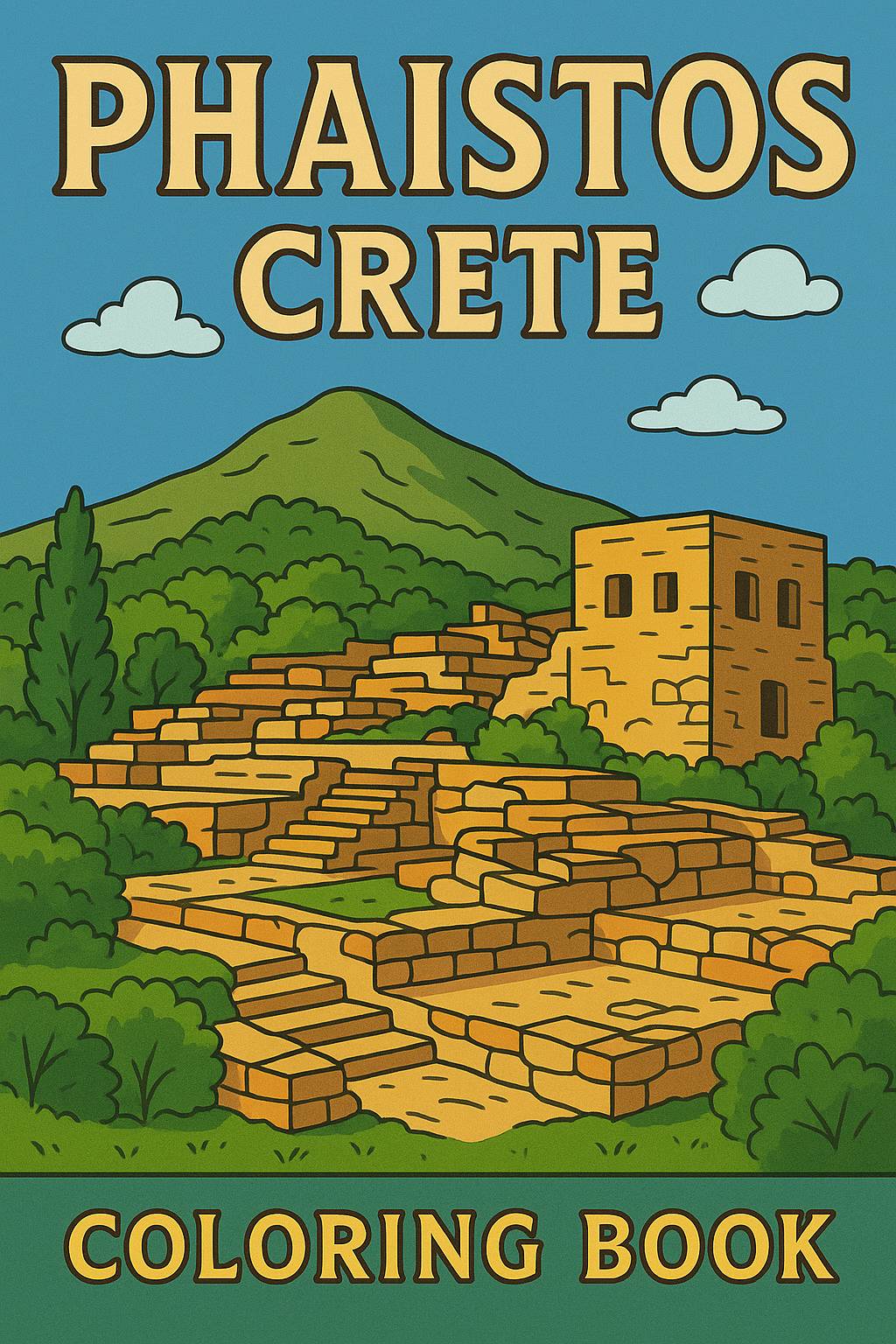

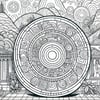
Phaistos, Crete, 59 designs, coloring ebook, digital printable product, instantly download
Phaistos, Crete, 59 designs, coloring ebook, digital printable product, instantly download. Phaistos & The Phaistos Disc: The Enigma of Minoan Civilization
The island of Crete has long been a cradle of ancient mystery. Among its archaeological treasures, Phaistos and the Phaistos Disc stand out as two of the most enduring enigmas in world history. These relics — one a grand palace and the other a small clay object — together illuminate the brilliance, spirituality, and complexity of the Minoan civilization, a culture that thrived during the Bronze Age and left behind more questions than answers.
This article explores the history, architecture, culture, and extraordinary mystery surrounding Phaistos and its iconic disc.
1. Phaistos: The Ancient Minoan Palace
1.1. Location and Geography
Phaistos (also spelled Faistos or Phaestos) is situated in the fertile Mesara Plain of southern Crete. Overlooking the region from a strategic hill, the palace controlled:
- Rich agricultural lands
- Trade routes to northern Crete
- Access to the Libyan Sea
- Cultural connections with nearby Minoan centers such as Agia Triada and Kommos
Its elevated position made Phaistos a commanding center of power in the Bronze Age.
1.2. Timeline of Phaistos
Archaeological evidence outlines three major phases:
Old Palace (1900–1700 BCE)
- Constructed during the early Minoan palace period
- Featured vast courtyards, storage rooms, workshops
Destroyed by an unknown event (earthquake? invasion?).
New Palace (1700–1450 BCE)
- Rebuilt with greater sophistication
- More spacious, with refined architecture
- Vibrant with artistry and ceremonial life
Again destroyed around 1450 BCE, possibly linked to the decline of the Minoan civilization or Mycenaean takeover.
Post-Palatial Period
- Some limited resettlement
- Ultimately abandoned
- Became an archaeological site after its rediscovery in the early 20th century
1.3. Architecture and Layout
The palace of Phaistos is renowned for its elegance and complexity. Key features include:
The Central Court
A large rectangular courtyard used for:
- Processions
- Ritual ceremonies
- Public gatherings
Grand Staircase
One of the best-preserved monumental staircases in Crete; symbol of Minoan architectural brilliance.
Magazines (Storage Rooms)
Stored large pithoi (giant clay jars) containing:
- Oil
- Grain
- Wine
- Honey
- These indicate advanced economic and bureaucratic systems.
Residential Quarters
Living spaces for elites, including:
- Luxurious chambers
- Light wells
- Pillared rooms
Workshops & Artisans
Craft specialists produced:
- Pottery
- Textiles
- Metalwork
- Frescoes
Religious Spaces
Shrines hint at spiritual activities involving:
- Goddesses
- Bulls
- Peak sanctuaries
2. The Cultural World of Phaistos
The civilization that flourished here was sophisticated, peaceful, artistic, and deeply spiritual.
2.1. Minoan Religion
Religious icons at Phaistos show a focus on:
- Great Mother Goddess
- Snake Goddess
- Bull symbolism
- Sacred trees & pillars
Rituals likely involved:
- Dancing
- Offerings
- Ecstatic rites
- Outdoor ceremonies
2.2. Economy and Society
Phaistos controlled a large agricultural region, producing:
- Wheat
- Olives
- Grapes
- Livestock
Its trade network reached:
- Egypt
- Anatolia
- Cyprus
- Mainland Greece
3. The Phaistos Disc: The Ancient Message That No One Can Read
The Phaistos Disc is one of the most baffling artifacts ever discovered. Found in 1908 by Italian archaeologist Luigi Pernier, it has become the “Rosetta Stone that refuses to speak.”
3.1. Discovery
The disc was unearthed in a basement room of the northern complex of the palace. Nearby objects suggest it may have been placed intentionally, or even ritually deposited.
3.2. Description of the Disc
- Made of fine clay
- Diameter: 16 cm
- Thickness: 2 cm
- Inscribed on both sides
- Contains 241 symbols
- Organized in spiral rows
- Features 45 distinct pictographic signs
The signs were pressed using stamps, making it:
The earliest known example of printing or movable type in the world.
3.3. The Symbols
The pictographs include:
- Human heads
- Running man
- Pregnant woman
- Shields
- Spears
- Birds
- Flowers
- Ships
- Tools
Their meaning remains unknown.
4. Theories About the Phaistos Disc
4.1. Religious Text or Hymn
Many scholars believe the disc is a prayer, perhaps to a Minoan goddess. The spiral layout suggests ritual significance.
4.2. Magical or Divinatory Object
Its symbols may have served:
- Fortune-telling
- Invocation
- Ceremonial magic
- Oracles
Some compare it with Near Eastern magical discs.
4.3. A Migrant Artifact
One theory claims the disc is not Cretan at all, but imported from:
- Anatolia
- Syria
- The Aegean islands
The writing system does not match known Minoan scripts (Linear A or Cretan hieroglyphs).
4.4. A Syllabic Script
Some believe it encodes:
- A syllabary
- An early Indo-European language
- Or a lost Minoan dialect
But no consensus exists.
4.5. A Game Board or Music Notation
A few imaginative theories suggest it may be:
- A board game
- A musical composition
- A teaching tool
4.6. A Hoax?
A fringe theory suggests the disc could be a 1908 forgery.
However:
- Soil analysis
- Clay composition
- Firing characteristics
strongly support its authenticity.
5. The Phaistos Disc in the Context of Writing Systems
Minoan scripts include:
- Cretan hieroglyphic (undeciphered)
- Linear A (undeciphered)
- Linear B (deciphered in 1952 — Mycenaean Greek)
The Phaistos Disc does not match any of these.
This makes it:
A script that appears only once in human history.
A “singleton script,” with no parallel texts to help decipher it.
6. Mystical & Esoteric Interpretations
Because the disc remains unreadable, mystics have proposed symbolic frameworks:
6.1. Solar Spiral Symbolism
The spiral pattern may represent:
- The sun
- Life cycle
- Birth–death–rebirth
- Sacred movement
6.2. Goddess Worship
The imagery of women, birds, flowers, and fertility motifs fits Minoan goddess cults.
6.3. Astronomical Codes
Some patterns echo:
- Moon cycles
- Venus phases
- Agricultural calendars
6.4. Initiation Rituals
The disc may have belonged to:
- Priestesses
- Oracles
- Secret societies
Its compact size suggests portability — for ritual travel or personal devotion.
7. Why the Phaistos Disc Remains Undeciphered
Key obstacles:
No bilingual inscription
(Unlike the Rosetta Stone)
No other example of this script
(Only one artifact in existence)
Unknown language family
Could be Minoan, Indo-European, Semitic, Anatolian, or something lost entirely.
Pictographic ambiguity
Images do not clearly map to sounds.
Thus, the disc remains a silent witness to Minoan thought.
8. Symbolism of Phaistos in Modern Thought
8.1. Archaeological Significance
Phaistos represents:
- Advanced urban planning
- Artistic refinement
- Complex social structure
8.2. Mystical Appeal
The disc has become a symbol of:
- Lost knowledge
- Ancient wisdom
- Esoteric mysteries
- “The script of the gods”
8.3. Pop Culture
It has appeared in:
- Books
- Documentaries
- Video games
- Esoteric literature
It continues to inspire both scholars and dreamers.
Conclusion: A Palace and a Mystery
Phaistos and the Phaistos Disc together form a dual legacy:
- One reflects the grandeur of the Minoan world.
- The other preserves its secrets.
The palace reveals a civilization of sophistication, beauty, and organization.
The disc reminds us that the past still holds mysteries we may never solve.
Yet perhaps that is its greatest power:
it keeps the ancient world alive — not through answers, but through wonder.