
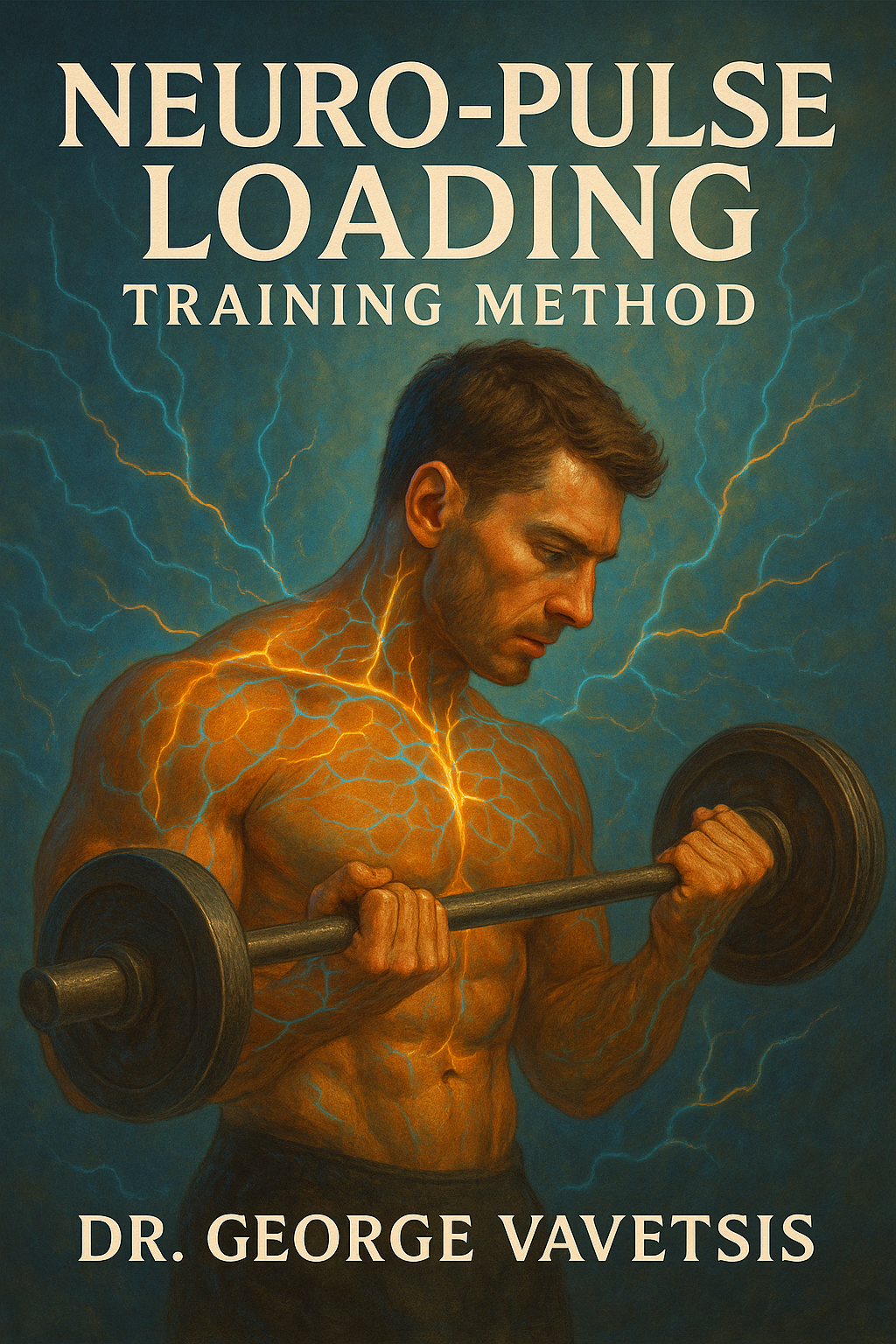
Neuro-Pulse Loading Training Method
Pages: 1189
As a strength and conditioning coach operating at the highest levels of sport, one comes to recognize that the limits of performance are not just muscular—they are profoundly neural. The quest for peak performance has traditionally been driven by mechanical load, hypertrophy, and energy system development. However, as competitive margins shrink and the demand for individualized, evidence-based training intensifies, it becomes imperative to pivot toward the domain where performance is initiated, regulated, and ultimately expressed: the nervous system.
This book, Neuro-Pulse Loading Training Method, emerges from years of scientific inquiry, field experimentation, and applied integration in elite sport. It is not simply a manual of exercises or periodization schemes. It is a neurocentric operating system that empowers the coach to rewire athletic training through the lens of cortical excitability, corticospinal drive, and neuromotor precision. The methods herein have been designed, tested, and refined for athletes who are expected to perform under the harshest neurological demands—those who must sprint, change direction, react explosively, and recover instantly.
In the ever-evolving world of sport science, the line between art and science continues to blur. This book does not abandon the core principles of classical strength training. Instead, it reframes them. Concepts such as load, volume, and intensity are redefined in neural terms—pulse density, synaptic sequencing, and threshold mapping. You will not see “3 sets of 10” recommended here. Rather, you will be introduced to parameters such as impulse duration, motor unit synchrony, and neuromuscular charge accumulation.
The neuro-pulse approach treats each repetition not merely as a muscular effort but as a neural event. Each set is an opportunity to prime afferent-efferent circuits, engage feedforward motor control, and calibrate the gamma loop for precision in contraction and coordination. The timing of a pulse, the rhythm of intent, and the magnitude of central drive are the new variables we must monitor. Through this lens, warm-up becomes neural ignition, power work becomes cortical activation, and recovery becomes synaptic recalibration.
This methodology is especially suited for coaches working with athletes in high-skill, high-speed environments—basketball, handball, track and field, combat sports, and team sports with chaotic stimuli. Traditional strength protocols often fail to transfer adequately to these dynamic contexts, because they neglect the rate-limiting factor: neuromuscular timing and reactivity. Neuro-pulse loading directly trains this system, bridging the gap between the weight room and the game.
But this method is not only for performance enhancement. It is also a formidable tool in injury prevention and return-to-play pathways. Chapters 10 and 11 specifically explore how neuro-pulse loading supports neuromotor retraining after ACL surgery, concussion, and tendinopathy, as well as how it can be tailored for youth development or sarcopenia resistance in aging athletes. The adaptability of this method is what makes it sustainable and broadly impactful.
From a programming standpoint, neuro-pulse loading introduces a novel approach to periodization. Rather than organizing by external load or time under tension alone, we propose programming by neural state: high-cortical, low-cortical, or regenerative sessions. The coach becomes a neuroarchitect—modulating the athlete’s weekly exposure to CNS excitation, inhibition, and rebound states. This level of control allows for precise microcycle tuning, enhanced readiness, and minimized risk of central fatigue.
This book is written for the curious coach—the one who reads neuroscience papers after practice, who tests new EMG settings on themselves, and who builds programs not from trends but from principles. It is assumed that the reader is already fluent in strength science, physiology, and periodization theory. Here, we delve into a deeper stratum—into the circuits, fields, and impulses that govern how strength is produced, expressed, and recovered.
You will find each chapter carefully structured to blend theory with practice. The science of cortical excitability, motor unit recruitment, and synaptic plasticity is paired with pulse-based drills, programming templates, cueing strategies, and monitoring tools. Whether you coach at the Olympic level or in an elite development program, you will find this system applicable, adaptable, and impactful.
Ultimately, neuro-pulse loading is not a passing innovation. It is a paradigm shift. It challenges the notion that maximum performance lies in muscle mass or external load. It posits that true athletic power lies in speed of signal, synchronization of output, and intentional neuromuscular activation. This book is your blueprint for unlocking that potential.
To every coach seeking not just stronger athletes, but smarter, more neurologically efficient ones—this work is for you.