
📍The Only Customized Korean Self-Study Dictionary of Its Kind📍
On Sale
$160.00
$80.00
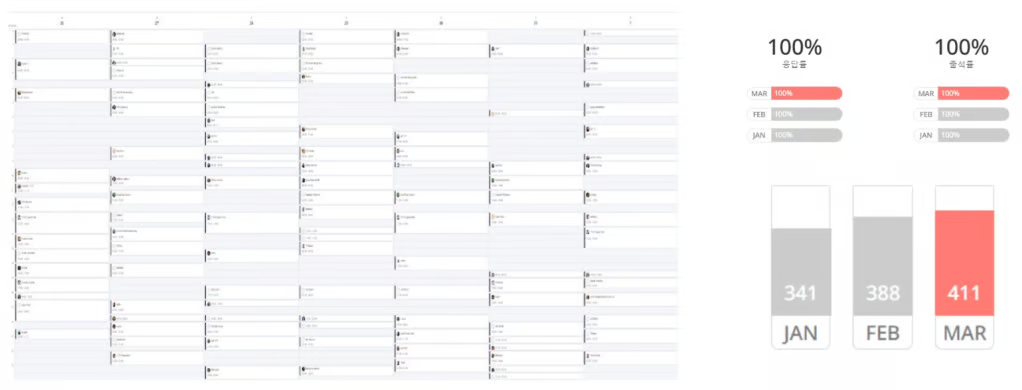
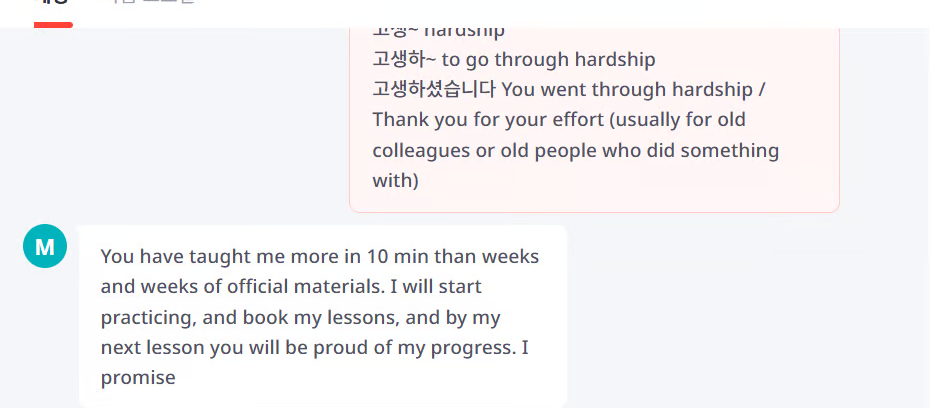
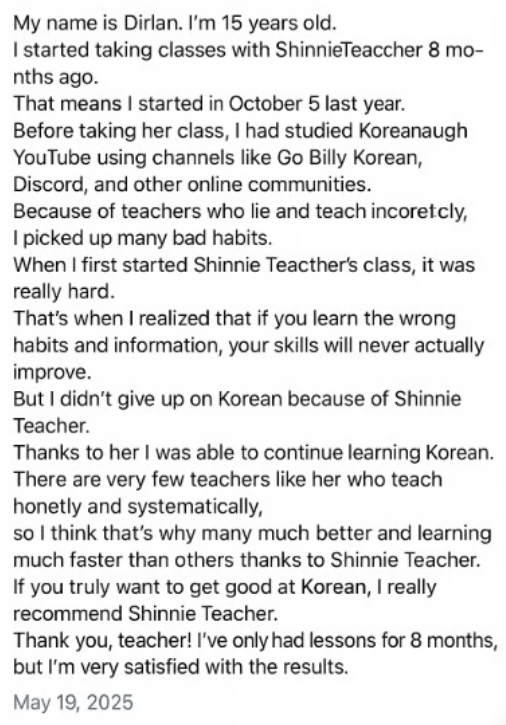
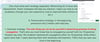
The result after starting from zero and studying for a year with incorrect methods.
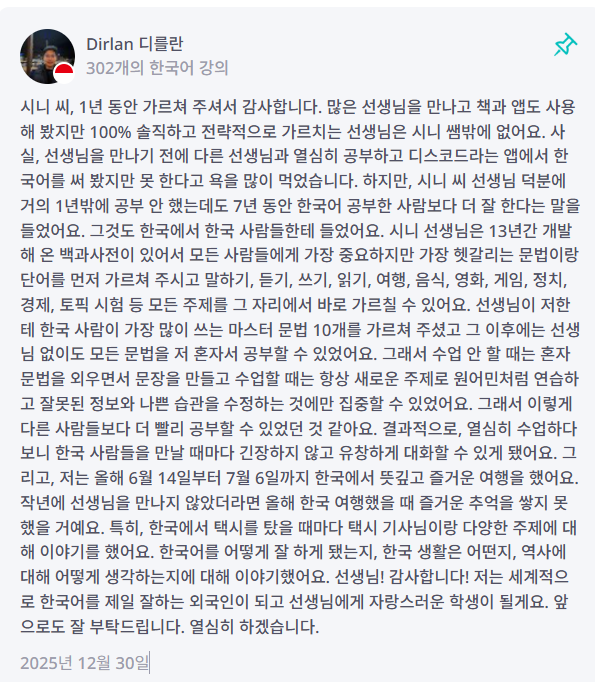
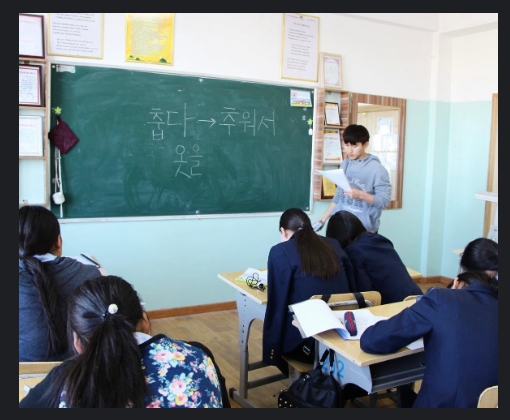
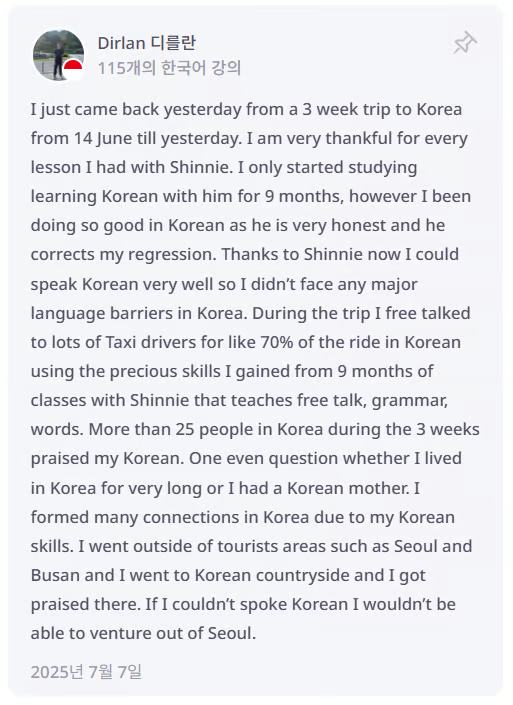
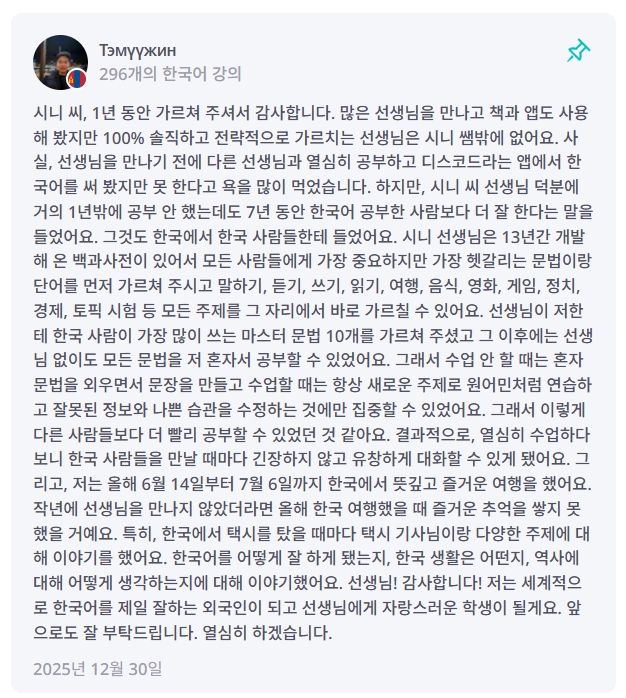
⭐⭐⭐⭐⭐
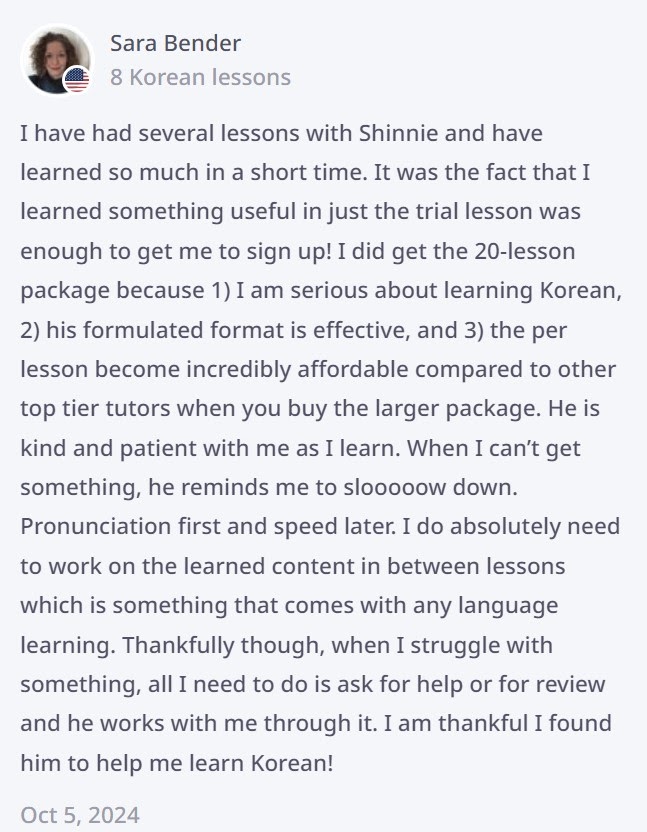
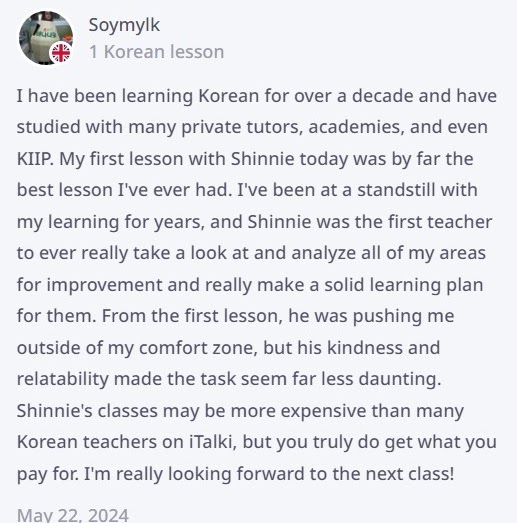
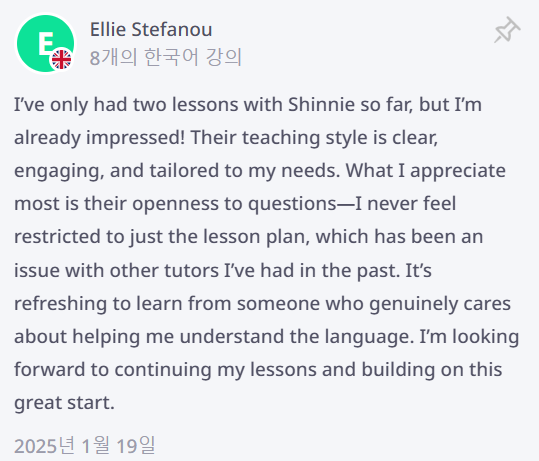
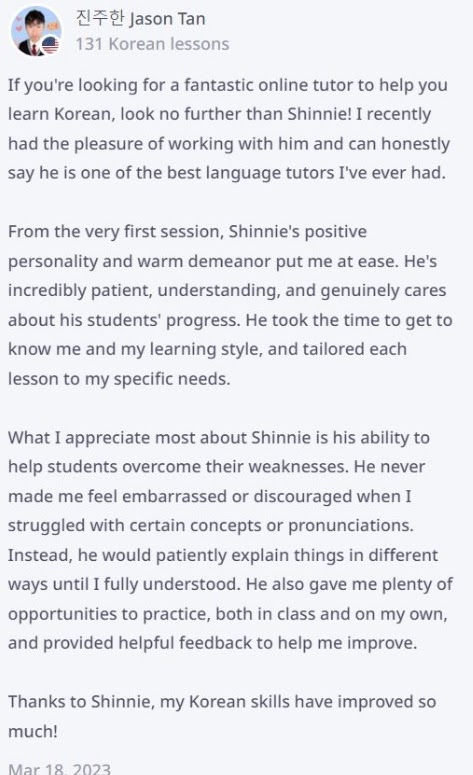
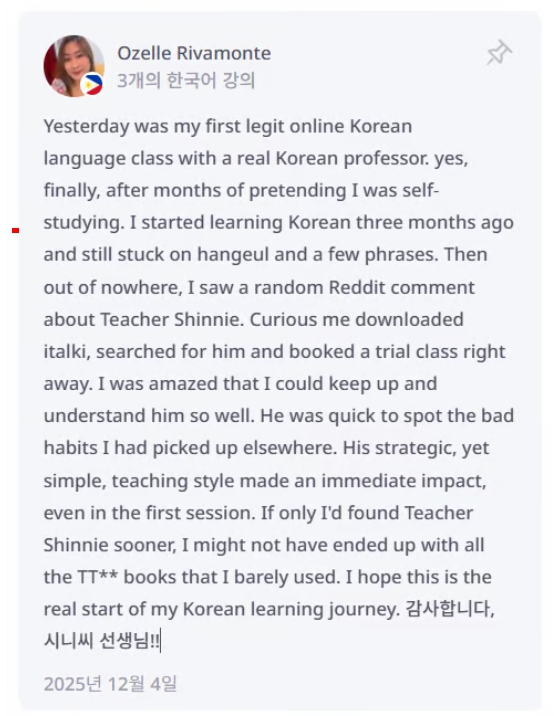
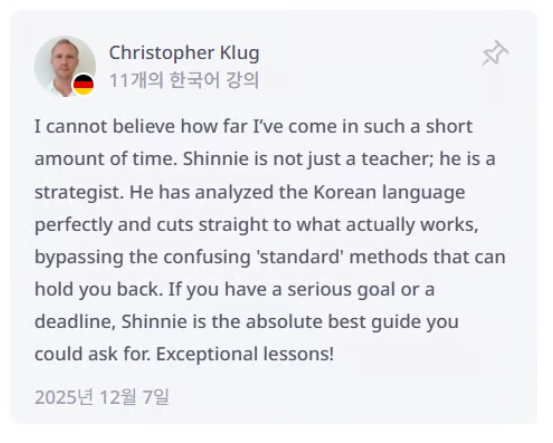
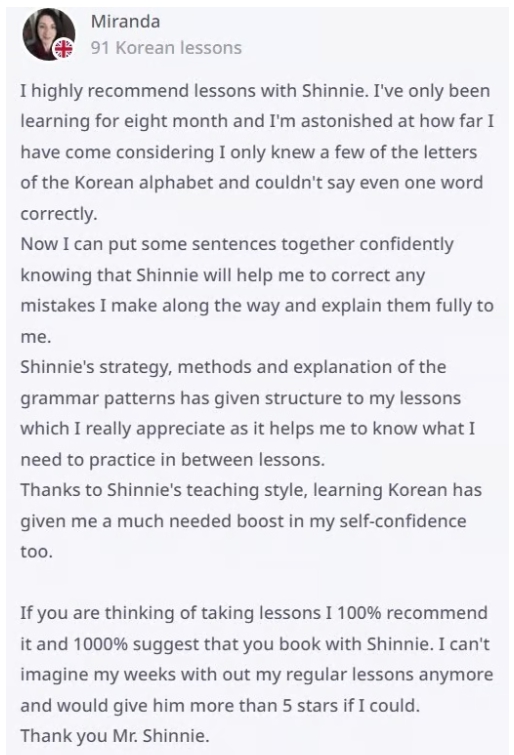
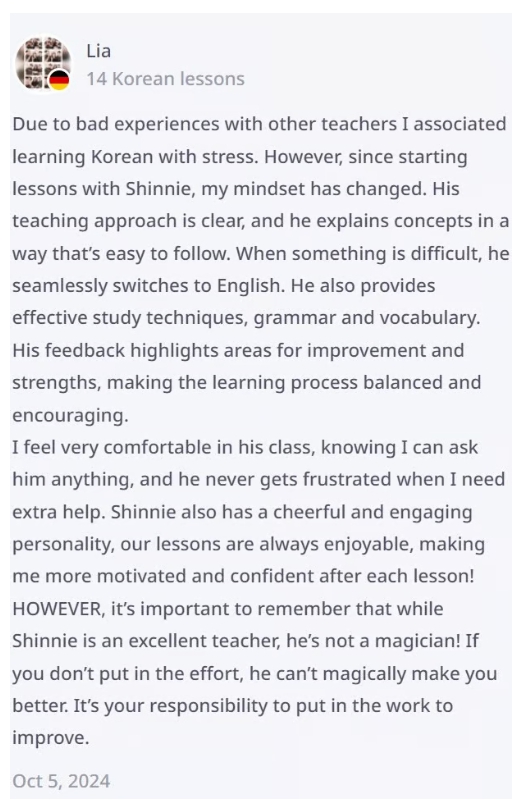
안녕하세요! I am a certified professional Korean strategist 'Shinnie' registered with the government, ranked first among all teachers (13 years of teaching experience; schools, academies, overseas, and private lessons).
I
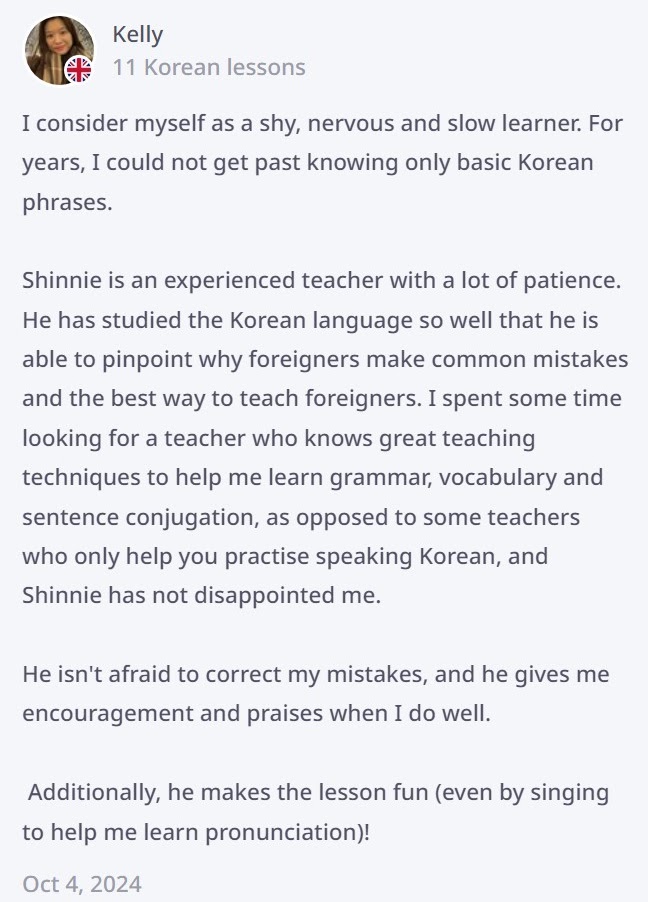
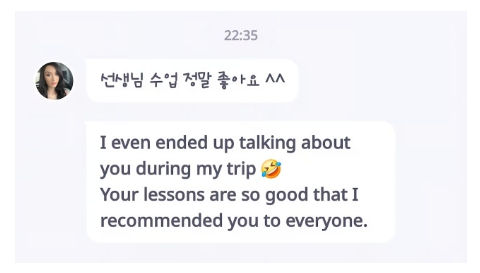
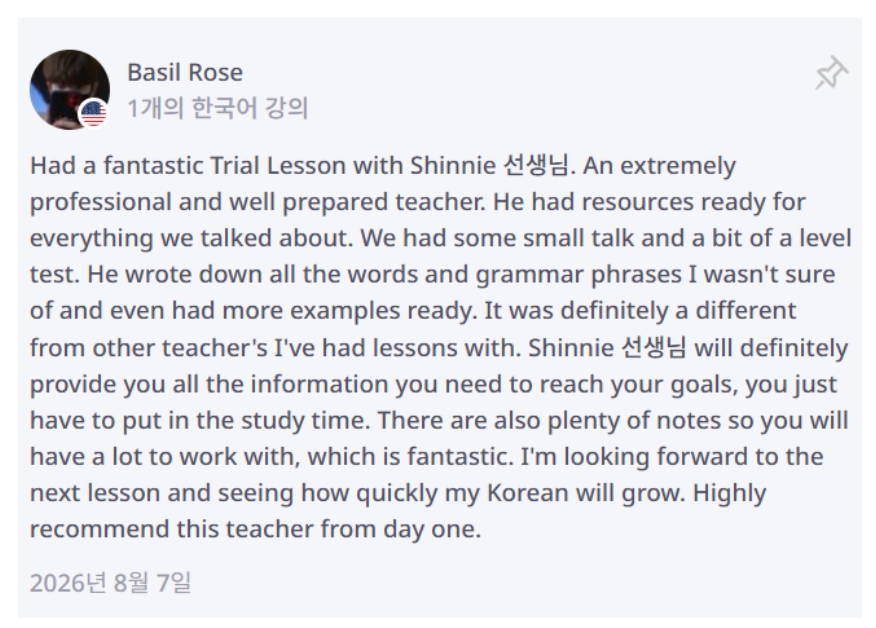
✅Offer patient, systematic, natural lessons catering to all levels, ages, problems, and requests.
✅Taught Korean while previously working in public enterprises, marketing, and publishing companies, and as an English teacher. After becoming the top-ranked teacher, I decided to quit the corporate job and focus entirely on Korean language teaching.
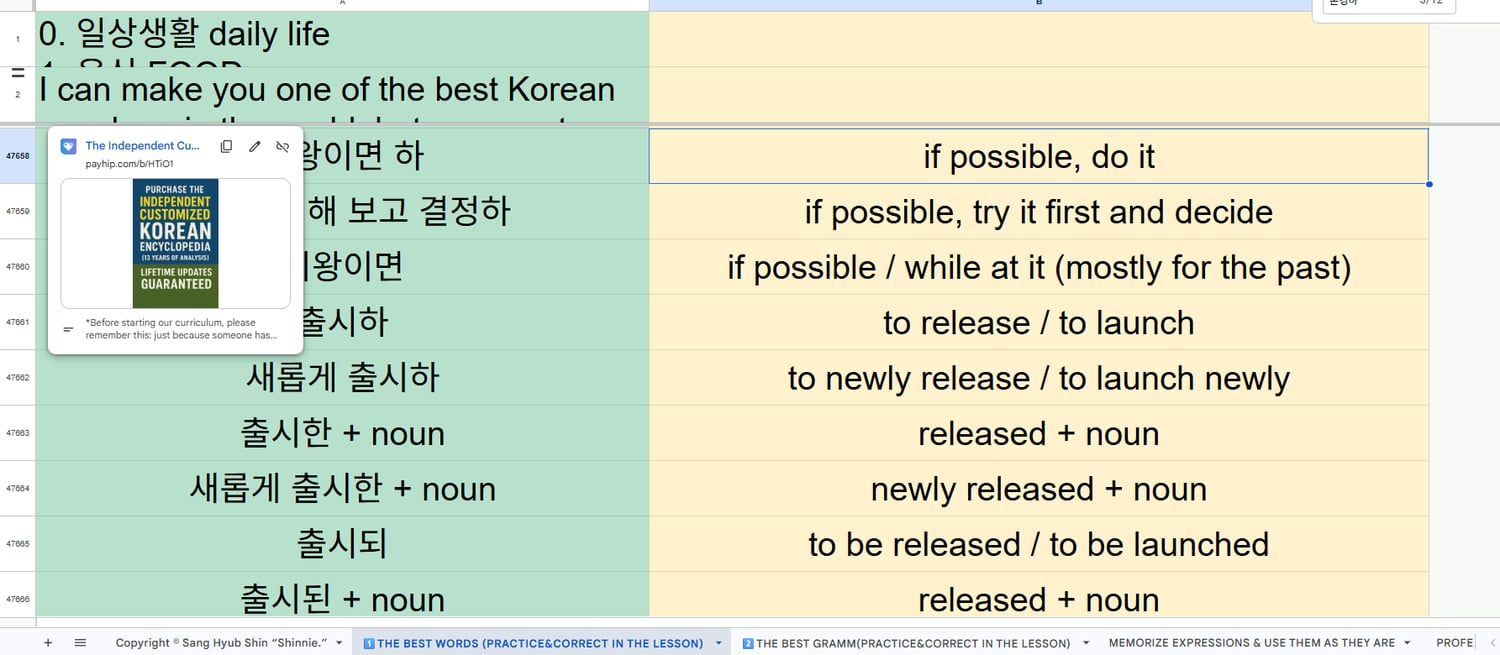
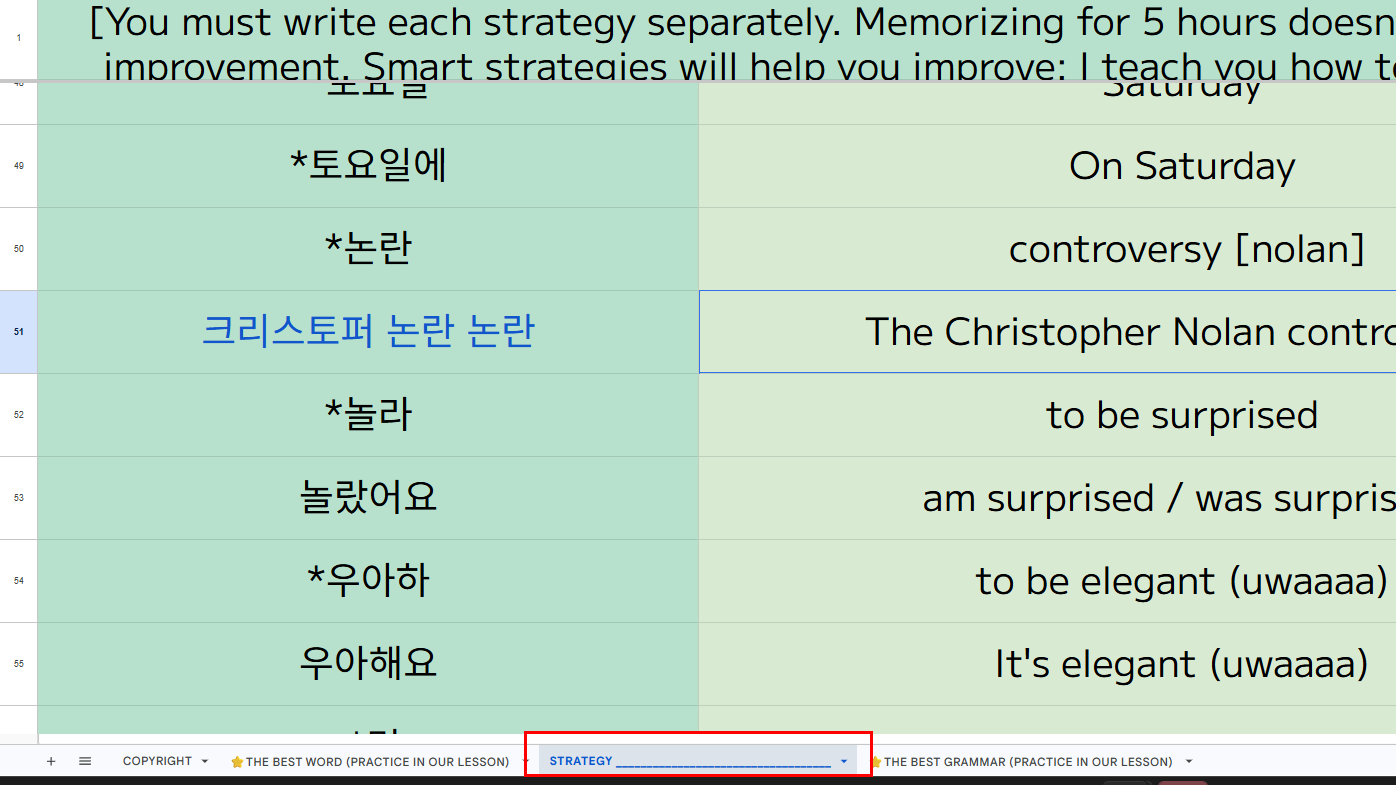
✅Have developed the independent customized encyclopedia.
✅Perform in Seoul with singing, rapping, vocal, and dance performances.
My students
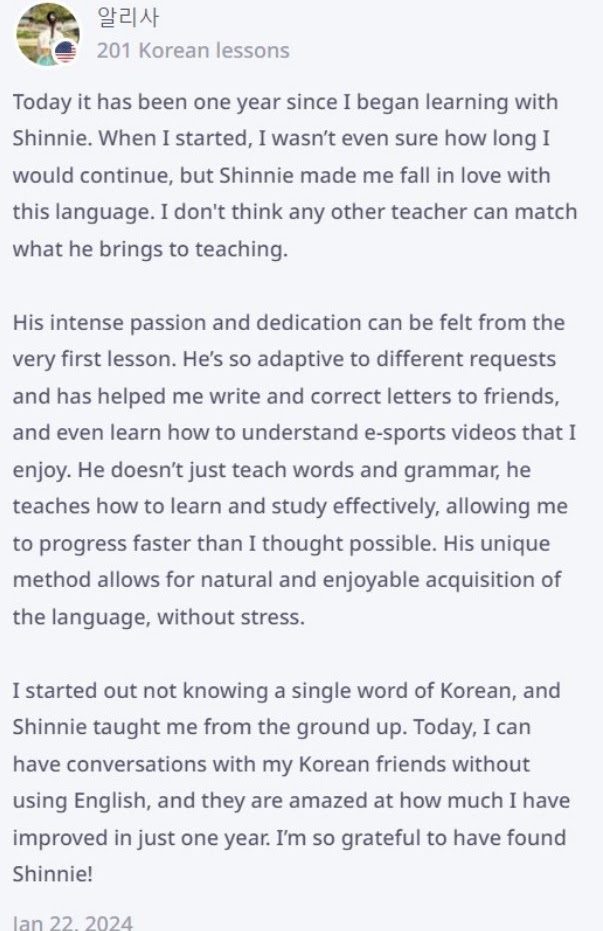
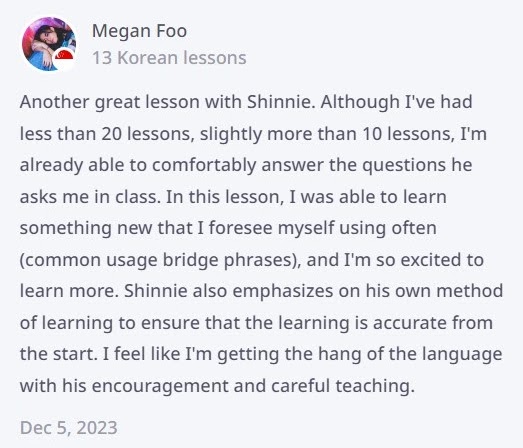
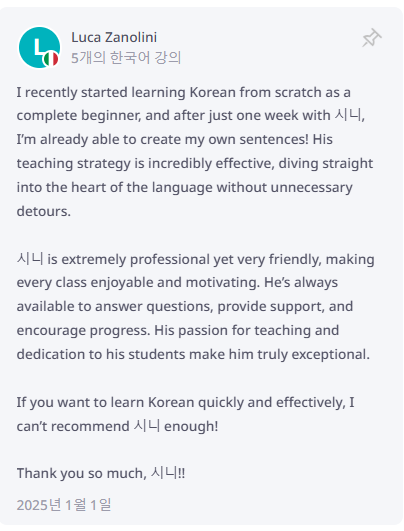
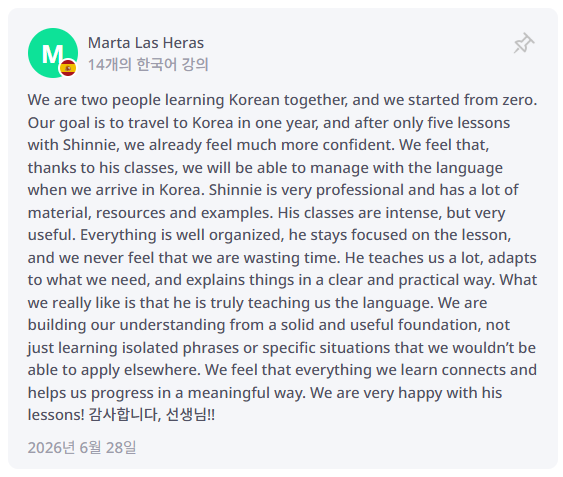
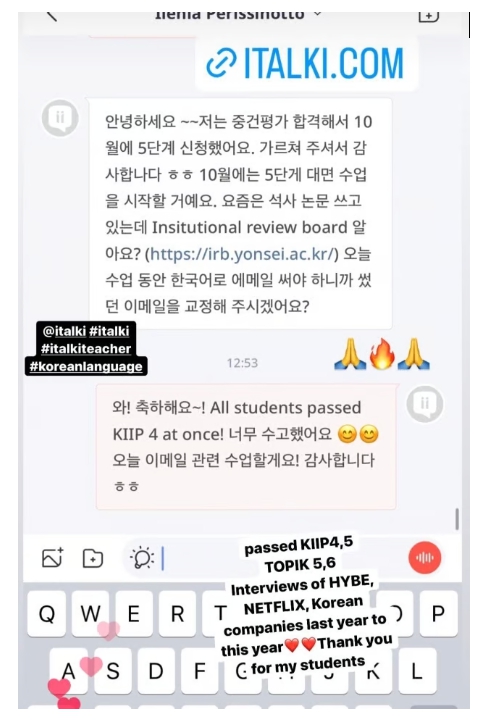
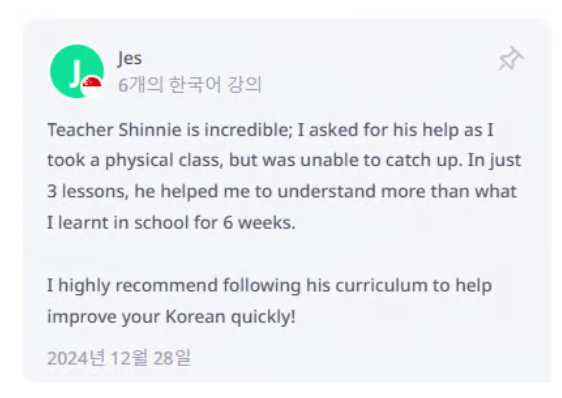
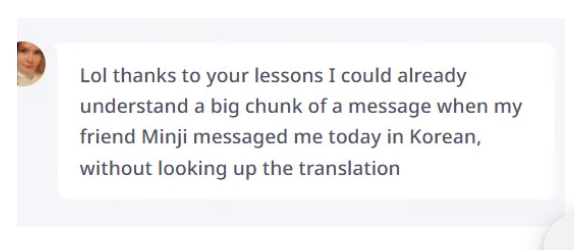
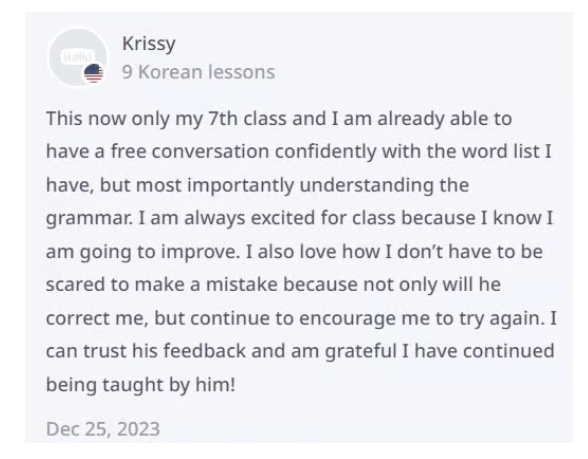
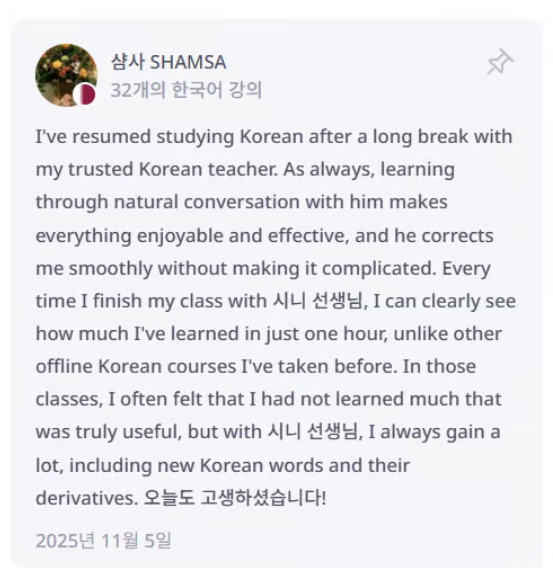
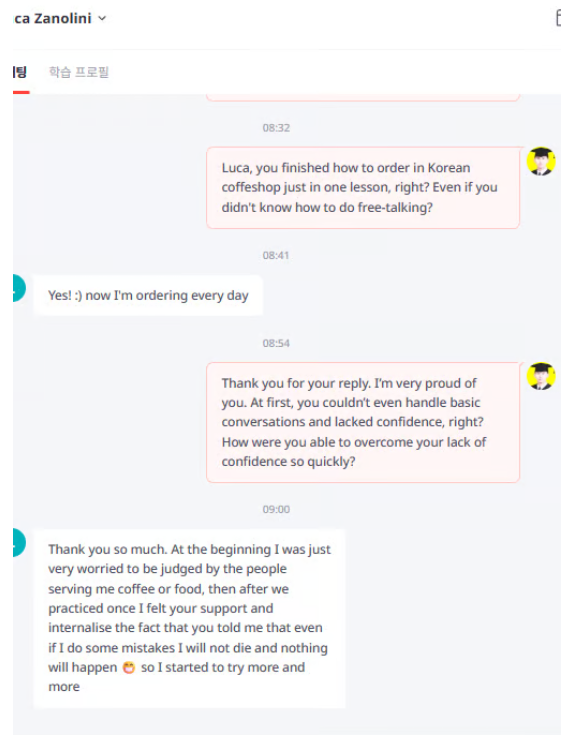
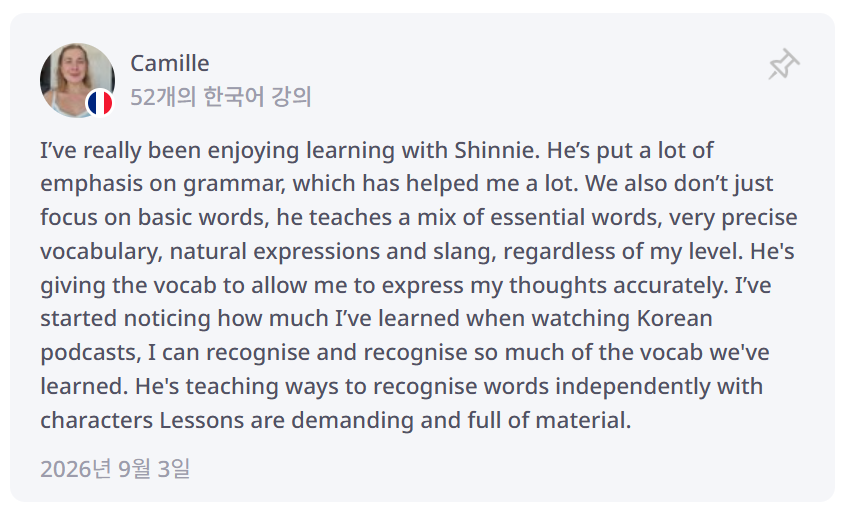
✅Could have casual conversations on many topics in just 3 months.
✅Achieved native-like fluency in Korean from zero in 1 year.
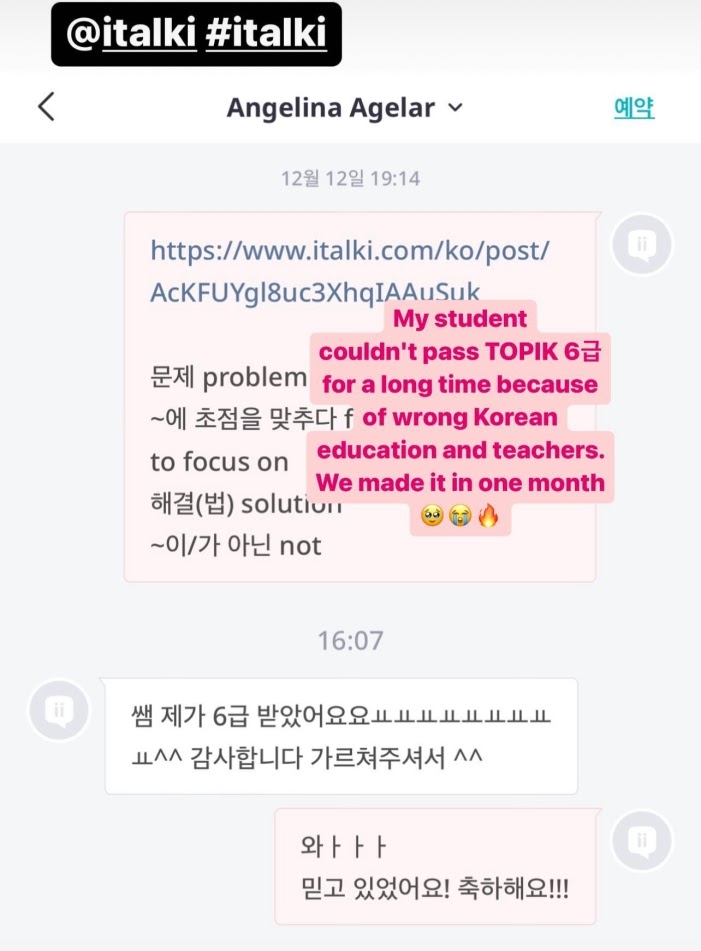
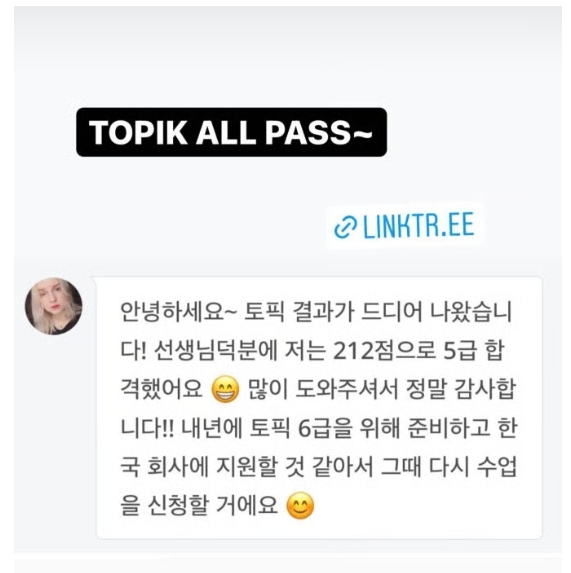
✅Passed KIIP 4, 5, TOPIK 3, 4, 5, 6 on their first attempt.
✅Successfully corrected resumes, cover letters, and passed interviews with prestigious companies such as HYBE Entertainment, Netflix, and Korean companies.
✅Achieved first place in speaking contests and secured scholarships
✅Took lessons to become a singer with Gangnam Style Psy's agency vocalist, with me as the interpreter.
✅Get a pronunciation guide from an American audio recording company.
✅Translated everything on their website.
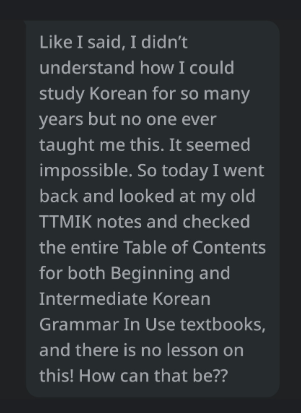
Have you ever stopped to think about how you are actually studying Korean, instead of simply studying for ten hours a day?
Most of the things Korean people tell you about your Korean being “good” are not necessarily true.
In Korea, it is part of the culture to be polite and avoid making someone feel bad, so people will often tell you that your Korean is good even when it isn't actually accurate or natural.
Stop avoiding reality for a moment and answer these questions honestly.
📚 Are you still memorizing vocabulary with flashcards?
Do you really think that memorizing words this way will allow you to use them accurately in real conversations?
And don't you eventually forget most of what you memorized anyway?
📉 Are you still at the same level—or even regressing?
🎧 Are you unable to recognize even simple words without subtitles?
💸 Are you wasting money on textbooks and apps that don't actually help you improve?
🔄 Do similar-looking words keep confusing you, causing you to mistranslate the same words over and over again?
You've studied with textbooks, apps, university teachers, and even AI.
So why, after one year, three years, five years, ten years, or even fifteen years, are you still using particles, numbers, vocabulary, grammar, and even expressions incorrectly?
If you already know that you're using them incorrectly, why aren't you even trying to change them?
Of course, this isn't entirely your fault.
Korean is an extremely difficult language because hundreds of thousands of words, grammar patterns, exceptions, and expressions can change depending on the context in which they are used.
That's exactly why Korean can be such a difficult language to master, especially without a natural talent for languages.
But even if you don't have exceptional language-learning talent,
there is still a way to truly master Korean.
💡💡💡💡💡 Is there really no solution?
Unless you have an extraordinary talent for languages, realistically, this is the only place where you can learn hundreds of thousands of words, grammar patterns, exceptions, and real-life expressions together within one fully connected system.
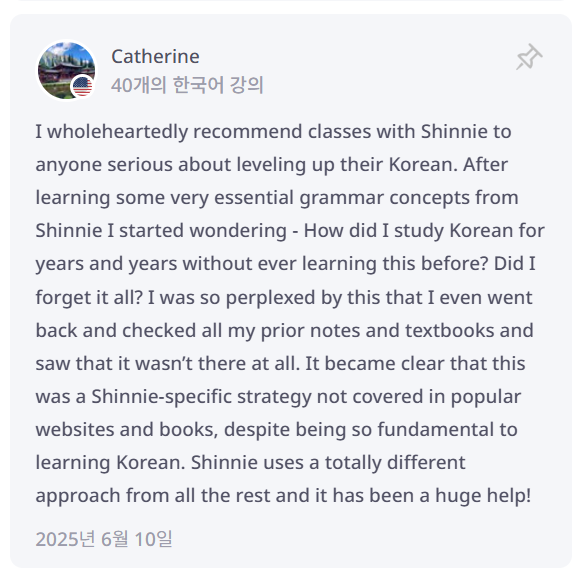
This dictionary is the only resource designed to help you overcome all of these problems and ultimately learn Korean completely on your own. I can say this with confidence after putting my entire 13-year career in Korean education behind it.
🔹 This is not simply a study guide.
It is a Korean encyclopedia that is continuously updated for life. It was created to solve the real problems that prevent Korean learners from using Korean naturally.
🔹 It covers everything from complete beginners to advanced learners, as well as a wide range of learning goals.
🗣️ Speaking · Listening · Reading · Writing
It includes the vocabulary and grammar you need for all four skills.
✈️ Travel · Everyday Life · Natural Conversation
These are all included as well.
🎬 Prevent Regression
The grammar and vocabulary that can cause learners to regress instead of improve are carefully organized so you can avoid regression as much as possible.
📝 TOPIK & KIIP
If you don't know exactly what materials and strategies you need, TOPIK and KIIP can take 10 years or more. This dictionary contains the strategies and methods I used to help my students pass TOPIK Levels 2, 3, 4, 5, and 6.
💼 Professional Korean · Business Korean · Workplace Korean
Everything you need for professional and business situations is included.
🔄 And it never stops growing.
This dictionary will continue to be updated for life, including new slang, newly emerging expressions, and new Korean vocabulary, so you can continue learning from an up-to-date Korean language system.
[MUST guideline: You can never learn Korean without accurate materials and the right strategy.]
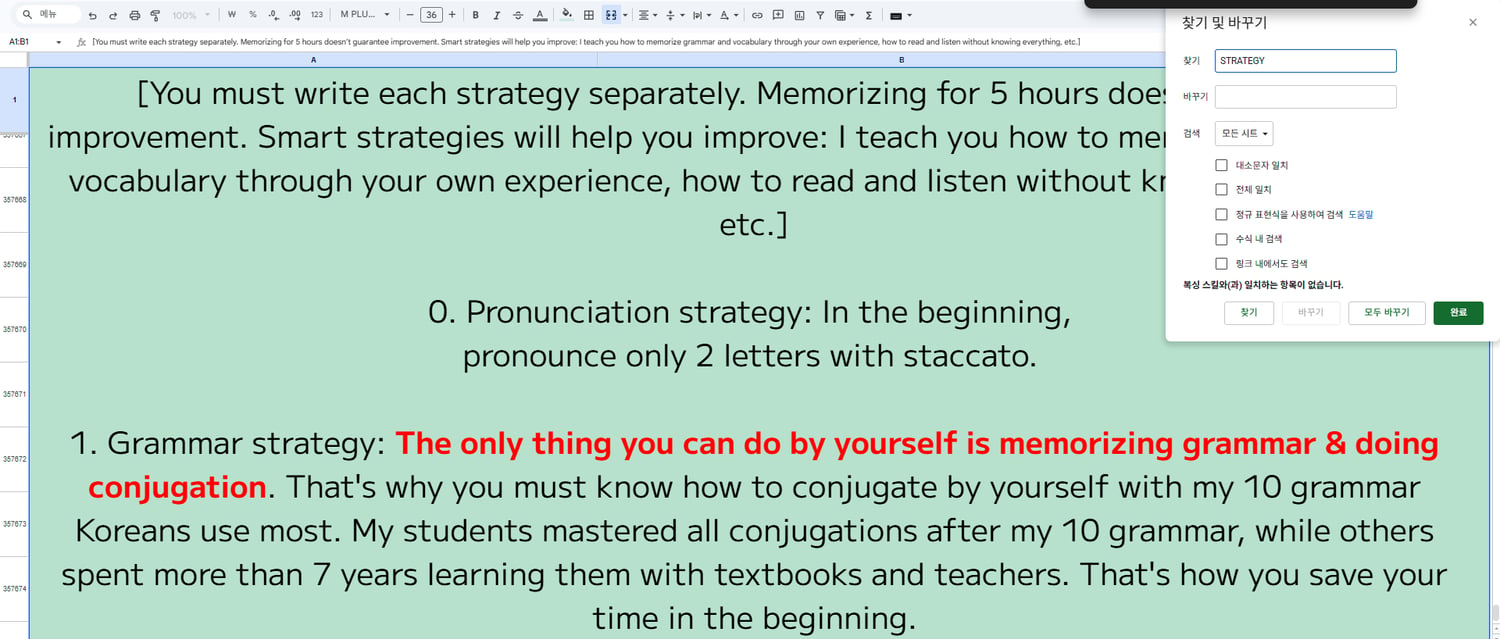
0. Pronunciation: You can master reading in just a few lessons using my strategies(staccato), while others take three months.
1. Grammar:
You just need ONE WORD + ONE GRAMMAR. Without grammar, everything collapses later.
So, the only thing you can do by yourself is *conjugation*.
That’s why you must know how to conjugate by yourself using my 10 grammar patterns Koreans use the most. My students have mastered all the essential conjugations using my 10 grammar patterns, while others have spent more than 7 years learning them.
2. How to practice and master Korean:
✅15 years? I don't care. You always have to ask words before answering.
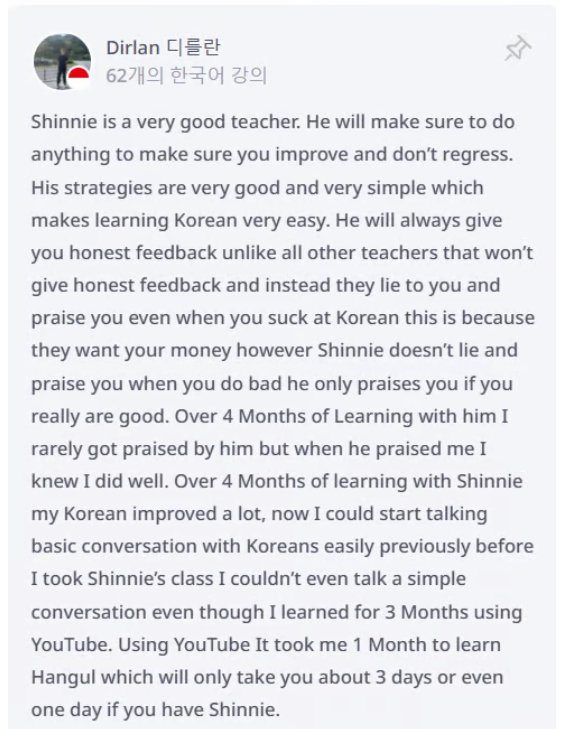
It’s not because of you. It’s because the apps, AI, Papago, teachers, and textbooks you’ve used never taught vocabulary with critical regression points in mind. Simply put, you can master Korean faster by resetting everything you’ve learned before.
✅For listening & reading, brave studying is more important than careful studying.
You can understand what Koreans say without knowing everything using my strategies.
✅Without flashcards, my strategies (ENGLISH/ ONE EXAMPLE) help you recognize and memorize letters, words, grammar, and numbers easily. Only for strategies, write them down by yourself.
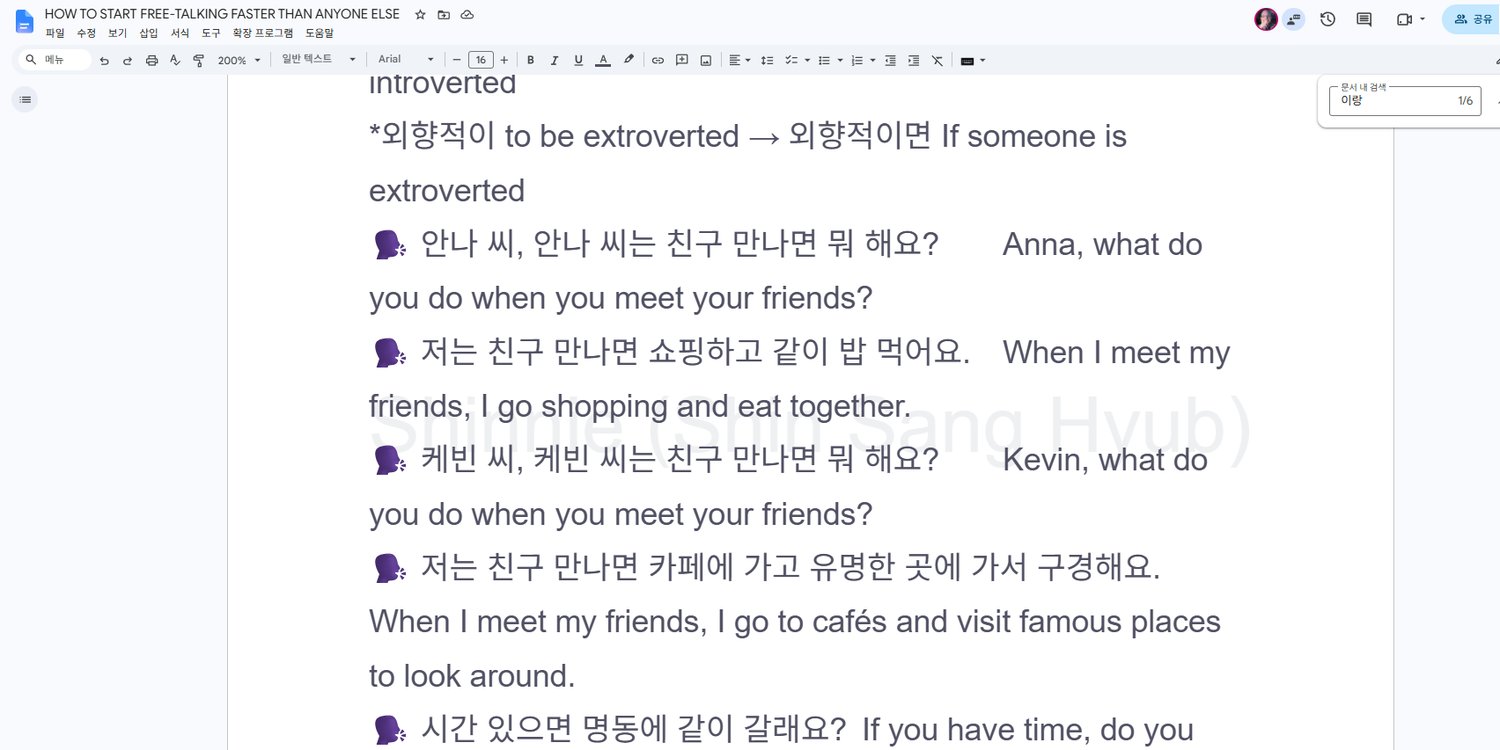
✅Taking lessons more than 3 times a week can help you start free-talking Korean within 3 months. However, if you can’t take frequent lessons, you must copy a word as it is & practice conjugation from my encyclopedia, which contains everything you need to master Korean.
https://linktr.ee/koreanstrategy
✅There’s no fixed level. There are just new words and new topics. I’ve already analyzed every topic, so tell me about any topic you want.
1. Menu
2. Game
3. Sports
4. Genre
5. Instrument
6. Skincare
7. Device
8. Daily Life (casual / professional)
9. Stress
10. Health
11. School
12. Company
13. Business
14. Shopping
15. Clothes
16. Hair
17. Cooking
18. Weather
19. Place
20. Animal
21. Travel
22. Holiday
23. Birthday
24. Driving
25. Belief
26. The Easiest Way to Sound Natural and Professional
27. Dating
28. Marriage
29. Slang
30. Goal
31. Personality
32. Emotion
33. People
34. Deep Conversation (crime / agreement / objection)
35. Cafe
36. Restaurant
37. Convenience Store
38. Taxi
39. Bus
40. Subway
41. Train
42. Hotel
43. Airport
44. How to Master Numbers & Particles Strategically
45. Stereotype
46. Racism
47. Using Authentic Materials and more topics...
3. “How to Travel”: Free-talking is different from situational role-playing for a trip. Koreans speak very fast with a lot of grammar patterns, but don’t get frustrated. If you know my strategies, you can understand what Koreans say without understanding everything. For answering, if you are very short on time, you should memorize the travel expressions that Koreans use most. However, even if you don’t have much time, if you can take lessons frequently, it is better to learn my free-talking grammar with travel expressions.
4. Particles: Famous universities teach particles in the beginning.
You must not study particles in the beginning. Most learners study them first, but they still make mistakes even after 10 years. The best time to learn them is after you get used to how to study Korean. When speaking, you don't have to use particles. However, for writing and exams, you need to learn them with my strategies. Object particles don't work.
*Subject particles: ~consonant이 / vowel가 + adjective (재미있어요 / 맛있어요), passive verb (to be organized)
*~consonant을 / vowel를 + action verb (먹어요 / 마셨어요 / 만들어요)
*Comparing particles (Don't call it as a subject particle): ~consonant은 / vowel는 (저는 / 오늘은 / 내일은 / 어제는)
*When you need 2 subjects: ~은/는 + ~이/가 in order!!!
5. TOPIK:
*You must use only the materials and strategies that I have analyzed for what TOPIK actually requires.
*The subject is extremely important.
*What if the sentence is misleading? What if he didn’t go to the hospital?
*What if it’s easy to catch? What if it’s 5 a.m.? What if it’s 5 p.m.?
*Compare whether they are scams or not.
*Compare whether they are positive or negative.