
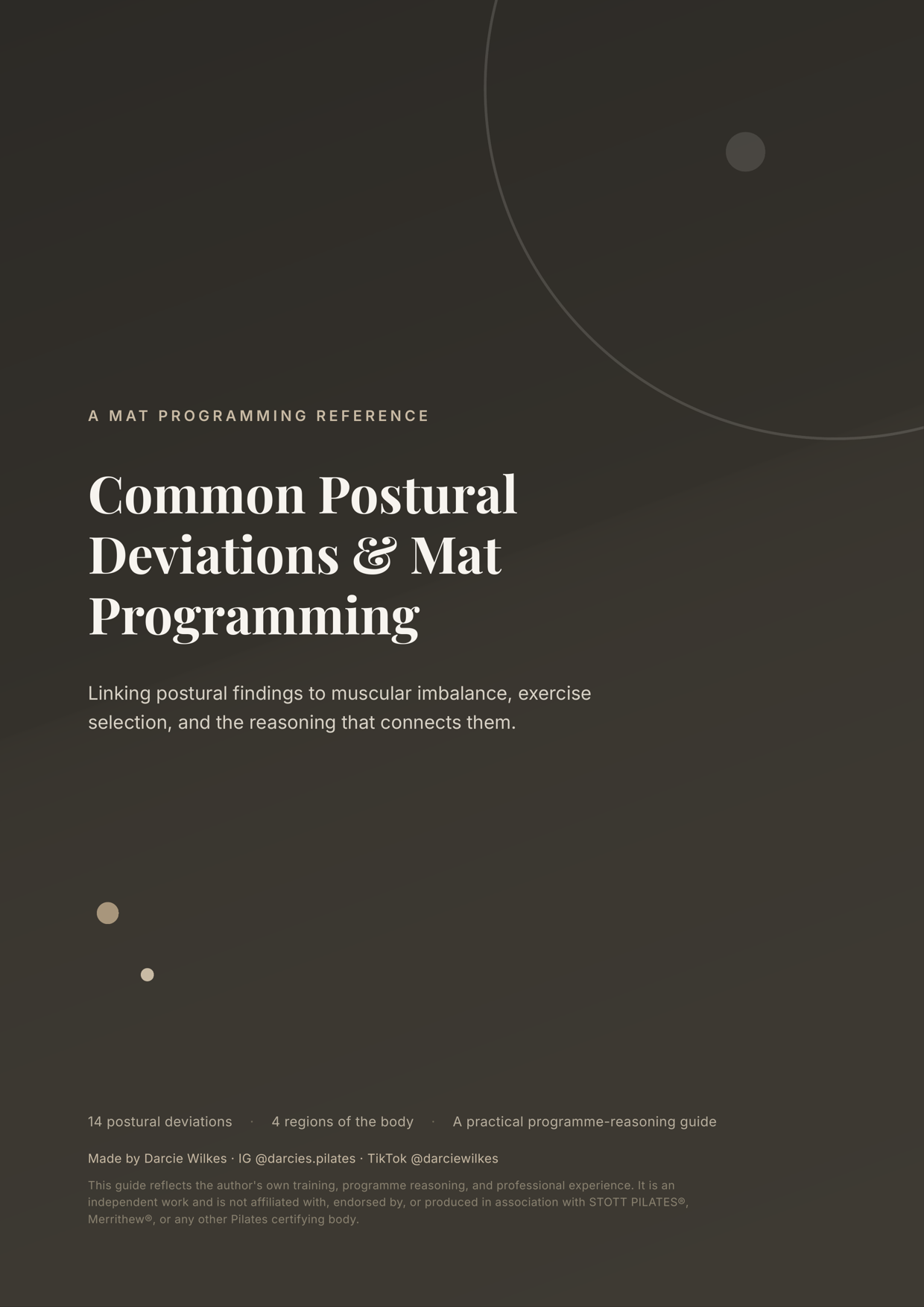
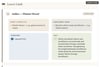

Common Postural Deviations & Mat Programming
Struggling to link postural findings to exercises and muscle imbalance?
If you're revising for STOTT, you'll know the drill: complete a postural analysis, programme exercises to address what you see, then justify every choice in your Statement of Focus. Linking those three things together — deviation, cause, exercise — was genuinely one of the hardest parts of my own revision.
This guide gives examples of the thought process I eventually landed on: linking a postural deviation to its likely muscular cause, and then to a mat exercise, so you always have a clear answer ready when asked why. Once I nailed down this reasoning process, my postural analysis and Statement of Focus work became so much clearer — this guide is built to get you there faster than I did.
It walks through examples of common postural deviations across the body, showing how to reason from finding → muscular imbalance → exercise → purpose.
What's inside:
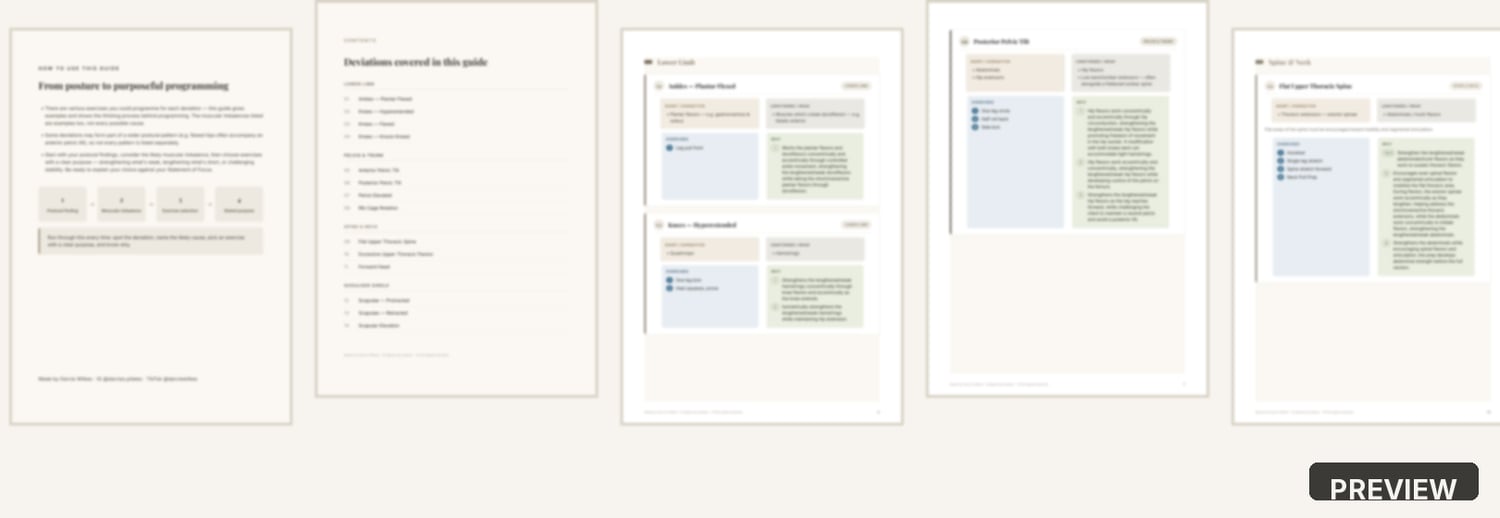
- Examples of common postural deviations across the lower limb, pelvis & trunk, spine & neck, and shoulder girdle
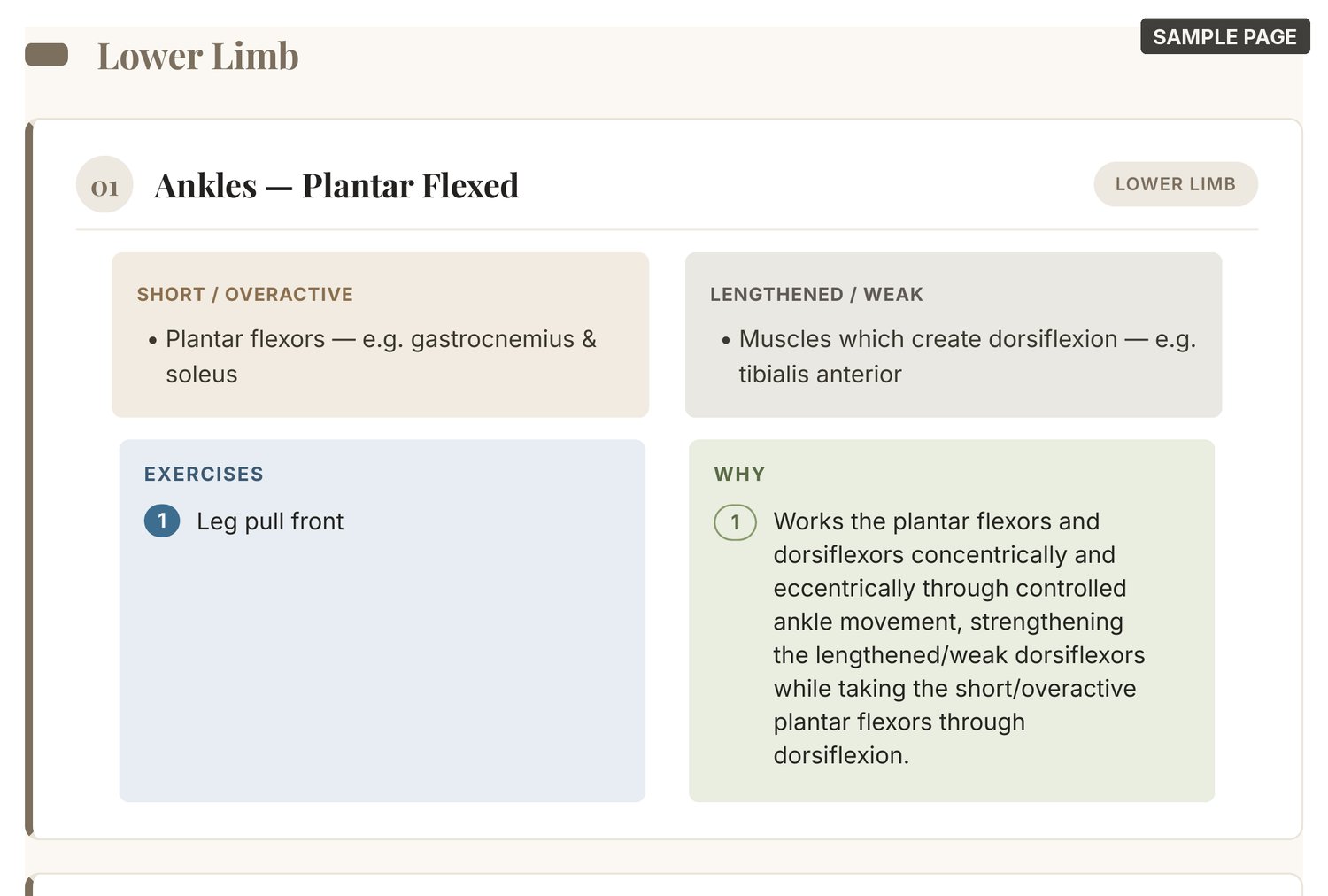
- For each one: the likely muscular imbalance (short/overactive vs. lengthened/weak), mat exercises to programme, and a clear breakdown of why each one works
- A simple 4-step reasoning framework you can apply to any deviation, even ones not listed here — perfect for postural analysis and Statement of Focus practice
- Clean, colour-coded layout designed for fast revision — not a wall of text
Who it's for:
Pilates instructors and trainees revising for their Mat exam, especially anyone who struggles to connect posture → cause → exercise → purpose when preparing their Statement of Focus. Also a handy revision tool for any instructor who wants a clearer, faster way to programme exercises for a client based on their postural deviations.
Written by a STOTT-certified Pilates instructor (96% exam score), based on real training and the exact reasoning process that helped me through my own revision.
Instant PDF download. Quick to read, easy to reference again and again during revision or client sessions.
Also revising Reformer? This guide has a matching Reformer companion, built with the exact same reasoning framework — check my shop for the pair.