
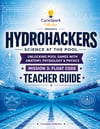
HydroHackers: Mission 3 Float Code
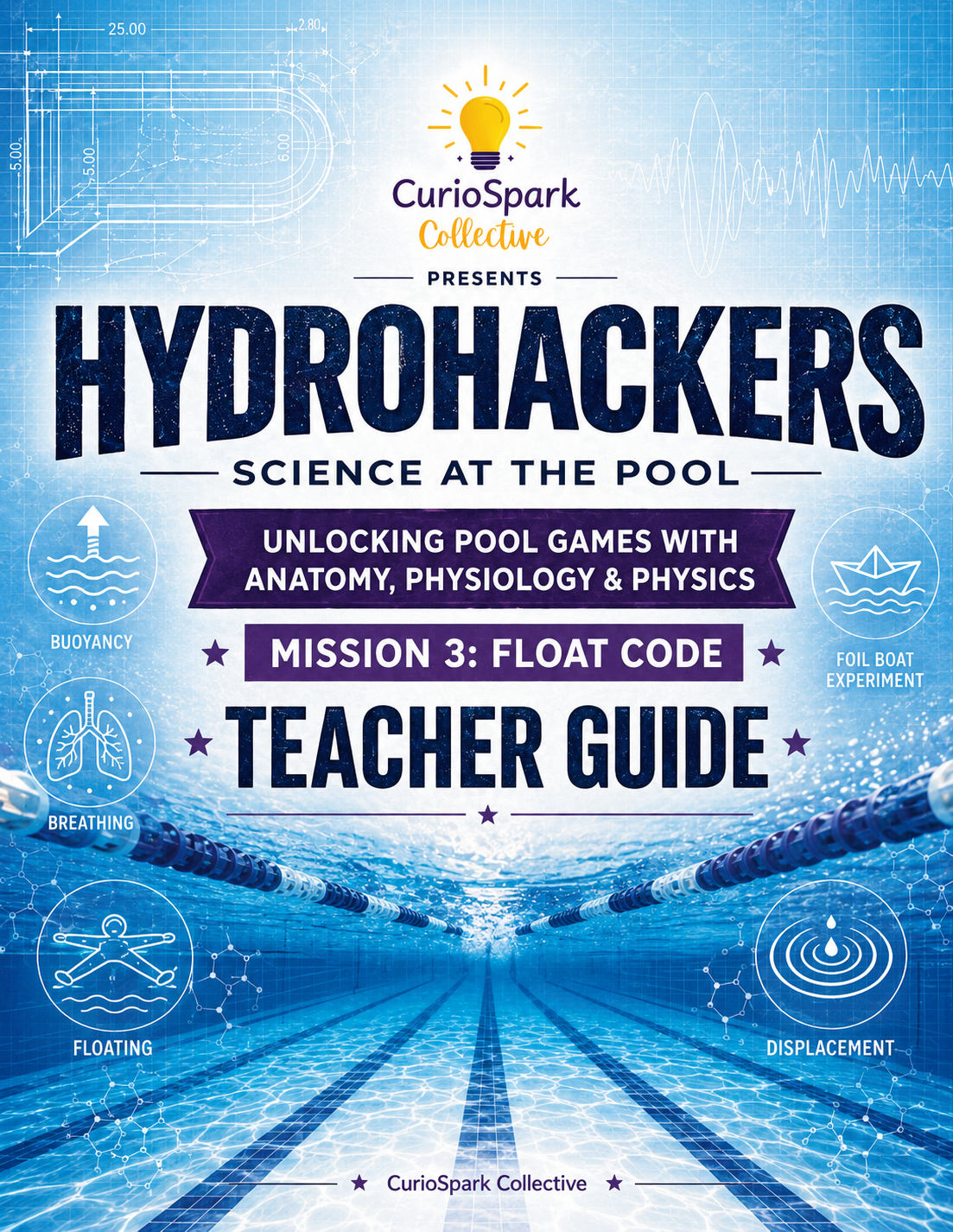
HydroHackers Mission 3: Float Code
Science at the Pool: Buoyancy, Breathing + Body Position
Water has a secret superpower: it pushes back.
In Float Code, HydroHackers investigate why some things float, why others sink, and how air, body shape, calm breathing, and buoyancy all work together in the water. Kids will test floating strategies, explore the respiratory system, build foil boats, load them with cargo, and crack the science code behind staying afloat.
This mission blends anatomy, physics, movement, and hands-on pool science in a playful, visually rich format designed for mixed-age homeschool groups, co-ops, camps, and curious families.
In this mission, HydroHackers will explore:
- Buoyancy: the upward force water provides
- Density: why added air can change how something floats
- Displacement: how objects and bodies push water aside
- Lungs + breathing: how inhaling, exhaling, and calm control affect floating
- Body shape: why spreading out can create more support in water
- Boat design: how shape, trapped air, and balanced cargo help boats carry more
Includes:
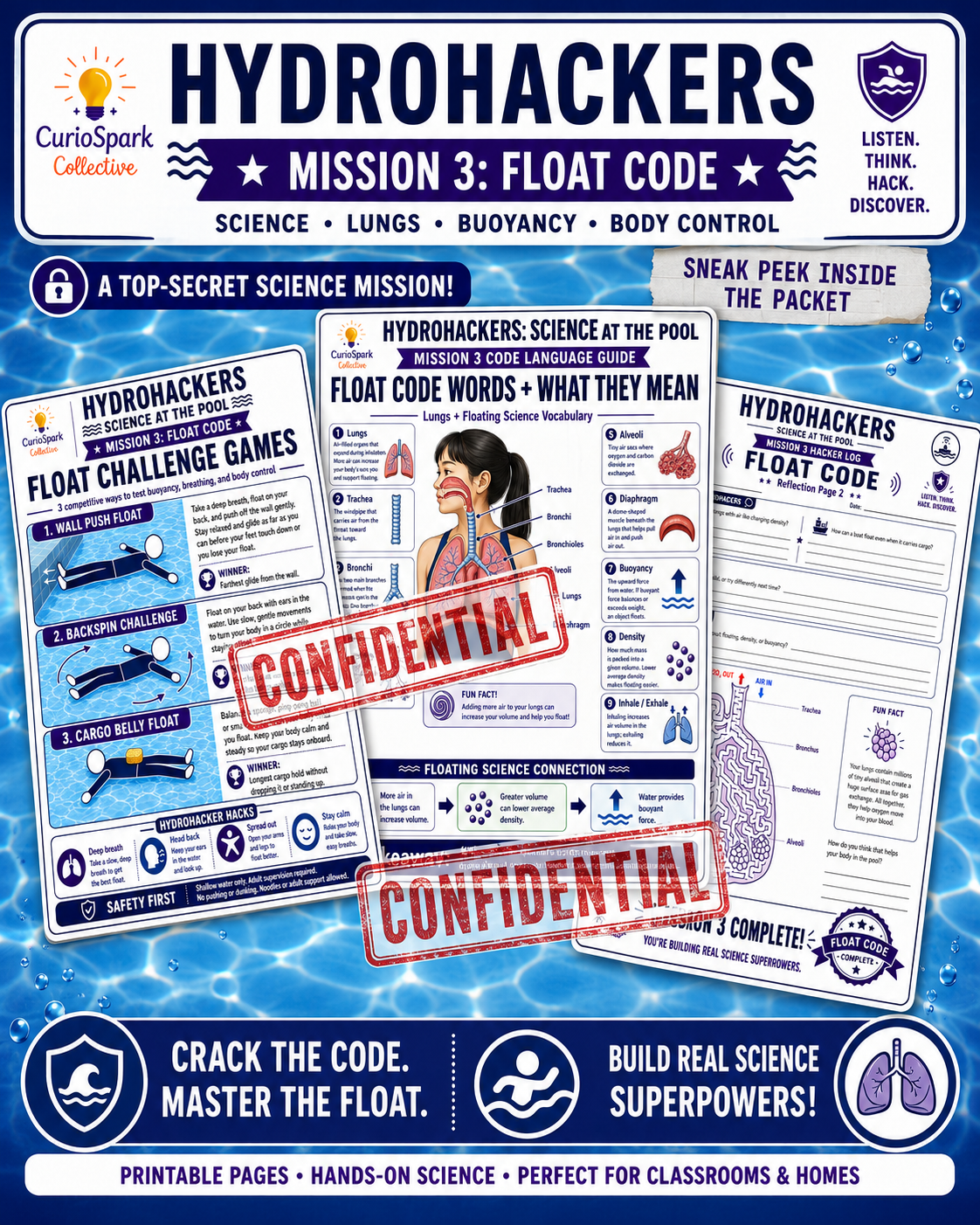
- Mission 3 cover and teacher-guide pages
- Step-by-step activity flow
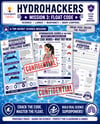
- Lungs + Floating anatomy poster
- Water Pushes Up buoyancy and density poster
- Float Code Challenge Hacks poster
- Boat Buoyancy Lab poster with foil-boat loading challenge
- Little Floaters shallow-water station
- Float Code vocabulary and respiratory-system reference pages
- Respiratory system label-it-yourself activity
- Two-page Float Code Hacker Log with reflection prompts
- A respiratory-system maze challenge featuring the path of air through the lungs
Main hands-on activities:
Float Code Trials
Kids test the AIR + SHAPE + CALM code through supported shallow-water floating challenges. Every learner can choose wall support, an adult helper, a noodle, or standing participation.
Boat Buoyancy Lab
Teams transform foil into floating boats, add cargo one piece at a time, then redesign their boats to hold even more.
Best for:
Ages approximately 6–13, with easy adaptations for younger learners and deeper vocabulary for older kids.
Supplies for the main lab:
Aluminum foil, tubs or dishpans of water, pennies/washers/counters for cargo, towels, and optional pool noodles for supported floating practice.
Important: All pool activities should be supervised by responsible adults and follow the safety rules of your pool or swim space.
This is a digital download. No physical product will be shipped.