
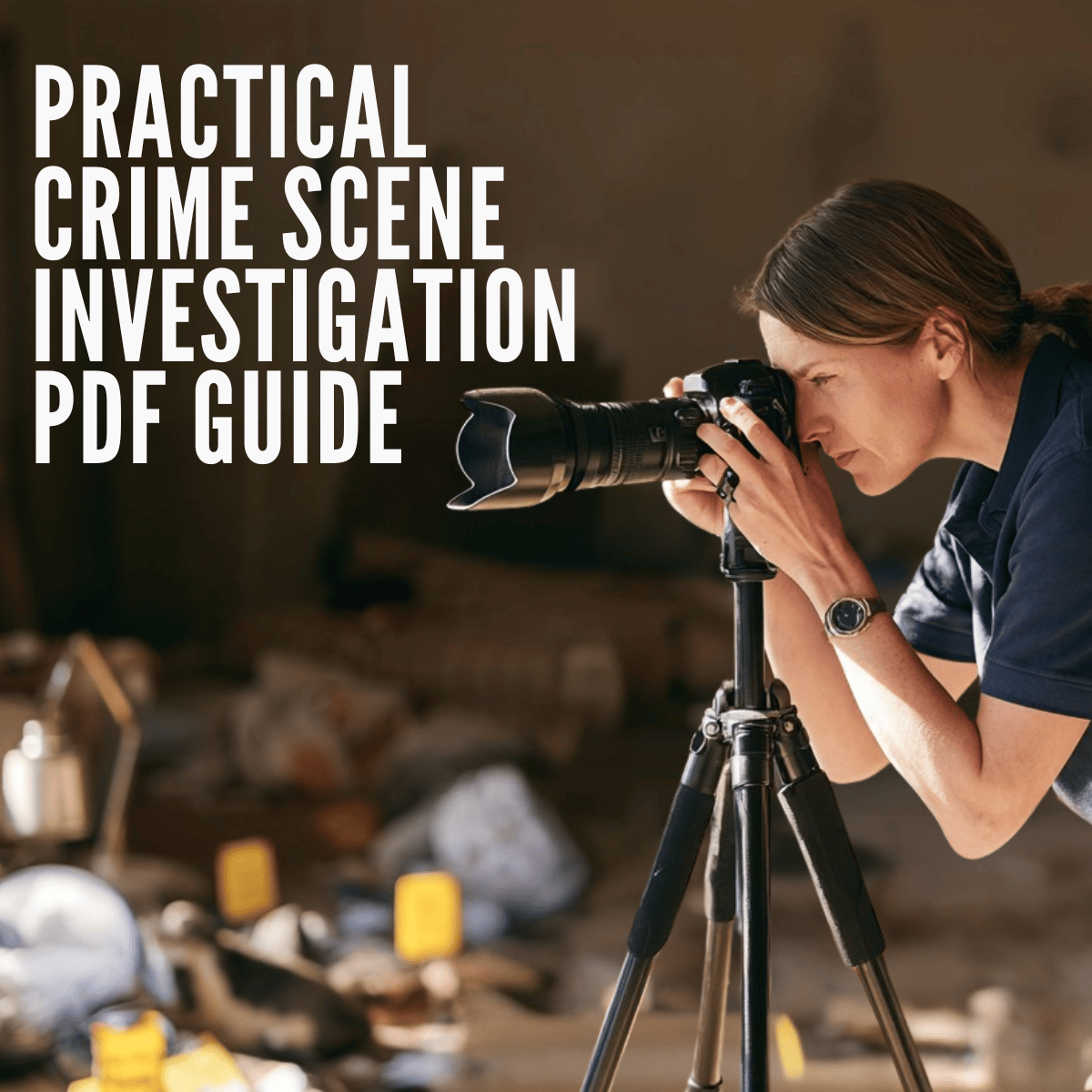

Practical Crime Scene Investigation
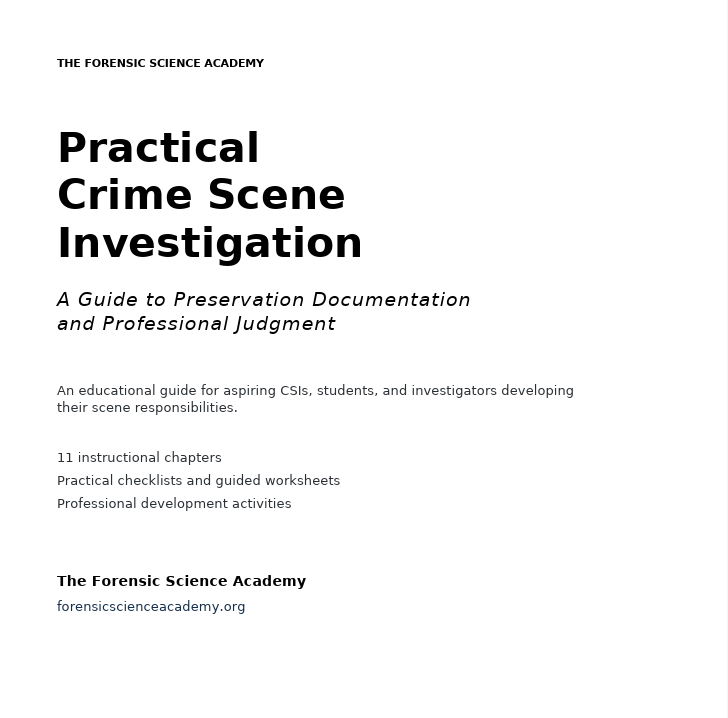
Practical Crime Scene Investigation
A Guide to Preservation, Documentation, and Professional Judgment
Develop the habits that support careful, well-documented crime scene work.
What should you prioritize on arrival? What needs to be documented before evidence moves? When should you stop and request specialist assistance?
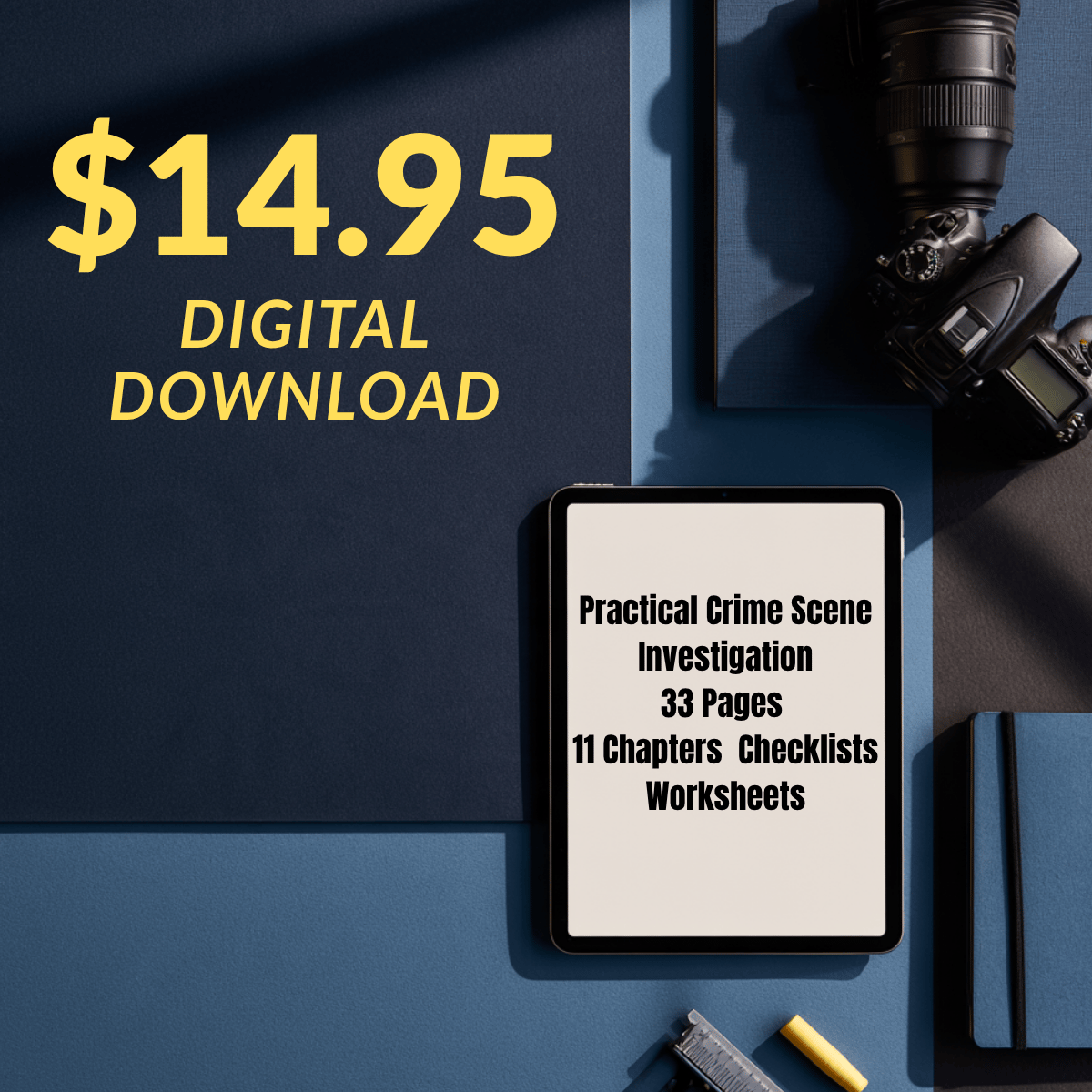
This 33-page downloadable guide from The Forensic Science Academy helps you explore those questions through clear explanations, practical checklists, and guided exercises.
Across 11 instructional chapters, you’ll examine first-response responsibilities, scene access, photography, notes and sketches, evidence handling, and chain of custody. You’ll also explore investigative tunnel vision, professional judgment under pressure, report writing, courtroom preparation, and final scene review.
Your guide includes:
Chapter checklists to review essential responsibilities and identify gaps.
Alternative Hypothesis Review worksheet to examine assumptions and consider other explanations.
Specialist assistance and decision checklists to help you recognize professional limits.
Court-Ready Documentation Review to assess whether your records support a clear explanation of your work.
One-page Final Crime Scene Release Checklist for reviewing outstanding questions.
Three-page Master CSI Checklist covering the broader workflow.
Professional development self-assessment and workbook pages to turn reflection into specific improvement goals.
Designed for aspiring CSIs, forensic-science and criminal-justice students, and new investigators reviewing foundational concepts. Use it alongside your coursework, supervised exercises, or professional training.
Format: Downloadable PDF for on-screen reading and printing. This is a digital resource; no physical product will be shipped.
Download your copy and begin building a more systematic approach to crime scene responsibilities.
For educational purposes. This guide does not confer certification or replace formal training, agency procedures, laboratory requirements, or legal guidance.