


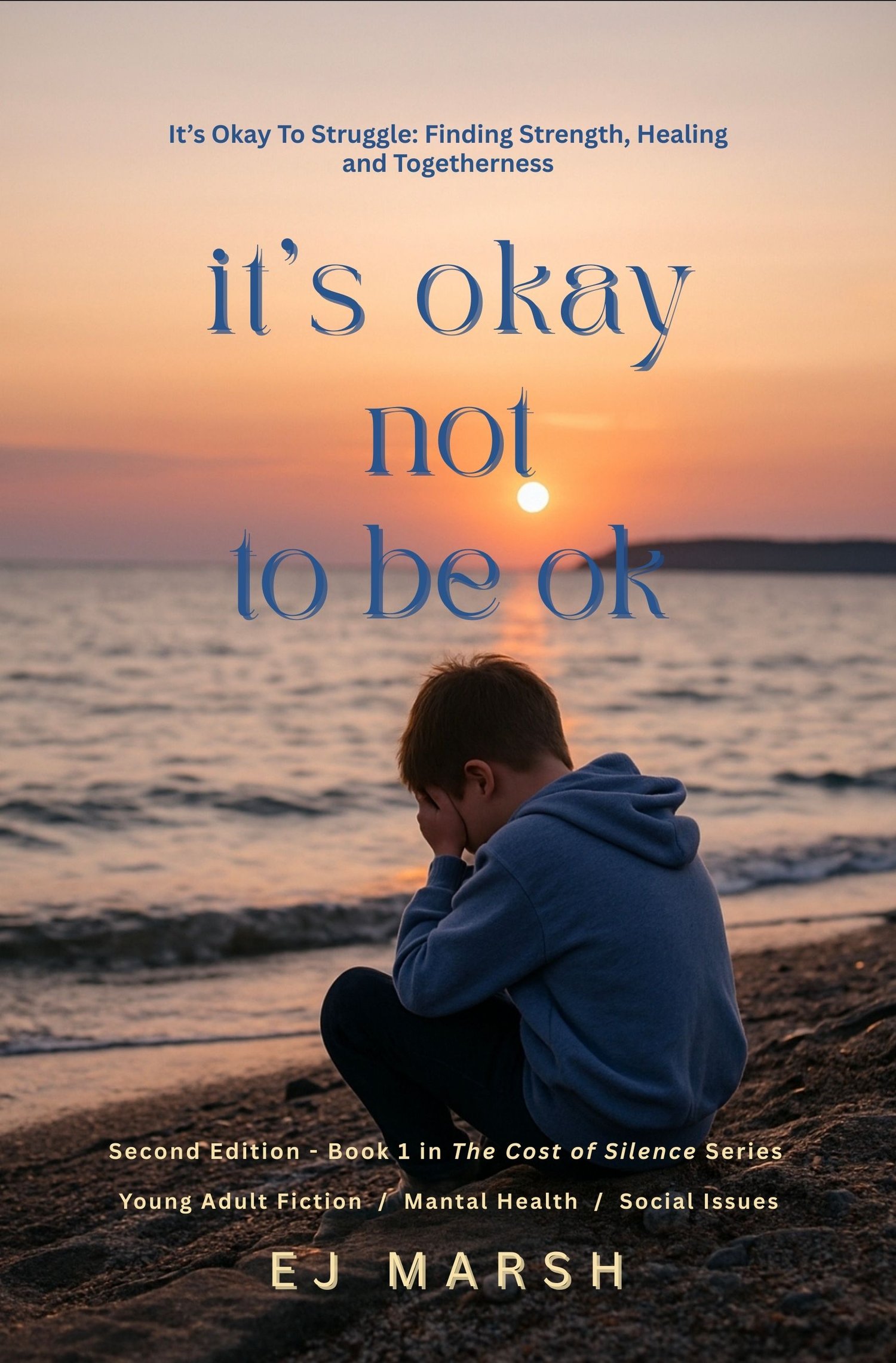
It's Ok Not To Be Okay
The first book in The Cost of Silence series - a powerful, emotionally
raw story of how silence, bullying, and hidden pain can spiral into
consequences no one sees coming.
How far can silence echo before someone finally breaks?
When fourteen-year-old Kyle begins bullying a quiet classmate online,
he thinks it's just a laugh-a stream of cruel emojis, taunts, and
careless words thrown into the void. But every message lands like a
stone in deep water, sending ripples outward. Behind the screen, Jamie
is already fighting invisible battles, and Kyle's words tip the
balance, sparking a chain of events that neither boy can escape.
Kyle's cruelty doesn't appear from nowhere. At home he lives with the
weight of absence: a father locked inside his own silence, unable to
guide or comfort. Into that void steps Martin-his father's friend, a
man Kyle calls "uncle." Martin notices him, praises him, offers him
friendship and what feels like a fatherly figure. To a lonely boy, it
seems like the acceptance he craves.
As one boy is broken by relentless bullying, another is lost and finds
himself falling deeper & deeper. Pain echoes through families, silence
breeds more silence, and the fractures remain hidden until they
shatter.
This is not a tale of simple heroes and villains. It's OK Not To Be OK
reveals uncomfortable truths-that bullies can also be victims, that
families can collapse not through shouting but through silence, and
that the most dangerous people often wear the gentlest smiles.
With unflinching honesty, this second edition expands the original,
weaving in new chapters that deepen both Jamie's suffering and Kyle's
descent down further and further, quietly, patient, and unnoticed. The
story now builds a stronger bridge toward its sequel, It's OK To
Struggle, while standing as a devastating novel on its own.
The book lays bare the corrosive impact of cyberbullying-the way words
become weapons, and how anonymity strips away empathy. It explores the
hidden weight of mental health struggles, the suffocating shame of
silence, and the loneliness of growing up in a home where love is
absent. At the same time, it exposes inner turmoil for what it is.
Layered into this is the generational pain of silence-fathers who
cannot speak, children who stop trying, families who repeat absence
without even realising it.