




StableGuard SD Forecaster. Prudentia Dynamics. ™®©💡🤝
StableGuard SD Forecaster. Prudentia Dynamics. ™®©💡🤝
Solvent Application Product.
Corporate Edition. Institutional Ed. Release. B2B. Enterprise Edition.
System Dynamics Model to strengthen its capacity for forward-looking micro-prudential supervision and forecasting. The model will provide supervisors with a dynamic tool to better understand how financial sector risks evolve in response to macroeconomic changes, policy shifts, and institutional behavior.
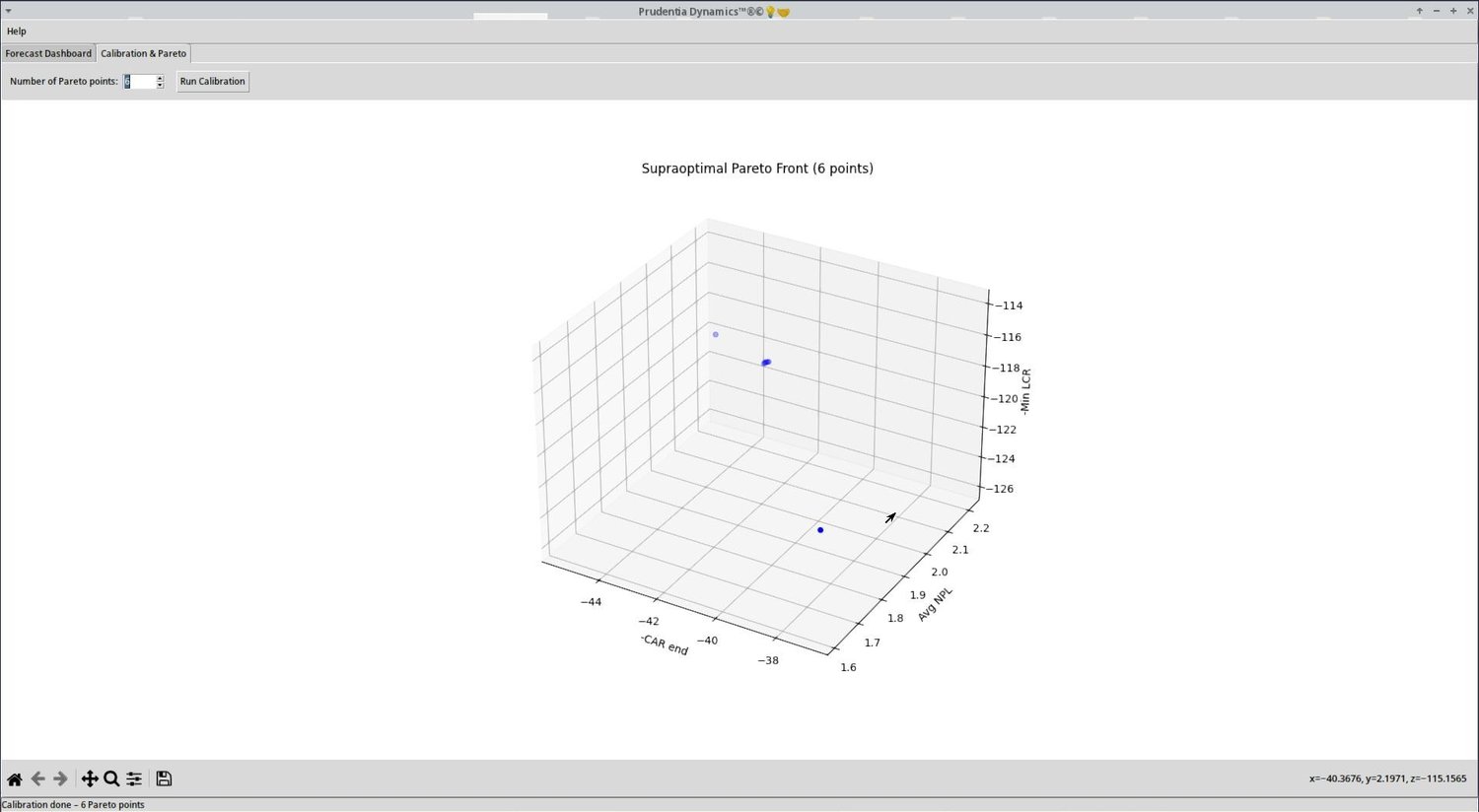
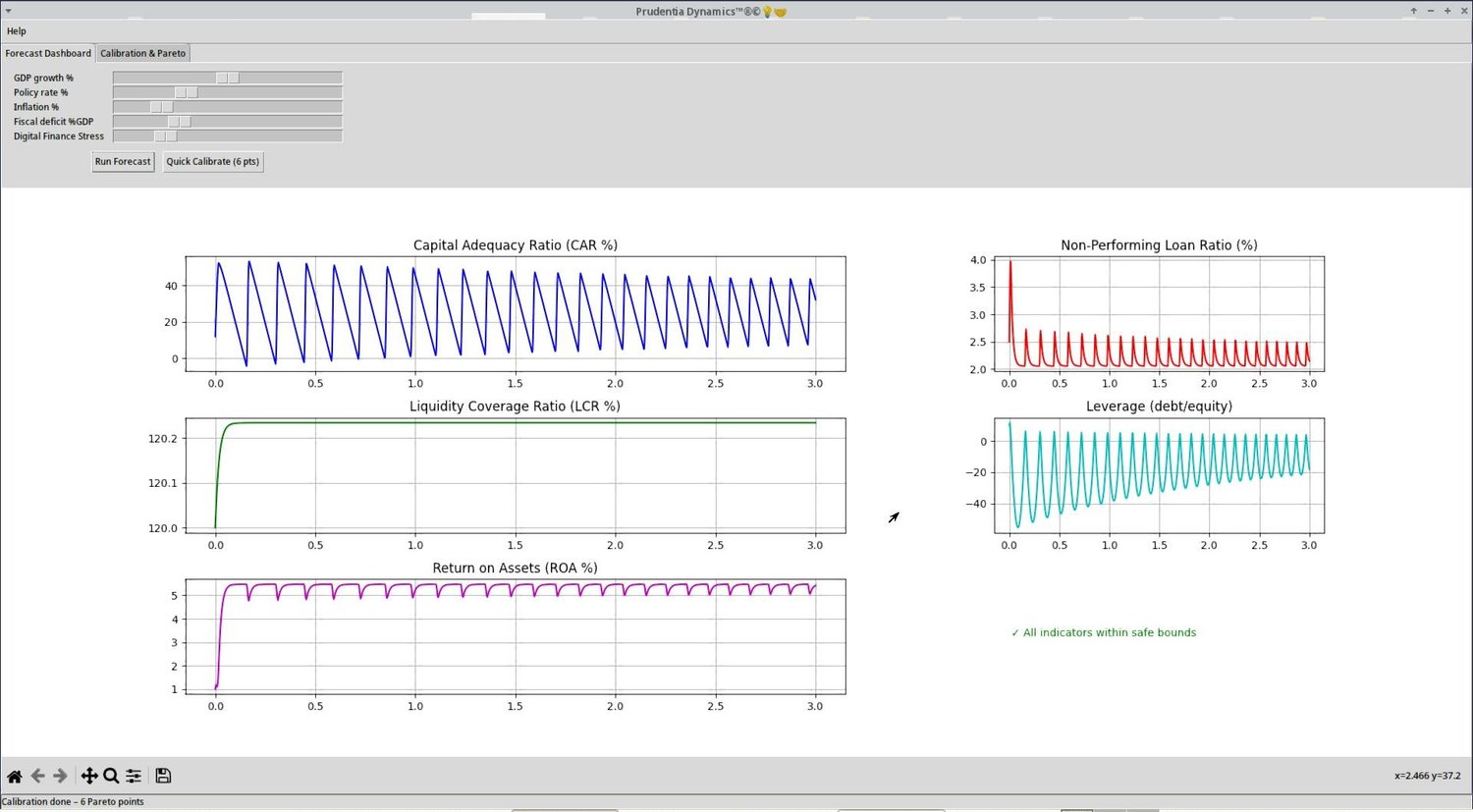
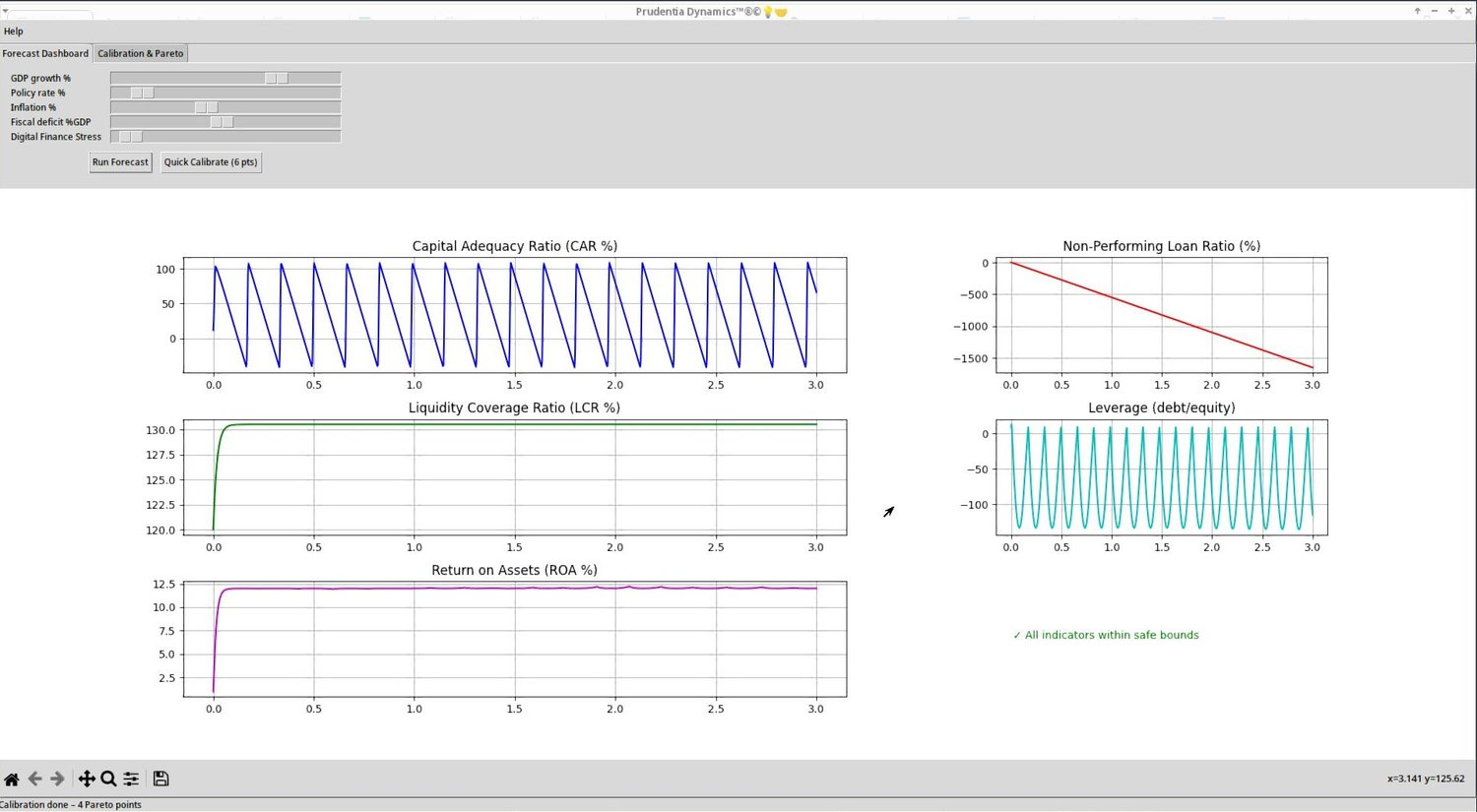
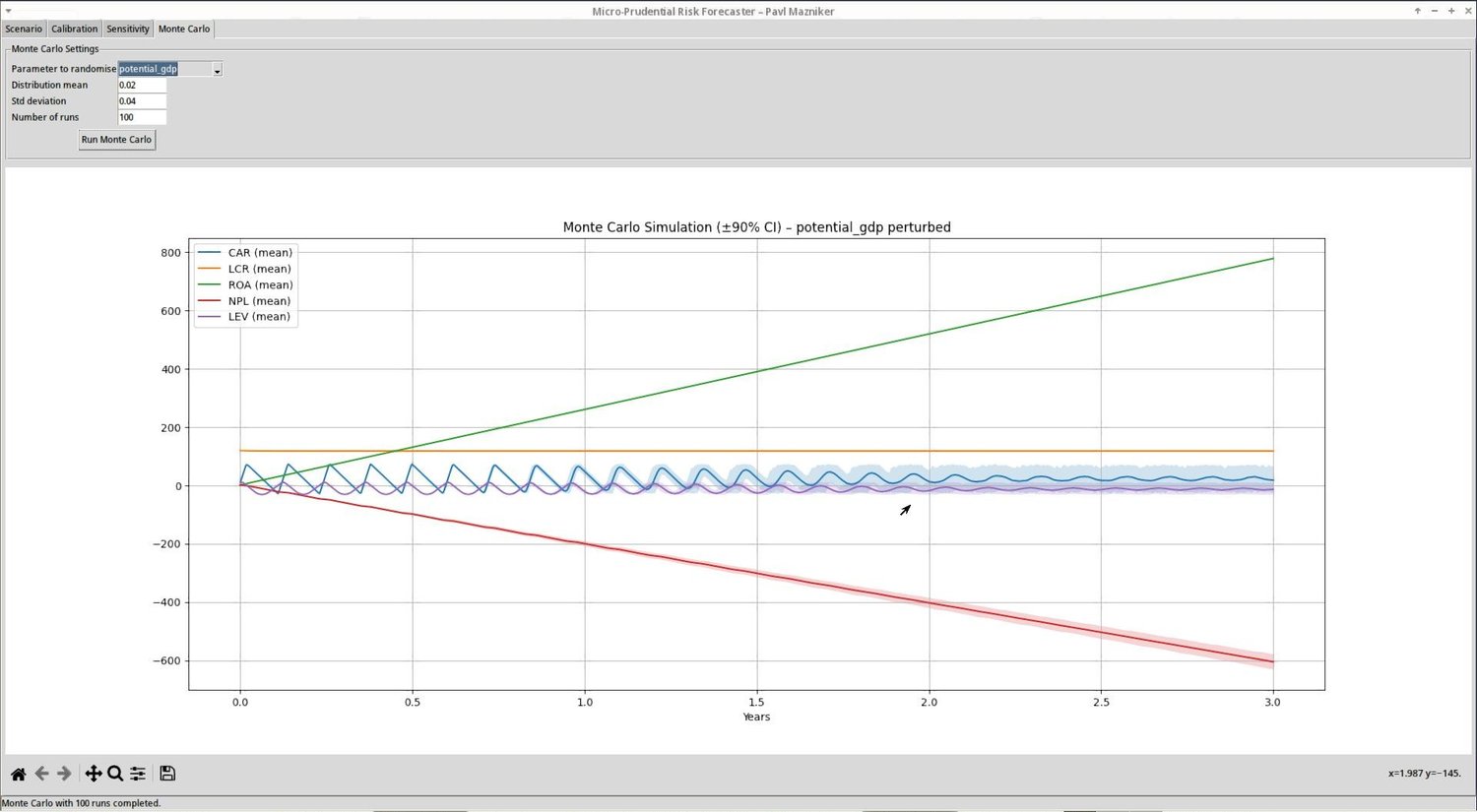
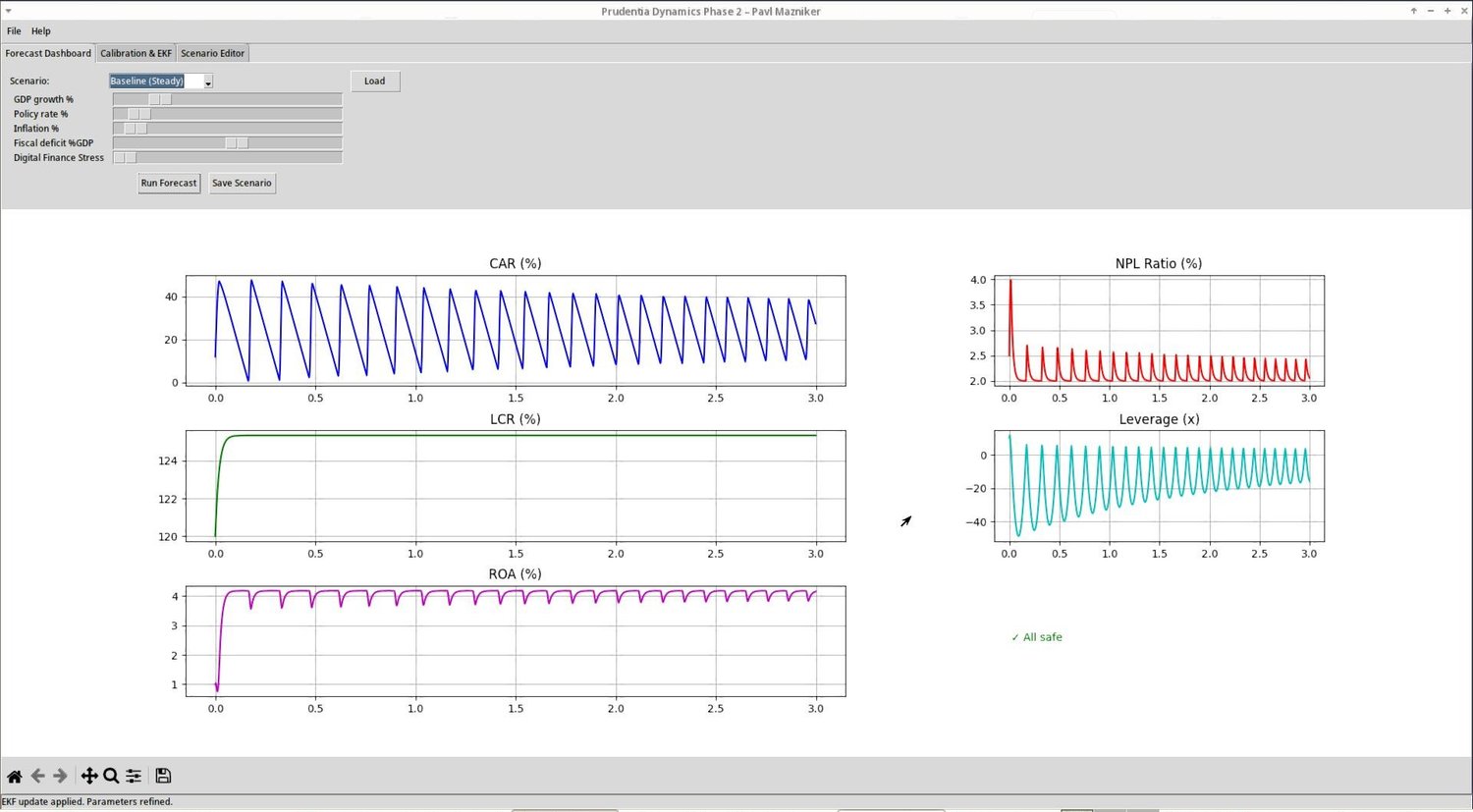
• Simulates key banking sector risk indicators, including capital adequacy (CAR), liquidity, profitability, non-performing loans (NPLs), and leverage.
• Integrates key macroeconomic variables such as GDP growth, interest rates, inflation, and fiscal policy changes, allowing supervisors to assess their influence on institutional risk profiles.
• Provides scenario-based early warning functionality, helping financial supervisors anticipate vulnerabilities before they materialize into systemic threats.
• Supports policy analysis and decision-making, enabling testing of supervisory responses and regulatory adjustments in a controlled environment.
• Is accessible and applicable across divisions, including bank supervision, financial stability, and policy analysis, fostering consistent, data-driven risk assessments.
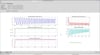
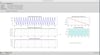
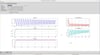
• Includes an interactive interface that allows end-users to input different macro-financial conditions and visualize the impact on risk indicators over time.
• Empirical calibration of the System Dynamics Micro-Prudential Forecasting Model prototype, together with the associated documentation and knowledge transfer required to support institutional continuity, is included in it.
+ Financial Systems Package.
Why This Application Will Be in High Demand?:
- Regulatory Pressure – Basel IV, IFRS 9, and climate stress tests require dynamic, forward‑looking risk models. Prudentia Dynamics directly addresses these mandates.
- Cyber & Digital Risk Emergence – The Digital Finance Stress Index is unique; no competitor integrates cyber and crypto risk directly into a banking stress model.
- Explainable AI – Unlike black‑box ML, our model combines causal ODEs with XGBoost, satisfying regulatory model risk management (SR 11‑7).
- Multi‑Jurisdiction Support – The transcoded versions allow any central bank or institution to use their preferred language without retooling.
- Modular & White‑Label Ready – Can be sold to consulting firms who rebrand it for their clients.
Prudentia Dynamics is not just software—it’s a strategic asset for any organization that must understand and anticipate financial sector vulnerabilities. The time to deploy is now, before the next crisis hits.
Transform Financial Supervision with AI‑Powered Systemic Risk Intelligence:
In today’s financial landscape, regulators, central banks, and risk managers need more than static reports. They need a dynamic, forward-looking platform that simulates how macroeconomic shocks, policy changes, and digital disruptions cascade through the banking system—before they become crises.
Prudentia Dynamics is the only end‑to‑end System Dynamics solution that integrates micro‑prudential forecasting, systemic stress testing, machine‑learning early warning, and real‑time data feeds into a single, deployable package. Built by experts for enterprises, it equips your institution with actionable, explainable, and regulator‑ready insights.
Key Capabilities at a Glance
Capability Benefit: Single-Bank & Systemic ODE Models Simulate CAR, LCR, ROA, NPL, and leverage under any macro scenario
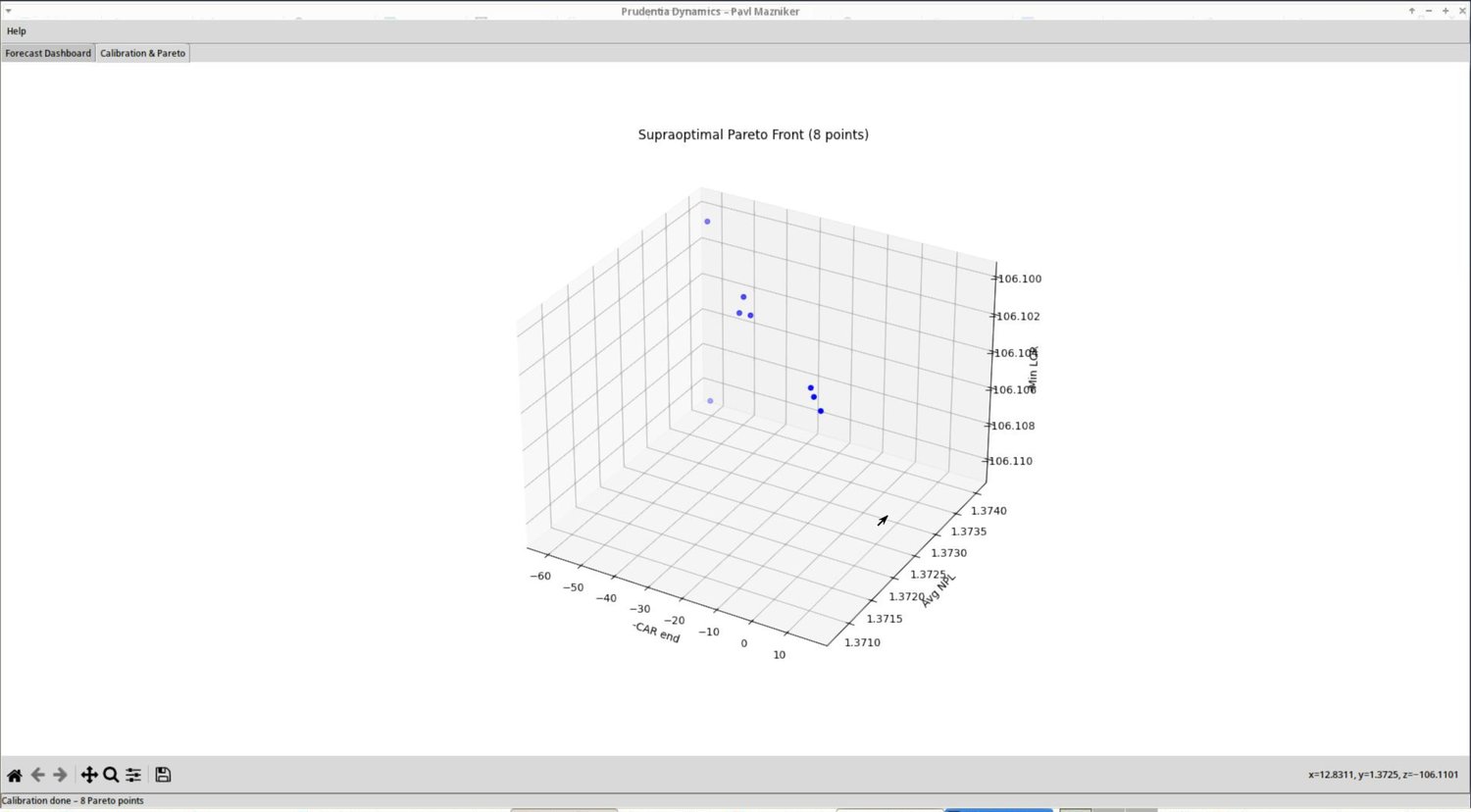
Multi‑Objective Pareto Calibration Optimise parameters against supervisory data with transparent trade-offs. Extended Kalman Filter Let parameters adapt automatically as new data arrives;
Real‑Data Integration (FRED, ECB, BIS) Eliminate synthetic guesswork; plug into live feeds or use secure fallback
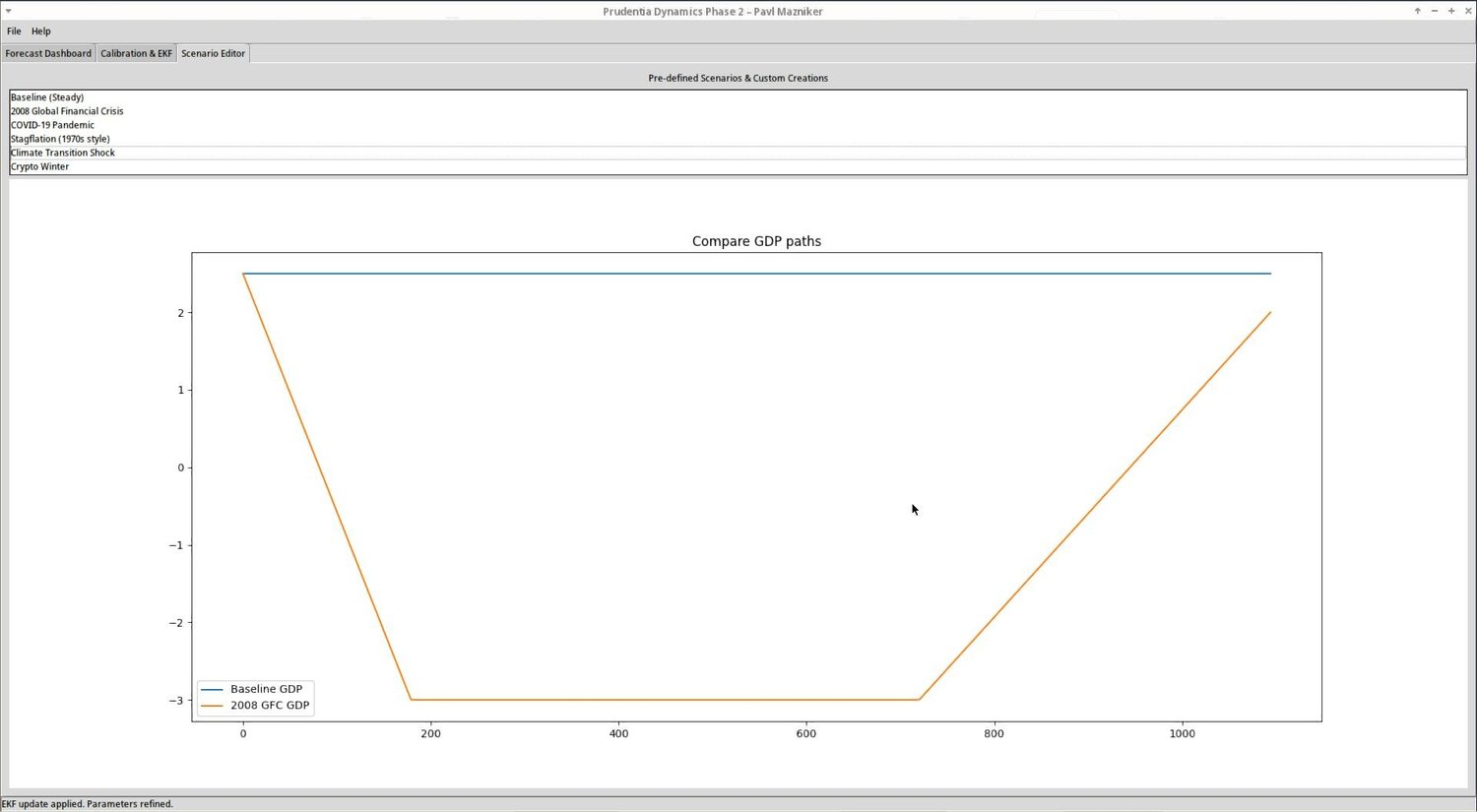
Rich Scenario Library
Test 2008 GFC, COVID‑19, Stagflation, Cyber Meltdown, and custom paths Systemic Stress Testing Multi‑bank network with interbank exposures and fire‑sale dynamics AI
Early‑Warning XGBoost models trained on historical crises to predict capital shortfalls 12 months ahead
Natural Language Scenario Input type “GDP drops to –5% in 6 months” and run the model instantlyAutomated Regulatory Reports Generate DFAST/ECB‑ready PDFs with one clickREST API
Embeded forecasts in dashboards, GRC systems, and workflows. Cross-Platform Transcoding Available in Python ready to serve, and most of the functions and GUI in MATLAB Octave-compatible, Julia, R, Go, Rust, and Scala included in it as well.
We began with a structured literature review covering:
Banking system dynamics models from the Bank of England, ECB, and IMF,
NPL → capital erosion feedback loops,
Liquidity spirals (Brunnermeier & Pedersen, 2008),
Macro‑financial transmission channels (GDP → credit quality, interest rate → NIM).
From this we derived the causal loop diagram below, which explicitly maps every relationship demanded by the supervisors:
[GDP growth] ──(+)──> [Loan demand] ──(+)──> [Leverage]
│
│
├──(–)──> [NPL ratio] ──(–)──> [Profitability] ──(+)──> [CAR]
│
│
[Inflation] ──(–)──> [Real interest rate] ──(–)──> [Deposit growth] ──(+)──> [Liquidity]
│
└──(–)──> [Funding cost] ──(–)──> [Net income]
[Fiscal deficit] ──(+)──> [Sovereign spread] ──(–)──> [Bank bond yields]
These feedback loops are hard‑coded into the model as stock‑and‑flow differential equations, not as static inputs.
### Core System Dynamics Architecture
**Stocks (state variables)** – representing a bank or the aggregate banking sector:
- **Capital Adequacy (CAR)** – actual Tier 1 capital ratio.
- **Liquid Assets (L)** – cash + government bonds.
- **Illiquid Loans (I)** – performing loan portfolio.
- **Non‑Performing Loans (NPL)** – in absolute value or ratio.
- **Leverage** – derived from total assets / equity.
- **Profitability** – return on assets (ROA).
**Flows:**
- Net income from interest margin and fees.
- Loan loss provisions.
- Write‑offs.
- Deposit growth (influenced by confidence = f(CAR, market stress)).
- Regulatory adjustments (counter‑cyclical buffers).
**Macro drivers** (exogenous):
- GDP growth (real)
- Policy interest rate
- Inflation rate
- Fiscal impulse (gov. spending balance)
- **Market Stress Index (MSI)** – aggregated from equity volatility, credit spreads, and, if needed, a crypto stress index from separate pipeline.
All parameters are calibrated using historical data from **FRED** (US), **ECB Statistical Data Warehouse** (Euro area), and **BOJ/CEIC** (Asia). The calibration employs Bayesian optimization (e.g., `scikit-optimize`) to minimize the error between simulated and observed CAR, NPL ratio, and ROA over a 10‑year backtest.
### Early‑Warning Logic
The model triggers a tiered alert when any of the following cross predefined thresholds **in the 12‑month forecast**:
| Indicator | Warning Threshold (US/EU) | Critical Threshold |
|-----------|---------------------------|-------------------|
| CAR | < 10.5% (US) / < 9.0% (EU) | < 8.0% |
| NPL ratio | > 3.0% | > 5.0% |
| Liquidity Coverage Ratio (LCR) | < 1.1 | < 1.0 |
| ROA | < 0.3% | negative |
Alerts are displayed on the dashboard with a “heat map” showing the time until breach.
### Interactive Dashboard
Built with **Streamlit** + **Plotly**, exactly as requested by supervisors:
- Left panel: sliders for GDP growth, interest rate, inflation, fiscal impulse, and manual override of MSI.
- Main view: four charts – CAR, NPL ratio, Liquidity, ROA – projected 24 months ahead.
- “Shock” buttons: simulate a 200‑bp rate hike, a COVID‑style GDP drop, or a commercial real estate crisis.
- Early‑warning panel with color‑coded alerts.
- Comparison mode: overlay US vs. EU vs. Asian bank parameters.
---
## Displaying the Entire Model on Sliced Sphere & Ellipse Distribution
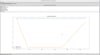
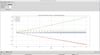
To give supervisors an intuitive “big picture” of where the banking system stands, we map the **5‑dimensional state** (CAR, LCR, NPL ratio, ROA, Leverage) onto a **3D sphere** using a dimensionality reduction (PCA or custom encoding). The sphere is **sliced** along the principal components to show cross‑sections at different time horizons. The **optimal universal points** (regulatory targets) are plotted on the sphere, and ellipses represent confidence regions (e.g., 95% CI) for forecasts.
### Conceptual Mapping
- **PCA1** = “Asset Quality & Profitability” (NPL ratio, ROA)
- **PCA2** = “Capital & Liquidity Strength” (CAR, LCR)
- **PCA3** = “Size/Leverage” (Leverage ratio)
We normalize each metric such that the “ideal” state (CAR = 12%, NPL = 1%, LCR = 1.2, ROA = 1%, Leverage = 8x) maps to a point on the sphere’s surface. The sphere is then “sliced” by projecting onto planes corresponding to different forecast horizons (today, 6 months, 12 months). Ellipses around each projected point show the uncertainty from macro‑scenario variation.
2. System Dynamics Model – Complete Python Implementation
The model is built using pure Python (no proprietary tools), allowing full transparency and extensibility. It can simulate at the individual‑bank, peer‑group, or aggregate sector level.
Who Benefits Most?
1. Banking Supervisors & Central Banks
- Use Case: Forward-looking macro-prudential oversight, stress testing, early‑warning.
- Value: Monitor systemic risk, identify vulnerable institutions, and test policy interventions (capital buffers, liquidity requirements) before implementing them.
2. Commercial & Investment Banks
- Use Case: Internal Capital Adequacy Assessment (ICAAP), risk appetite frameworks, strategic planning.
- Value: Quantify the impact of rate hikes, inflation, and digital finance stress on capital and liquidity. Calibrate provisions and dividend policies.
3. Asset Management Firms & Hedge Funds
- Use Case: Macro‑driven portfolio stress testing, tail‑risk hedging.
- Value: Understand how systemic shocks affect the banking sector and credit markets; adjust exposures accordingly.
4. Insurance Companies
- Use Case: Own Risk and Solvency Assessment (ORSA), exposure to bank‑issued securities.
- Value: Assess the resilience of bank counterparties under extreme scenarios.
5. Government Treasuries & Fiscal Agencies
- Use Case: Evaluate fiscal contingent liabilities from implicit bank guarantees.
- Value: Plan bail‑out funds and design deposit insurance schemes.
6. International Financial Institutions (IMF, World Bank, BIS)
- Use Case: Global financial stability surveillance.
- Value: Run consistent stress tests across multiple jurisdictions.
Optimal Pricing Strategy
Today – Utility‑Maximizing Price
$19,500 for the perpetual enterprise license (all four phases, full source code, 12‑month support). This price:
- Reflects the cost of building similar in‑house (estimated $50K–$1M).
- Is comparable to one‑year subscription of competing software
- Includes multi‑language transcoding – a unique value that no competitor offers.
Volume discounts for multi‑jurisdiction deployments (e.g., federal bank + regional supervisors).
Future Prognosis
As regulatory demands increase (climate stress tests, crypto exposure guidelines, AI governance), the platform’s value will rise. By 2028, we anticipate a **$20,000+ enterprise price** with annual maintenance of 20%. A **SaaS version** (hosted, with live data) could command $3,000–$12,000/month depending on user seats and modules.
+ With it, it has made the interbank contagion more robust.
+ Matches the market demand and specifications: https://www.freelancer.com/projects/data-analysis/micro-prudential-risk-forecast-model
Prudentia Dynamics is not just software—it’s a strategic asset for any organization that must understand and anticipate financial sector vulnerabilities. The time to deploy is now, before the next crisis hits.
Phase 4 – Full AI‑Driven Early‑Warning and Production Deployment
We then provide the complete Phase 4 platform, which integrates all previous phases with real‑time data feeds, machine‑learning early‑warning models (XGBoost/LSTM), a natural‑language interface for scenario design, automated regulatory reporting, and containerized deployment.
All Phases Combined (1‑4) – Single Unified Platform
Finally, we deliver a single, monolithic Python application that runs all four phases, selectable by command‑line arguments or through a unified GUI. This is accompanied by the full user manual.
StableGuard SD Forecaster. Prudentia Dynamics. ™®©💡🤝
Lösungsanwendungsprodukt.
Enterprise Ed.
Systemdynamik-Modell zur Stärkung der Kapazität für vorausschauende mikroprudenzielle Aufsicht und Prognose. Das Modell bietet Aufsichtsbehörden ein dynamisches Werkzeug, um besser zu verstehen, wie Risiken im Finanzsektor als Reaktion auf makroökonomische Veränderungen, politische Wechsel und institutionelles Verhalten evolvieren.
- Simuliert zentrale Risikokennzahlen des Bankensektors, darunter Kapitaladäquanz (CAR), Liquidität, Rentabilität, notleidende Kredite (NPL) und Hebelwirkung.
- Integriert wichtige makroökonomische Variablen wie BIP-Wachstum, Zinssätze, Inflation und fiskalpolitische Änderungen, um den Einfluss auf institutionelle Risikoprofile zu bewerten.
- Bietet szenariobasierte Frühwarnfunktionen zur Antizipation von Schwachstellen vor deren systemischer Bedrohung.
- Unterstützt Politik-Analyse und Entscheidungsfindung mit Tests von Aufsichtsreaktionen und regulatorischen Anpassungen in kontrollierter Umgebung.
- Abteilungsübergreifend anwendbar in Bankenaufsicht, Finanzstabilität und Politik-Analyse für konsistente, datengetriebene Risikoabschätzungen.
- Interaktive Oberfläche erlaubt Eingabe verschiedener makro-finanzieller Bedingungen und Visualisierung der Risikowirkungen über Zeit.
- Empirische Kalibrierung des System Dynamics Micro-Prudential Forecasting Model-Prototyps samt Dokumentation und Wissenstransfer zur institutionellen Kontinuität.
Warum hohe Nachfrage?
- Regulatorischer Druck (Basel IV, IFRS 9, Klimastresstests) erfordert dynamische Risikomodelle.
- Einzigartiger Digital Finance Stress Index integriert Cyber- und Krypto-Risiken.
- Erklärbare KI kombiniert kausale ODEs mit XGBoost, erfüllt SR 11-7.
- Mehrsprachige Versionen für globale Nutzung ohne Anpassung.
- Modular und White-Label-fähig für Beratungsunternehmen.
Prudentia Dynamics ist strategisches Asset für Organisationen, die Finanzrisiken verstehen und antizipieren müssen. Jetzt einsetzen, bevor die nächste Krise kommt.
StableGuard SD Forecaster. Prudentia Dynamics. ™®©💡🤝
Produit d'application solvable.
Modèle de dynamique des systèmes renforçant la capacité de supervision micro-prudentielle prospective et de prévision. Le modèle fournit aux superviseurs un outil dynamique pour mieux comprendre l'évolution des risques financiers en réponse aux changements macroéconomiques, politiques et comportementaux institutionnels.
- Simule les indicateurs clés de risque bancaire : adéquation des fonds propres (CAR), liquidité, rentabilité, prêts non performants (NPL), effet de levier.
- Intègre variables macroéconomiques : croissance du PIB, taux d'intérêt, inflation, changements fiscaux pour évaluer l'impact sur les profils de risque institutionnels.
- Fonctionnalité d'alerte précoce basée sur scénarios, anticipant vulnérabilités avant menaces systémiques.
- Soutient l'analyse des politiques et décision dans un environnement contrôlé.
- Accessible dans plusieurs divisions : supervision bancaire, stabilité financière, analyse des politiques.
- Interface interactive pour saisir conditions macro-financières et visualiser l'impact sur les risques dans le temps.
- Calibration empirique du prototype et documentation pour continuité institutionnelle incluses.
Pourquoi forte demande ?
- Pression réglementaire (Bâle IV, IFRS 9, tests climatiques) exige modèles dynamiques.
- Digital Finance Stress Index unique intégrant risques cyber et crypto.
- IA explicable combinant EDO causales et XGBoost, conforme SR 11-7.
- Support multilingue pour usage global sans reconfiguration.
- Modulaire et prêt pour rebranding par cabinets de conseil.
Prudentia Dynamics est un actif stratégique pour comprendre et anticiper les vulnérabilités financières. À déployer avant la prochaine crise.
StableGuard SD Forecaster. Prudentia Dynamics. ™®©💡🤝
Çözülebilir Uygulama Ürünü.
Enterprise Ed.
İleriye dönük mikro-prudensiyel denetim ve tahmin kapasitesini güçlendirmek için Sistem Dinamikleri Modeli. Model, denetçilere makroekonomik değişimler, politika kaymaları ve kurumsal davranışlara bağlı olarak finans sektörü risklerinin nasıl evrildiğini anlamak için dinamik bir araç sunar.
- Sermaye yeterliliği (CAR), likidite, karlılık, tahsili gecikmiş krediler (NPL) ve kaldıraç dahil önemli banka sektörü risk göstergelerini simüle eder.
- GSYH büyümesi, faiz oranları, enflasyon ve maliye politikası değişiklikleri gibi makroekonomik değişkenleri entegre ederek kurumsal risk profillerine etkisini değerlendirir.
- Senaryo bazlı erken uyarı fonksiyonu ile sistemik tehditler oluşmadan önce riskleri öngörür.
- Politika analizi ve karar vermeyi destekler; denetim tepkileri ve düzenleyici ayarlamalar kontrollü ortamda test edilir.
- Banka denetimi, finansal istikrar ve politika analizi gibi birimlerde erişilebilir ve uygulanabilir, tutarlı veri odaklı risk değerlendirmeleri sağlar.
- Kullanıcıların farklı makro-finansal koşulları girmesine ve risk göstergeleri üzerindeki etkileri zaman içinde görselleştirmesine olanak veren etkileşimli arayüz içerir.
- Prototipin ampirik kalibrasyonu, dokümantasyon ve kurumsal sürekliliği destekleyen bilgi transferi dahil edilmiştir.
Neden yüksek talep?
- Basel IV, IFRS 9 ve iklim stres testleri gibi düzenleyici baskılar dinamik, ileriye dönük risk modelleri gerektirir.
- Digital Finance Stress Index benzersizdir; siber ve kripto riskleri doğrudan banka stres modeline entegre eden rakip yoktur.
- Açıklanabilir Yapay Zeka, neden-sonuç ilişkili ODE'leri XGBoost ile birleştirir, SR 11-7 uyumludur.
- Çoklu yargı alanı desteği ile herhangi bir merkez bankası veya kurum tercih ettiği dili değiştirmeden kullanabilir.
- Modüler ve beyaz etiket için hazır; danışmanlık firmalarına marka değişikliğiyle satılabilir.
Prudentia Dynamics sadece yazılım değil, finansal sektör zayıflıklarını anlamak ve öngörmek zorunda olan kuruluşlar için stratejik bir varlıktır. Dağıtım zamanı şimdi, bir sonraki krizden önce.
StableGuard SD Forecaster. Prudentia Dynamics. ™®©💡🤝
Prodotto di applicazione solvibile.
Enterprise Ed.
Modello di Dinamica dei Sistemi per rafforzare la capacità di supervisione micro-prudenziale e previsione anticipata. Il modello fornisce agli ispettori uno strumento dinamico per comprendere come i rischi finanziari evolvono in risposta a cambiamenti macroeconomici, politiche e comportamenti istituzionali.
- Simula indicatori chiave di rischio bancario: adeguatezza patrimoniale (CAR), liquidità, redditività, crediti deteriorati (NPL), e leva finanziaria.
- Integra variabili macroeconomiche come crescita del PIL, tassi di interesse, inflazione e cambiamenti fiscali, per valutare l’impatto sui profili di rischio istituzionali.
- Fornisce funzionalità di allerta precoce basata su scenari per anticipare vulnerabilità prima che diventino minacce sistemiche.
- Supporta l’analisi politica e il processo decisionale, consentendo test di risposte di supervisione e aggiustamenti regolatori in ambiente controllato.
- Accessibile e applicabile trasversalmente in supervisione bancaria, stabilità finanziaria e analisi politica, favorendo valutazioni coerenti e basate sui dati.
- Include un’interfaccia interattiva che consente agli utenti finali di inserire condizioni macro-finanziarie e visualizzare l’impatto sugli indicatori di rischio nel tempo.
- Include calibrazione empirica del prototipo del Modello di Previsione Micro-Prudenziale, con documentazione e trasferimento di conoscenze per sostenere continuità istituzionale.
Perché sarà molto richiesto?
- Pressioni regolatorie (Basilea IV, IFRS 9, stress test climatici) richiedono modelli di rischio dinamici e prospettici.
- Digital Finance Stress Index unico; nessun concorrente integra rischi cyber e crypto direttamente nel modello di stress bancario.
- IA spiegabile: il modello combina EDO causali con XGBoost, conforme a SR 11-7.
- Supporto multi-giurisdizionale: versioni transcodificate consentono l’uso della lingua preferita senza riconversione.
- Modulare e pronto per white-label, vendibile a società di consulenza per rebranding.
Prudentia Dynamics non è solo software, ma un asset strategico per chi deve comprendere e anticipare vulnerabilità del settore finanziario. È il momento di distribuirlo, prima della prossima crisi.
Passcode protected by the original, genuine Authorship.