



Introduction to antibiotics
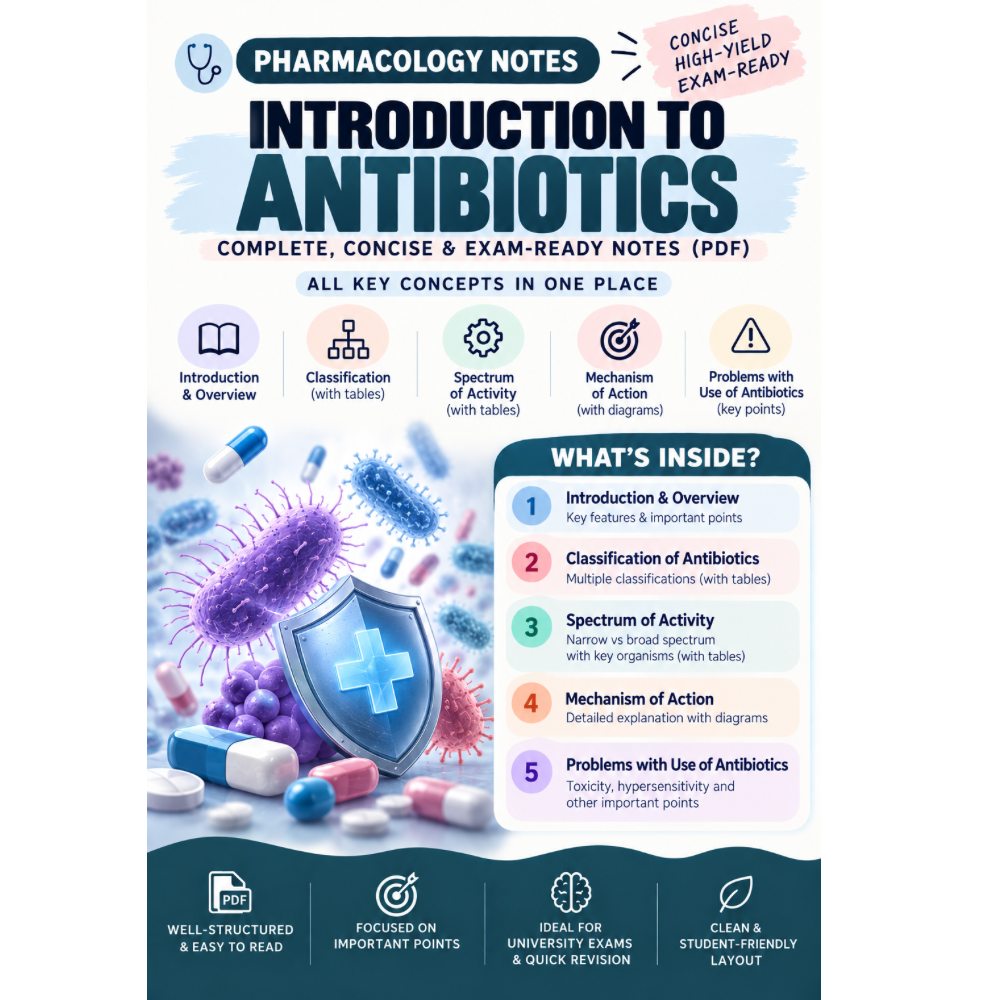
A concise, structured and exam-oriented resource designed to build a strong foundation in antimicrobial pharmacology.
Understand the fundamentals of antibiotics and antimicrobial agents through systematically organized classifications, mechanism-based learning, visual diagrams and clinically important concepts—all compiled into one focused PDF.
📚 What the PDF Covers
- Introduction to Chemotherapy — understand the basic concept of selective toxicity and how antimicrobial chemotherapy targets infecting microorganisms while minimizing harm to the host.
- Classification of Antimicrobial Agents — systematic classification based on chemical structure, target organism, spectrum of activity and mechanism of action.
- Classification by Target Organism — antibacterial, antifungal, antiviral, antiprotozoal and antihelminthic agents with representative examples.
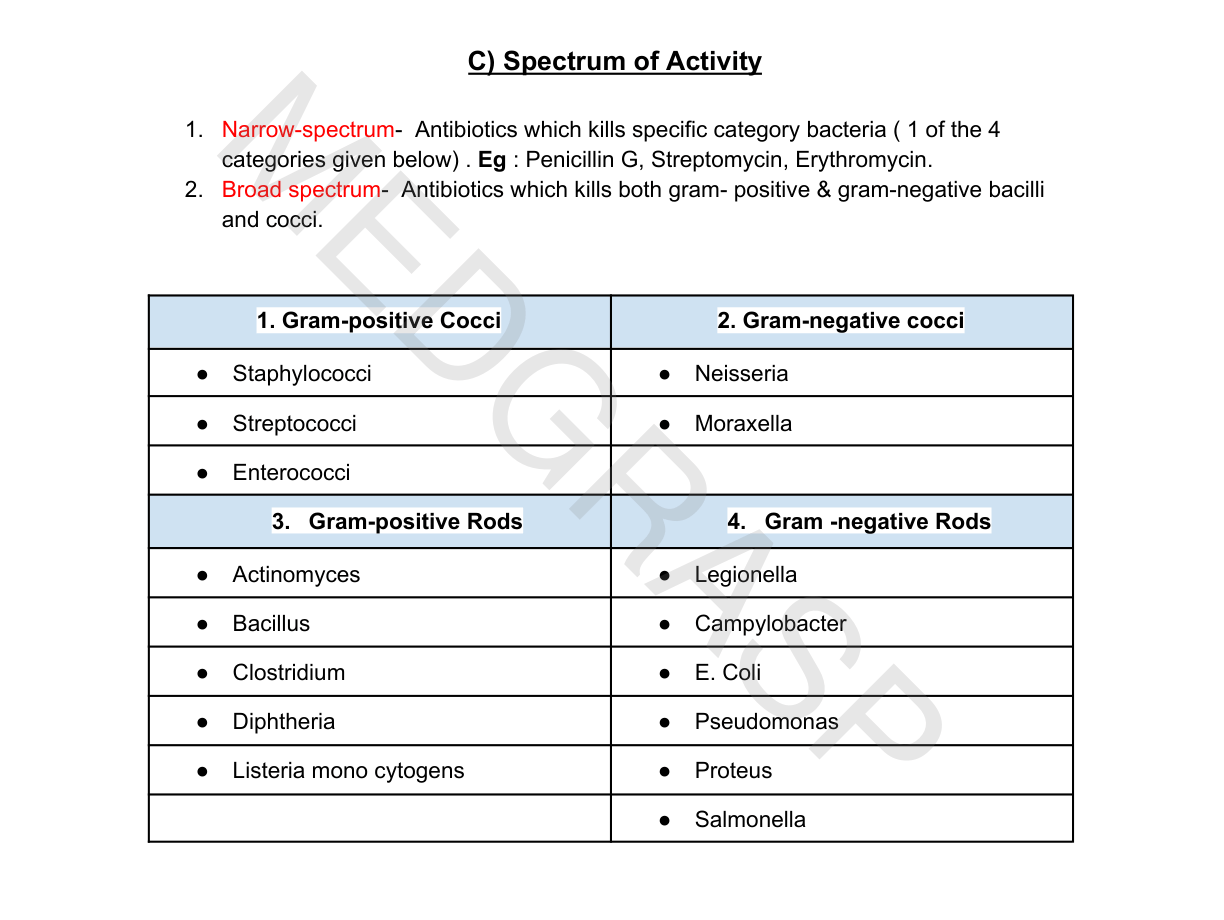
- Spectrum of Activity — clear distinction between narrow-spectrum and broad-spectrum antibiotics, with important bacterial groups organized for easier understanding and revision.
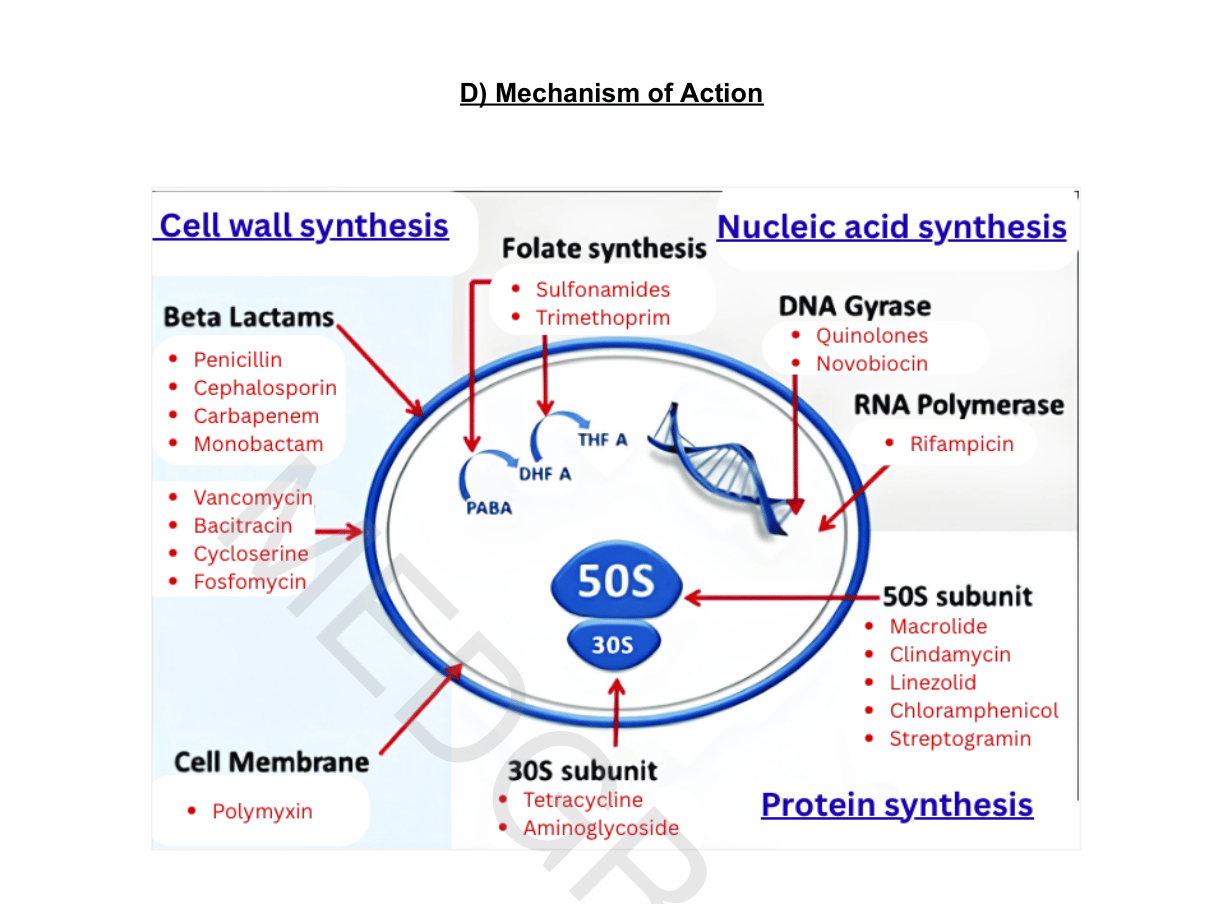
- Mechanisms of Antimicrobial Action — comprehensive overview of major targets including cell-wall synthesis, cell membrane integrity, protein synthesis and nucleic acid synthesis.
- Protein Synthesis Inhibitors — organized comparison of drugs acting on the 30S and 50S ribosomal subunits, including their bacteriostatic or bactericidal characteristics.
- Nucleic Acid Synthesis Inhibitors — overview of agents acting on DNA gyrase, DNA, RNA polymerase and folate-related pathways.
- Problems Associated with Antimicrobial Use — important concepts including toxicity, hypersensitivity, drug resistance, superinfection, nutritional deficiencies and masking of infection.
- Drug Resistance — natural and acquired resistance, with key mechanisms such as enzymatic degradation, efflux pumps, altered drug targets and reduced permeability.
- Visual Learning Aid — a comprehensive diagram connects major antimicrobial classes with their cellular targets and mechanisms of action, making the overall topic easier to visualize and revise.
🎯 Why Choose These Notes?
- Build the foundation before studying individual antibiotic classes.
- Instead of memorizing antibiotic classes independently, these notes provide a big-picture understanding of antimicrobial pharmacology by connecting drug classification with their target, mechanism of action, spectrum and important problems associated with antimicrobial therapy.
- The structured tables and mechanism-of-action visual map help you understand how different antimicrobial classes act, while the sections on resistance, toxicity and superinfection provide essential concepts for subsequent antibiotic topics.
👨🎓 Ideal For
Medical Students • Pharmacy Students • Nursing Students • Pharmacology Learners • University Examinations • Quick Revision
Whether you are beginning antimicrobial pharmacology or revising its fundamental concepts before an examination, this PDF provides a focused, systematic and student-friendly foundation for understanding antibiotics.
📥 Study Smarter. Revise Faster. Remember Better.