

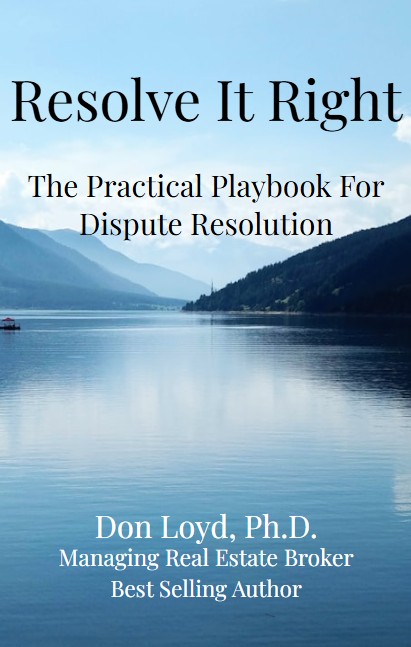
Resolve It Right - The Practical Playbook for Dispute Resolution
Pages 198
Words 42,607
I’ve spent more than fifty years in real estate, and I can tell you something with complete confidence: real estate is not just about houses. It’s about people. It’s about emotions. It’s about expectations. And sometimes, it’s about conflict that shows up at the worst possible moment.
Most folks think the biggest challenges in real estate are things like interest rates, inventory, or finding a buyer. Those things matter, sure. But what most people don’t see is what happens behind the curtain, where conversations get tense, relationships get strained, and someone feels like they’re being treated unfairly. That’s when the real work begins.
I’ve sat across kitchen tables from families who were exhausted, stressed out, and hanging on by a thread. I’ve watched deals fall apart over something that could have been solved in ten minutes if the right words had been spoken. I’ve seen business partners turn cold because nobody knew how to handle a hard conversation without making it personal. And I’ve witnessed people lose money, lose trust, and lose sleep, not because they were wrong, but because they didn’t know how to negotiate or resolve a dispute in a calm and productive way.
Conflict doesn’t announce itself politely. It usually shows up in the form of a sudden phone call, a sharp email, a misunderstood sentence, or a demand that feels unreasonable. One day everything seems fine. The next day, someone is upset. And once emotions enter the room, logic often walks out.
That’s why this book exists.
Resolve It Right: The Practical Playbook for Dispute Resolution was written for the person who wants to handle conflict differently. Not louder. Not more aggressively. Not with manipulation or intimidation. But with strength, clarity, and control. This book is for the person who is tired of going into tough conversations unprepared and hoping things work out. It’s for the person who wants better outcomes, less stress, and more confidence when it actually matters.
Because here’s what I’ve learned over the years: disputes don’t just happen between enemies. They happen between good people who are under pressure.
Sometimes it’s a buyer who feels misled. Sometimes it’s a seller who is afraid the deal won’t close. Sometimes it’s a contractor who wants more money. Sometimes it’s a tenant who believes they’ve been treated unfairly. Sometimes it’s an agent, a lender, or a business partner who feels disrespected or ignored. And sometimes it’s family. Those conflicts cut deeper, and they can last longer than any financial dispute.
But no matter who you are dealing with, most disagreements come down to a few basic forces: fear, misunderstanding, pride, money, and a need to feel heard.
When those forces collide, people stop communicating like adults and start defending like they’re under attack. They interrupt. They accuse. They assume the worst. They talk over each other. They dig in. And before long, you’re no longer talking about solutions. You’re fighting for position.
That’s the moment when you need a playbook.
A good dispute resolution process doesn’t happen by accident. It happens when someone has the wisdom and discipline to slow things down, lower the temperature, and guide the conversation toward common ground. That doesn’t mean you roll over. It doesn’t mean you “keep the peace” by giving up what you need. It means you learn how to stay steady when someone else is unstable. It means you speak in a way that leads to progress, not pushback. It means you understand what really drives people, so you can negotiate without making the situation worse.
In real estate, you learn quickly that timing matters. Tone matters. Documentation matters. But even more than that, relationships matter.
The best negotiators aren’t the ones who dominate the room. They’re the ones who control the direction of the conversation. They don’t react emotionally. They don’t chase arguments. They don’t let a small disagreement become a permanent fracture. They stay focused on the outcome. They stay grounded in facts. They remain flexible in approach, but firm in purpose.
And most importantly, they know how to bring disputes to a close.
That skill is priceless.
Because if you can negotiate well, you gain power without raising your voice. You gain respect without intimidation. You gain agreement without drama. You become the kind of person others trust in stressful situations. And that kind of reputation will open doors in business, strengthen relationships, and protect your peace.
This book will teach you how to do that.
You will learn how to prepare for a difficult conversation before it begins. You’ll learn how to recognize the emotional triggers that cause people to react poorly. You’ll learn how to listen beyond the words so you can identify what someone truly wants. You’ll learn how to make offers that are easier for people to accept. You’ll learn how to set boundaries without sounding hostile. You’ll learn how to avoid the traps that keep disputes alive. And you’ll learn when it’s time to keep negotiating and when it’s time to walk away.
You’ll also learn something deeper: dispute resolution is not just a “skill” you use on other people. It’s a mindset you build inside yourself. It’s the choice to stay calm when your pride wants to rise. It’s the discipline to ask questions when you’d rather make accusations. It’s the courage to speak clearly instead of hoping the problem disappears. It’s the ability to hold your ground without burning bridges.
And once you develop that mindset, you start approaching conflict differently. You stop fearing it. You stop avoiding it. You stop letting it steal your joy and energy. You stop feeling powerless in uncomfortable conversations. You become the person who resolves it right.
So if you’ve ever faced a dispute that kept you up at night…
If you’ve ever wished you knew what to say in a tense moment…
If you’ve ever walked away from a conversation thinking, I should have handled that better…
· Then you’re in the right place.
· Let’s turn conflict into closure
· Let’s replace stress with strategy.
· And let’s help you build a life where problems get solved instead of dragged out.
Welcome to the playbook.