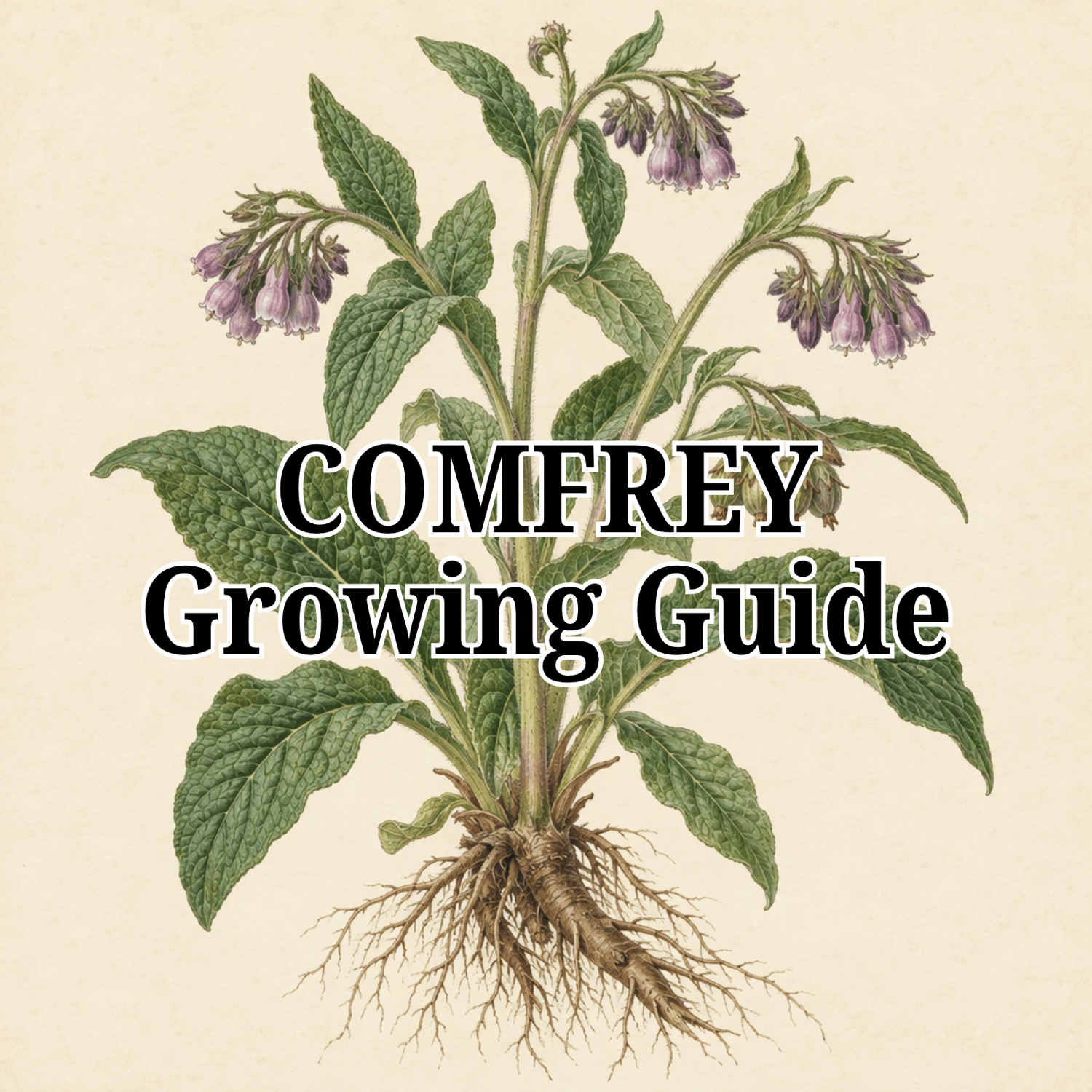
Comfrey Growing Guide | Symphytum officinale | Herbal Garden Printable | Southern Hemisphere
🌿 Comfrey Growing Guide
Discover one of the great traditional plants of the herbal and homestead garden: Comfrey (Symphytum officinale).
A member of the Boraginaceae family, comfrey is a vigorous herbaceous perennial recognised by its large, hairy leaves and clusters of bell-shaped flowers. It has a long history in traditional Western herbalism and has also become a much-loved plant in organic, permaculture and productive gardens.
Created especially for Southern Hemisphere gardeners, this beautifully presented printable guide brings together the practical information you need to understand, establish and manage comfrey in your own garden.
🌱 Inside Your Guide
Discover practical information covering:
- Botanical identification
- Southern Hemisphere planting times
- Climate and growing conditions
- Soil requirements
- Sun and position
- Planting and establishment
- Propagation
- Watering and ongoing care
- Growth habit
- Flowering
- Harvesting
- Seasonal care
- Managing established plants
- Practical growing tips
Comfrey is hardy across a wide range of climates. Australian growing guidance notes that it performs particularly well in fertile, well-watered soil and can be propagated from root cuttings or crown division.
🌿 A Wonderful Plant for the Productive Garden
Comfrey isn't only of interest to herbalists.
Its abundant foliage can be used as mulch or added to compost, and its flowers provide forage for bees. Its substantial root system also contributes to its reputation as a useful plant around productive gardens and orchards.
It's a particularly interesting choice for the herbal garden, homestead, orchard or permaculture garden.
🌸 Perfect For
- Herbal gardeners
- Homesteaders
- Permaculture gardeners
- Cottage gardeners
- Traditional herb enthusiasts
- Productive gardens
- Herbalism students
- Grow-your-own enthusiasts
- Garden reference collections
⚠️ A Note About Comfrey
Comfrey should be planted thoughtfully. Common comfrey can spread and regenerate from pieces of root, which can make an established plant difficult to remove.
Comfrey also contains pyrrolizidine alkaloids (PAs), so historical herbal use should not be interpreted as meaning the plant is automatically safe for internal consumption.
DIGITAL DOWNLOAD
This is a digital printable growing guide. No physical product, seeds or plant material will be shipped.
Print it for your herbal garden folder, gardening journal or homestead reference collection, or keep the digital copy handy while working in your garden.
For educational and gardening purposes only.