
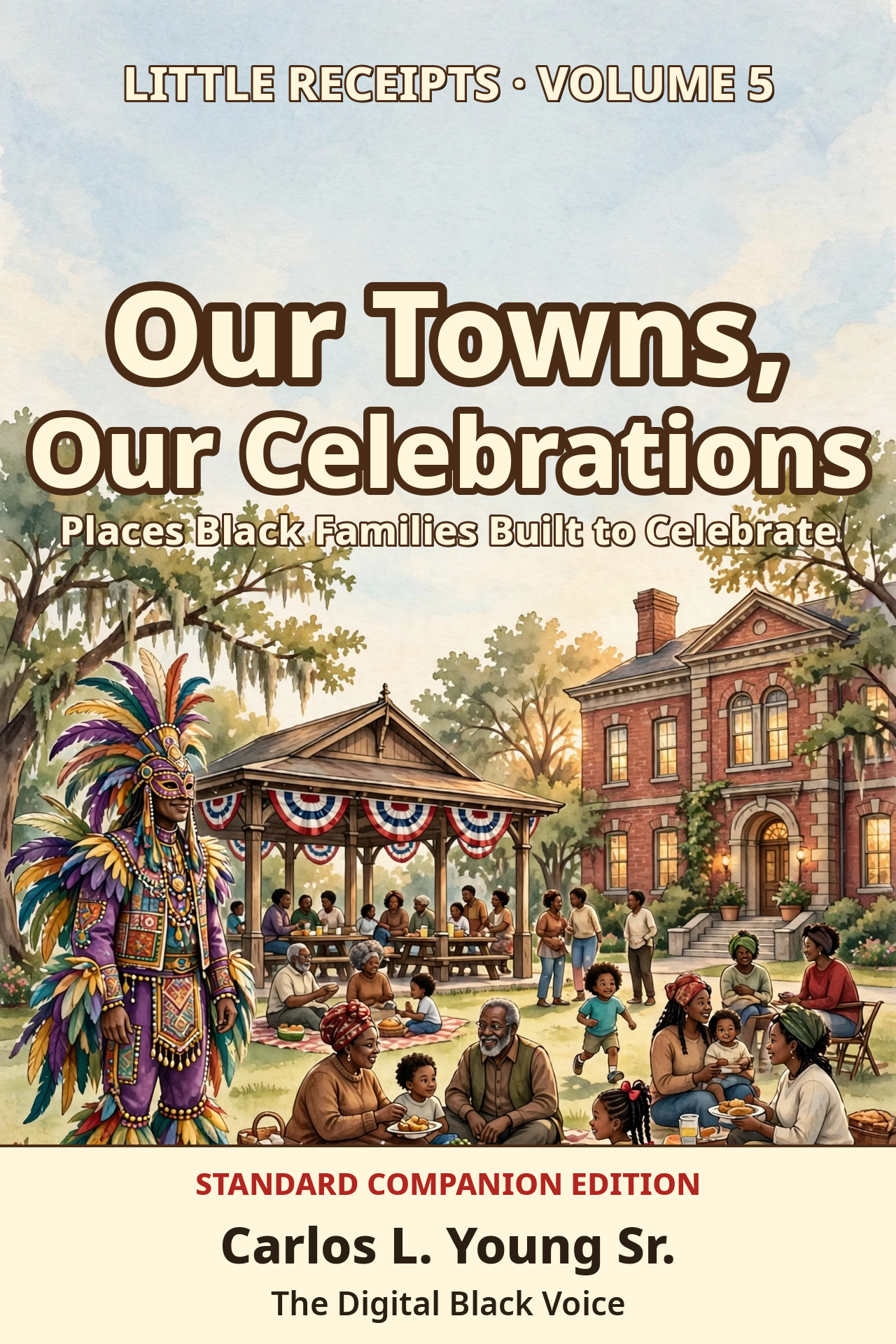
Little Receipts Vol. 5 — Our Towns, Our Celebrations (Standard Companion Edition — EPUB Edition)
Juneteenth is anchored where the document anchors it: General Order No. 3, read in Galveston on June 19, 1865 — not to a balcony tradition the record cannot verify, which the standard edition labels as exactly that, an unverified tradition. In 1872, formerly enslaved men in Houston pool their money and buy ten acres just to celebrate on — Emancipation Park, at the $800 the deed itself records, not the rounder number in the retellings. Houston's Carnegie Colored Library opens in 1913, built and fought for by Black readers who understood that a library card is a small, mighty kind of freedom. In New Orleans, the Mardi Gras Indians sew all year for one morning — and their beginnings are printed as the attributed tellings the record holds, side by side, because the museum's own word is that it is impossible to know exactly when the tradition began. The family reunion chapter names no 'first family reunion,' because the record names none. And Barbara Jordan of Houston's Fifth Ward closes the volume, her 1974 words quoted only from the certified transcript.
All 6 chapters, full text (13,292 words). Every chapter closes with its sources and a method note — where the record disagrees, the disagreement is printed, not papered over. The clean EPUB edition (STANDARD COMPANION EDITION), readable on any e-reader, tablet, or phone.
The chapters:
- Juneteenth! The Party That Started in Galveston
- The Park They Bought Themselves: Emancipation Park, Houston
- A Library Card of One's Own: Houston's Carnegie Colored Library — and the Fight for Books
- Mardi Gras Morning: The Indians Sew All Year
- The Chitlin' Circuit — No, the Family Reunion: How Black Families Invented the Reunion Summer
- Barbara Jordan Listens to the Constitution
Big history. Little readers. All receipts.