
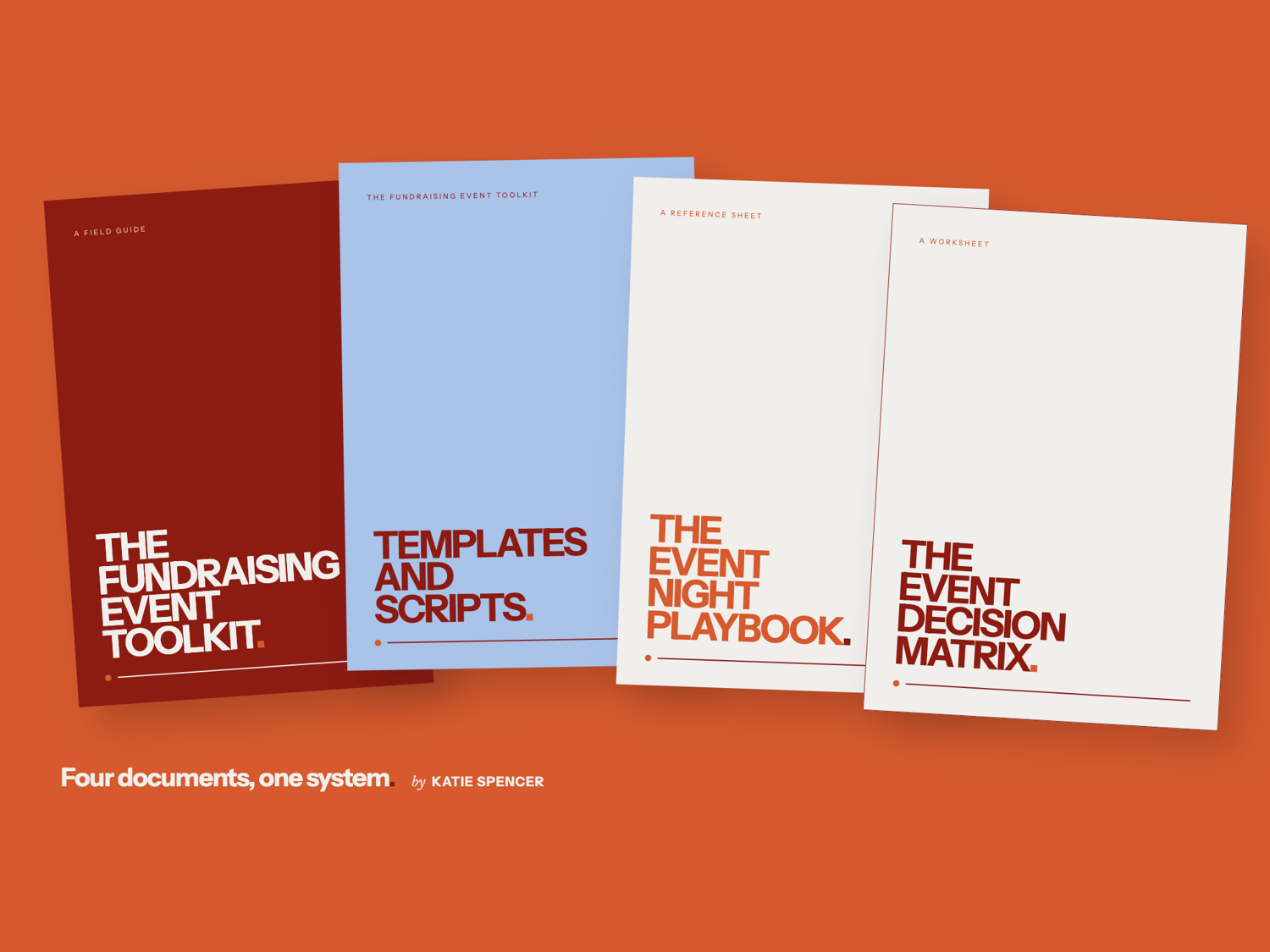
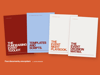
The Fundraising Event Toolkit
Plan a fundraising event that nets money, not just goodwill.
A guide, a workbook, two printables, and every script you have to say out loud.
Maybe the gala is the biggest number in your fundraising budget and nobody has ever asked whether it earns its place. Maybe you inherited an event calendar you did not build. Maybe there is one event your board loves that eats three hundred staff hours and nets less than a single good ask. Maybe you are about to run the whole night with two people and a volunteer committee.
I have been there. I co-founded an opera company in New York and ran it for almost five years, and later served as Director of Advancement at a regional opera company, where the gala, the sponsorship deck, the seating chart, and the paddle raise all landed on my desk in the same eight weeks. This toolkit is the system I wish somebody had handed me: how to decide which events deserve to exist, how to price and sell sponsorship, how to build a night that actually asks, and what to do in the forty-eight hours after, which is where most of the value gets thrown away.
What's inside
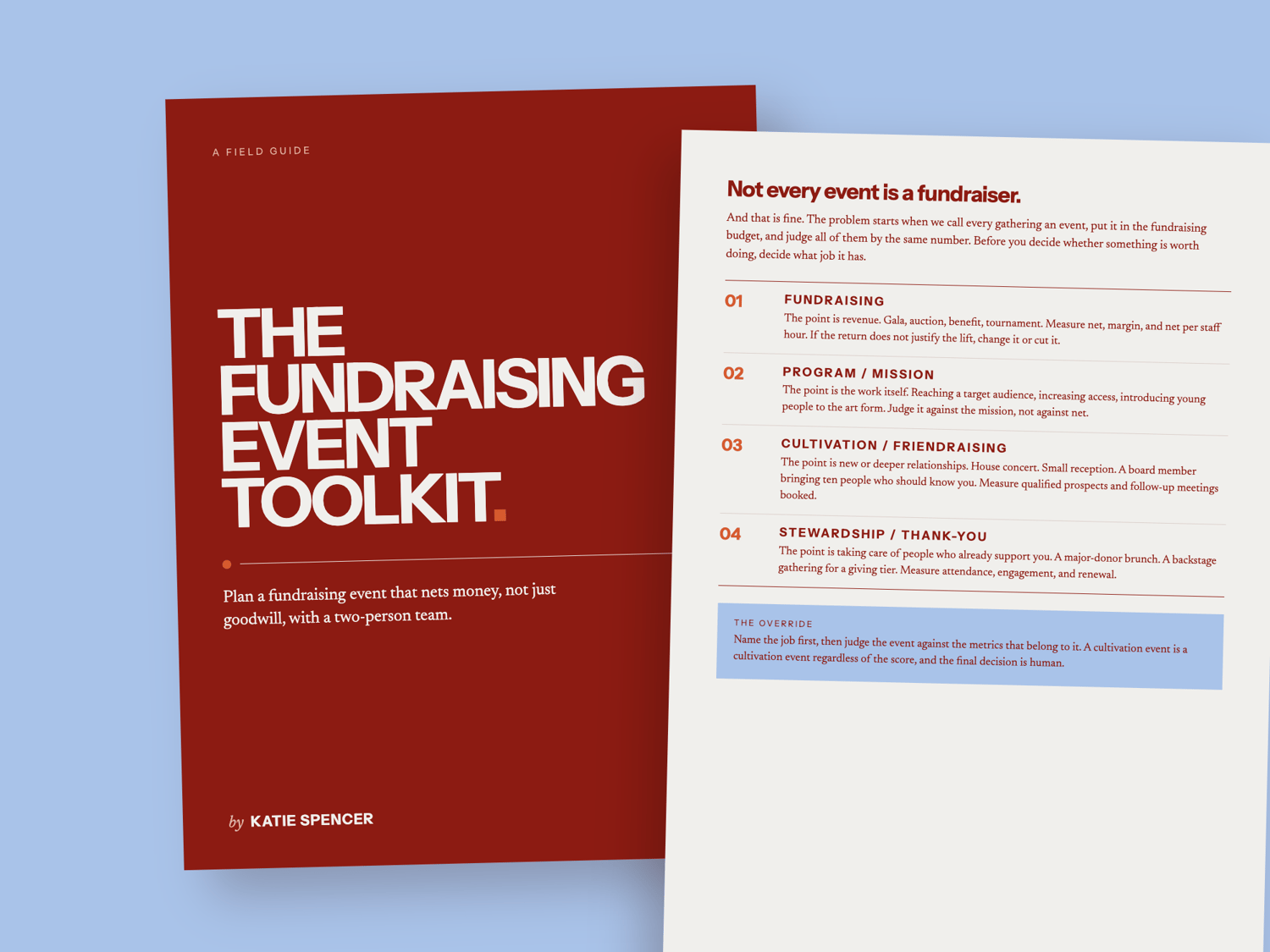
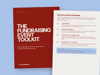
The Guide (40-page PDF). Ten parts. Whether to hold the event at all, with a representative event portfolio and the honest math behind it. Why margin will not tell you what to keep, and why net per staff hour will. Who owns the event, and what happens when a volunteer committee owns it. The theme. Sponsorship: the five-rung ladder you build once, tier design, fair market value in plain language, and the ask itself. Invitations, the guest list, and the door, including the sample sixteen-week timeline and the five communications that matter. The auction, silent versus live, honestly. The paddle raise: the ladder in units of program, the three-minute story, and the pre-committed lead gifts that decide whether it works. The arc of the evening. Production. And the forty-eight hours after.
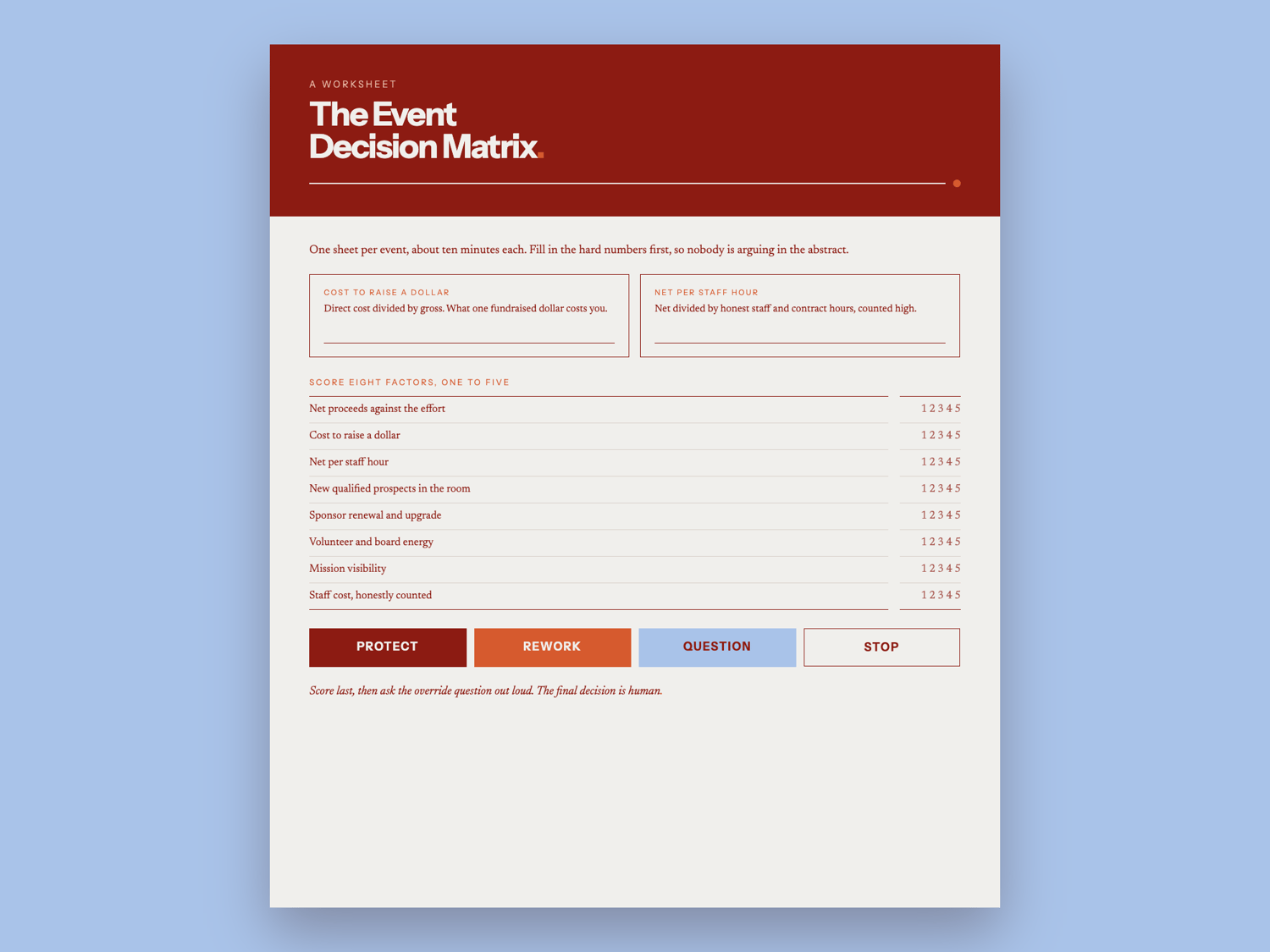
The Fundraising Event Workbook (Google Sheets). Twelve tabs. Make a copy and it is yours. Event Portfolio and Decision Matrix, so every event you hold sits on one page with net, margin, net per staff hour, and cost to raise a dollar. An Event Budget with every revenue and cost line, budget against actual, staff cost by role, and a break-even calculator. Sponsors, with the ladder, the fair market value column, and a tracker for what you promised against what you delivered. Host Committee. A 16-Week Countdown where every date moves when you change the event date. A Run of Show where changing one duration shifts the rest of the night. Guest List, one row per human being, with seating intent and the post-event next touch. Paddle Raise. Auction. Vendors and day-of details.
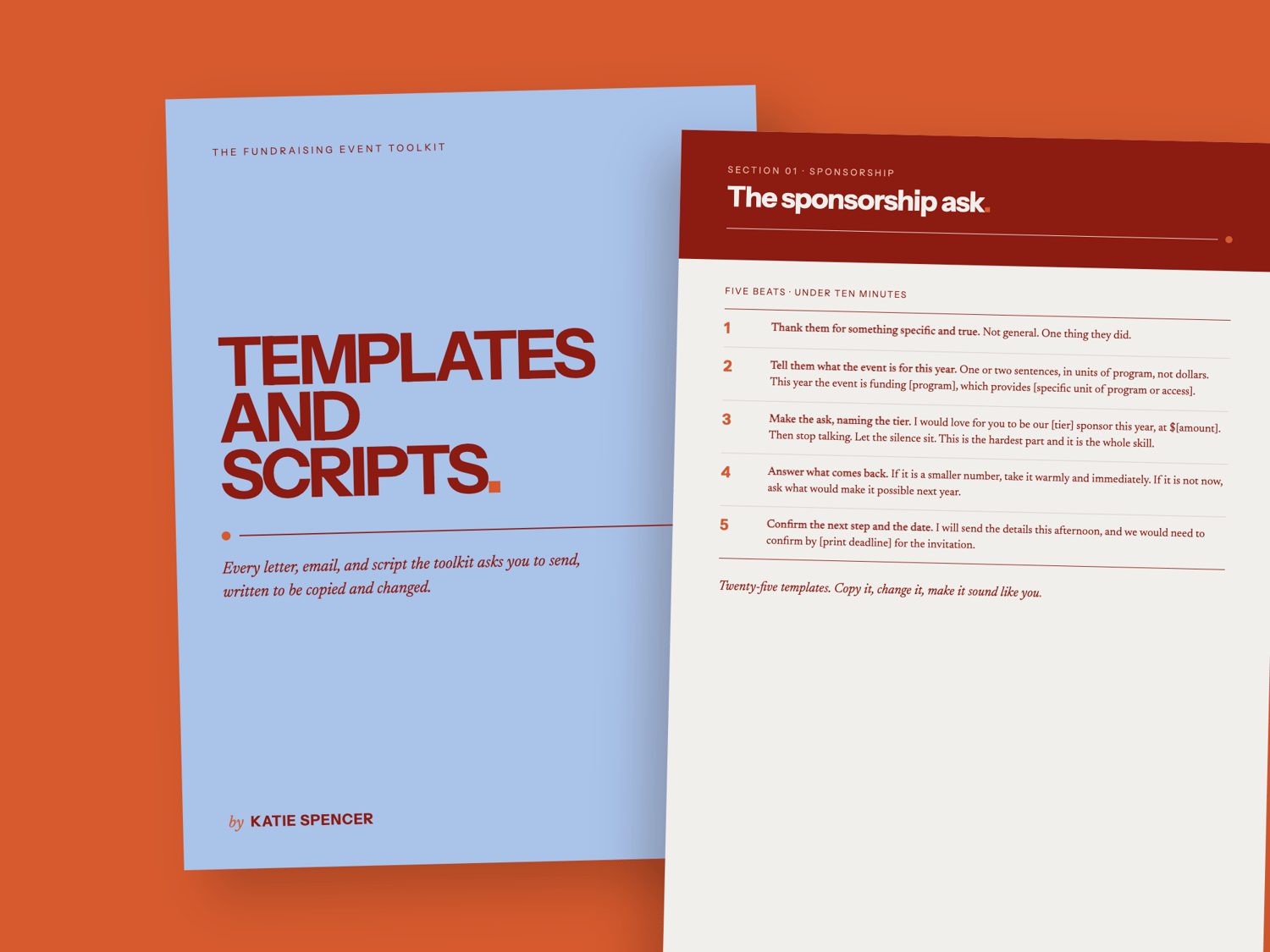
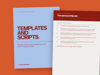
Templates and Scripts (25-page PDF). Twenty-five templates. Corporate and individual sponsor letters, the sponsorship ask in five beats, and the delivery report that doubles as the renewal. The three host committee emails, written for the host to send from their own address. The two emails nobody remembers to send: the reminder a week out and Know Before You Go the day before. Every word spoken from the stage, with a time limit at the top of each one: the welcome, sponsor recognition, the honoree, the three-minute story, the paddle raise, the match, the close, and the live auction item introduction. Auction solicitation written to steer people away from offering you another gift basket. Then the forty-eight hour thank-you, the two we-missed-you letters, the receipt with the fair market value line, and the debrief agenda.
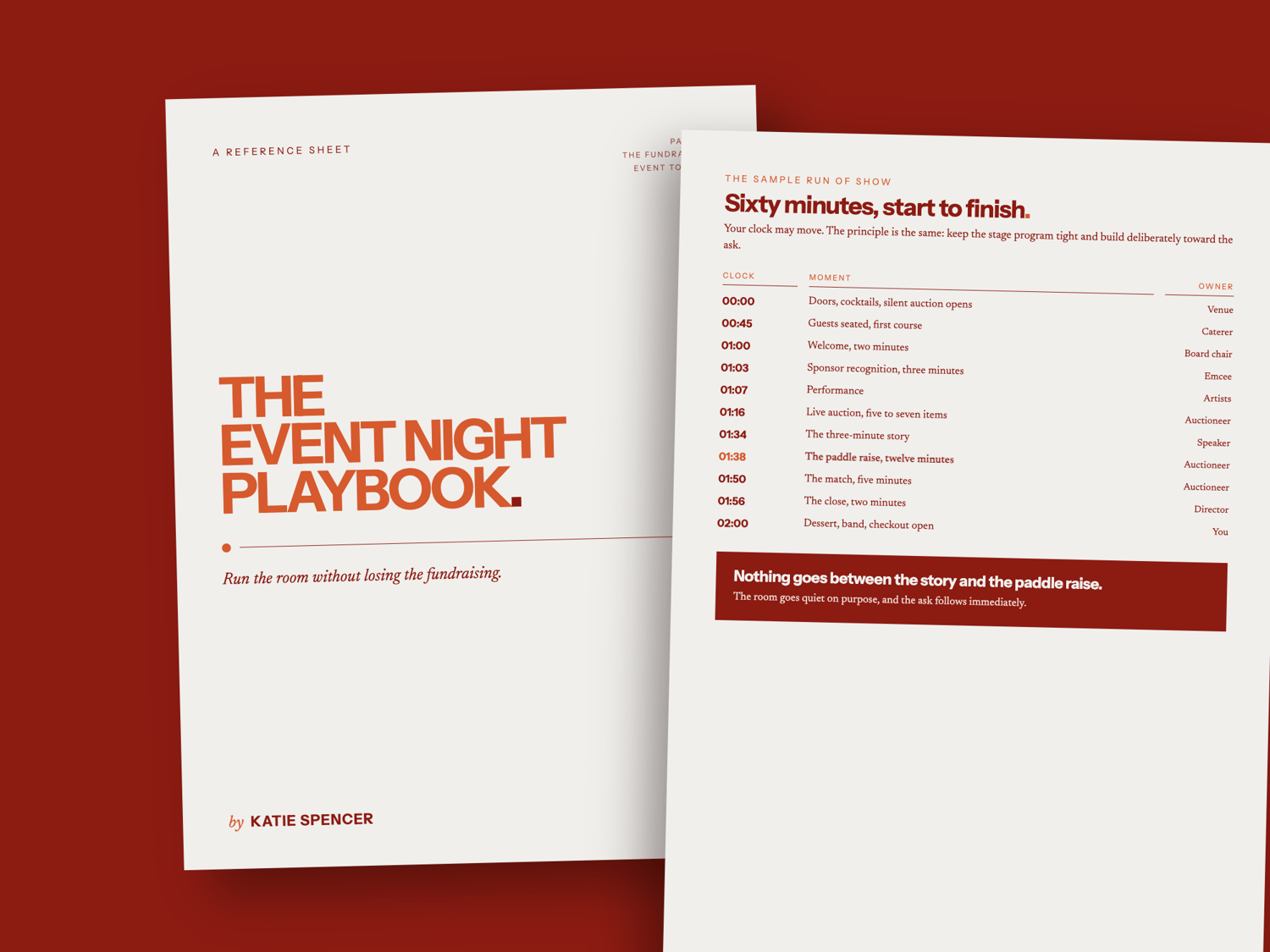
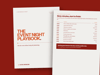
The Event Night Playbook (6-page printable PDF). What you actually hold on the night. The seven acts, a full sample run of show with an owner against every line, speaker time limits, the production checklist, and the one-page day-of document.
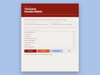
The Event Decision Matrix (2-page printable PDF). One sheet per event, about ten minutes each. The hard numbers, the eight scored factors, the recommendation, and the override question. Take it into the planning meeting.
Who this is for
Small arts organizations running one to four fundraising events a year without an events department. Maybe you are a one- to three-person development team. Maybe a guild or a volunteer committee owns the event and you are the one responsible for the quality, the brand, and whether it actually raises anything. Maybe you have a board that wants a bigger gala and no honest number to point at.
If you have never counted the staff hours an event costs you, this is for you.
Who this is not for
Organizations with dedicated events staff, an established sponsorship pipeline, and a run of show that already works. If you have an events manager, a sponsorship deck that sells itself, and a debrief on the calendar before the event happens, you probably do not need this.
The event was never the point. The room was.
How it's delivered
Instantly, after checkout. You get the Guide, Templates and Scripts, the Event Night Playbook, and the Event Decision Matrix as PDFs, plus links inside the Guide to the Google Sheets workbook, which you copy into your own Drive with File and then Make a copy. Nothing to install. Updates to the toolkit go out to every past buyer for free.
A note on the spreadsheet: the workbook is built for Google Sheets. The countdown, the run of show, and the decision matrix all rely on formulas that behave differently elsewhere. Open it in Sheets, not Excel.