

FIELD MANUAL I eBook
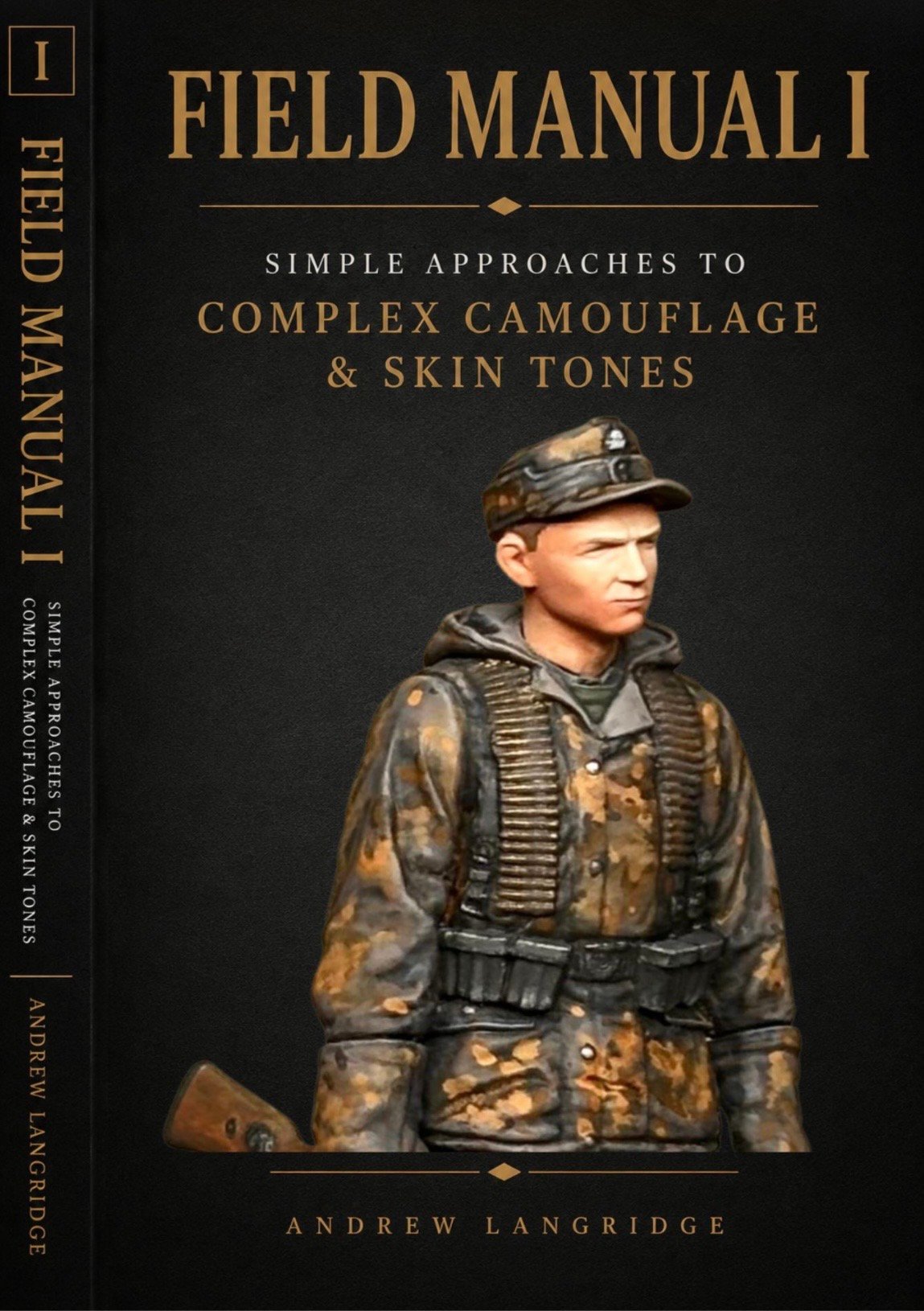
Field Manual I: Simple Approaches to Complex Camouflage & Skin Tones
What’s Inside
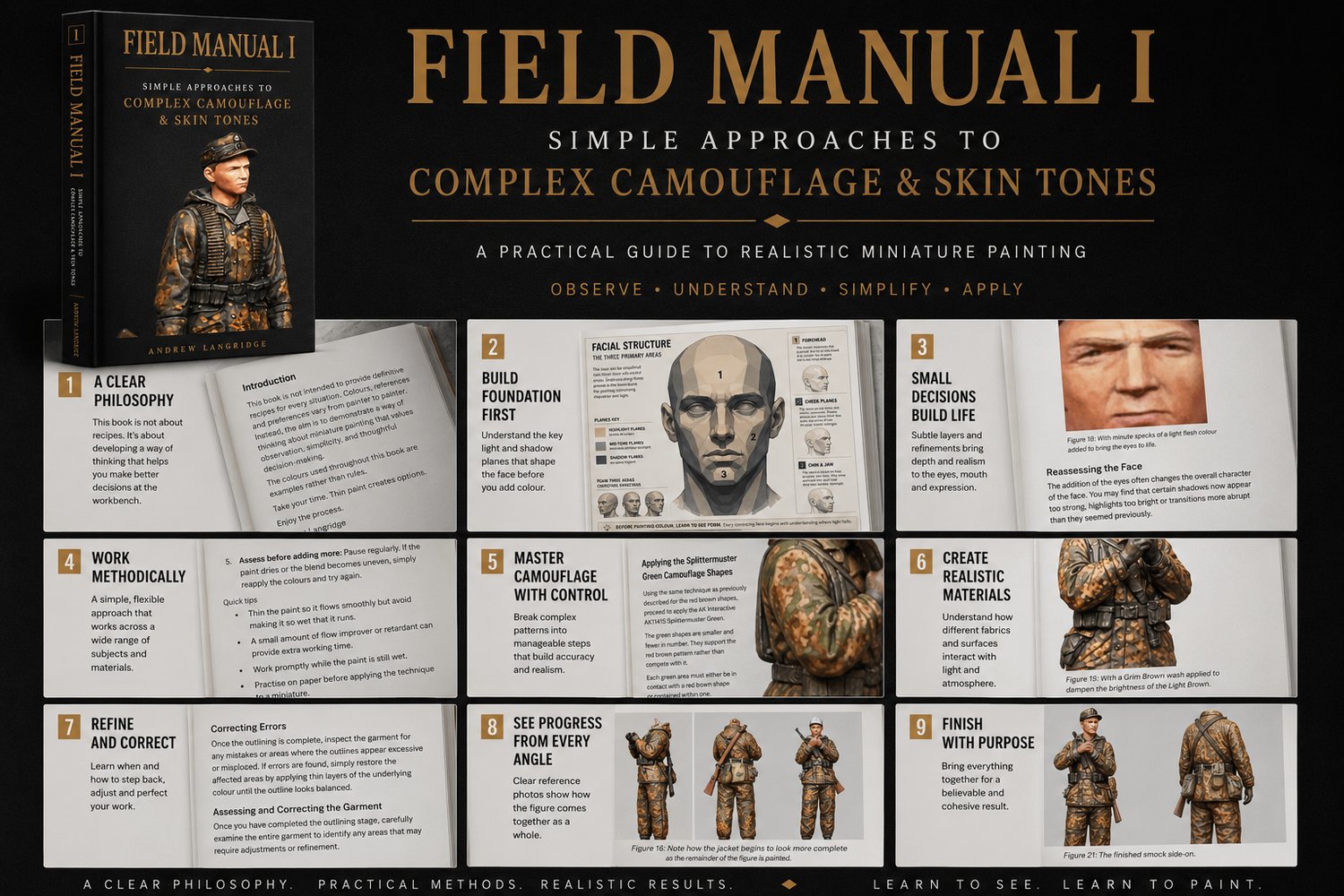
Field Manual I combines practical painting techniques with structured instruction to help painters produce more convincing World War II miniatures.
Inside you’ll find:
- Step-by-step guides covering flesh tones and camouflage.
- Detailed paint recipes using AK Interactive 3rd Generation Acrylics.
- Hundreds of colour photographs documenting each stage of the painting process.
- Original camouflage reference material.
- Practical explanations of technique, colour placement and problem solving.
- Advice developed through years of painting professionally for collectors, manufacturers and museums.
The emphasis throughout is not simply on what to paint, but why.
Contents
Field Manual I is divided into six structured chapters, guiding the painter from fundamental flesh tones through increasingly complex camouflage techniques.
Chapter 1 – Painting Faces
A comprehensive guide to painting realistic flesh tones, including wet blending, facial structure, eye placement, colour transitions and finishing techniques. The chapter focuses not only on achieving lifelike skin tones, but also on understanding why the face is the most important part of any figure.
Chapter 2 – Splittermuster ‘B’ Camouflage
A complete step-by-step guide to painting the iconic German Splittermuster camouflage, from the base colours through to the final rain marks. Original wartime reference material is included throughout to explain the structure and placement of the pattern.
Chapter 3 – Oak Leaf Spring Camouflage
Learn how to paint the Spring variation of Oak Leaf camouflage using a structured, repeatable approach. The chapter demonstrates how to build complexity gradually while maintaining control and realism.
Chapter 4 – Splittermuster ‘31’ Camouflage
A second Splittermuster chapter exploring a different garment and application. By revisiting the same camouflage family, the painter develops confidence while reinforcing the core principles introduced earlier in the book.
Chapter 5 – Oak Leaf Autumn Camouflage
Building upon the previous Oak Leaf chapter, this section explores the warmer Autumn variation, explaining how colour relationships change while the underlying painting process remains consistent.
Chapter 6 – Painting Hands
A focused guide to painting convincing hands that complement the face and complete the figure. Covering colour placement, transitions and subtle tonal variation, the chapter reinforces the importance of treating hands as expressive features rather than an afterthought.
Together, these six chapters provide over eighty A4 pages of practical instruction, hundreds of colour photographs and a structured approach designed to help painters develop techniques they can apply across future projects.
About the Author
Andrew Langridge is a professional miniature painter whose work has appeared on commercial box art, museum commissions and private collections around the world.
Field Manual I has become a trusted learning resource for painters looking to improve their understanding of flesh tones, camouflage and realistic military finishes.