


🚀 SQL Interview Mastery Interview Question : The Ultimate SQL Interview Preparation Guide 📘 — 500 Basic, Intermediate & Advanced Questions with Detailed Answers, Working SQL Queries 💻, Joins 🔗, Subqueries 🔍, CTEs ⚡, Window Functions 📊, Indexes 🚀, Transact
# 🚀 SQL Interview Mastery: 500 Questions with Deep Answers
**Walk into your next SQL interview prepared and confident.** 💪
Whether you're aiming for a data analyst, backend developer, data engineer, or DBA role, this eBook covers the SQL questions interviewers actually ask, with answers that explain the *what*, the *why*, and the *trade-offs*. 🎯
---
## 📚 What's Inside
✅ **500 interview questions** with detailed, worked answers
✅ **106 pages** in a clean, easy-to-read PDF 📄
✅ **Runnable SQL examples** for most answers 💻
✅ **Level tags** on every question: 🟢 Basic, 🟠 Intermediate, 🔴 Advanced
✅ **💡 Interview tips** on the topics interviewers love to probe
✅ **Clickable bookmarks** for every question, so you can jump straight to any topic 🔖
✅ **Practice schema** you can recreate locally to run every example 🗂️
✅ **Quick-reference appendix** with join cheat sheet, pagination by dialect, and a final-round checklist 📝
---
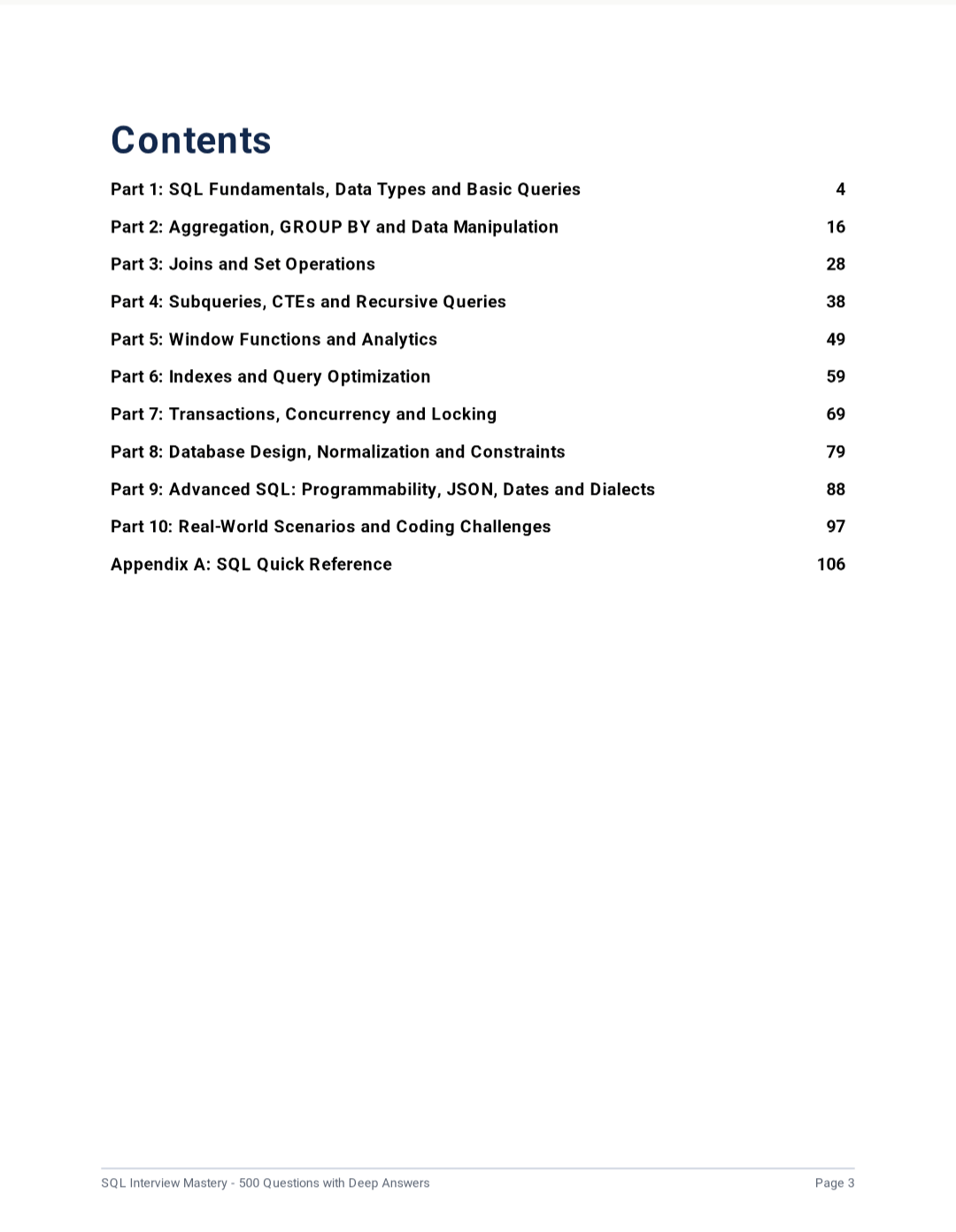
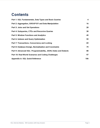
## 🧭 The 10 Parts
**1️⃣ SQL Fundamentals** 🧱
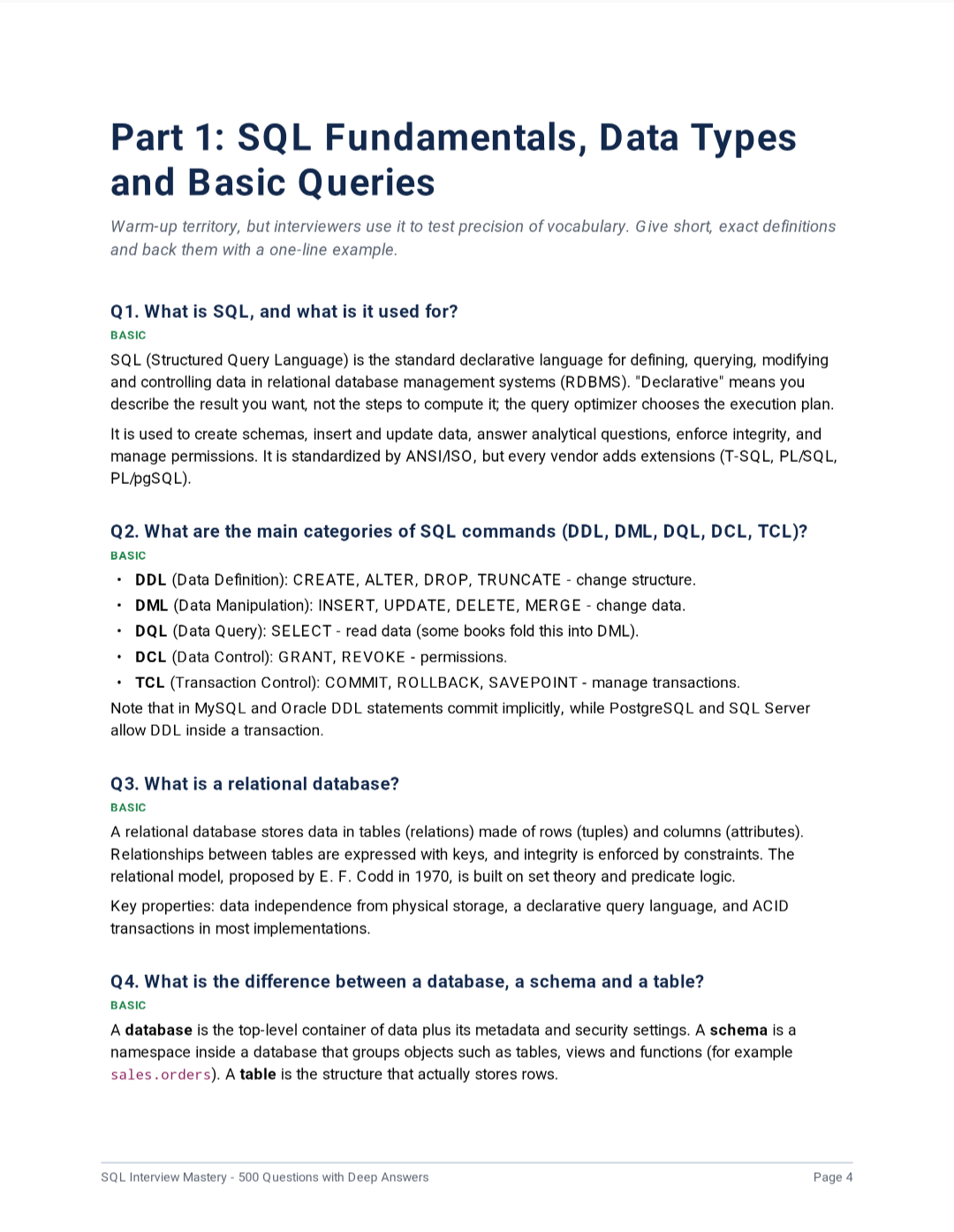
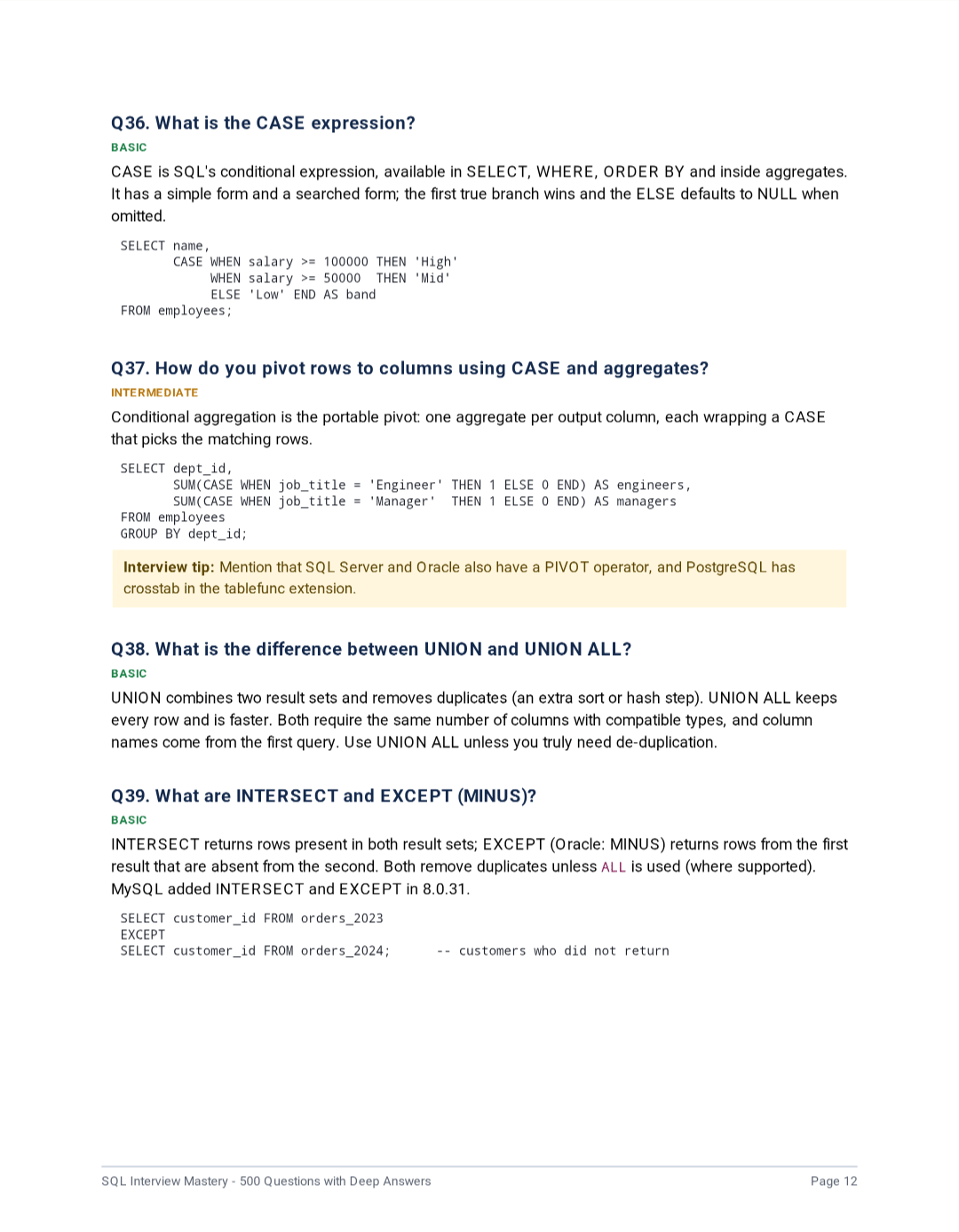
Data types, keys, constraints, NULL handling, CASE, and set operators.
**2️⃣ Aggregation & Data Manipulation** 📊
GROUP BY, HAVING, ROLLUP/CUBE, duplicates, Nth-highest salary, running totals, and safe bulk updates.
**3️⃣ Joins & Set Operations** 🔗
All join types, the LEFT JOIN + WHERE trap, fan-out problems, semi/anti-joins, and join algorithms.
**4️⃣ Subqueries, CTEs & Recursion** 🌳
Correlated subqueries, EXISTS vs IN, recursive CTEs, hierarchies, and cycle detection.
**5️⃣ Window Functions** 🪟
ROW_NUMBER, RANK, LAG/LEAD, frames, gaps and islands, sessionization, and moving averages.
**6️⃣ Indexes & Performance** ⚡
B-trees, covering and composite indexes, sargability, execution plans, partitioning, and a step-by-step tuning method.
**7️⃣ Transactions & Concurrency** 🔐
ACID, isolation levels, MVCC, deadlocks, locking, write skew, replication, and zero-downtime migrations.
**8️⃣ Database Design** 🏗️
Normalization (1NF to BCNF), ER modeling, star schemas, SCDs, multi-tenancy, and security.
**9️⃣ Advanced SQL** 🧠
Stored procedures, triggers, JSON, dates and strings, MERGE, CDC, and differences between MySQL, PostgreSQL, SQL Server, and Oracle.
**🔟 Real-World Scenarios** 🏆
Cohort retention, RFM segmentation, funnels, market-basket analysis, anomaly detection, and debugging a slow query or a wrong report.
---
## 🎓 Who Is This For?
👩💻 Job seekers preparing for SQL rounds
📈 Data analysts and BI professionals
🛠️ Backend and full-stack developers
🏭 Data engineers and analytics engineers
🗄️ Aspiring DBAs
🎒 Students and career switchers
---
## 🌟 Why You'll Love It
🔍 **Deep, not shallow**: answers go beyond definitions to real-world pitfalls
🧩 **Pattern-based**: learn reusable techniques, not memorized snippets
🌐 **Multi-dialect aware**: standard SQL with notes for the major engines
📖 **Built for practice**: answer aloud, write the code yourself, then compare
---
## 🗓️ Suggested Study Plan
📌 **Pass 1**: read each question and answer out loud in 60–90 seconds
📌 **Pass 2**: write every code answer yourself in a SQL client
📌 **Pass 3**: focus on the 🔴 Advanced questions and the Part 10 scenarios