
What to do when a Client goes Silent in Therapy
What do you say when a client goes quiet in therapy?
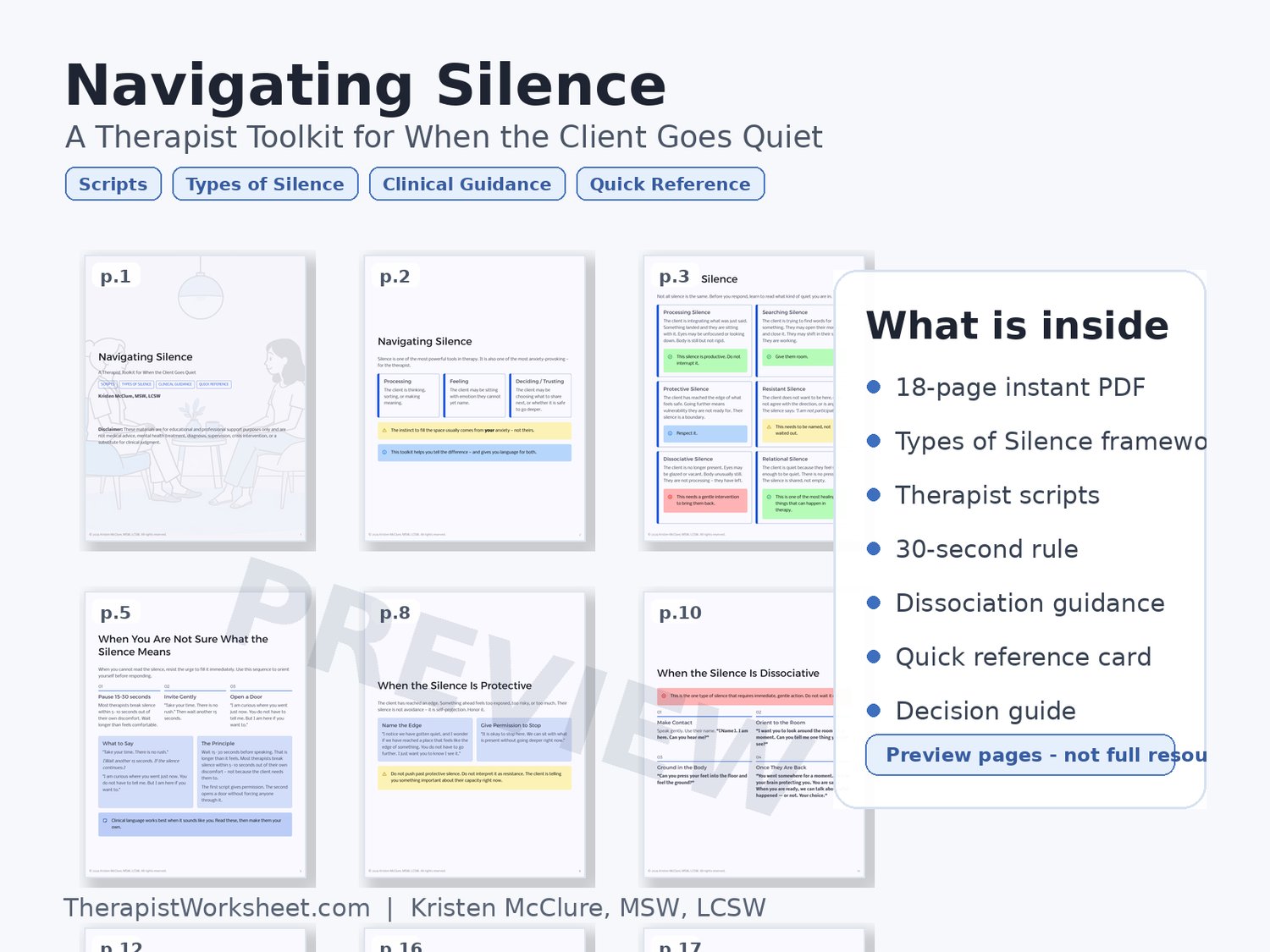
This 18-page therapist toolkit gives you scripts, clinical guidance, a Types of Silence framework, a quick reference card, and a decision guide for navigating silence in session.
Silence can mean many different things. A client may be processing, searching for words, protecting themselves, resisting the direction of therapy, dissociating, or feeling safe enough to be quiet with you. This toolkit helps therapists slow down, read the silence more accurately, and decide when to wait, when to speak, and when to gently intervene.
Use this toolkit when you need help tolerating silence, responding without filling the space too quickly, recognizing what kind of quiet is happening, and finding steady language when the client goes silent.
Inside, you will find:
🔵 A Types of Silence framework for processing, searching, protective, resistant, dissociative, and relational silence
🔵 Therapist scripts for when you are not sure what the silence means
🔵 Guidance for waiting before speaking, including the 30-second rule
🔵 Scripts for processing silence and searching silence
🔵 Language for protective silence, resistant silence, and possible rupture
🔵 Grounding guidance for dissociative silence
🔵 Support for managing your own discomfort when silence feels hard to tolerate
🔵 Guidance for long silences, recurring silence, and silence after something you said
🔵 A quick reference card for supervision, consultation, or personal review
🔵 A decision guide for knowing when to wait and when to speak
Designed for therapists who want to use silence with more confidence, clarity, and clinical steadiness.
Format: Instant PDF download
Length: 18 pages
Best for: therapists, interns, associates, supervisors, and private practice clinicians
Use for: session preparation, supervision discussion, clinical reflection, therapist reference, and in-session decision support
For educational and professional support use only. This resource does not replace clinical judgment, supervision, crisis intervention, or applicable legal and ethical standards.
This description reflects the toolkit content: scripts, Types of Silence framework, clinical guidance, quick reference card, decision guide, and specific sections on processing, protective, resistant, dissociative, and relational silence.