

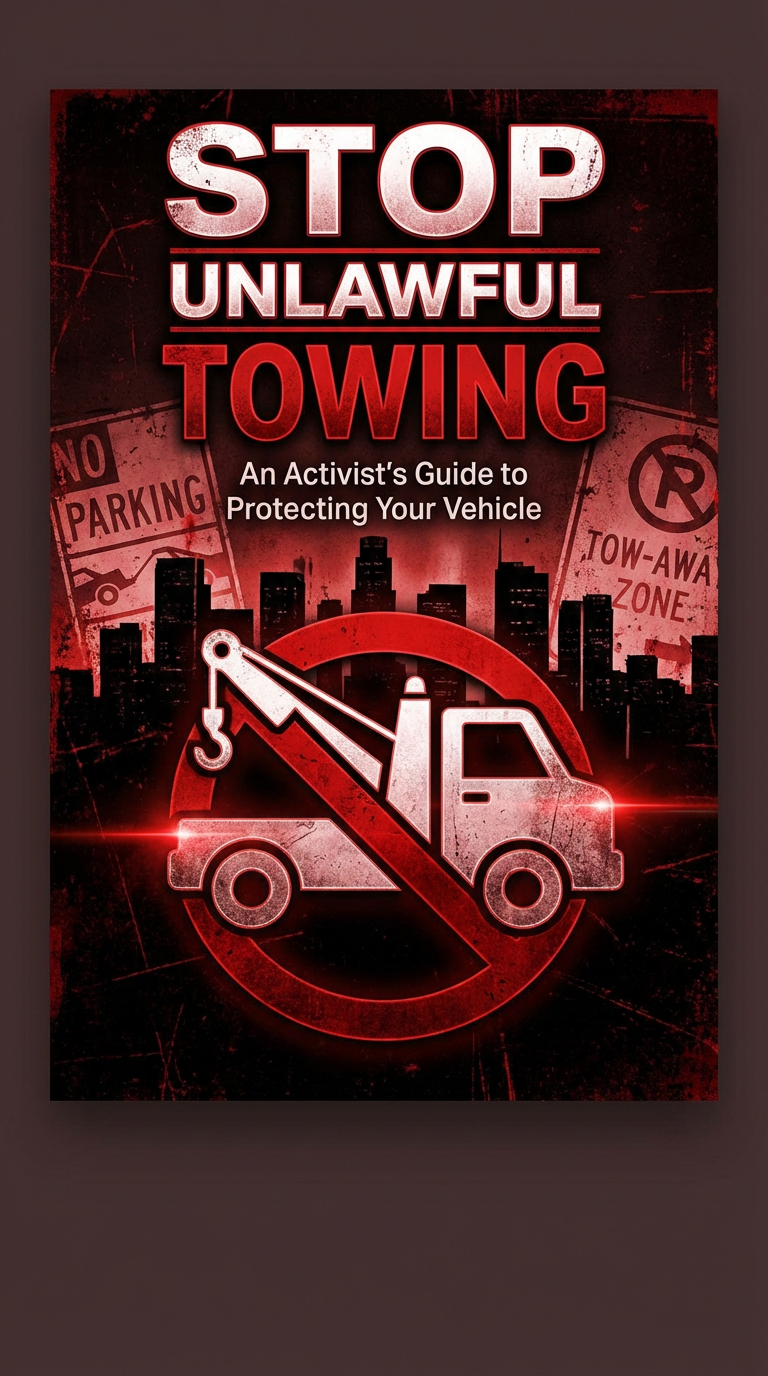
Unlawful Towing
Unlawful Repossession & Unlawful Towing: How to Take Action and Get Your Vehicle Back
Most people don’t realize that the majority of repossessions and tows that happen every single day are completely unlawful. Tow companies, lenders, and third-party agents rely on intimidation, fear, and the public’s lack of knowledge to get away with seizing property they have no legal claim to take.
What they don’t want you to know is this:
If someone has your vehicle but does not hold the legal title, they are essentially renting it from you — and you have the lawful right to demand its return or charge daily storage fees.
This guide shows you exactly how to challenge an unlawful repo or tow, how to assert your rights, and how to take action to reclaim what is rightfully yours.
Understanding Unlawful Repossession
A repossession is unlawful when:
- The lender or tow company does not hold legal title
- There is no perfected security interest
- The repossession agent is unlicensed
- There was no breach of peace
- The proper notices were not given
- The vehicle was taken from a secured or gated area
- The lender failed to comply with state or federal requirements
- There was no valid contract or the contract is legally defective
Most repossessions violate one or more of these requirements — which means the entire act was illegal.
Unlawful repossession gives you the right to:
- Demand the immediate return of the vehicle
- Charge daily storage or rental fees
- Demand compensation
- Sue for damages
- Report the repo agent or tow company
- Challenge the lender’s standing entirely
This guide shows you how.
Unlawful Towing: What They Don’t Want You to Know
Tow companies often act as though they have unlimited authority, but they are bound by strict rules. A tow becomes unlawful when:
- There is no posted signage
- The signage does not meet legal standards
- The tow company is unlicensed
- There was no consent
- The tow was not ordered by a lawful authority
- The company refuses to release your vehicle without illegal fees
- The vehicle was towed from private property without due cause
When a tow is unlawful, the company may be liable for:
- Conversion of property
- Civil theft
- Damages
- Attorney’s fees
- Daily compensation
- Wrongful possession
Your automobile is your private property — and no company has the right to seize it without lawful authority.
If They Don’t Hold Title — They Don’t Own the Car
This is one of the most important principles:
Possession does not equal ownership.
Title equals ownership.
If the:
- tow yard
- repo agent
- lender
- storage facility
- third-party contractor
does not hold the legal title, they are not the owner — you are.
In many cases, they are:
- Detaining your property unlawfully
- Holding your property hostage
- Acting as “renters” by default
- Liable for daily storage or rental fees
- Engaged in conversion or theft
- Operating outside their legal authority
This book teaches you how to enforce this principle in writing and in court.
You Can Demand the Return of Your Vehicle — Immediately
Most people don’t know they can send:
- a Notice of Wrongful Detentio
- a Demand for Return of Property
- a Bill for Daily Rental Fees
- a Notice of Conversion
- a Cease & Desist
Once these are served properly, the tow yard or repo company becomes:
- financially liable
- administratively exposed
- legally obligated to respond
When they fail to prove lawful authority or produce the title, they often release the vehicle voluntarily to avoid litigation.
This guide provides templates and step-by-step instructions for issuing these notices.
Charging a Daily Fee for Wrongful Possession
If a company is holding your automobile without title, they are:
- in possession without right
- interfering with your property
- preventing your lawful use
That is legally equivalent to renting it from you without permission.
You can charge:
- daily usage fees
- storage fees
- administrative costs
- damages
- towing reimbursement
- attorney’s fees if it escalates to court
This guide explains how to calculate fees properly and how to send an enforceable invoice.
Taking Action: How to Secure What’s Rightfully Yours
Inside this section of your book, readers will learn:
- how to challenge a repo agent’s authority
- how to force a tow company to prove lawful possession
- how to demand the immediate release of the vehicle
- how to use consumer law to attack the lender’s standing
- how to issue proper notices that create legal leverage
- how to draft a Notice of Conversion
- how to file complaints that force compliance
- when and how to sue for damages
This knowledge puts you back in the driver’s seat — literally and legally.
Reclaim Your Power & Protect Your Property
Unlawful repossession and unlawful towing thrive on:
- fear
- confusion
- lack of knowledge
- intimidation
- silence
Once you understand how ownership, title, and possession truly work, the system flips in your favor.
Your vehicle is your property — and no corporation, lender, or tow operator has the right to take it without lawful authority.
This guide gives you the tools to:
- expose fraud
- demand remedy
- reclaim your property
- hold the wrongdoers accountable
Your property.
Your rights.
Your remedy.