

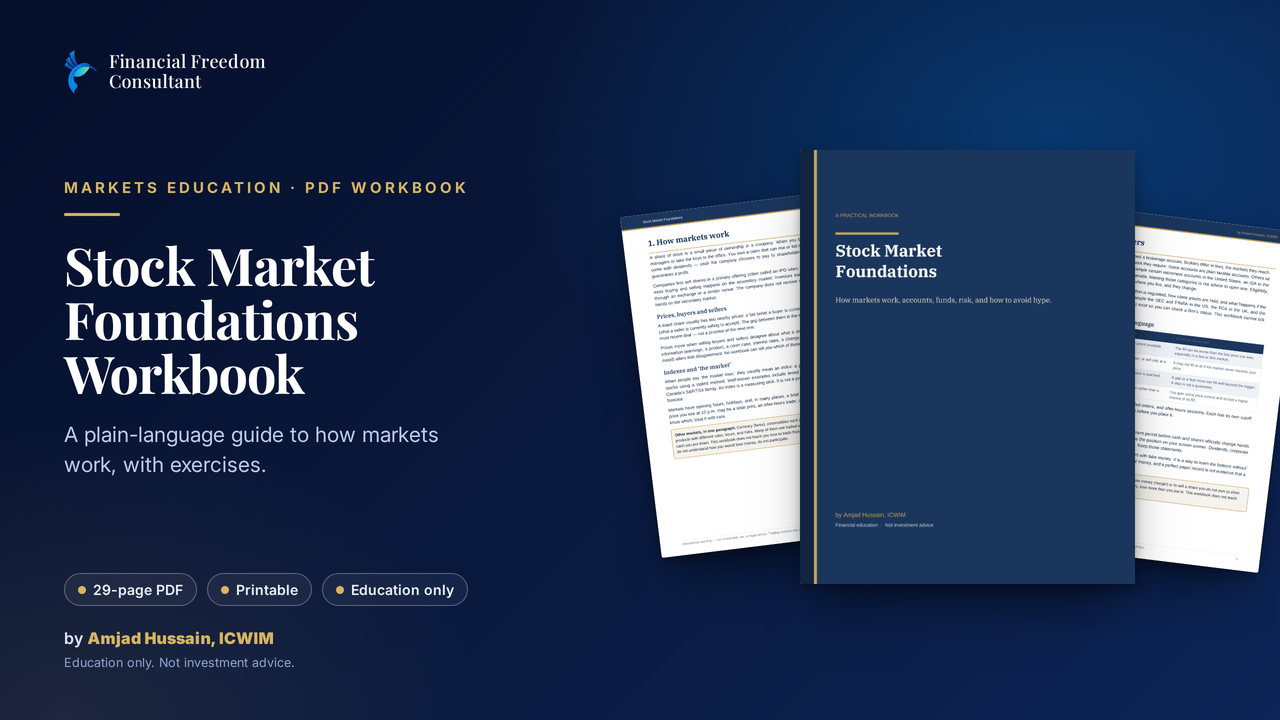

Stock Market Foundations Workbook — Beginner Guide to How Markets Work, Accounts, Funds, Risk and Avoiding Hype (Printable PDF)
A calm, practical tour of how public stock markets work — written so you can understand a headline, a statement, or a fund factsheet, not so you can be told what to buy.
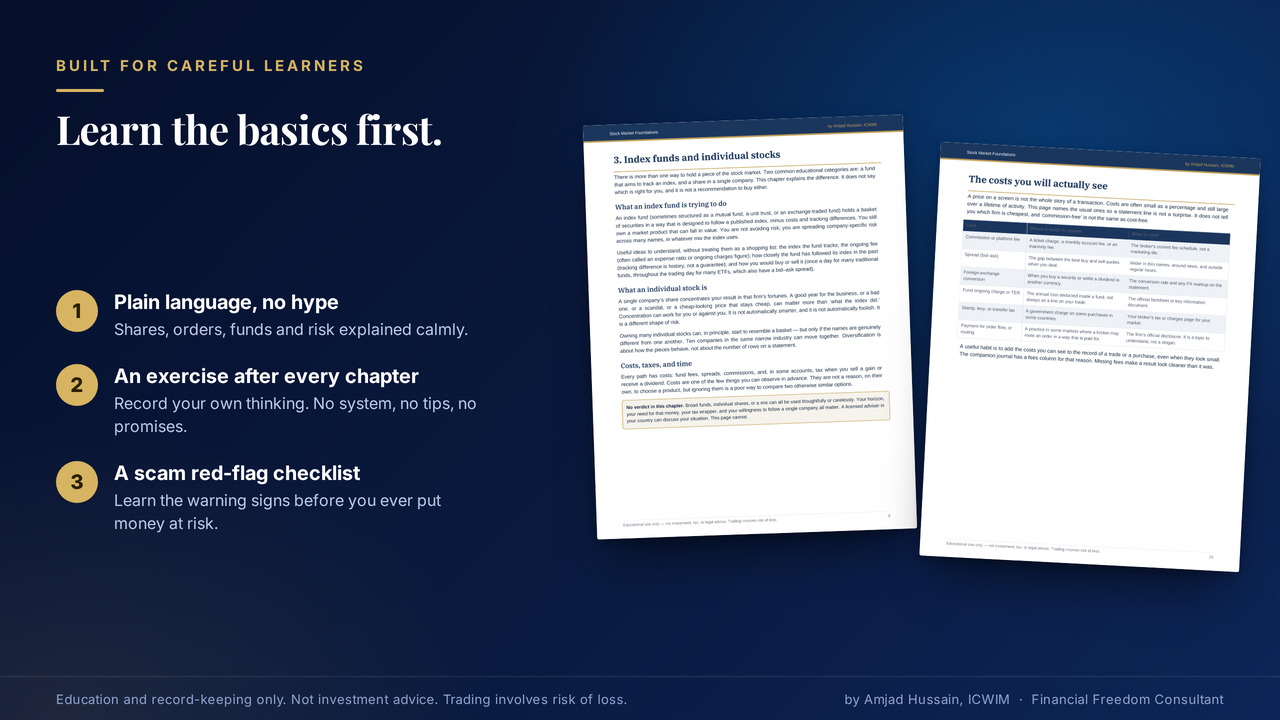
This 29-page printable workbook explains the basics in plain language, then gives you short exercises and writing space. There is no buy or sell list, no trading system, and no promise of profit.
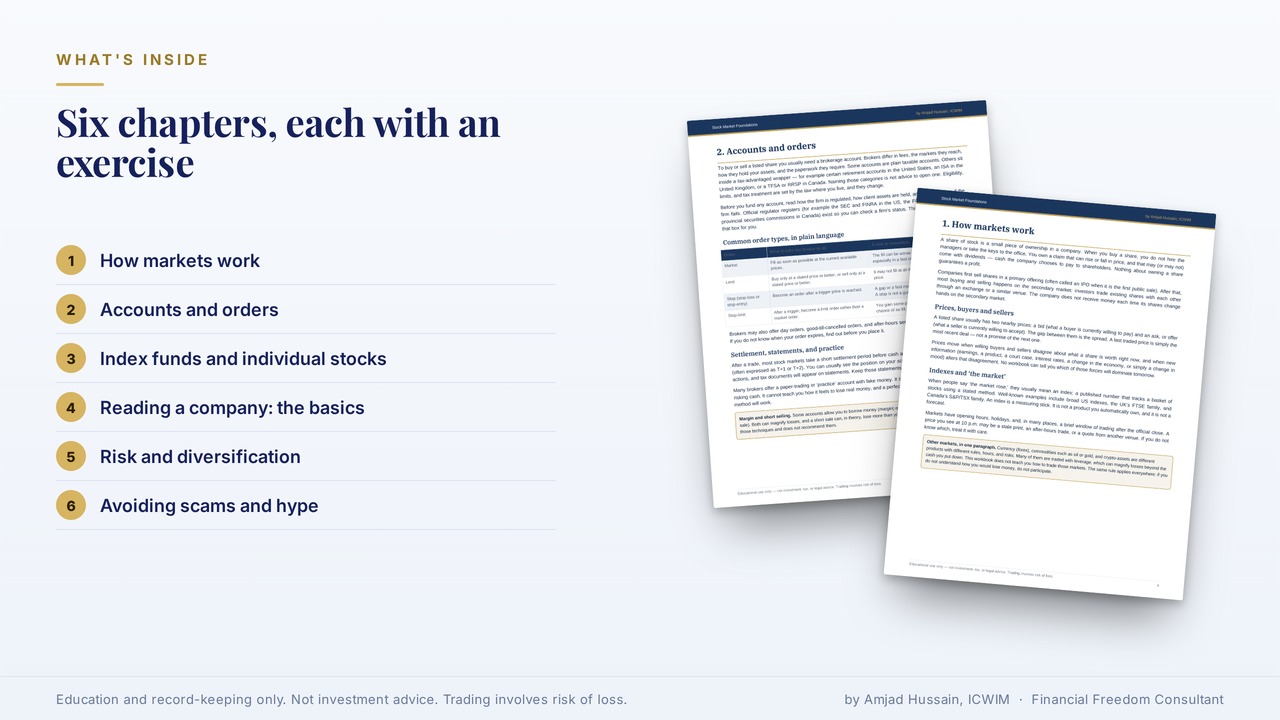
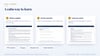
What’s inside
- How markets work: shares, bids and offers, indexes, and market hours
- Accounts and orders: market, limit and stop orders, in plain language, including the risk of each
- Index funds versus individual stocks — a comparison of ideas, not a pick list
- Reading a company: where official information lives, and why one ratio is not a signal
- Risk and diversification, including the risk of a total loss
- Avoiding scams and hype, with a red-flag checklist
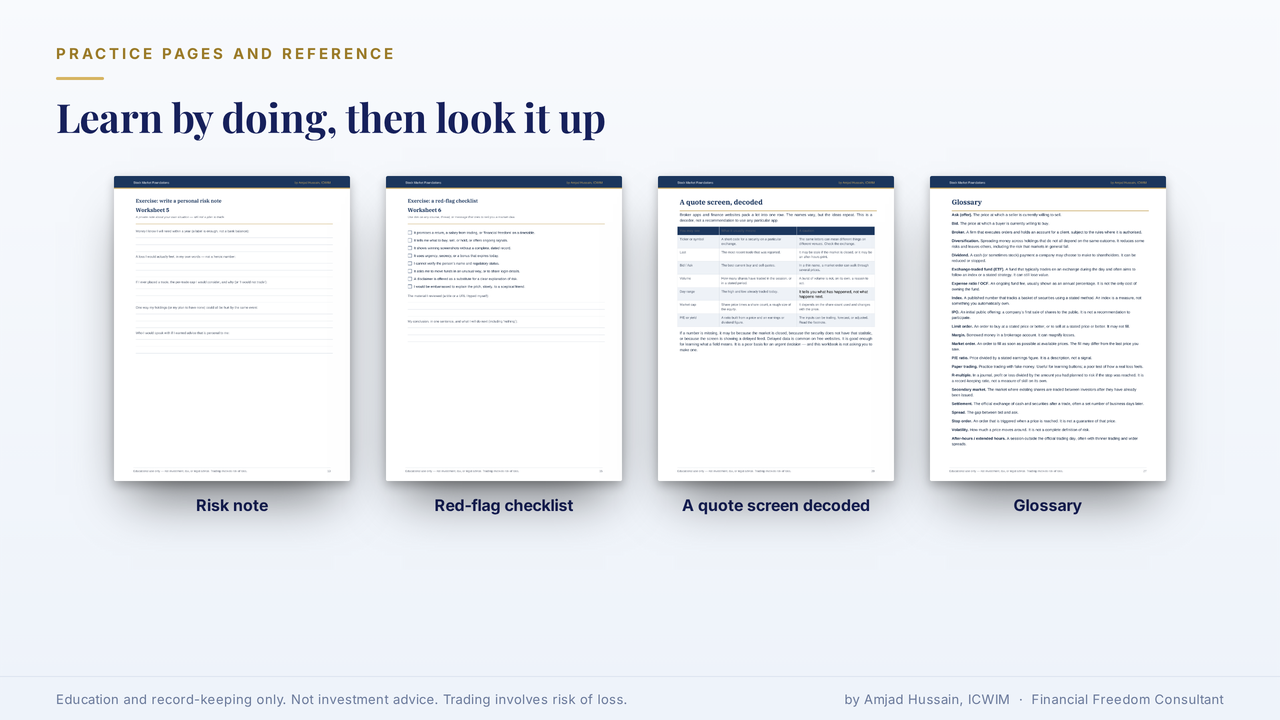
- Extra pages on quote screens, corporate actions (dividends, splits), and the costs you will actually see
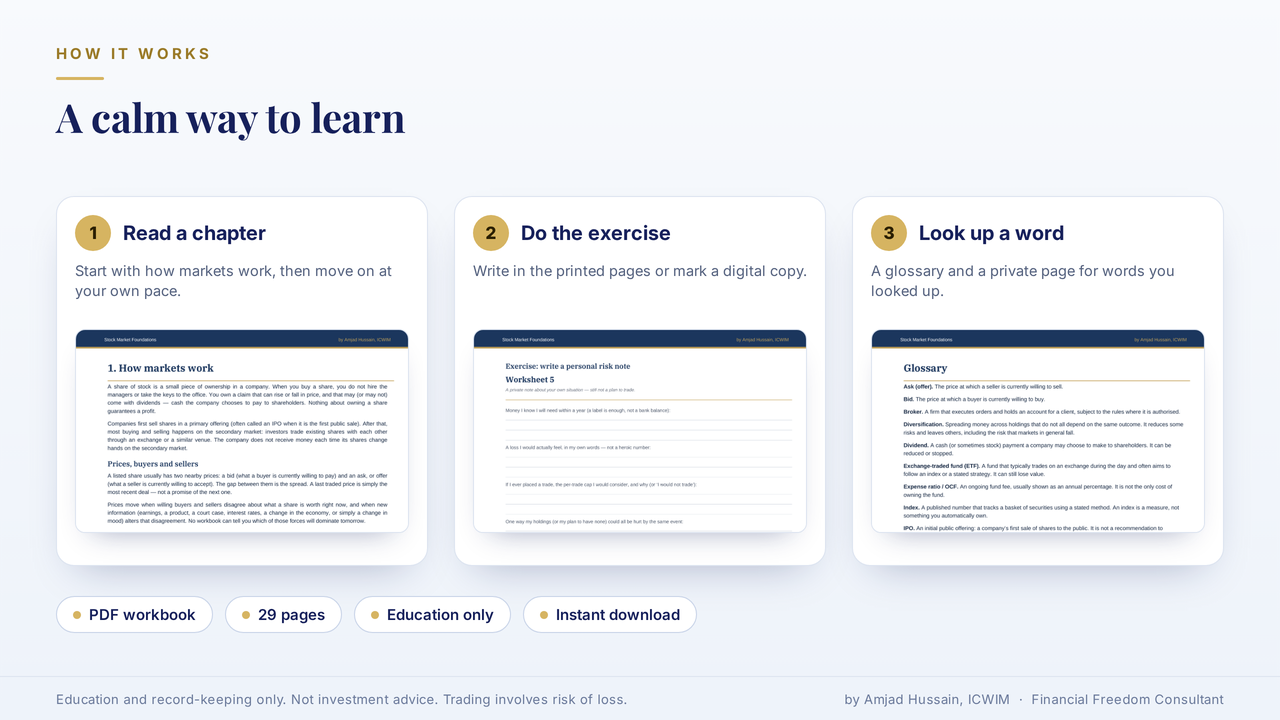
- Practice pages, common questions, a glossary, and a private “words I looked up” page
How to use it
Read one chapter, then complete the worksheet. Stay in observation mode: an exercise is a record of your own thinking, not a plan you are required to follow. The optional companion file, the Trading Journal & Review spreadsheet, is a place to record trades if you later choose to make them. This workbook does not depend on that file, and it does not tell you to trade.
Print it or mark a digital copy.
by Amjad Hussain, ICWIM
This product is for educational and personal organization purposes only. It is not investment advice, tax advice, legal advice, or a recommendation to buy, sell, or hold any financial product, stock, fund, or other security. It does not provide trading signals or a trading system, and it does not promise profit. Amjad Hussain, ICWIM, provides financial education, not personalized financial advice, and is not a licensed investment adviser. Trading and investing involve a real risk of loss, including the loss of all capital you put at risk. Results depend on your own figures, decisions, and circumstances.