

The Family Manual
Your agency found you the right person.
This is the system that keeps them.
Most families assume the hard part is finding the right nanny or governess. The agencies do that part well — they vet, reference, and place experienced professionals into homes that need them.
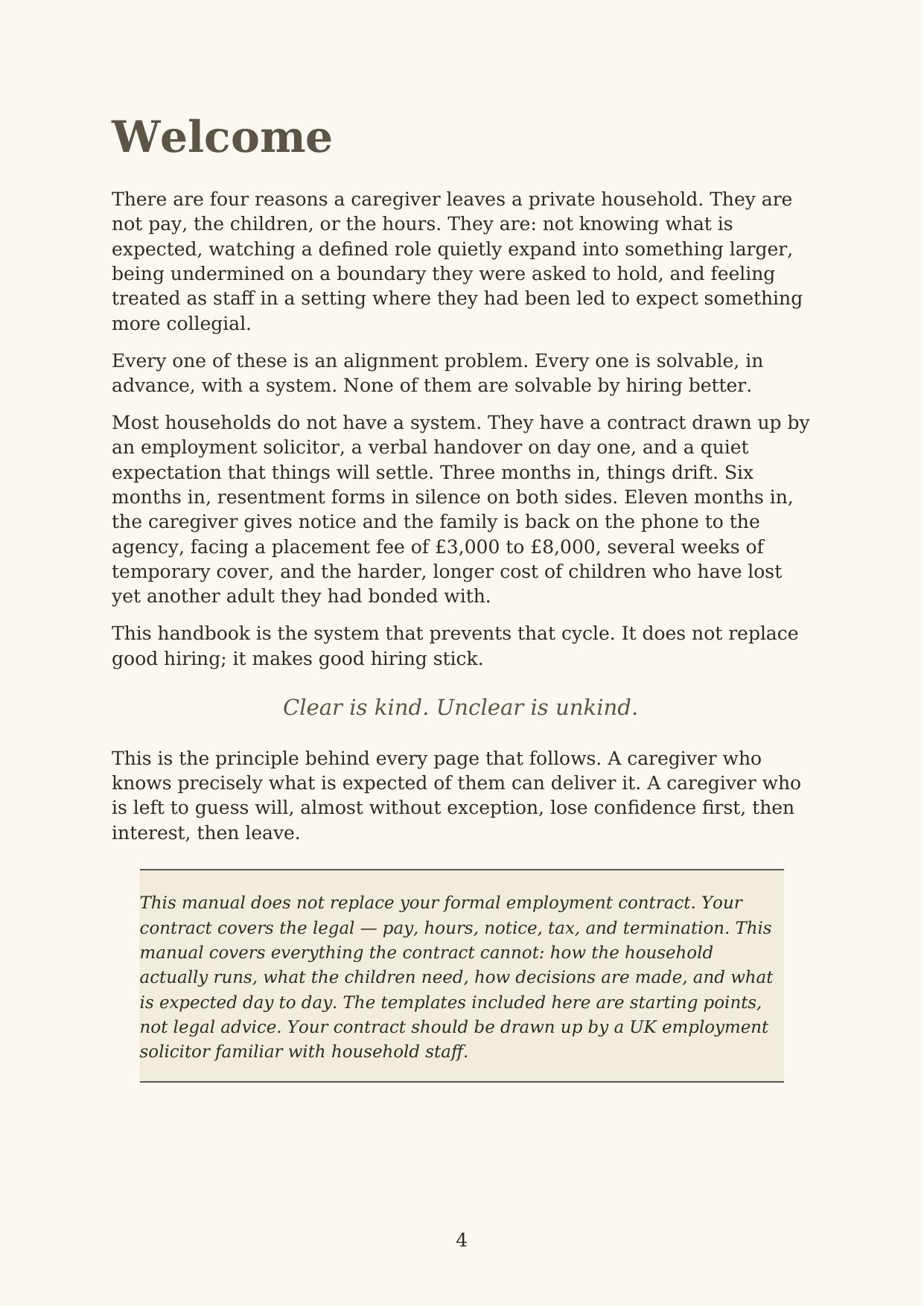
It is not the hard part. The average tenure of a private nanny in a UK household is eighteen to twenty-four months. The reasons are rarely dramatic: unclear expectations, the slow drift of duties, a boundary undermined, feeling treated as staff rather than a professional. Quiet, slow, and almost entirely preventable.
The cost of getting it wrong: £3,000–£8,000 in replacement agency fees, weeks of temporary cover, and children who have lost another adult they had bonded with.
The Family Manual is the system that prevents that cycle.
What is in the manual
Forty-three pages, written by a former governess with fifteen years inside London's private households. Nine sections plus two appendices, filled in once by both parents together, then used as the running reference for the role.
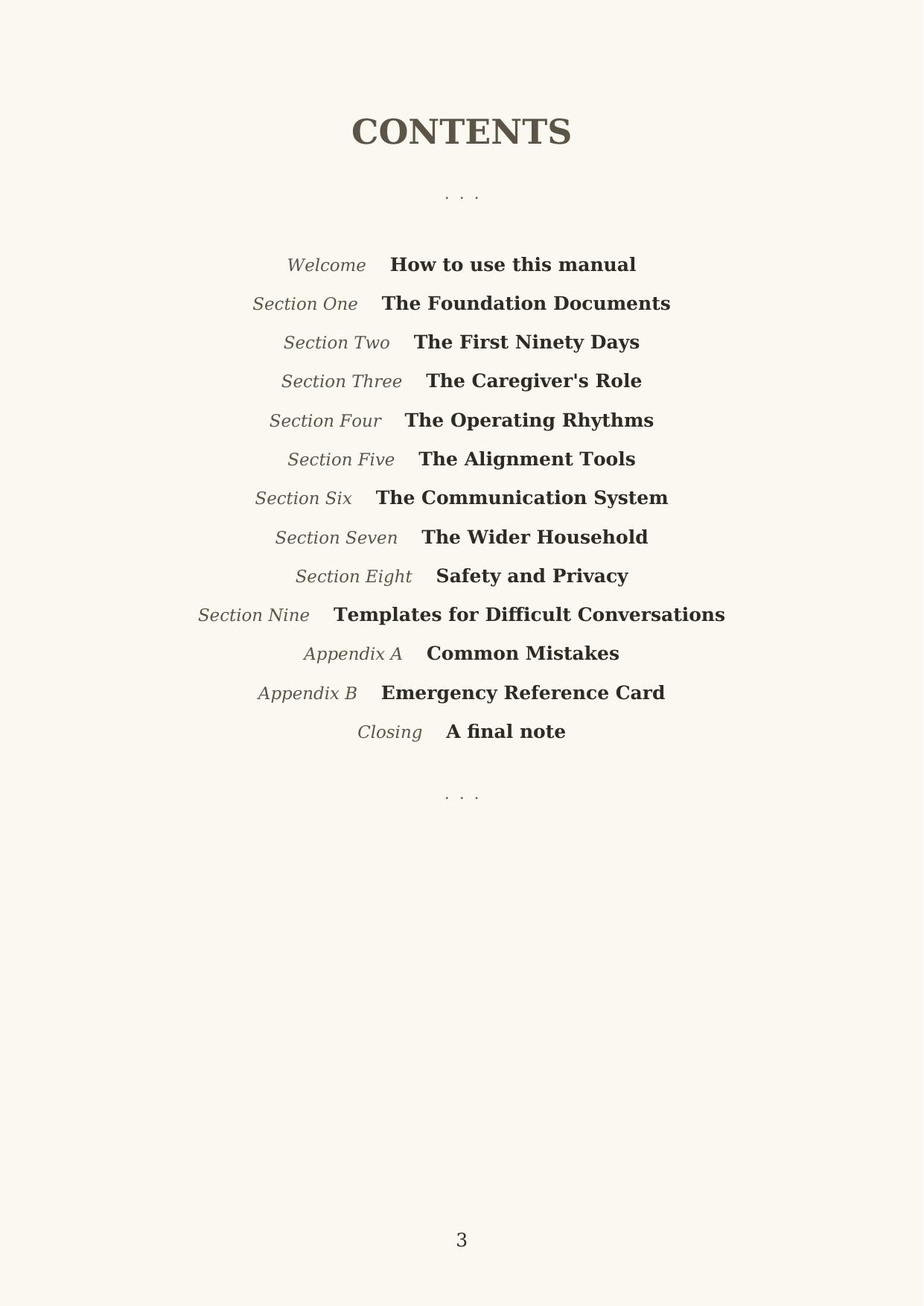
- The Foundation Documents — family handbook, household map, children's profiles
- The First Ninety Days — week-by-week onboarding, reviews at 30/60/90 days, a First Day Letter template
- The Caregiver's Role — sole-charge vs proxy-parenting, what's included, travel
- The Operating Rhythms — daily schedule, morning and bedtime protocols, meal standards
- The Alignment Tools — discipline worksheet, screen time, house rules
- The Communication System — daily handover, check-ins, conflict resolution
- The Wider Household — working alongside housekeeper, driver, other staff
- Safety and Privacy — emergency plans, medical sheet, privacy protocols
- Templates for Difficult Conversations — five scripts for the conversations that most often need to happen, and most often do not
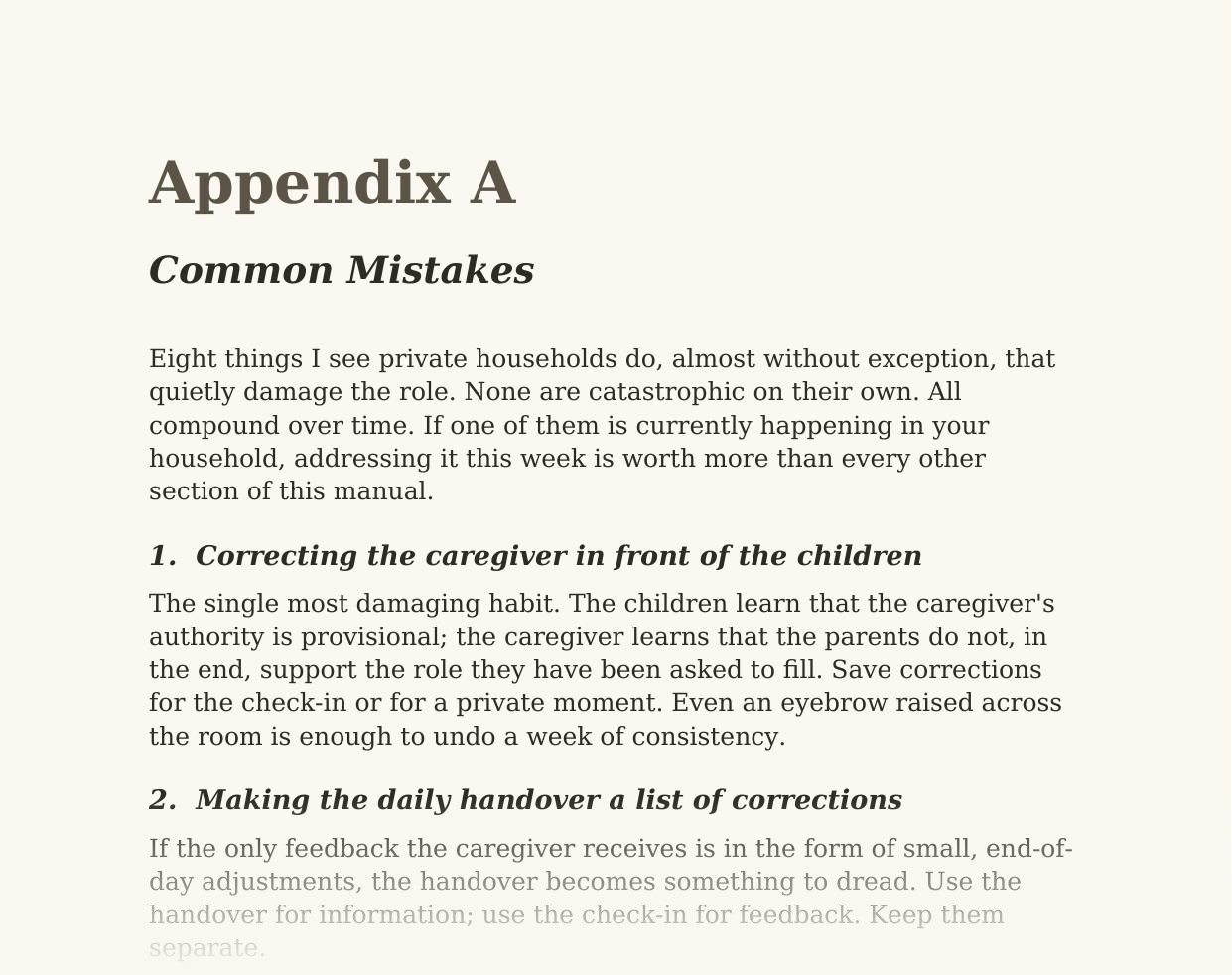
- Appendix A: Common Mistakes — eight things households do that quietly damage the role
- Appendix B: Emergency Reference Card — designed to print and keep in the kitchen
Who this is for
Families employing a nanny, governess, or childcare team — most commonly UK-based, though the principles travel. Two working parents, one to four children, one or more residences is the typical reader. Useful whether hiring your first caregiver, well into an existing arrangement, or replacing one — and equally useful whether the caregiver came through an agency or a private referral.
Not for families wanting a quick checklist. The manual takes a weekend to complete properly with both parents present the exercise itself is much of the value, surfacing disagreements the caregiver would otherwise have to navigate alone.
The essentials
- Format — 43-page PDF, typeset as a proper reference handbook rather than a generic template, designed to be printed, kept, and handed to the next caregiver if there is one
- Price — £297. The price will rise as the manual expands; founding-edition buyers keep this price for any future updates
- Licence — single household. May be filled in, printed, and used by the family and the caregivers they employ; not for redistribution or resale
- International buyers — written from a London perspective; the framework travels to Gulf, North American, European, and Asian households, with safety and medical sections adaptable to local equivalents. Charged in GBP; PayPal converts automatically
- Refunds — non-refundable once downloaded, as a digital product delivered immediately, consistent with UK Consumer Contracts Regulations 2013
The promise
A nanny who knows precisely what is expected can deliver it. Left to guess, she will quietly lose confidence, then interest, then leave. Used well, this manual does not save you money — it saves you years of cycling through caregivers your children had bonded with, and gives back the energy spent on chaos that did not need to exist.