
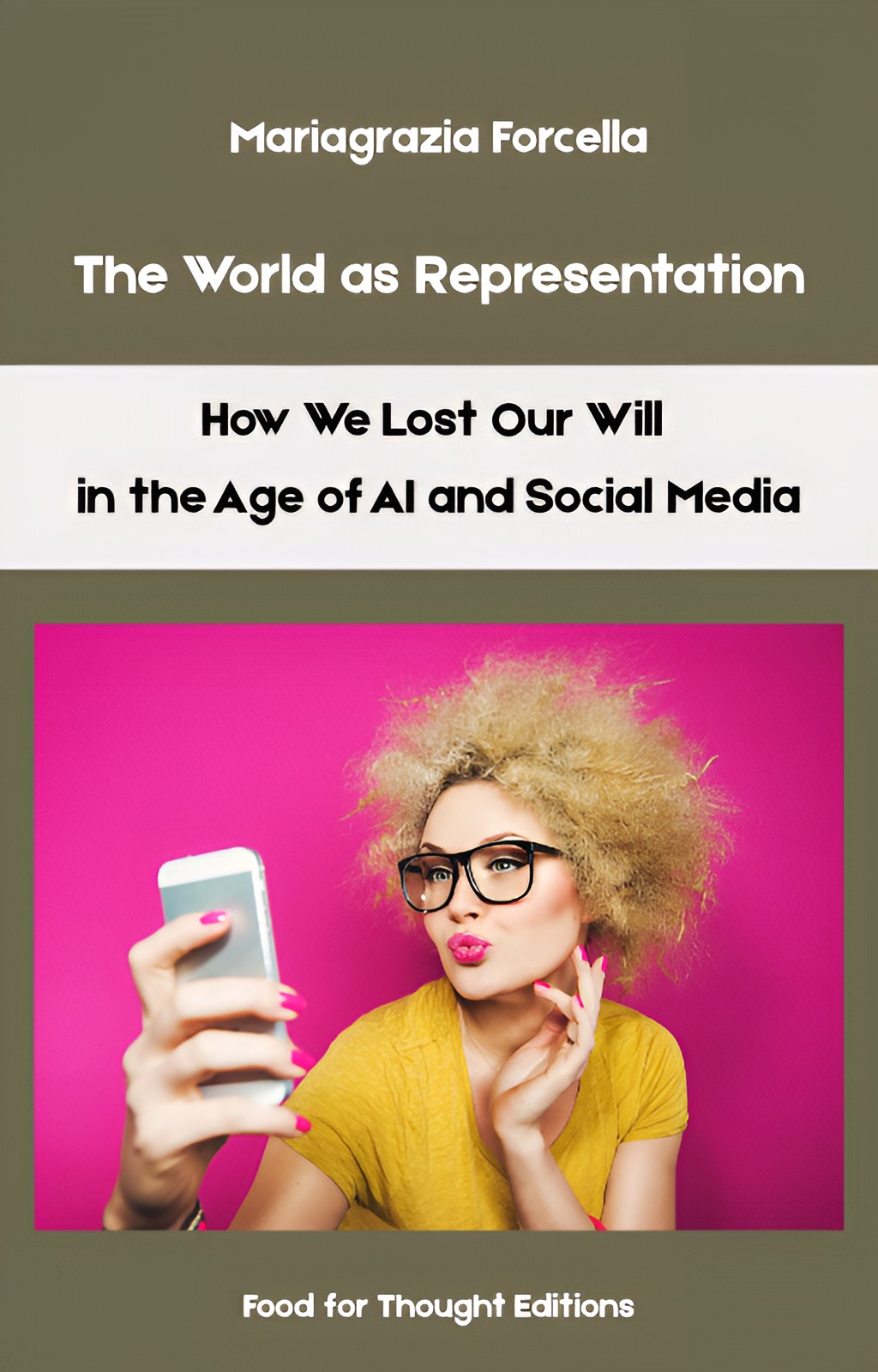
The World as Representation - How We Lost Our Will in the Age of AI and Social Media
The Representation has devoured the Will.
The image has consumed the reality. The World as Representation is not a lamentation about technology. It is a diagnosis: a systematic, interdisciplinary examination of how the fundamental structure of human experience has been inverted in the age of AI and social media.
Drawing on the philosophy of Schopenhauer, the semiology of Roland Barthes, and the critique of Byung-Chul Han, this book reveals:
- How the curated self has displaced the embodied self
- How the compulsion to document has paralyzed the capacity to act
- How politics has become performance
- How convenience has been weaponized to surrender freedom
- How attention, intelligence, and choice have been outsourced to algorithms
This is a work of consciousness-raising, not despair. The technology is not the enemy: the abdication of agency is.
We have the choice. Do not delegate the choice to the algorithms.
The World as Representation
How We Lost Our Will in the Age of AI and Social Media
You don't choose what you see on Facebook. The algorithm does. You don't choose your political opinions. The algorithm shapes them. You don't choose what you want. The algorithm tells you.
We have surrendered our Will to the Representation. We curate our identities, optimize our bodies, and perform our lives for the algorithmic gaze. We film emergencies instead of intervening. We consume politics as spectacle. We express solidarity through gestures. We choose convenience over freedom. We outsource our memory, our navigation, our intelligence to machines that do not serve us: they serve the platforms that own them.
This is not a lamentation about technology. It is a diagnosis. Drawing on philosophy, semiology, sociology, and political theory, The World as Representation reveals the machinery of our capture.
You will discover:
- Why your convenience is their control
- Why your attention is worth more than your money
- Why you have already delegated your choices to an algorithm
- Why the "eternal sunshine of the spotless body" is erasing individuality
- Why you film emergencies instead of helping
- Why influencers are the high priests of a new religion
- Why "Google it" is a confession of forgetting
The inversion is not inevitable. The technology is not the enemy. The abdication of agency is.
Introduction
The title of this book is a provocation. It is an echo, a deliberate, almost defiant echo, of Arthur Schopenhauer's The World as Will and Representation, first published in 1818. In that work, Schopenhauer proposed a theory of human existence. He argued that the universe we perceive, our own bodies, and the very fabric of space and time are not things-in-themselves; they are merely a Representation, a mental projection, a phenomenon generated by our cognitive apparatus. The world as we know it is a construction, filtered through the lenses of space, time, and causality.
But Schopenhauer insisted that this Representation is not the ultimate reality. Beneath the shimmering veil of appearances pulses something far more fundamental: the Will. The Will is the thing-in-itself, the blind, insatiable, irrational striving that drives all existence. It is the force behind the growth of a crystal, the hunger of a tiger, the ambition of a politician, the desperation of a lover. For Schopenhauer, the Will is the tyrannical master; the Representation is merely its servant, the lantern carried by the Will as it stumbles through the darkness of existence. The intellect, he argued, is not the captain of the ship; it is the passenger who merely watches where the captain - the Will - chooses to sail.
This book argues that this relationship has been catastrophically inverted.
In the age of Artificial Intelligence and algorithmic social media, the Representation has devoured the Will. We no longer live in the world as Will; we live in the world as pure, hyper-curated Representation. The authentic, embodied, striving self has been reduced to raw material for algorithmic optimization. Our identities are becoming content strategies. Our bodies are becoming eternal, spotless images. Our actions are paralyzed by the compulsion to document. Our politics becomes performance. Our attention has been captured and commodified. Our choices have been delegated to algorithms. Our intelligence has been outsourced to machines.
The Representation is no longer the servant of the Will; it is its master.
This book is a work of diagnosis. It is not a lamentation about technology, nor a nostalgic longing for a pre-digital past, nor a prescriptive manual for digital detox. It is a systematic, interdisciplinary examination of how the fundamental structure of human experience has been inverted by the technologies that now mediate our existence.
The book proceeds through eighteen chapters, each examining a different facet of the Great Inversion. The argument is cumulative: each chapter builds upon the foundations laid by the previous ones, revealing the systematic nature of the transformation.
Table of Contents
Introduction
Part I: The Philosophical and Semiological Foundations
Chapter 1: The Great Inversion – When Representation Ate the Will
Chapter 2: The Empire of the Sign – When the Map Consumes the Territory
Chapter 3: The Algorithmic Gaze – How Social Media and AI Represent the World, and Why We Cannot See It
Part II: The Sociological Manifestations – The Displacement of the Will
Chapter 4: The Curated Self – Identity as a Content Strategy
Chapter 5: Eternal Sunshine of the Spotless Body – The Body as Representation
Chapter 6: The Paralysis of Action – The Bystander Effect in the Age of the Smartphone
Chapter 7: The Empire of Indifference – When Representation Absolves the Will
Chapter 8: The Influencer as High Priest of Representation
Chapter 9: The Visual Overdose – Selfies, Photo Mania, and the Tyranny of the Image
Part III: The Political Consequences – When Representation Governs
Chapter 10: Politics as Performance – The Spectacle of Governance
Chapter 11: The Algorithmic Public Sphere – Media, Consensus, and the End of News
Chapter 12: Slacktivism and the Catharsis of the Sign
Chapter 13: The "Comfy" and the Fast – Eternal Sunshine of the Slave Lazy
Chapter 14: "Google It" – The Forgetting of Space and the Outsourcing of the Self
Chapter 15: The Loss of Intellectual Capabilities and the Loss of Will
Part IV: The Return of the Will – Consciousness and Empowerment
Chapter 16: Reclaiming Attention – The Capture and Liberation of Our Most Precious Resource
Chapter 17: Reclaiming the Choice – The Delegation of Volition
Chapter 18: The World as Will, Reclaimed – Consciousness and Empowerment
Bibliography
BOOK REVIEWS
Mariagrazia Forcella has written the book that our digital moment demands. “The World as Representation - How We Lost Our Will in the Age of AI and Social Media” is a work of rare intellectual ambition, a systematic, interdisciplinary diagnosis of how the fundamental structure of human experience has been inverted by the algorithmic systems that now mediate our existence.
The title deliberately echoes Arthur Schopenhauer's magnum opus, and the philosophical architecture of the book is built upon this foundation. Schopenhauer argued that the world we perceive is merely a Representation, a mental projection generated by our cognitive apparatus, while the thing-in-itself - the blind, striving, insatiable force that drives all existence - is the Will. For Schopenhauer, the Will was the tyrant, and the Representation was its servant, the lantern carried by the Will as it stumbled through the darkness of existence. Forcella argues that this relationship has been inverted. The Representation has devoured the Will. We no longer live in the world as Will; we live in the world as pure, hyper-curated Representation.
What distinguishes this book from the growing corpus of digital criticism is its methodological rigor and its refusal of easy moralism. Forcella does not lament; he diagnoses. She does not moralize; she analyzes. She draws on philosophy, semiology, sociology, and political theory with equal fluency, constructing an argument that is both intellectually formidable and urgently relevant.
The semiological framework is particularly compelling. Forcella extends Roland Barthes' analysis of the empire of signs to the digital domain, showing how the signifier has been emancipated from the signified, how the image has consumed the reality it once served. The digital photograph is not a trace of the real but a construction of the ideal. The selfie is not a representation of a person but a performance of a persona. The influencer is not a celebrity but a sign without a referent. The political discourse is not a deliberation but a spectacle. The solidarity is not a commitment but a gesture.
The sociological evidence is equally persuasive. Forcella documents the photographic bystander effect with chilling precision: the compulsion to document emergencies instead of intervening, the paralysis of action in the face of suffering, the transformation of the witness into a content-creator. He traces the empire of indifference that emerges when reality is perceived as Representation, and the political consequences of this transformation, the destruction of the public sphere, the delegitimation of democratic institutions, the erosion of citizenship.
The chapter on the "comfy" and the fast is particularly devastating. Forcella shows how the pursuit of convenience has been weaponized to surrender freedom, how the micro-savings of effort have been exchanged for the macro-loss of autonomy, how the body itself has become a method of payment in a system of total surveillance. The argument is not that convenience is evil, but that the terms of the exchange have been systematically obscured. We have traded our autonomy for a frictionless existence, and we have done so without understanding the consequences.
The book is also a work of intellectual courage. Forcella does not shrink from the evidence that cognitive capacities are declining, that IQ scores are falling across developed nations, that the capacities for sustained attention, independent reasoning, and autonomous judgment are being systematically eroded by the digital environment. She quotes the studies, presents the data, and draws the implications. The loss of intellectual capability is the loss of the Will. The erosion of attention is the erosion of agency. The surrender of choice is the surrender of the self.
The concluding chapters are not a manual for resistance but a call to consciousness. Forcella does not tell the reader what to do, she shows the reader what has been done. She exposes the machinery of the Representation, the mechanisms of the inversion, the architecture of the capture. The implications are left for the reader to draw. The choice is left for the reader to make.
“The World as Representation” is essential reading for anyone who has felt the pull of the screen and the erosion of attention, who has sensed that the convenience of the algorithm comes at a cost, who has wondered whether the Representation is the reality or only its shadow. It is a work of diagnosis for the digital age, clear-eyed, rigorous, and urgent. Forcella has written the book that our moment demands.
Heriberto Lopez
There is a particular kind of unease that settles over you when you realize that your smartphone is not a tool but a master, that the algorithm does not serve you but uses you, that the convenience you have welcomed into your life has come with a price tag you never bothered to read. Mariagrazia Forcella “The World as Representation - How We Lost Our Will in the Age of AI and Social Media” is the book that makes you read that fine print.
Forcella, a political strategist and semiotician who studied and worked with Umberto Eco, has written a work of diagnosis for the digital age. The title echoes Schopenhauer's magnum opus, and the philosophical architecture is built upon this foundation. Schopenhauer argued that the world we perceive is merely a Representation, a mental projection generated by our cognitive apparatus, while the thing-in-itself is the Will. Forcella argues that this relationship has been catastrophically inverted. The Representation has devoured the Will. We no longer live in the world as Will; we live in the world as pure, hyper-curated Representation.
This is not a book about how to put down your phone. It is not a self-help manual for the digitally afflicted. It is a systematic, interdisciplinary examination of how the fundamental structure of human experience has been transformed by the algorithmic systems that now mediate our existence.
Forcella 's scope draws on philosophy, semiology, sociology, and political theory with equal fluency. The argument is cumulative: each chapter builds upon the foundations laid by the previous ones, revealing the systematic nature of the transformation. The curated self has displaced the embodied self. The eternal, spotless body has replaced the mortal, unique body. The compulsion to document has paralyzed the capacity to act. Politics has become performance and solidarity has become gesture. Convenience has been weaponized to surrender freedom. Attention, intelligence, and choice have been outsourced to algorithms.
The evidence is both scholarly and alarmingly concrete. Forcella documents the photographic bystander effect, the phenomenon in which individuals film emergencies instead of intervening. She cites the Kanpur road accident where onlookers filmed a brother and sister for forty minutes as they lay dying, taking videos instead of calling for help. She quotes the Pakistani politician who praised a pilot's "miraculous save" in a video that turned out to be footage from the video game Grand Theft Auto V, unable to distinguish between reality and simulation. She presents the studies showing that IQ scores are declining across developed nations, that cognitive capacities are being systematically eroded by the digital environment.
The chapter on convenience is particularly arresting. Forcella shows how the pursuit of frictionless existence has been weaponized to surrender freedom. The Chinese citizen who pays for groceries with a palm scan is not merely saving time; they are trading their biometric data - the unique pattern of veins beneath their skin - for a moment of convenience. The data is stored, processed, and linked to a comprehensive profile of their financial behavior. Every transaction is recorded. Every purchase is tracked. Every preference is logged. The system that knows what you buy also knows what you believe, whom you associate with, and how you live. The convenience is the mechanism of control.
The political implications are deeply troubling. Forcella shows how social media has become the contemporary agora, but an agora of reaction, not action. The news is no longer new; it is the eternal repetition of the already known. The media no longer seek to raise consensus, they seek to raise engagement. The result is a public sphere that is not a space of encounter but of echo, not a space of deliberation but of provocation, not a space of citizenship but of consumption. The citizen is no longer an agent but a spectator.
What distinguishes this book from the growing corpus of digital criticism is its refusal of easy moralism. Forcella does not lament; she diagnoses. She does not moralize; she analyzes. She does not tell the reader what to do, she shows the reader what has been done. The implications are left for the reader to draw, and they are not comfortable. The technology is not the enemy, the abdication of agency is. The algorithm is not the determinant, the will is. The future is not written, it is chosen.
“The World as Representation” is essential reading for anyone who has felt the pull of the screen and the erosion of attention, who has sensed that the convenience of the algorithm comes at a cost, who has wondered whether the Representation is the reality or only its shadow. It is a work of diagnosis for the digital age, clear-eyed, rigorous, and urgent.
Read it. Then put down your phone. And think.
Werner Haas
Mariagrazia Forcella's “The World as Representation - How We Lost Our Will in the Age of AI and Social Media” is the kind of book that makes you want to throw your phone into a river, and then immediately pick it up again to tell everyone about it.
I came to this book as a student of political sciences, expecting yet another critique of social media, another lament about polarization, another hand-wringing exercise about the state of democracy. What I found instead was something far more unsettling: a systematic argument that the very structure of our perception has been inverted, and that this inversion has profound political consequences that we have barely begun to understand.
Forcella's central thesis is deceptively simple. Drawing on Arthur Schopenhauer's distinction between the Will and the Representation, she argues that the relationship has been reversed. In the digital age, the Representation, the algorithmically optimized image of reality, has devoured the Will, the embodied, striving, autonomous self. We no longer live in the world, we live in a simulation of the world, tailored to our preferences, optimized for our engagement, and designed to keep us scrolling.
For a student of political sciences, this argument is devastating. The chapter on the algorithmic public sphere is particularly relevant to my field. Forcella shows how social media has become the contemporary agora, but an agora of reaction, not action. The news is no longer new, it is the eternal repetition of the already known. The media no longer seek to raise consensus, they seek to raise numbers (the numbers of clicks, shares, likes, and views). The result is a public sphere that is not a space of encounter but of echo, not a space of deliberation but of provocation, not a space of citizenship but of consumption.
The political consequences are evident everywhere. Forcella documents how politics has become a battle of Representations, how the political influencer has replaced the statesman, how the soundbite has displaced the policy, how the viral clip has substituted for deliberation. She shows how slacktivism, the substitution of symbolic gesture for substantive action, has become the dominant mode of political engagement, how the profile picture has replaced the protest, how the hashtag has replaced the organization, how the online petition has replaced the movement.
The chapter on convenience is perhaps the most frightening for a political scientist. Forcella demonstrates how the pursuit of frictionless existence has been weaponized to surrender freedom. The citizen who prefers digital payment to cash, who opts for facial recognition over the ATM, who chooses the algorithm over the effort, is not merely saving time; they are trading autonomy for convenience. And this trade has profound political implications. The citizen who is comfortable is the citizen who does not resist. The citizen who is pacified is the citizen who does not organize. The citizen who is passive is the citizen who does not hold power accountable.
What I found most compelling about this book is its refusal of easy solutions. Forcella does not offer a 10-step program for digital detox or a nostalgic longing for a pre-digital past. She diagnoses, she exposes, she reveals. The conclusions are left for the reader to draw. The technology is not the enemy, the abdication of agency is.
This book has changed how I understand my own relationship to technology. I am more conscious of the mechanisms that capture my attention, more skeptical of the algorithms that curate my reality, more aware of the choices I have delegated without realizing it. I am also more conscious of the political implications of these mechanisms. The erosion of the Will is not merely a personal crisis; it is a political crisis. The citizen who has lost the capacity for sustained attention, independent judgment, and autonomous action is the citizen who is compliant, predictable, and controllable.
“The World as Representation” is essential reading for anyone who cares about the future of democracy, which is to say, for anyone who intends to be a citizen rather than a spectator. It is a work of diagnosis, not of despair. It is a call to consciousness, not to resignation.
Mario Galloni