

Coastal Passage Planning Guide
Coastal Passage Planning Guide – Edition 01
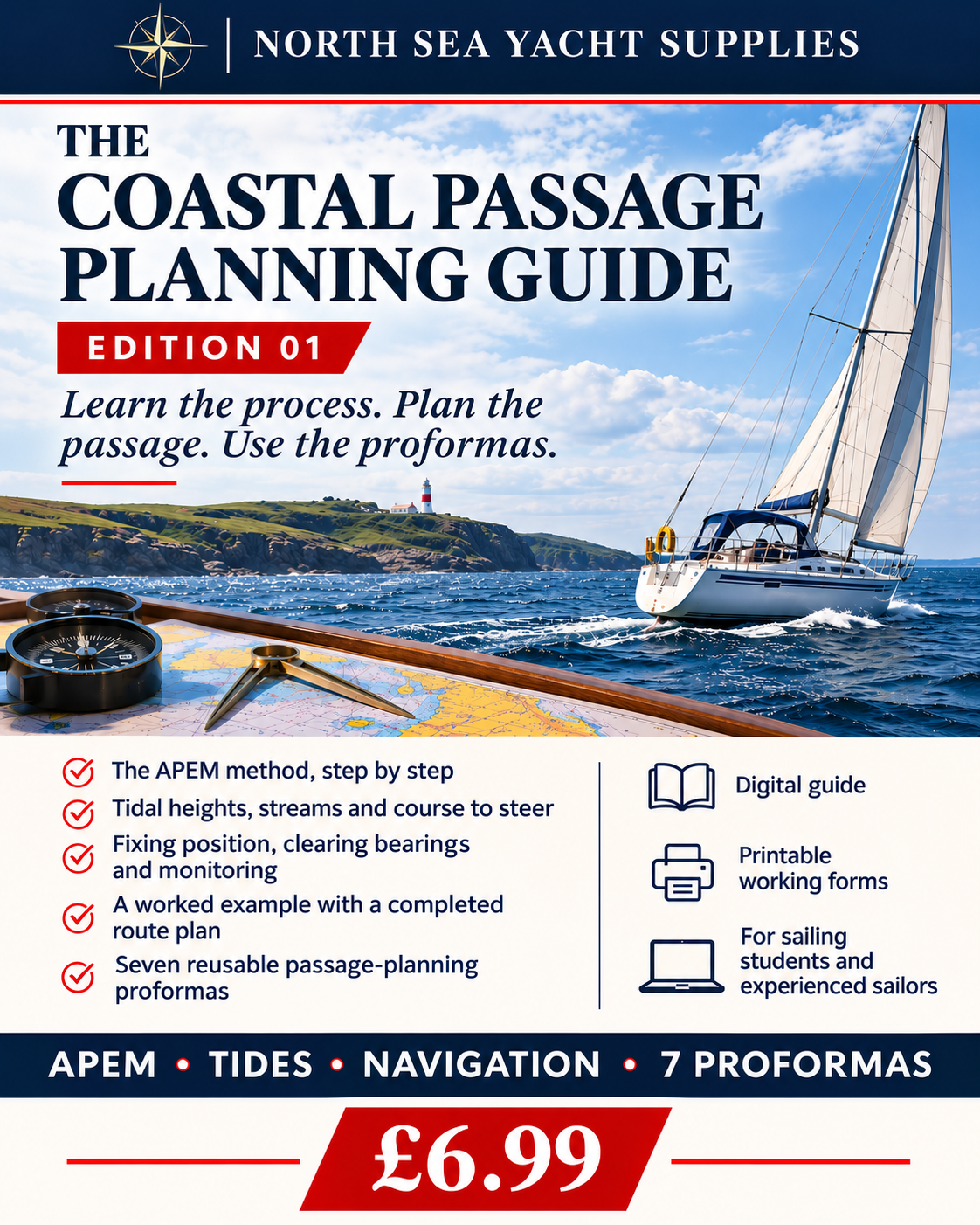
A practical passage-planning guide for sailing students and experienced sailors.
Good passage planning is about more than drawing a route on a chart. It means assessing the vessel and crew, understanding the conditions, planning around tides and hazards, briefing everyone on board and monitoring the passage as it unfolds.
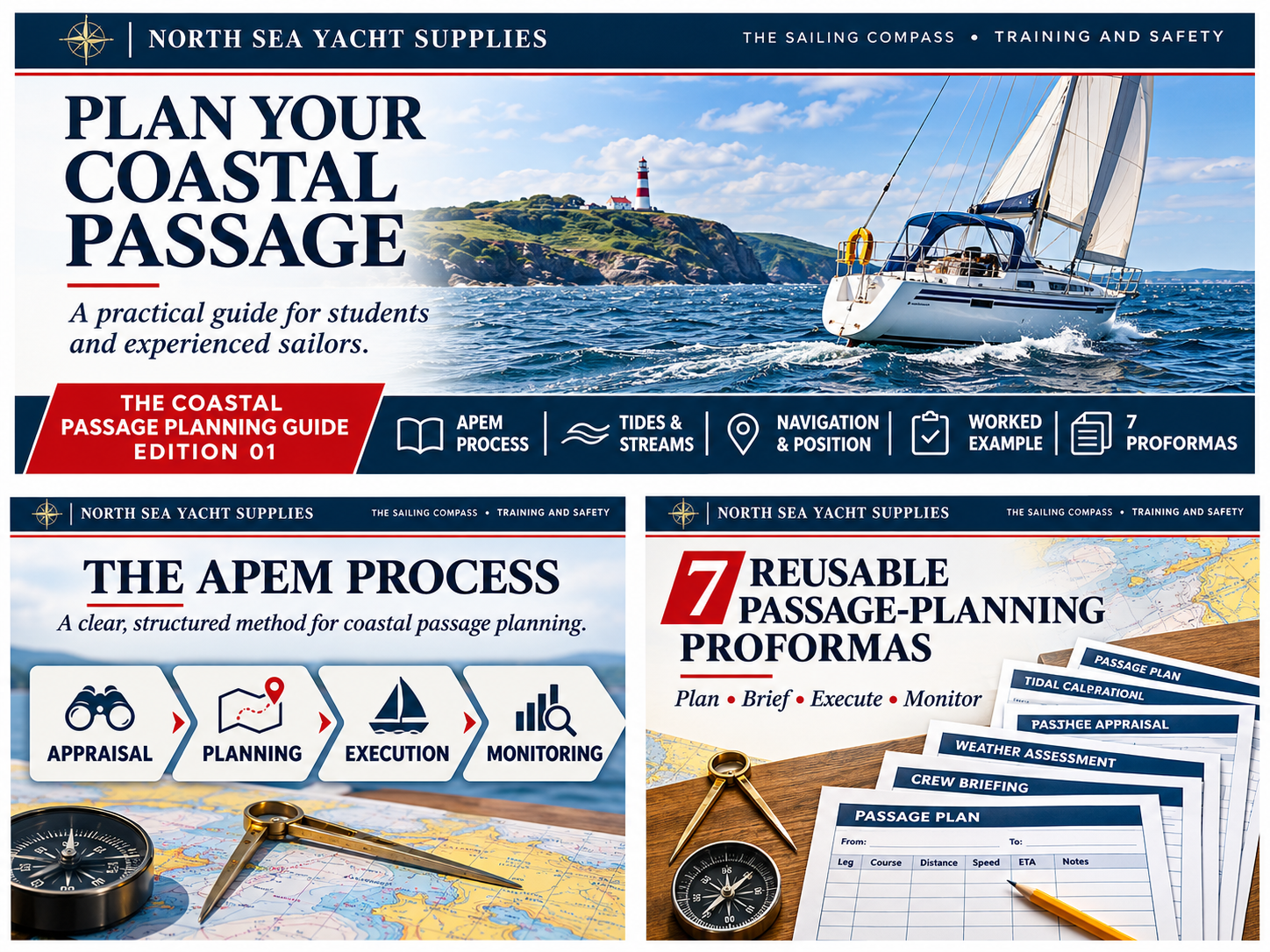
The North Sea Yacht Supplies Coastal Passage Planning Guide provides a clear, structured approach using the APEM method: Appraisal, Planning, Execution and Monitoring.
Work through the principles step by step, follow a worked coastal passage example and use the included proformas to develop a consistent planning routine for your own sailing.
What’s included
- The APEM passage-planning process, explained step by step
- Appraisal of the vessel, crew and available information
- Route planning, waypoints, timing and safe water
- Tidal heights, tidal streams and tidal gates
- Course to steer and the effect of tidal streams
- Position fixing, dead reckoning, estimated positions and monitoring
- Weather assessment and coastal hazards
- A worked example with a completed route plan
- Final passage review and decision-making prompts
- Seven reusable passage-planning proformas for your own use
Who is it for?
Sailing students: Build your understanding of passage planning, practise the techniques and develop the ability to explain the decisions behind a plan.
Experienced sailors: Refresh your knowledge, use a consistent planning framework and keep practical records for your passages.
Skippers and crew: Use the proformas to support preparation, crew briefings, monitoring and contingency planning.
A practical resource you can keep using
The seven proformas are designed to be printed or copied and reused. They cover passage appraisal, route and waypoint planning, tidal calculations, weather assessment, crew briefing, execution and monitoring, and contingency planning.
Digital PDF – Edition 01
Price: £6.99
Important: This guide is an educational aid, not a navigational publication or a substitute for current charts, official information, appropriate training or sound seamanship. Always verify information for the actual vessel and passage. Sample figures and locations are illustrative only and must not be used for navigation.