


The Education, Curriculum and Policy Scholarship Playbook
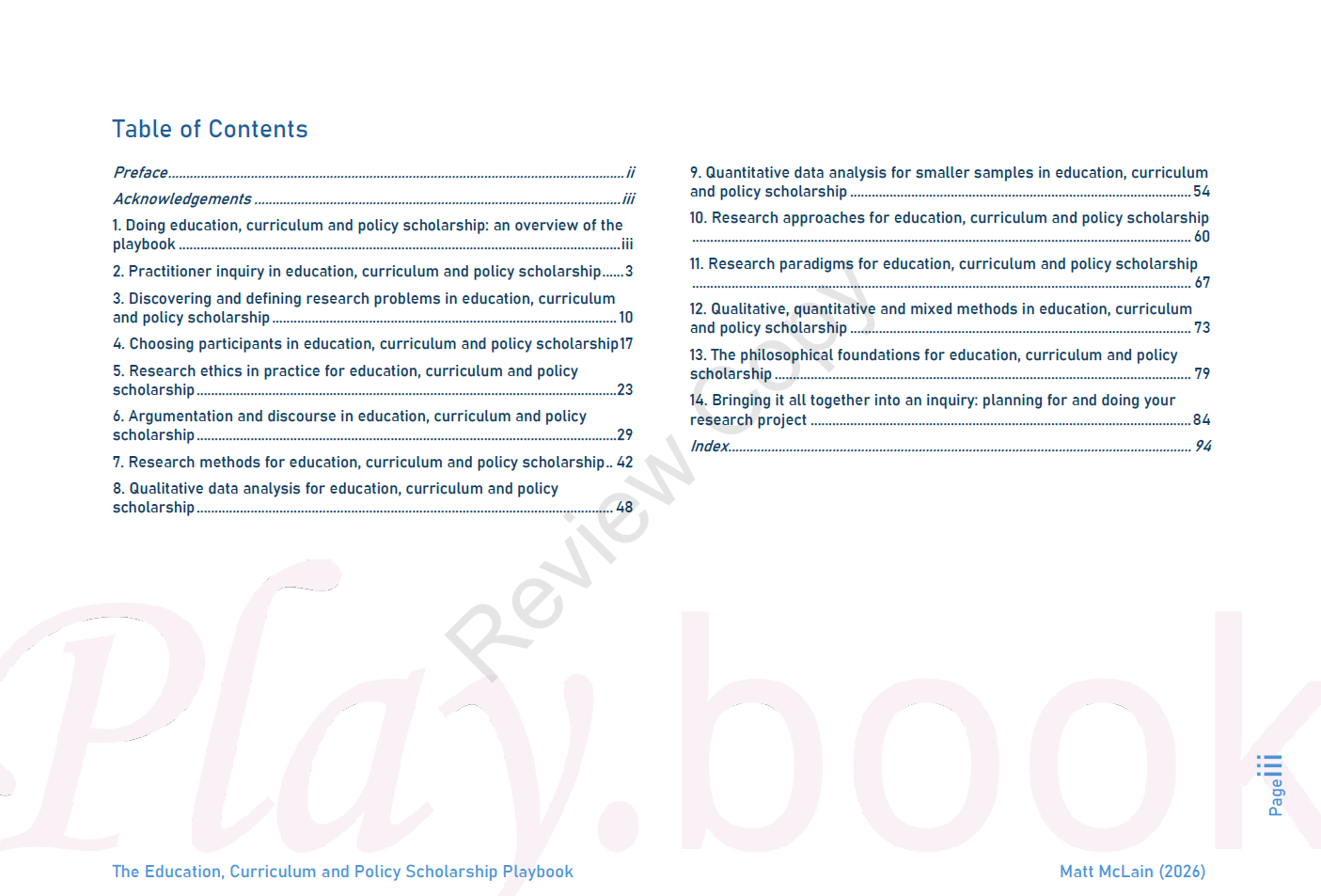
This playbook is a practical guide to designing, conducting, analysing, and defending research in education, curriculum, and policy. Its central argument is that research is best understood as a series of informed decisions rather than a collection of isolated methods. The book emphasises maintaining a coherent "golden thread" linking:
Research problem → aims → objectives → questions → methodology → methods → data → findings → conclusions.
Major Sections
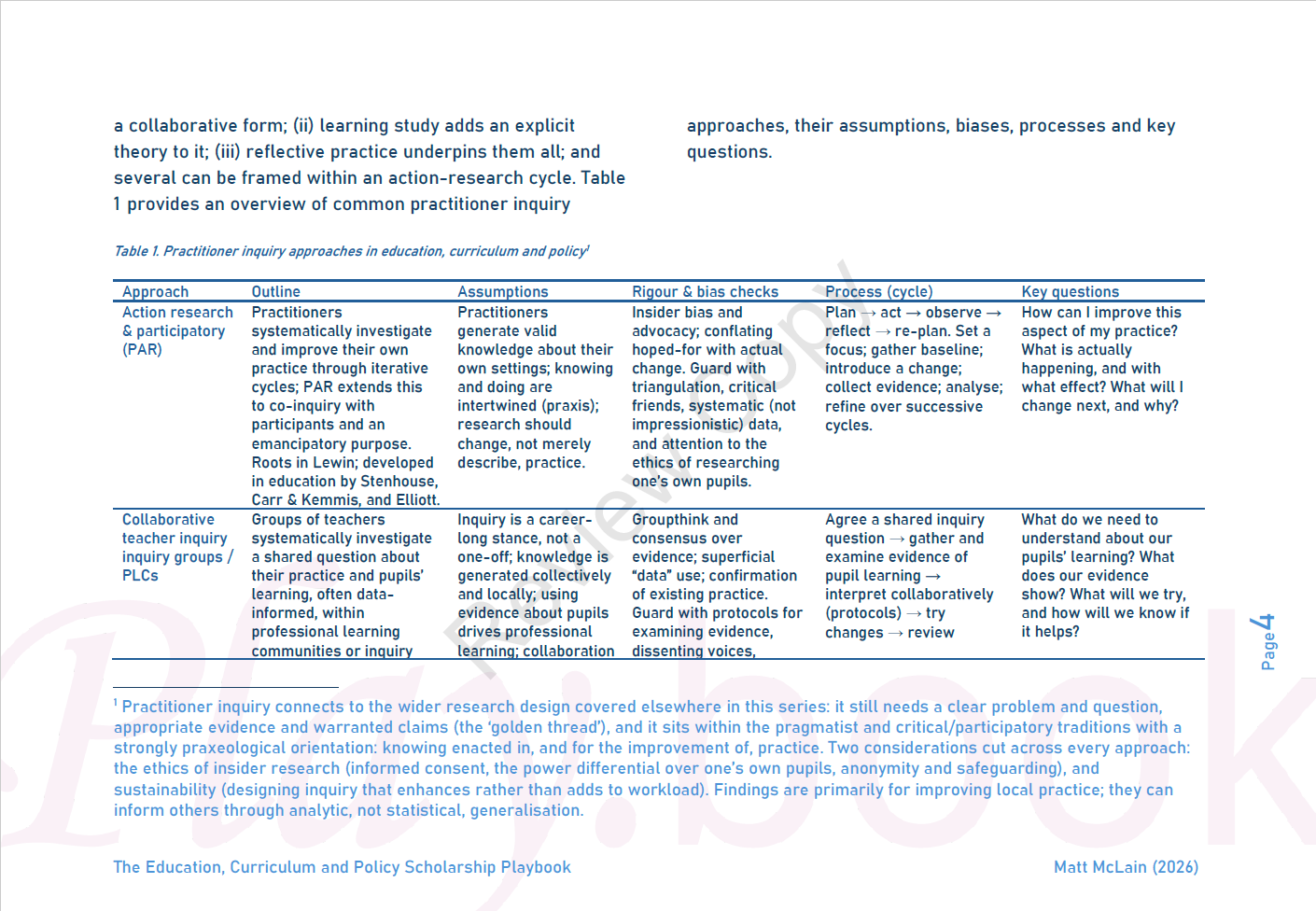
Practitioner Inquiry
- Action research, lesson study, learning study, reflective practice, improvement science, and self-study.
- Focuses on researching and improving one's own educational practice.
Research Problems and Questions
- Multiple ways of identifying research problems:
- Literature gaps
- Problems of practice
- Policy-driven issues
- Equity and justice concerns
- Theory-driven inquiries
- Problematisation and discourse approaches
Sampling and Participants
- Probability and non-probability sampling approaches.
- Emphasis on transparency, transferability, and analytical rather than statistical generalisation in small-scale educational research.
Research Ethics
- Informed consent, confidentiality, safeguarding, insider research, power relations, data protection, AI use, and BERA ethical principles.
- Distinguishes procedural ethics from ethics-in-practice.
Argumentation and Discourse
- Toulmin
- Walton
- Freeman
- Pragma-Dialectics
- Habermas
- Aristotle
- Perelman
- Fisher
- Critical Discourse Analysis
- Bacchi's WPR framework
Research Methods
- Interviews, focus groups, surveys,
- observation,
- document analysis, visual methods, diaries, artefact analysis,
- learning analytics, and elicitation techniques.
Data Analysis
- Qualitative: thematic analysis, grounded theory, IPA, framework analysis, discourse analysis, conversation analysis, narrative analysis.
- Quantitative: descriptive and inferential statistics suitable for smaller samples, effect sizes, confidence intervals, non-parametric methods.
Research Approaches
- Case study
- Ethnography
- Phenomenology
- Grounded theory
- Narrative inquiry
- Action research
- Design-based research
- Mixed methods
- Q methodology
- Policy analysis
- Systematic reviews
Research Paradigms
- Positivism
- Post-positivism
- Interpretivism
- Critical theory
- Pragmatism
- Critical realism/social realism
- Post-structuralism
- Post-qualitative/new materialist perspectives
Philosophical Foundations
- Ontology
- Epistemology
- Methodology
- Axiology
- Praxeology
Putting Research Together
- Final chapter presents an eight-stage inquiry design process:
- Define problem
- Form research questions
- Select methodology
- Choose participants
- Address ethics
- Develop argument
- Gather and analyse data
- Clarify positionality and theoretical framework
Overall Character
The playbook is:
- Practitioner-oriented
- Methodologically pluralist
- Strongly focused on curriculum and policy scholarship
- Explicit about philosophical assumptions
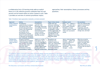
- Rich in comparative tables, frameworks, examples, and decision-making tools
Its distinctive contribution is connecting practical educational inquiry with deeper methodological, theoretical, and philosophical foundations while maintaining a consistent focus on research coherence and defensibility.