
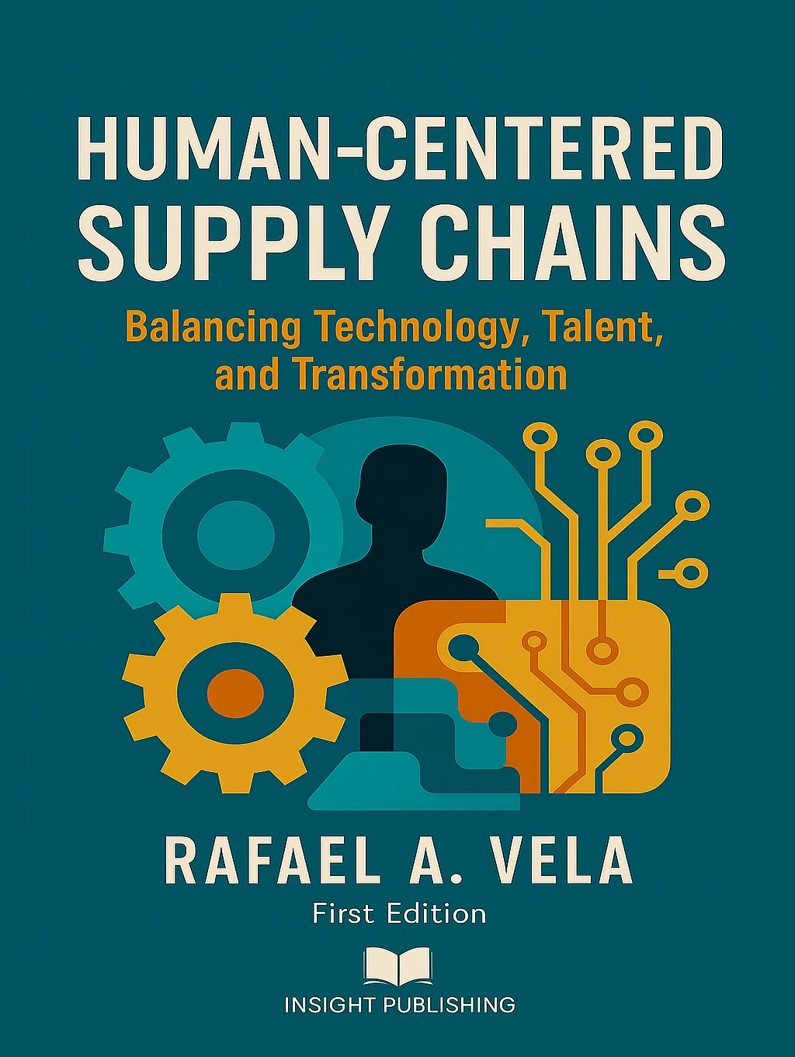
Human-Centered Supply Chains. Balancing Technology, Talent, and Transformation. First Edition
Is your supply chain powered by technology—but limited by people and culture?
In today’s race toward automation, AI, and digital transformation, many organizations overlook the most important driver of supply chain success: people. A purely tech-driven model may increase efficiency, but without human creativity, adaptability, and ethical grounding, supply chains risk becoming fragile, disconnected, and unsustainable.
Human-Centered Supply Chains – Balancing Technology, Talent, and Transformation is your blueprint for creating supply chains that are not only efficient, but also resilient, innovative, and ethically grounded. This book explores how to align people, processes, and platforms in ways that put human talent at the center of transformation.
Inside, you will discover how to:
- Empower local teams to act with autonomy during global disruptions.
- Balance automation and AI with the uniquely human strengths of judgment, creativity, and collaboration.
- Build a culture of resilience where problem-solving and adaptability thrive.
- Link sustainability, ethics, and circular economy practices with human well-being.
- Design supply chains that serve not just markets—but also the communities and people behind them.
In a future shaped by technology, the greatest competitive advantage will be supply chains built around people.
Table of contents
Part I – Foundations of Human-Centered Supply Chains
Chapter 1 – What Does Human-Centered Really Mean? - 11
• Defining human-centered design in supply chains - 11
• Moving beyond HR and compliance toward a holistic philosophy - 11
• Balancing performance, ethics, and well-being - 12
• Why people are the ultimate driver of resilience and innovation - 13
Chapter 2 – The Human-Centered Design Framework - 15
• Principles: empathy, inclusivity, and shared value creation - 15
• Mapping stakeholder needs across employees, suppliers, customers, and communities - 17
• Designing processes with people at the core - 18
Chapter 3 – Ethics and Responsibility in Supply Chain Leadership - 21
• Fair labor practices and responsible sourcing - 21
• Trust, transparency, and accountability - 23
• Aligning human-centered design with ESG and sustainability imperatives - 24
Part II – Balancing Technology and Humanity
Chapter 4 – Digital Transformation with a Human Lens - 28
• How AI, IoT, and blockchain reshape human roles and decisions - 28
• Avoiding the trap of techno-centrism - 30
• Designing technology as a tool for empowerment, not replacement - 31
Chapter 5 – Human–Machine Collaboration - 34
• The new division of work between humans and automation - 34
• Reskilling, upskilling, and continuous learning - 37
• Case insights: when machines augment human judgment rather than displace it - 39
Chapter 6 – Data, Decisions, and the Human Mindset - 41
• Making analytics understandable and actionable - 41
• Managing cognitive overload and decision fatigue - 43
• Creating cultures of informed, empowered decision-making - 45
Part III – Talent as the Catalyst of Transformation
Chapter 7 – Human-Centered Leadership - 49
• Leading with empathy, resilience, and foresight - 49
• The role of middle management in enabling change - 51
• Inspiring purpose-driven supply chains - 53
Chapter 8 – The Future Workforce of Supply Chains - 56
• Diversity, equity, and inclusion as competitive strengths - 56
• Engaging new generations in supply chain careers - 58
• Retaining talent in a high-pressure global environment - 60
Chapter 9 – Collaboration, Culture, and Change Management - 63
• Breaking silos through cross-functional collaboration - 63
• Culture as the backbone of transformation - 65
• Overcoming resistance to change with human-centered methods - 67
Part IV – Transformation in Action
Chapter 10 – Designing Resilient and Adaptive Networks - 70
• Empowering local teams in global disruptions - 70
• Human-centered risk and crisis response strategies - 72
• Balancing global standards with local autonomy - 74
Chapter 11 – Sustainability Through a Human-Centered Lens - 76
• Linking circular economy principles with human well-being - 76
• Reverse logistics and community impact - 79
• Making sustainability a shared responsibility across the value chain - 81
Chapter 12 – Innovation as a Human-Centered Process - 84
• Co-creating solutions with suppliers, employees, and customers - 84
• Reverse innovation and bottom-up creativity - 86
• Scaling ideas across global networks - 88
Conclusion – The Future Belongs to Human-Centered Supply Chains - 91
• Key takeaways for leaders and practitioners - 91
• The ongoing balance of technology, talent, and transformation - 91
• A call to action: designing supply chains that serve humanity - 92
Appendices
• Appendix A – Principles of Human-Centered Supply Chain Design (Practical Checklist) - 94
• Appendix B – Tools and Frameworks for Human-Centered Design - 96
• Appendix C – Case Studies of Human-Centered Practices - 99
• Appendix D – Glossary of Human-Centered Supply Chain Terms - 101