
Morning side Blood: The 1979 Greensboro Massacre How Klansmen, Nazis, Street-Level Hatred, Police Failure, and a City’s Silence Turned 88 Seconds Into a Wound That Never Fully Closed
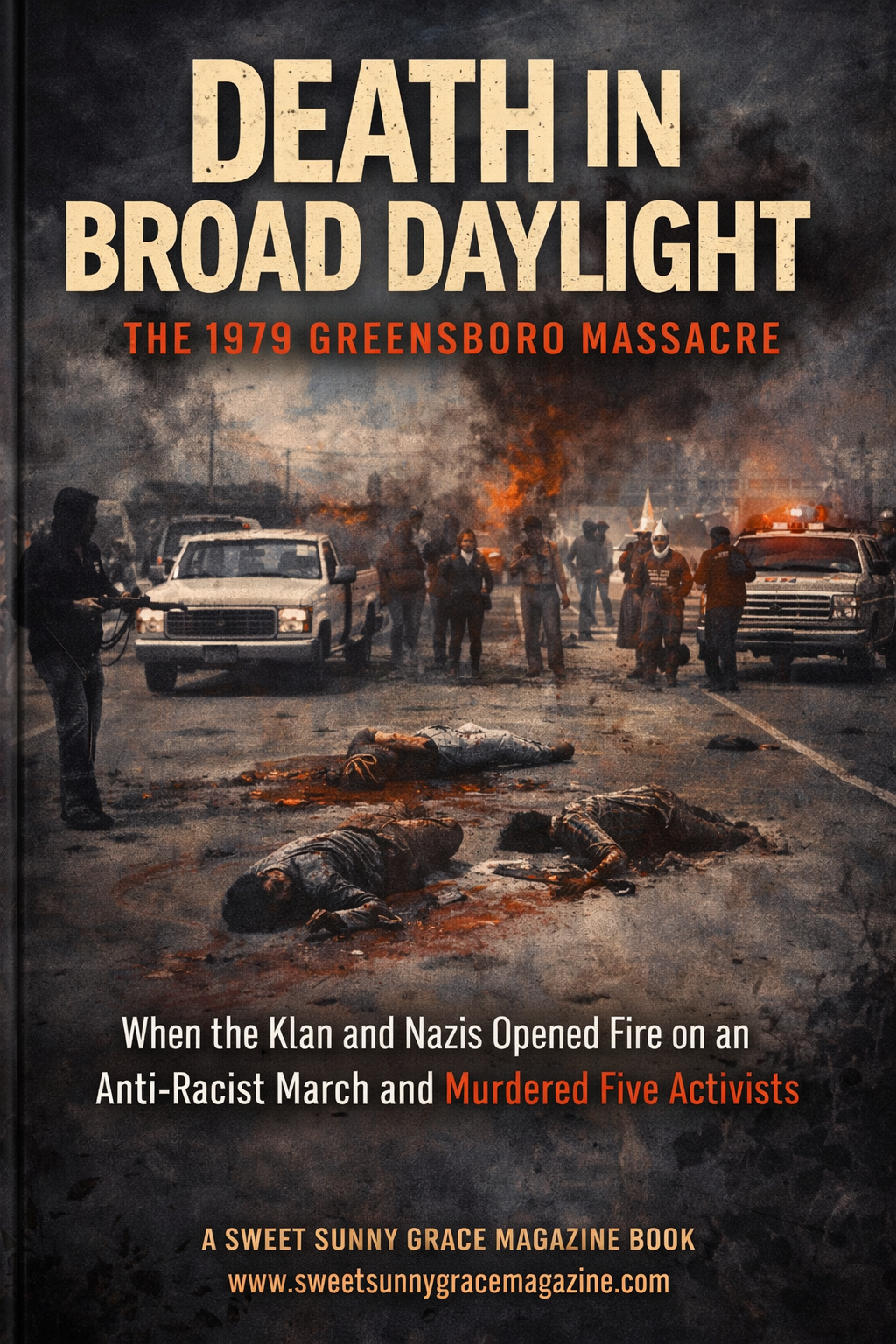
DEATH IN BROAD DAYLIGHT: The 1979 Greensboro Massacre
On November 3, 1979, an anti-Klan demonstration in Greensboro, North Carolina, turned deadly when members of the Ku Klux Klan and American Nazi Party confronted demonstrators and gunfire erupted in broad daylight.
Within minutes, five activists were dead and others were wounded.
Death in Broad Daylight examines the Greensboro Massacre, one of the most disturbing and controversial episodes in modern North Carolina history. This book goes beyond the shocking violence itself to explore the political tensions surrounding the demonstration, the people involved, the role and absence of law enforcement at critical moments, the criminal trials that followed, later civil litigation, and the questions about justice that continued for decades.
Inside, readers will explore:
- What led to the November 3, 1979 demonstration
- The confrontation between activists, Klansmen, and Nazis
- How five people were killed in the streets of Greensboro
- The police response and controversies surrounding it
- The criminal trials and acquittals that shocked many observers
- The later federal civil case and questions of responsibility
- How race, politics, extremism, and policing collided
- Greensboro’s later efforts to confront and document what happened
- Why the massacre still matters in discussions of racial violence and political extremism today
This is not fiction.
It is the story of how political hatred, racial extremism, violence, and failures of accountability collided on an American street—and left a city wrestling with the consequences for generations.
Five people died. The cameras were rolling. And the fight over what really happened had only begun.
A Sweet Sunny Grace Magazine Book
Discover more powerful history, investigative stories, and books at:
www.sweetsunnygracemagazine.com