

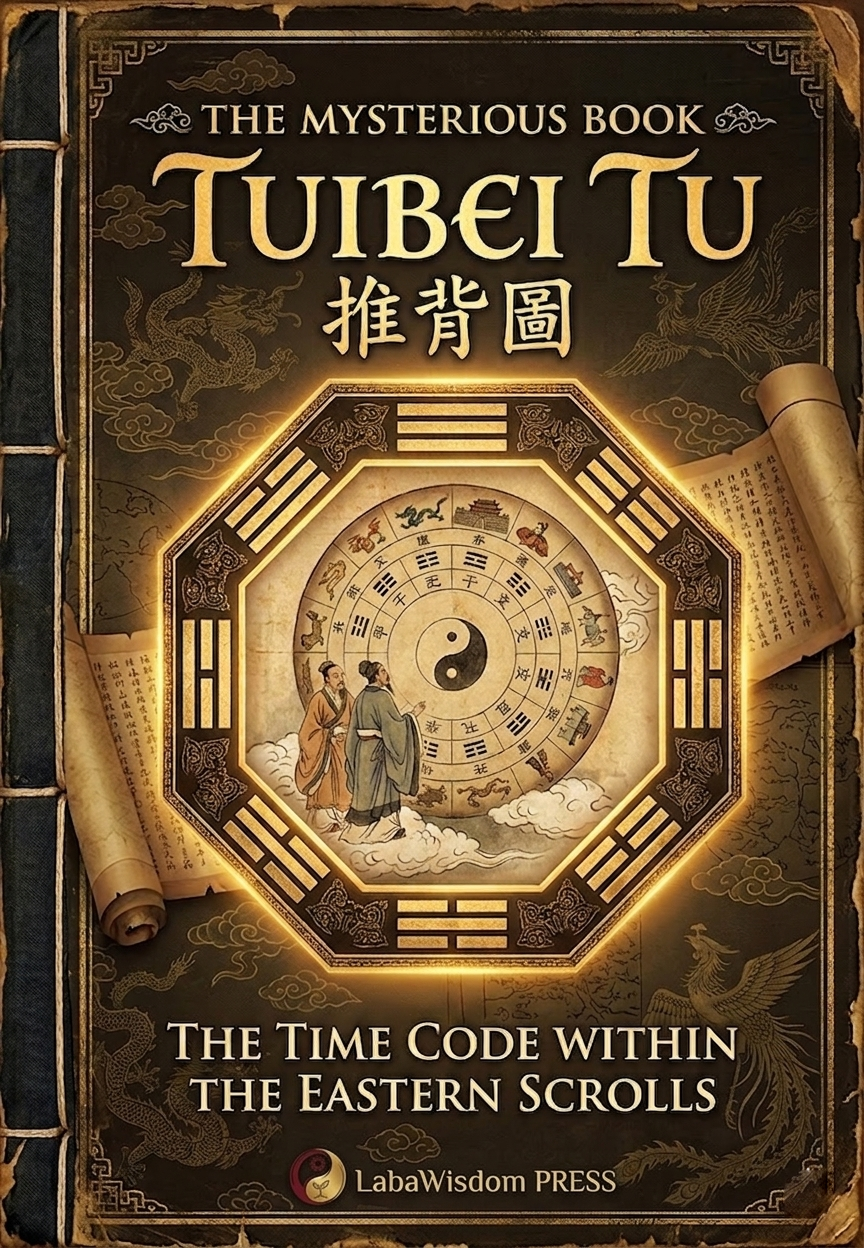
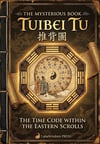
The I Ching Book-Tuibei Tu:Chinese Prophecy and Taoist Wisdom
Author’s Note
- The Tui Bei Tu is widely regarded as one of the most mysterious and influential applications of the I Ching in Chinese history.
- Traditionally attributed to two imperial masters of divination, it uses the 64 hexagrams of the I Ching, symbolic imagery, and prophetic verses to portray future dynastic changes and major historical events.
- The hexagrams and illustrations in the book were created between the 7th and 10th centuries CE
- This work systematically presents the relationship between the Tui Bei Tu hexagrams and the historical events associated with them, allowing readers to explore how the I Ching was applied in practice to interpret patterns, trends, and turning points in history. Many of its passages have long been considered remarkably consistent with later historical developments, making it one of the most fascinating classics for the study of practical I Ching interpretation.
- As a classical work that intertwines the philosophy of the I Ching, symbolic numerology, astronomy, and historical thought, The Tuibei Tu reflects not only the traditional Chinese system of divination, but also the ancient understanding of fate, cyclical history, and the Mandate of Heaven.
- Yet due to the complexity of its symbolism, the existence of multiple surviving editions, and centuries of conflicting interpretations, modern readers often find the text difficult to approach directly. For many international readers unfamiliar with traditional Chinese metaphysics and symbolic systems, there has long been a lack of accessible and systematically organized English editions of this work.
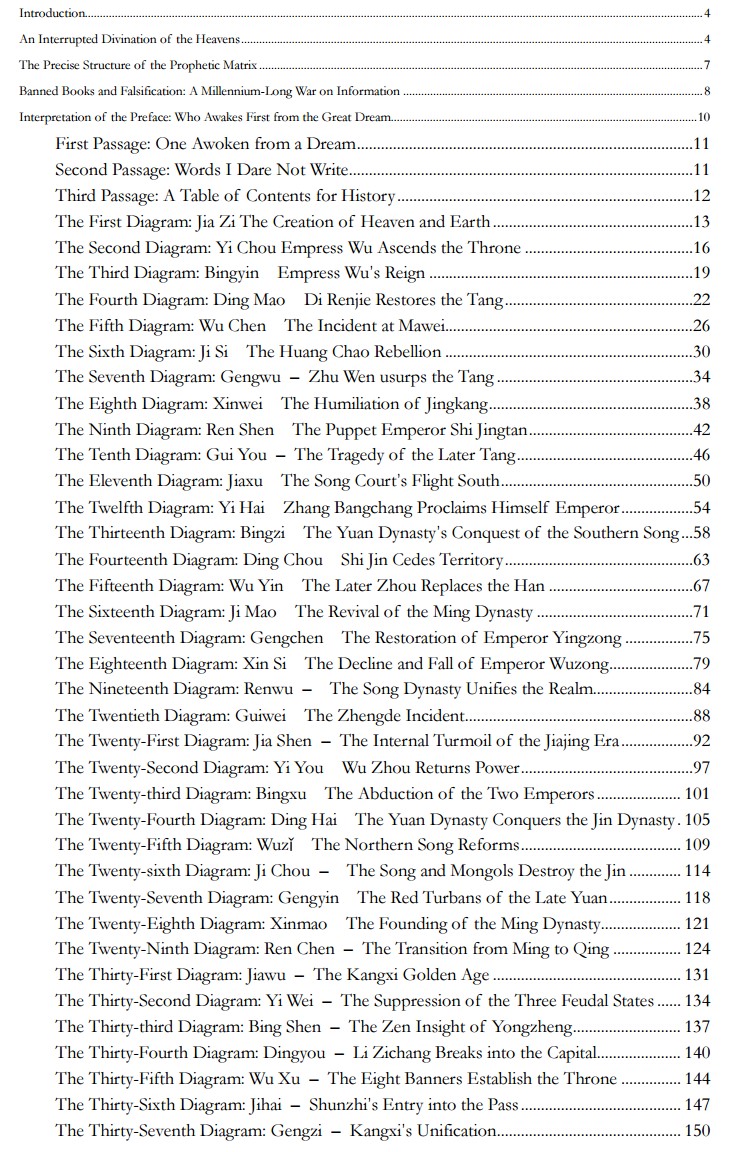
- After years of research and collation, Labawisdom LLC has carefully studied various classical editions and traditional commentaries in order to produce this translated and annotated edition of the Sixty Diagrams of The Tuibei Tu. In this work, we have sought to preserve the original literary tone and symbolic structure of the text while also providing interpretive commentary and historical associations related to each diagram and prophetic verse.
- This book does not claim to present a single definitive interpretation of The Tuibei Tu. As history has shown, readers from different eras have continually understood the same symbols through the lens of their own times. Our hope is instead to offer a cultural bridge through which more readers may encounter the rich traditions of Chinese prophecy, classical cosmology, and the symbolic worldview embedded within ancient Eastern wisdom traditions.
- Perhaps the true significance of The Tuibei Tu lies not merely in whether its prophecies were fulfilled, but in the enduring influence it has exercised over how generations of people have imagined history, destiny, and the recurring patterns of human civilization.
- This edition is dedicated to all readers who hold an interest in Chinese classical wisdom, historical culture, and the enduring mysteries of the Eastern esoteric tradition.
Introduction
Amidst the vast ocean of ancient Chinese texts lies a remarkable work once classified as a banned book; since its emergence in the early Tang dynasty, it has lingered like a spectre amidst the shadows of changing dynasties. It is known as *The Tuibei Tu*, and is said to have been co-authored by two masters of astrology during the reign of Emperor Taizong of Tang—Li Chunfeng and Yuan Tiangang.Weaving together sixty enigmatic illustrations, cryptic prophetic verses and the hexagrams of the *I Ching*, this book has spun a web of prophecy spanning two millennia of the nation’s fortunes. It is not history, yet it repeatedly collides with history to produce heart-stopping echoes; it is not myth, yet it bears the weight of a civilisation’s obsession with and fear of destiny.
An Interrupted Divination of the Heavens
During the Zhenguan era, Emperor Taizong of Tang, Li Shimin, ordered Li Chunfeng, the Director of the Astronomical Bureau, to calculate the duration of the dynasty’s reign. Li Chunfeng entered a state of deep meditation, employing the divination techniques of the *I Ching* to journey downstream along the river of time. He witnessed the Wu Zhou dynasty replacing the Tang, saw barbarian horsemen advancing southwards, and observed the collapse of the imperial system… As scene after scene flooded his mind, he unwittingly projected his vision a thousand years into the future.
Just as he was about to touch upon the secrets of the universe’s beginning and end, Yuan Tiangang stood behind him, gently nudged his back, and said, “The mysteries of heaven must not be fully revealed; cease here.” This nudge brought an end to a meditation that might have pierced the very end of time, and left behind this fragmentary scroll—comprising merely sixty diagrams yet encompassing twelve centuries of rise and fall. The name “Tui Bei” (The Prophecy of the Back-Nudge) originates precisely from this.
The Precise Structure of the Prophetic Matrix
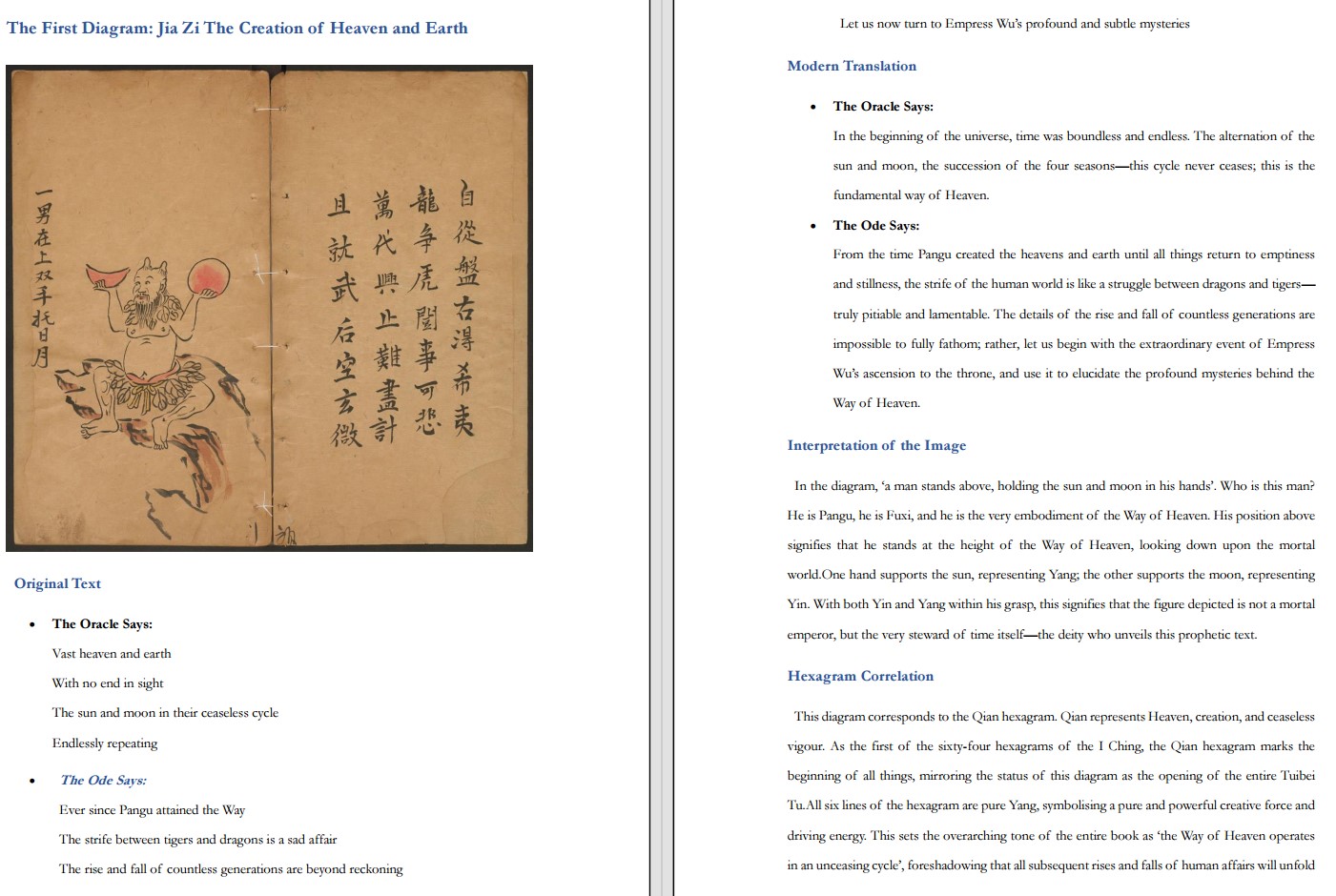
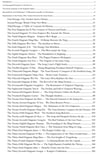
The *Tuibei Tu* is not a haphazard collection of prophecies, but a meticulously interlocking system of symbols. The sixty diagrams of the book correspond to the sixty-four hexagrams of the *I Ching* (excluding the four opening and closing hexagrams), and each diagram is composed of four layers of coding:
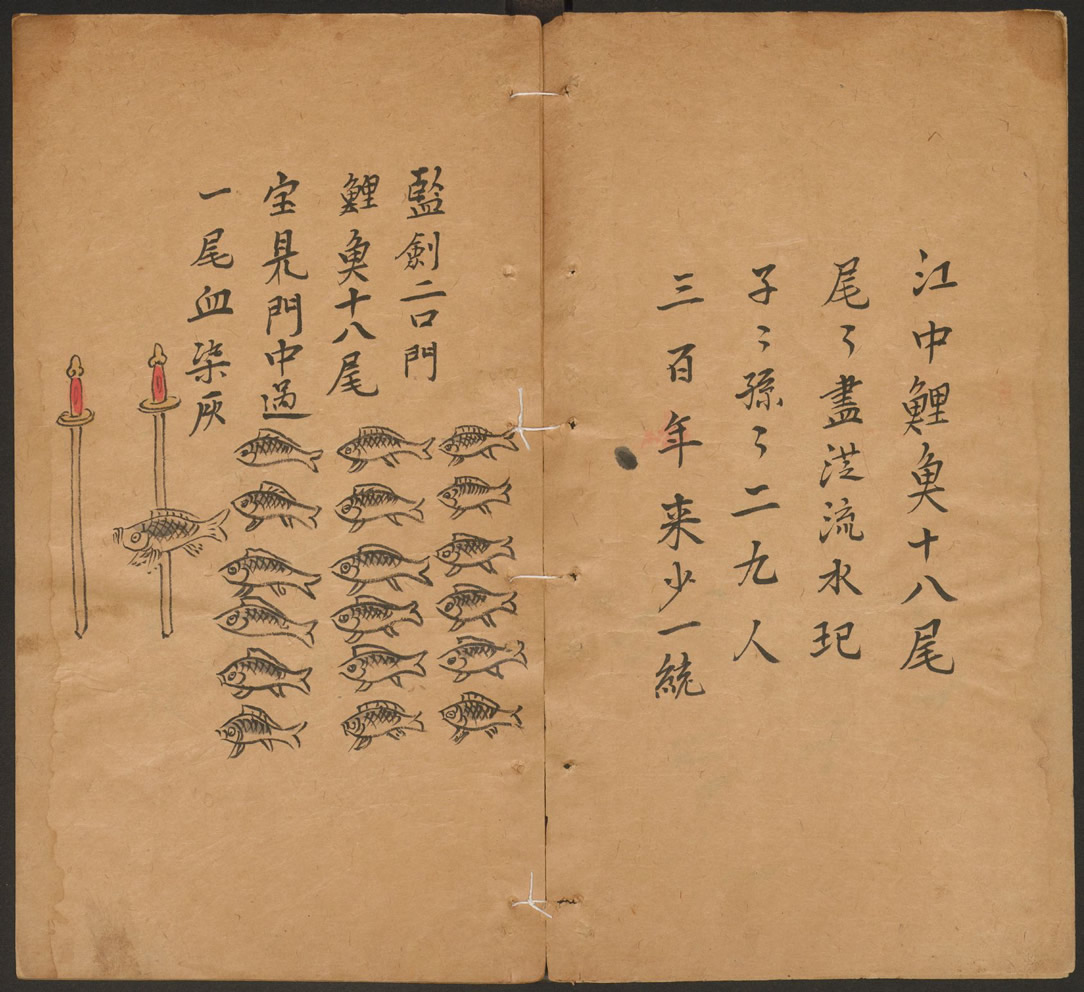
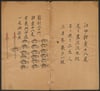
The first is the hexagram, which sets the cosmic tone of the diagram; the second is the illustration—a minimalist ink painting concealing a core metaphor: a plum tree without grass, a horse emerging from the city gate, or a skull supported by the Ghost River; the third is the oracular verse, a few lines of cryptic language pointing to the characteristics of figures or events; the fourth is the ode, which unfolds the details, often slicing through history with the precision of a razor’s edge.
These four elements are intricately interlinked, forming a multidimensional prophetic mechanism. What is even more thought-provoking is that this is not a static text, but a dynamic seal—enormous interpretative space is left between the hexagram and the diagram, the oracle and the ode, as if the designer had deliberately intended for the truth to flicker between the known and the unknown.
© 2026 Labamaster LLC. All Rights Reserved.
This work has been independently compiled and edited from historical classical sources. The layout design, content organization, translations, explanatory notes, hexagram-to-history correlations, and interpretive content contained in this edition are original works created by Labamaster LLC.
Unauthorized reproduction, distribution, sharing, or commercial use is strictly prohibited.